New organisations are presenting themselves as protectors of Ezidi identity while their funding, ideology and political connections lead back to Kurdish political movements.
An “Ezidi press association” built around another political ideology
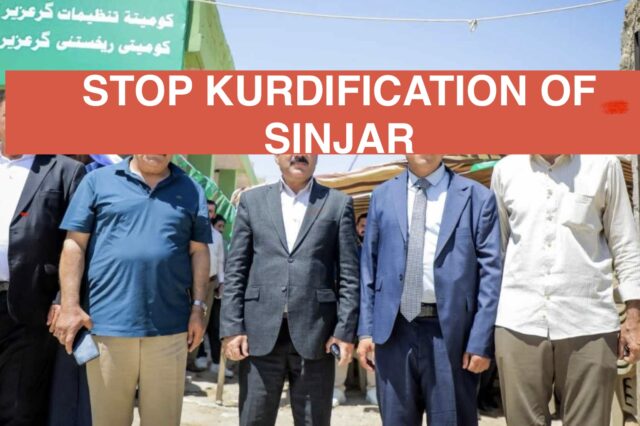
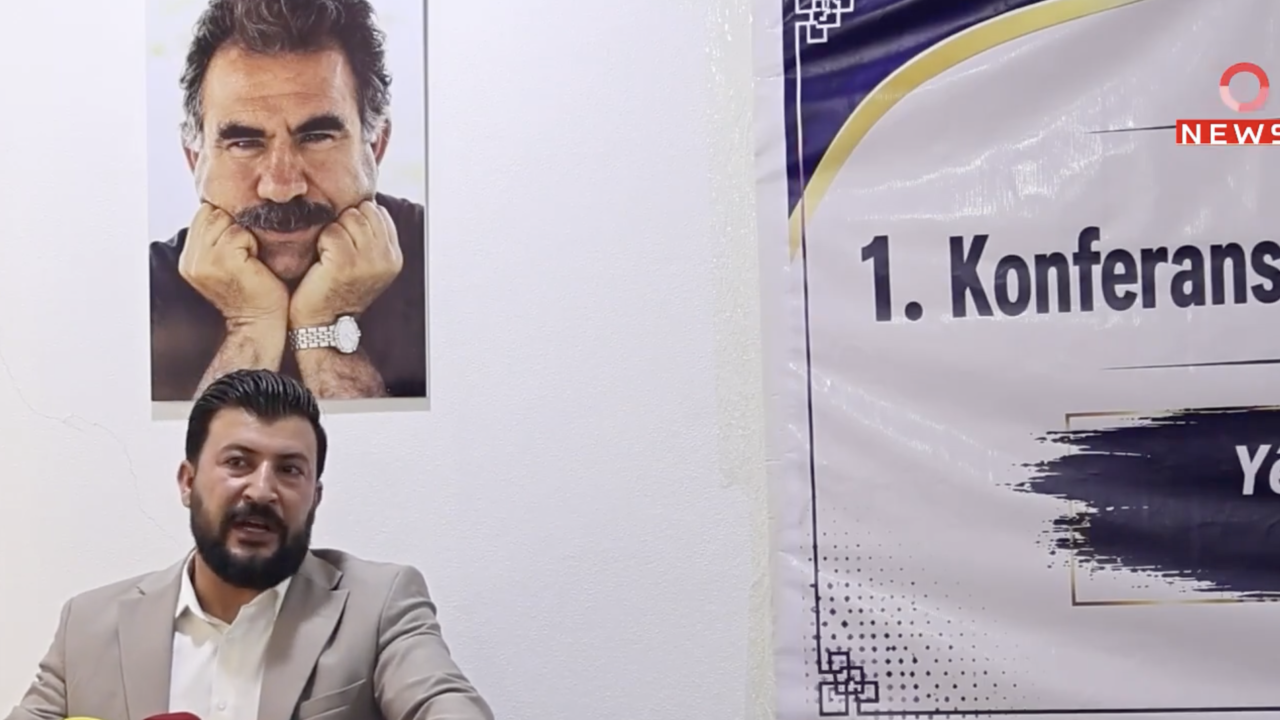
On 12 August 2026, an organisation calling itself the Êzîdxan Press Union held its first conference in Geliyê Kersê in Şengal. The name and public presentation suggest that this is an independent Ezidi media organisation created to serve Ezidis.
Reports in Russian, German and Turkish show that the event involved organisations and armed structures connected to a Kurdish political network. Participants were presented with Abdullah Öcalan’s views on the role of the press, while the final declaration referred to him by the political title “Rêber Apo” and stated that the conference had been dedicated to him, alongside journalists and victims of the 2014 genocide.
An organisation cannot place the ideology of a Kurdish political leader at the centre of its work, surround itself with Kurdish political structures and then expect Ezidis to accept it unquestioningly as an independent Ezidi institution. Putting an Ezidi name on an organisation does not make it Ezidi-controlled. Placing Ezidis in front of cameras does not tell us who controls the money, the political direction or the decisions behind those cameras.
Ezidi Times has received many reports concerning newly established organisations, political groups, media projects and associations across the Middle East. These groups publicly claim that their purpose is to protect Ezidis, preserve Ezidi identity, educate Ezidi young people or give Ezidis a stronger voice.
When their funding and leadership are investigated, however, a repeated pattern emerges. Most of these newly created groups are Kurdish-funded, while individuals occupying important positions have affiliations with the PKK or other Kurdish political parties.
Ezidis must therefore stop judging organisations by their names and slogans. We must follow the money, examine the people involved and ask what political interests are hiding behind the language of “support”.
1. What do Kurdish political parties gain from “protecting” Ezidi identity?
The first question is the simplest: what do they gain?
Political parties do not spend money, establish organisations, train media workers, organise conferences and create international networks without expecting a return. The return may not be money. It may be political influence, control over public language, access to Ezidi institutions, international legitimacy or the ability to claim that they represent Ezidis.
An Ezidi name gives such projects credibility. Ezidi participants give them a human face, while photographs of Ezidi women, young people, religious symbols and genocide survivors allow political organisations to present themselves internationally as defenders of an endangered people. That image has political value. It creates sympathy, attracts funding and gives Kurdish political movements an opportunity to speak in the name of Ezidis.
Ezidis must therefore ask a basic question whenever a new “Ezidi” organisation appears: if Kurdish parties are paying for it, what and whom are they purchasing?
2. How can those who deny Ezidi identity suddenly claim to protect it?
For decades, Kurdish political parties, media outlets, academics and nationalist organisations have attempted to classify Ezidis as a Kurdish subgroup. They have called Ezidis “Ezidi Kurds”, a community and a religious community. They have and still continue to presented Sharfadin as an ancient “Kurdish religion” and treated Ezidi history, language, sacred traditions and cultural heritage as Kurdish property.
Those same political networks now want Ezidis to believe that they are spending money to “protect Ezidi identity”.
The contradiction is obvious. A political movement cannot repeatedly deny the independent existence of Ezidis and then present itself as the guardian of that same identity.
What identity are they supposedly protecting if they continue to insist that Ezidis belong to another nation? Are they protecting Ezidi identity, or are they constructing controlled institutions through which Ezidis can gradually be absorbed into a Kurdish political identity?
The old method was direct. Ezidis were simply told that they were Kurds and that Sharfadin was a Kurdish religion.
That method created resistance because more Ezidis began openly rejecting the imposed identity. The new method is softer: fund organisations with Ezidi names, recruit Ezidi faces, organise cultural and media activities, and slowly build political loyalty from inside Ezidi institutions. This is soft power. The language has changed, but the desired result may remain the same.
3. Nobody spends money purely out of kindness
No individual, organisation, political party, government or international institution spends money without receiving something in return. Even an ordinary person who makes a small donation will usually receive a thank-you email, a certificate, public recognition or some other acknowledgement.
There is always an exchange. The larger the funding, the more important it becomes to understand what the funder expects in return.
When political organisations finance salaries, offices, media equipment, travel, conferences and training, they are not simply handing over money and walking away. Funding creates access, dependence and influence.
The funder may influence who receives a position, which political language is accepted, which subjects can be discussed, which leaders may be criticised and how Ezidi identity is presented to the outside world. An organisation may retain an Ezidi name while gradually losing the freedom to defend an independent Ezidi position.
Ezidis must not allow themselves to be treated like naïve lambs expected to follow every organisation carrying an Ezidi name. A logo, a slogan and a few Ezidi employees are not proof of independence.
4. Why is this money not being spent on Kurdish populations living in poverty?
Large Kurdish communities across the Middle East continue to suffer from poverty, unemployment, displacement, poor infrastructure and limited public services. Kurdish political parties know that many of their own supporters and the populations under their influence face serious economic hardship. If these parties have enough resources to establish and finance organisations for Ezidis, Ezidis must ask why those resources are not being spent on their own struggling populations.
The answer cannot simply be that Kurdish political parties are exceptionally concerned about Ezidi identity. Their long record of attempting to place Ezidis under a Kurdish identity makes that explanation impossible to accept without serious questioning.
Ezidis possess something of considerable political value: an ancient identity, the religion of Sharfadin, indigenous roots in the region, international recognition following the 2014 genocide and growing attention from governments, courts and human-rights institutions.
Control over Ezidi representation can therefore produce political rewards. A Kurdish-funded organisation carrying an Ezidi name can be used to influence what foreign governments hear, who is invited to international meetings and who is permitted to speak on behalf of Ezidis. This is not charity because the Kurds love Ezidis. It is an investment in political influence.
5. Today’s “support” can become tomorrow’s claim of ownership
Kurdish political organisations can later point to the organisations, projects and donations they financed and declare: “Look at everything we have done for our “Ezidi Kurds”.” The assistance then becomes evidence for a false claim of ownership. Instead of respecting Ezidis as a separate people, the political sponsor presents its own funding as proof that Ezidis belong to the Kurdish nation.
This method is already visible in the changing language surrounding the 2014 Ezidi Genocide. In the years immediately following the genocide, Kurdish media generally referred to it as the genocide against Ezidis.
In 2026, an alarming number of reports have begun calling it a genocide against “Ezidi Kurds”, a “Ezidi Kurdish genocide” or even a genocide against Kurds. Every time this language is repeated, the crime is moved further away from Ezidi history and placed inside a Kurdish national narrative.
This is not an innocent translation error. ISIS targeted Ezidis because they were Ezidis and because they followed Sharfadin. Men were murdered, women and girls were enslaved, children were abducted and sacred sites were destroyed as part of an attempt to annihilate the Ezidi people.
Calling this a genocide against “Kurds” steals the identity of the victims and changes the historical meaning of the crime. Ezidi Times has previously documented this dangerous development in The Ezidi Genocide Is Not a “Yazidi Kurdish Genocide”.
The pattern is clear: first finance Ezidi organisations, then claim to represent Ezidis, and finally use that manufactured representation to present Ezidi identity and suffering as Kurdish.
6. Ezidis must build their own power
No foreign nation, Kurdish political party or externally controlled organisation will save Ezidis. Anyone waiting for another people to protect Ezidi identity is surrendering responsibility for that identity.
Ezidis must establish and strengthen their own media organisations, archives, research institutions, cultural associations, educational projects, legal initiatives and political structures. These institutions must be led by Ezidis, accountable to Ezidis and free to defend Ezidi interests without seeking permission from outside political sponsors.
This does not mean that Ezidis should isolate themselves. Cooperation with the Iraqi state, Assyrians, Turkmen, Shabaks, Jews, Kurds and others can be valuable when it is transparent, equal and based on clearly defined shared interests.
But cooperation is not submission. Receiving support must never give the donor ownership over Ezidi identity, Ezidi institutions or the right to speak for Ezidis.
Before supporting any newly created organisation, Ezidis should demand clear answers:
- Who provides the money?
- Who appointed the leadership?
- Which political parties are the organisers affiliated with?
- Does the organisation recognise Ezidis as a distinct people?
- Can it openly criticise its funders?
- Who controls its accounts, media channels, data and international contacts?
- Does it defend Ezidi interests when those interests conflict with the interests of its sponsor?
If an organisation refuses to answer these questions, that refusal is itself an answer.
An Ezidi name is not proof of Ezidi ownership. An Ezidi spokesperson is not proof of independence. Kurdish funding is not politically neutral, and party affiliation is not a private matter when an organisation claims to represent an entire people.
Ezidi identity is not a political instrument. Sharfadin is not a branch of another nation’s history, and the Ezidi Genocide is not available for others to rename and appropriate.
Ezidis must remain alert, question every political project and build institutions that cannot be bought, controlled or used against them.
If “support” requires you to surrender or rewrite your ethnicity, the name of your language, or your history, then it was never support—and it never will be.
If “support” allows you to be censored or forces you to accept an imposed political affiliation, then it is not support.
If “support” requires you to speak of “Yezidism”—a term never used in the Ezidi language and an attempt to replace the sacred name of Şarfadin—then it is most certainly not support.
If “support” makes you afraid to say the “wrong” thing, then it is not support.
If “support” means that you may be attacked simply for stating that your ethnicity is Ezidi—not Kurd—that your language is Ezdiki, and that your religion is Şarfadin, then it is not support. It is coercion.
Ask yourself whether this false support—which is, in reality, political propaganda, oppression, and a silent genocide—is worth the minor privileges and handful of coins you receive in exchange for betraying your ancient Ezidi identity.
If you decide that those small benefits and coins are worth your soul, then sell your own soul. But do not dare to sell the Ezidi identity, and do not presume to speak on behalf of the Ezidi people.