
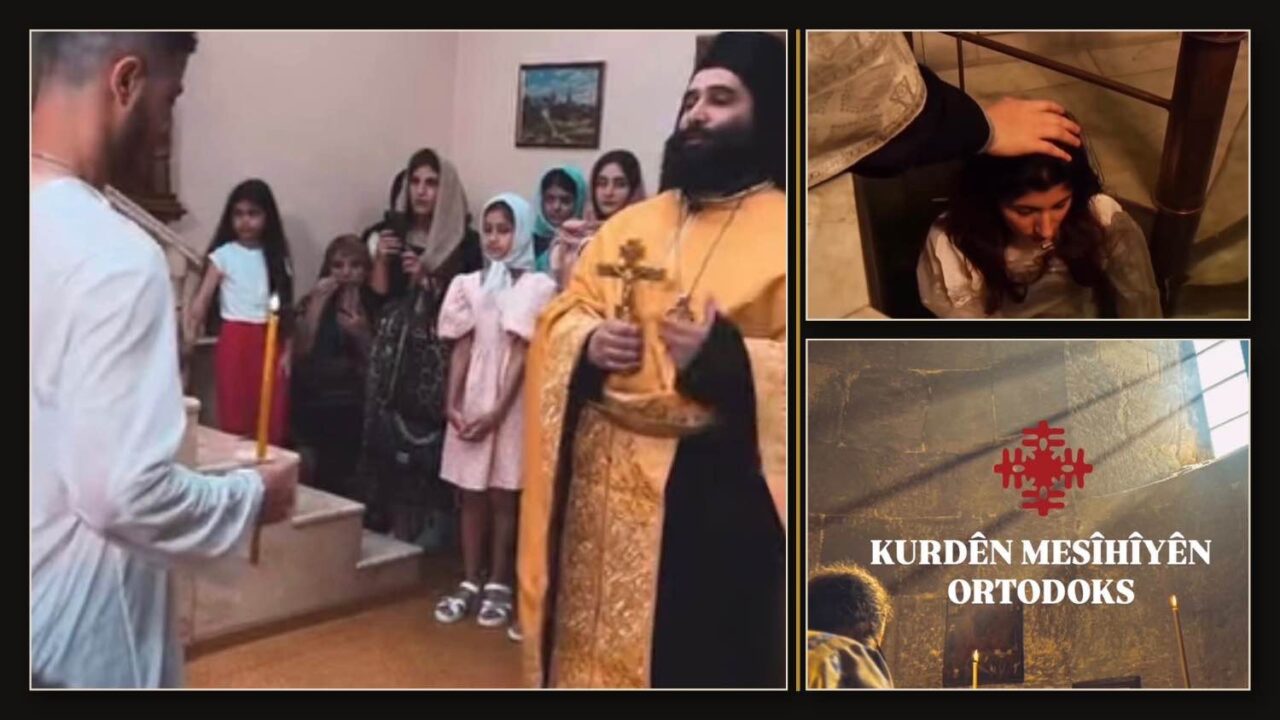
Recently, some online accounts run by Ezidis who have converted from Sharfadin to another religion have begun spreading hate speech and misinformation about Sharfadin. Videos have also circulated online showing a group of Ezidis taking part in a conversion ceremony.
The issue is far more alarming than just the conversion videos themselves. Some accounts are publishing AI-generated images associating Ezidi temples with demonic figures, spreading false explanations of our religious traditions and directing insults at those who continue to follow Sharfadin. Choosing another religion is one thing. Using that choice to humiliate Ezidis and demonise their sacred places is another.
Some are creating AI-generated demonic images of Ezidi temples and sacred symbols. Others circulate videos, false claims and insulting material designed to mock, misrepresent and demean Ezidis.
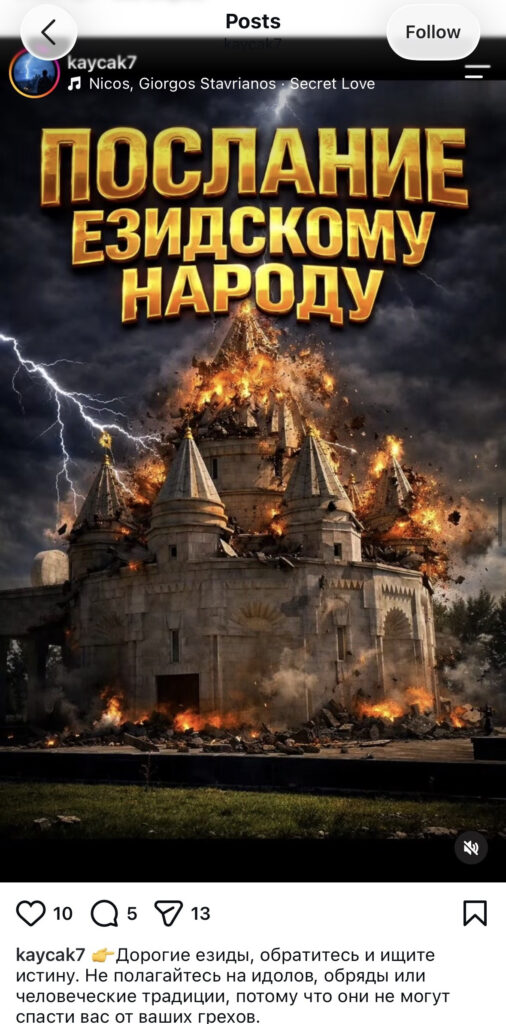
Just one example of the content that these accounts are spreading.
Translation of the captions: “Dear Ezidis, turn and seek the truth. Do not rely on idols, rituals or human traditions, because they cannot save you from your sins.”
Many people have contacted Ezidi Times asking us to explain why these claims are wrong and to urge people not to abandon their religion. Our position is clear: it is painful and disappointing when an Ezidi leaves Sharfadin without understanding the religious and historical meaning of what they are leaving behind. But Ezidis, unlike many modern religions, do not seek to impose their faith on others. Sharfadin is not a religion one enters simply by reciting a few empty words and thereafter claiming to be a follower. Nor is it engaged in a desperate search for “lost souls” who are uncertain about the meaning of their lives. Sharfadin is an inherited faith, history and identity that is at least 6,776 years old, preserved across generations despite persecution, forced conversion and repeated attempts to erase it.
However, what is not a personal choice is using that decision as a licence to spread lies, hatred and blasphemous material about the Ezidi people and their sacred places.
When someone creates demonic fantasies about Ezidi temples, spreads false theories about Sharfadin and harasses people who have done them no harm, this is no longer a question of private belief. It is anti-Ezidi hate speech.
If you truly believe that you have found a religion that has made you more humane, more compassionate and closer to God, why do you spend your time humiliating the people you left behind? Why do you spread hatred against a people whose identity, religion and sacred sites have already been targeted by persecution?
This behaviour does not show religious conviction. It repeats the dehumanising logic that has been used against Ezidis for generations and that helped make the Ezidi Genocide of 2014 possible.
You contradict the moral values you claim to believe in through your own actions. We feel sorry for people who leave one faith only to dedicate themselves to mockery, harassment and falsehood against those who have never harmed them.
So we ask you:
Is this your religion?
If hatred of Ezidis, contempt for sacred places and lies about Sharfadin are what you choose to spread, then that is what your religion looks like to the world.
This Is Not Only an Attempt at Religious Assimilation—It Is Another Layer of Kurdish Propaganda
To those who think this is just a question of religious freedom and that these Ezidis should not be condemned for converting to another religion: we want to present another layer of this issue. None of the Christian-majority countries in which these Ezidi families have lived since the genocide of 1915 has forcibly imposed Christianity on them.
We see these conversions as a result of Kurdish propaganda that presents Ezidi identity as merely a religion. When we look more closely at these accounts, the movement and the historical background of how these Christian sects approached Ezidis, we see one very obvious pattern: they all seem to promote a Kurdish nationalist ideology.
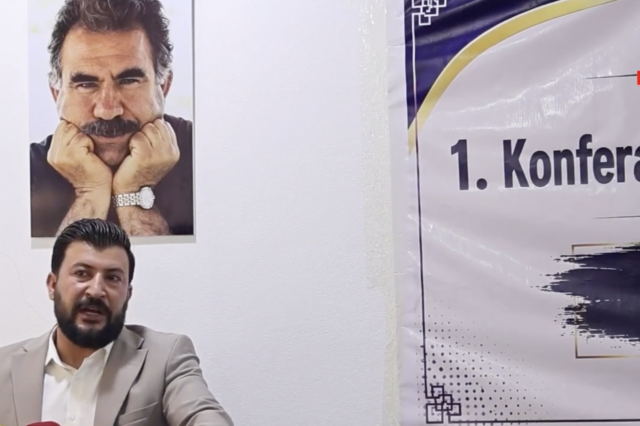
Now, this might surprise certain people, but we are simply presenting this fact: Rüdaw has made an entire documentary in which they visit Ezidis and interview them about religion. What they constantly push throughout the interviews is the idea that Ezidis are “just Kurds” and that it is all right for Ezidis to leave Sharfadin: they are still Kurds, and Kurds love them because they add to the colours of Kurdish identity.
Ezidi identity is distinctive in the way it connects ethnicity and religion. Within the understanding of Ezidi identity, those who convert to other religions are no longer considered Ezidi, this has been a way to preserve and protect the Ezidi identity from assimilation. This is particularly convenient for Kurdish nationalists who seek to assimilate Ezidis and present our identity as merely a “Kurdish religion.”
The issue surrounding these conversions is therefore alarming not only because some of those involved spread hate speech and misinformation about Sharfadin. Where this is accompanied by the denial of Ezidi ethnic identity, we see another attempt to annihilate that identity.
Now, this might surprise certain people, but we are simply presenting this fact: Rüdaw has made an entire documentary in which they visit Ezidis and interview them about religion. What they constantly push throughout the interviews is the idea that Ezidis are “just Kurds” and that it is all right for Ezidis to leave Sharfadin: they are still Kurds, and Kurds love them because they add to the colours of Kurdish identity.
It is like searching for trash that can be recycled. If you find it useful, please go ahead. But remember: they did not serve their original purpose and were therefore thrown away. What makes you think they will bring you value?
To those repeating the worn-out argument that “Ezidi is only a religion”, here is a simple question for you:
If an Ezidi converts to another religion and is then considered a Kurd, how does one become Ezidi in the first place?
The answer is that you are born Ezidi, because Ezidi is an ethnic identity as well as a religious one. Under traditional Ezidi rules, you cannot become Ezidi simply by adopting the religion. Reducing that inherited identity to a “Kurdish religion” ignores its ethnic dimension and shows a limited understanding of what ethnoreligious identity means: the connection between ethnic and religious belonging.
Leaving Sharfadin does not rewrite your ancestry. Nor does it give you the authority to rewrite ours.
Our final message to those who have forgotten their history and what their ancestors endured to preserve the Ezidi identity—and to those actively trying to assimilate Ezidis through different strategies:
What you are doing is searching for trash that can be recycled. If you find it useful, please go ahead. But remember: they did not serve their original purpose and were therefore thrown away. What makes you think they will bring you value? Thank you for taking away our rotten apples!