
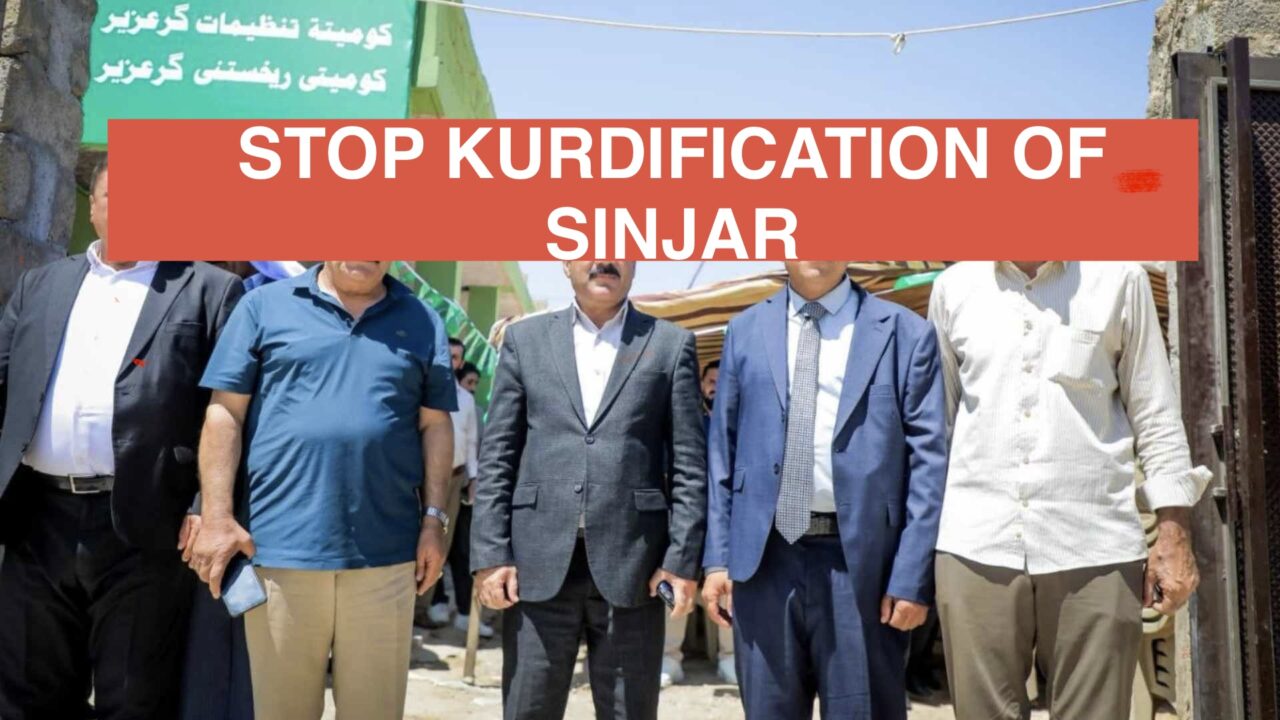
The Patriotic Union of Kurdistan (PUK) has reopened its party headquarters in the Ezidi village of Gir Ozer after twelve years.
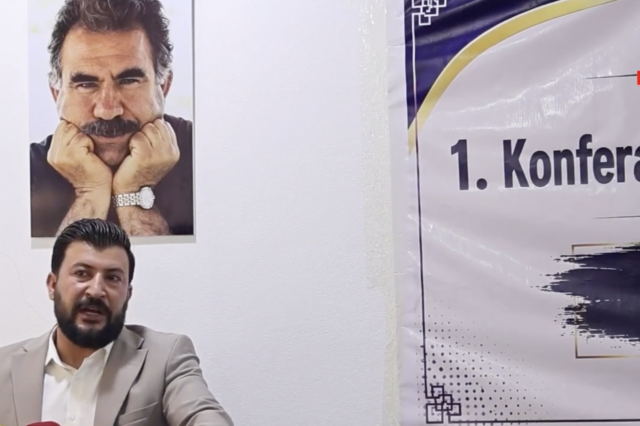
The PUK described this as a positive step that would help it communicate with local people and serve their needs. But Sinjar does not need another outside political party opening offices and competing for control.
It needs homes, schools, hospitals, jobs, security and justice.
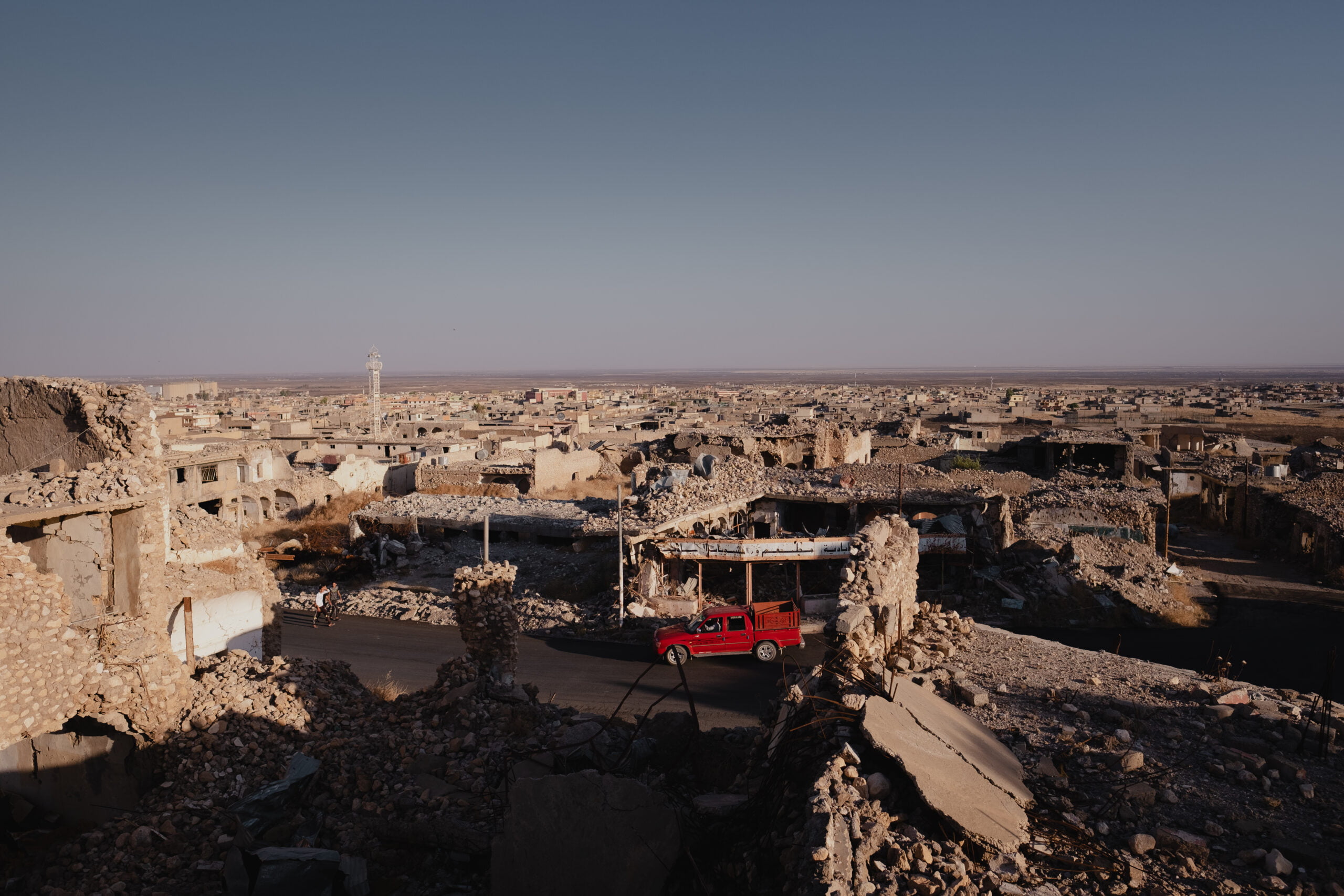
A political headquarters will not rebuild destroyed villages. It will not find the missing. It will not identify victims in mass graves. It will not compensate survivors or help displaced Ezidis return home.
Its main purpose is political influence.
The PUK will now have a permanent presence inside an Ezidi village. From there, it can build relationships with local leaders, recruit supporters and increase its control over political life in the area. In another words; continue its work to kurdify and spread propaganda.
The Kurdish political parties have long tried to present Sinjar as part of “Kurdistan”. The PUK has openly supported bringing disputed areas under the control of the Kurdistan Region.
The reopening of its headquarters must therefore be viewed as more than a local office. It is another step in a wider struggle over who will control Sinjar. It also shows that the kurds essentially succeeded with their plan; They disarmed Sinjar, they fled from scene allowing isis to have a free passage to commit a genocide against Ezidis, then they “freed” Sinjar a year later. Now they are making claims over Sinjar and also claiming that the 2014 genocide was a genocide against the “kurds”. Even the most naive person would understand what they are doing.
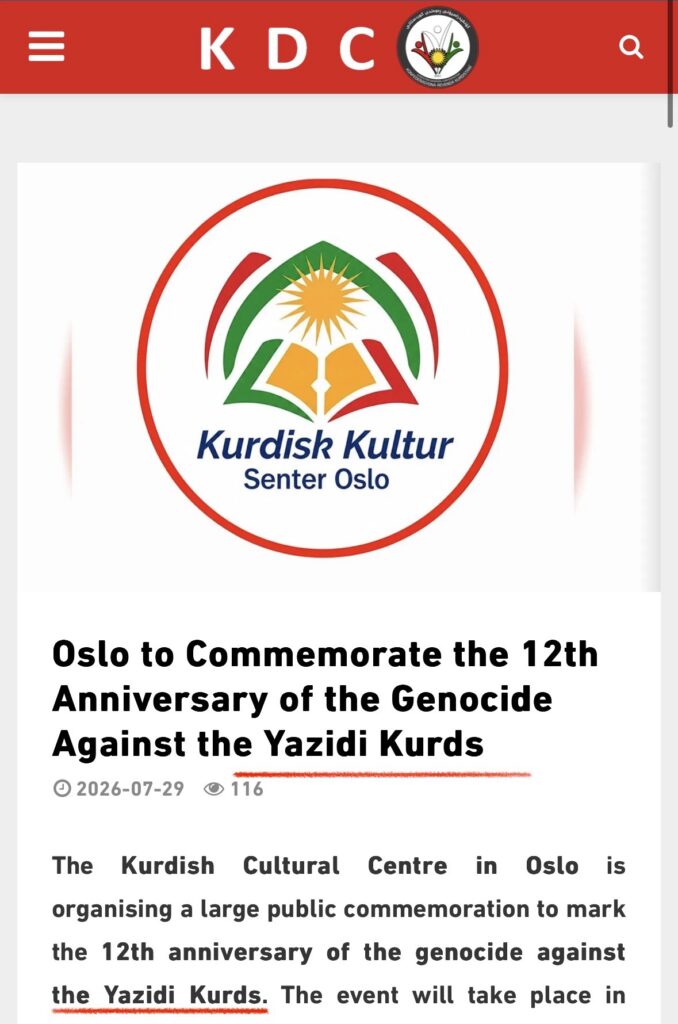
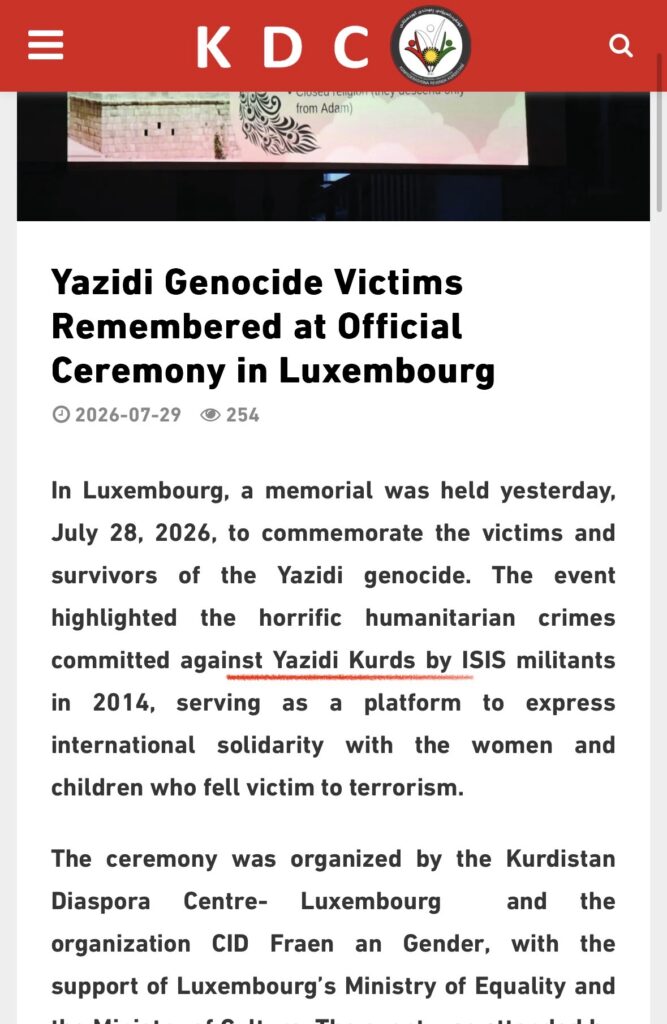
In some years; the Kurds will remove “Ezidi” and only mention the 2014 genocide against the Kurds. That is the modus operandi of Kurdish logic and agressive kurdification propaganda.
Sinjar is not empty land
Sinjar is the ancestral homeland of Ezidis. It is not territory for Kurdish, Iraqi or armed political groups to divide between themselves.
For years, outside parties have treated Ezidis as people whose support must be won, rather than as a distinct people who should decide the future of their own homeland.
The PUK says it wants to “serve” local residents. But public services should not depend on political parties.
People should not need party connections to obtain jobs, assistance, documents or protection. When a party controls access to such things, it is nothing than oppression, criminal behaviour and corruption.
This is especially dangerous in Sinjar, where many people remain displaced, poor and dependent on outside assistance.
The wrong lesson from 2014
Kurdish forces controlled much of Sinjar before the ISIS attack of 3 August 2014. When ISIS advanced, Peshmerga forces withdrew and left Ezidis without proper protection.
The PUK was not the main party controlling Sinjar at the time. But it belongs to the same Kurdish party system that has repeatedly placed party interests and territorial claims above the needs of ordinary people.
After such a failure, Kurdish political parties should show restraint.
Instead, the PUK is celebrating that it is the first Kurdish party to reopen an office in Sinjar, as though this were a political prize.
The question should not be which Kurdish party arrives first. The question should be why outside parties continue to believe that they have a right to expand inside an Ezidi homeland.
More parties will create more division
The PUK will probably not remain the only party seeking a stronger presence in Sinjar.
The KDP has its own claims. PKK-aligned organisations promote another political system. Iraqi parties and armed groups also compete for influence.
Every new party office risks dividing Ezidi villages and families into rival political camps.
This does not give Ezidis more control. It gives outside organisations more control over Ezidis.
Sinjar has already suffered from too many governments, parties and armed groups. Adding another party headquarters will not create unity or security.
What real support would look like
A party that genuinely wanted to help Sinjar would support independent Ezidi-led administration and local security accountable to the people who live there.
It would help rebuild homes, schools and hospitals without demanding political loyalty. It would support compensation, the recovery of missing Ezidis, the identification of mass-grave victims and the safe return of displaced families.
Most importantly, it would respect the right of Ezidis to decide the political future of their homeland.
The PUK headquarters does not strengthen Ezidi independence. It strengthens the PUK.
Sinjar must not become another territory claimed by Kurdish parties simply because its people were displaced by genocide.
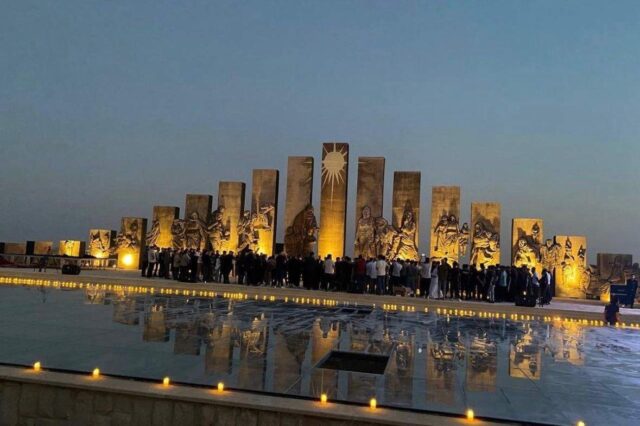
Twelve years after ISIS tried to destroy Ezidis physically, they should not now have to defend their homeland from political absorption.
Sinjar belongs first to its Ezidi people—not to the PUK, the KDP or any other outside political movement.