
Warning: This article contains graphic images from the 14 August 2007 attacks in Sinjar that some readers may find distressing.
On 14 August 2007, four coordinated truck bombs struck the predominantly Ezidi towns of Tel Azer (Al-Qahtaniyah) and Siba Sheikh Khidir (Al-Jazira) in the Sinjar region of Iraq. The attacks, attributed to Al-Qaeda in Iraq, killed hundreds of Ezidis, injured many more and destroyed entire neighbourhoods. They became one of the deadliest attacks against Ezidis before the genocide of 2014.
This article is dedicated to the memory of the hundreds of Ezidis who lost their lives in the attacks of 14 August 2007, and to the families who continue to carry their loss. May the victims rest in peace, and may their names and stories never be forgotten.
A genocide that remains largely unrecognised. A crime so horrific that the human mind struggles to comprehend it. How could such cruelty happen, and why were innocent people targeted simply because of who they were? Almost two decades later, these questions remain, even though no answer could ever justify what happened.
For many Ezidi families, 14 August 2007 is not a distant historical date. Mothers still live without knowing exactly what happened to children who never returned. Families were shattered within minutes, leaving parents, children, brothers and sisters searching through ruins for those they loved. Some found bodies. Others found only fragments. Some found nothing at all and were left without the certainty of death or the possibility of saying goodbye.
The coordinated bombings of Al-Qahtaniyah, known to Ezidis as Tel Azer, and Al-Jazira, or Siba Sheikh Khidir, were among the deadliest attacks against Ezidis. Hundreds were killed and many more were injured. Yet the massacre did not come without warning. Years of religious hatred, political instability and increasing extremist violence had already placed Ezidis in an increasingly dangerous position.
Seven years later, on 3 August 2014, another catastrophe descended upon the Ezidi people. For many Ezidis, the connection between the two events is impossible to ignore. The massacre of 2007 had shown what extremist hatred could produce when Ezidis were left exposed. The failure to respond adequately to that warning became part of an even greater tragedy.
Sinjar before the attack
Before the US-led invasion of Iraq in 2003, Saddam Hussein and the Ba’ath Party ruled the country through a highly centralised political system. Ezidis, who had already experienced centuries of persecution, lived under policies that placed considerable pressure on their identity and their homeland in Sinjar.
One of the Ba’ath government’s central policies was Arabisation. In Sinjar, this included attempts to incorporate Ezidis into an Arab nationalist framework and pressure them to identify as Arabs rather than maintain their distinct Ezidi identity. The policy also affected place names. Tel Azer was officially renamed Al-Qahtaniyah, while Siba Sheikh Khidir became Al-Jazira. Such changes were not simply administrative. They formed part of a broader effort to reshape the identity of the region and strengthen state control over it.
After Saddam Hussein’s regime fell in 2003, Sinjar entered another political period. The Kurdistan Democratic Party and Kurdish Peshmerga came to control much of the area. Some Ezidis gained opportunities in the police, Peshmerga and other government positions that had previously been largely unavailable to them.
At the same time, political and social tensions increased. Some local Sunni Arab populations lost influence and government employment after the fall of the Ba’ath regime. Armed extremist organisations, particularly Al-Qaeda in Iraq, exploited these tensions and increasingly portrayed Ezidis as enemies, including by accusing them of supporting Kurdish authorities.
Religious hatred made the situation even more dangerous. Extremist groups regarded Ezidis as infidels and drew upon the centuries-old false accusation that Ezidis worship the devil. Such beliefs were used to dehumanise Ezidis and create an ideological justification for violence against them.
From the murder of Du’a Khalil to escalating violence
One event in 2007 became particularly significant in the escalation of hostility towards Ezidis: the murder of the young Ezidi woman Du’a Khalil.
On 7 April 2007, Du’a was killed by members of her own family in what has been described as a so-called “washing shame” killing. Reports at the time claimed that she had converted to Islam or had been involved with a Muslim man. Her murder attracted widespread media attention and was subsequently exploited by extremists as propaganda against Ezidis as a whole.
Rather than treating Du’a’s killing as a crime committed by specific individuals, extremist groups used it to encourage collective hatred. According to the accounts surrounding the period, they presented the case as justification for retaliation against people who had nothing whatsoever to do with her death.
Soon afterwards, 23 Ezidi men working in Mosul were kidnapped and murdered because they were Ezidi. The killings were another indication that the violence was no longer directed towards particular individuals or disputes. Ezidi identity itself had become sufficient reason for targeting.
What happened to Du’a was wrong and deserves condemnation. But no crime committed by individuals can justify collective punishment of an entire people. The Ezidis murdered afterwards had no responsibility for her death. They were targeted because they shared an identity with people whom extremists had already decided to treat as legitimate victims.
The exploitation of Du’a’s murder also exposes the selective nature of such extremist reasoning. Even today, women continue to be killed under the pretext of “washing shame” in different parts of the region. Yet the wrongdoing of individuals does not make an entire religion or population collectively responsible. Hundreds of Ezidis were nevertheless made to pay for a crime they did not commit.
Were there warnings of a planned attack?
Another account raises questions about whether the massacre of August 2007 was preceded by more direct warnings.
In his book Genocidal Explosions (انفجارات الإبادة), Ibrahim Tamri Ismail describes the killing of a Muslim man from the Khatouniya tribe, Hussain Abdullah Al-Khatouni, before the bombings. According to the book, the killing was connected to a tribal vendetta dating back to the Ba’athist period.
Ismail writes that when Al-Khatouni’s body was brought from the police station, one of his sons declared in the presence of police officers that if his father’s killer was not found, they would kill one person from Tel Azer and Siba Sheikh Khidir for every hair on his father’s body.
The book further states that members of the tribe had connections to Al-Qaeda and argues that these connections helped direct the organisation’s attention towards the Ezidi areas, particularly Tel Azer and Siba Sheikh Khidir. Ismail presents the incident as one of the developments preceding the planning of the large-scale attack.
This account remains the author’s description of the events, but it raises an important question about the warnings that existed before 14 August. Whether understood as a threat, an indication of growing hostility or part of a wider plan, it illustrates the vulnerability of Ezidis during the months preceding the bombings and the inability of authorities to prevent what followed.
The night of 14 August 2007
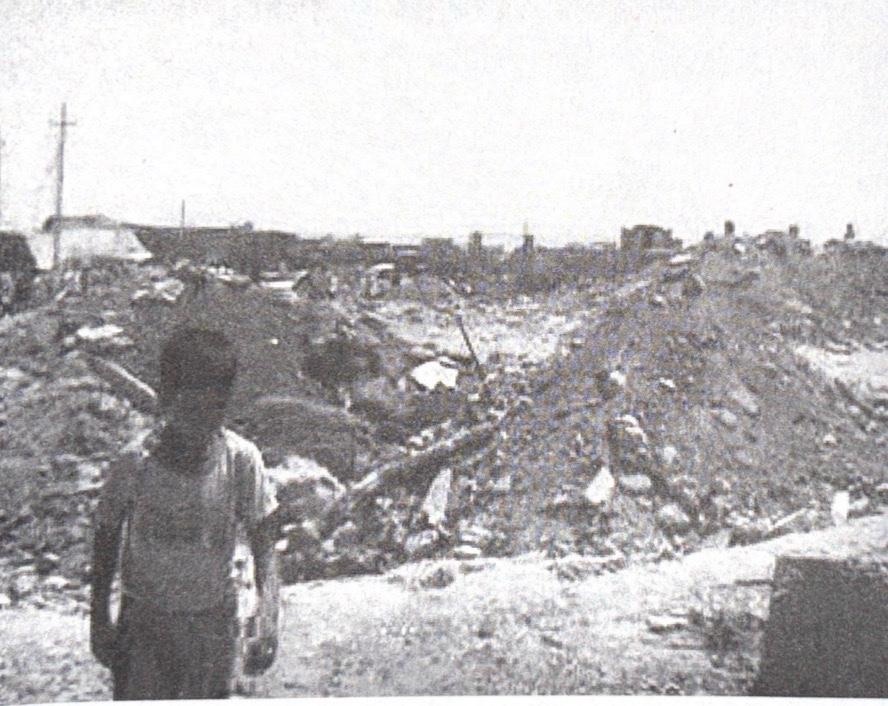
At approximately 7:20 p.m. on 14 August 2007, four trucks carrying large quantities of explosives entered the Ezidi towns of Al-Qahtaniyah, or Tel Azer, and Al-Jazira, or Siba Sheikh Khidir. The explosions occurred almost simultaneously.
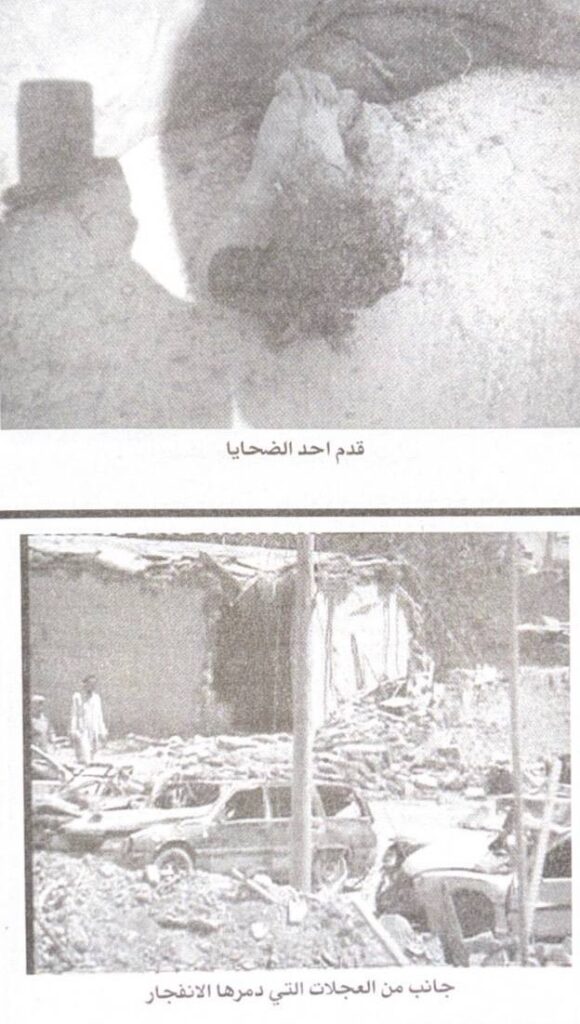
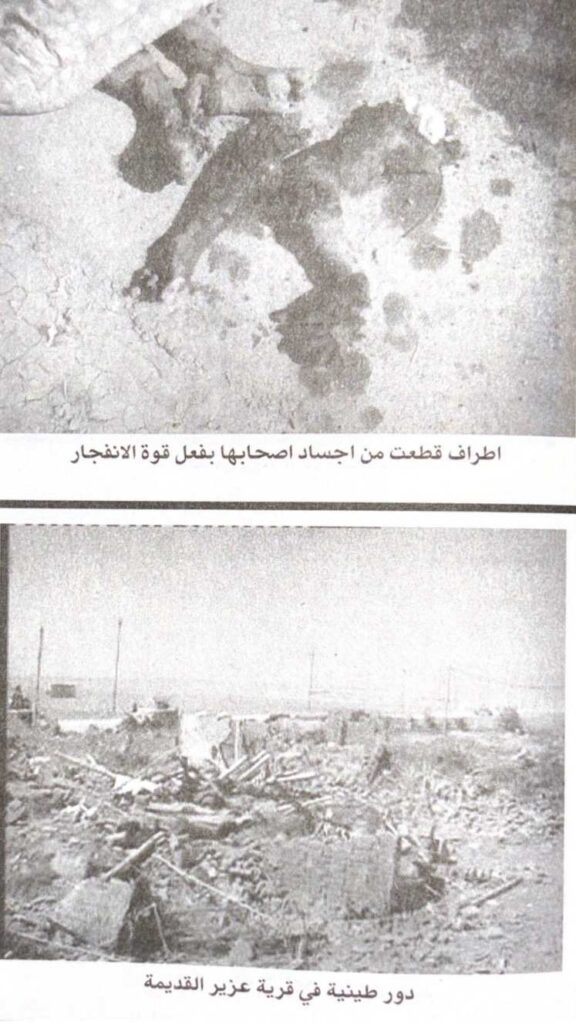
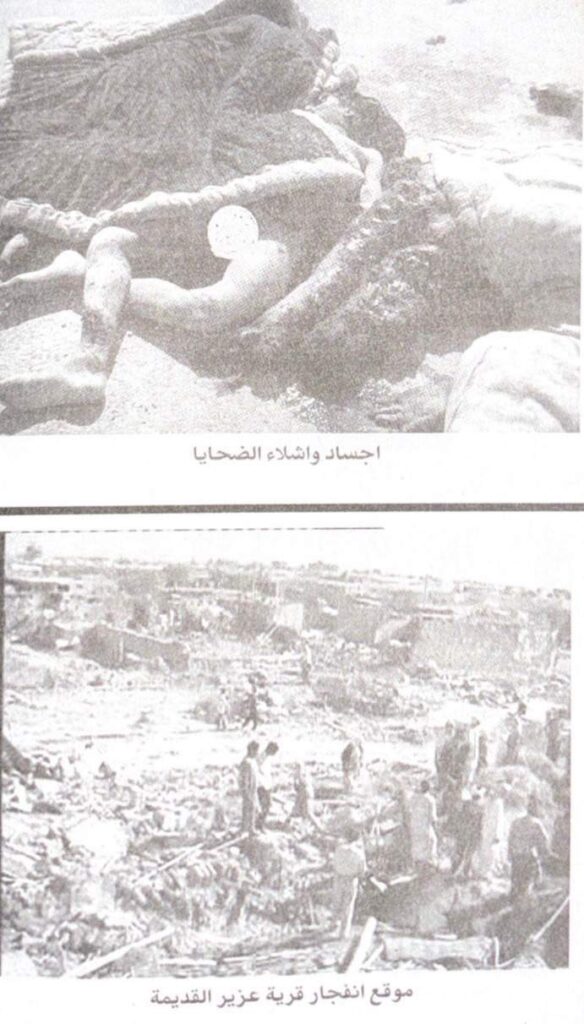
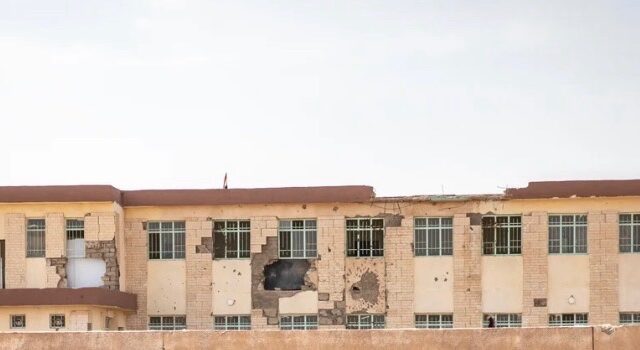
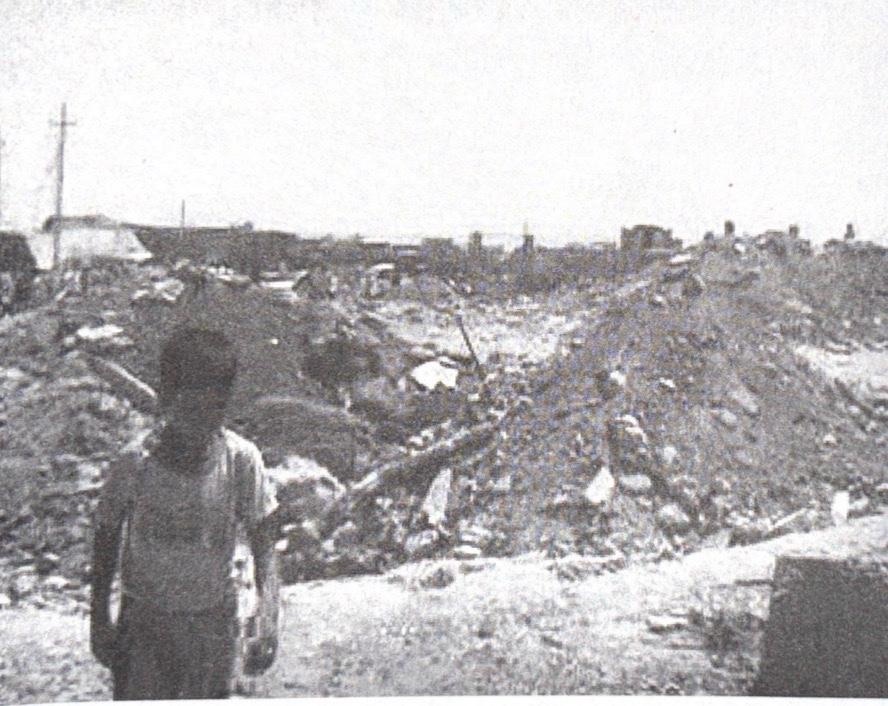
Within seconds, homes, shops, vehicles and businesses were destroyed. Entire neighbourhoods were reduced to rubble. Families who had been living ordinary lives moments earlier suddenly found themselves surrounded by collapsed buildings, fire, dust and bodies.
The exact number of victims remains disputed. Nadia Murad writes in The Last Girl that approximately 800 Ezidis were killed and around 1,500 injured. Ibrahim Tamri Ismail gives a considerably lower death toll in Genocidal Explosions, recording 312 deaths. Whatever the final number, both accounts describe a catastrophe in which hundreds of Ezidis were killed and many more suffered devastating injuries.
The differing figures also demonstrate how much remains unresolved about the massacre nearly two decades later.
Among Ezidis, another disturbing account has continued to circulate. Some survivors have said that American soldiers transported severely injured victims to hospitals, after which some of those people were never seen again. Others say they did not witness this. Because the testimonies differ, no definite conclusion can be drawn from the information available here. For some families, however, uncertainty over what happened to missing relatives has continued since that night.
As darkness fell over the destroyed towns, families searched through the ruins with flashlights. They called the names of children, parents, brothers and sisters. Some found their relatives alive. Some found bodies. Others encountered human remains so badly damaged that identification became almost impossible.
For those who never found the person they were searching for, grief became inseparable from uncertainty. A mother who has never seen the body of her child can continue to carry a small hope that the child might somehow still return. For some Ezidi families, that hope has survived since August 2007.
A warning before 2014
The massacre did not occur in isolation. It came after increasing extremist hostility towards Ezidis, after the murder of 23 Ezidi workers in Mosul, amid weak security and political instability, and within an environment in which anti-Ezidi religious hatred was being openly exploited.
For that reason, the 2007 attacks should also be remembered as a warning.
They showed that extremist organisations were prepared to target Ezidi civilians on a massive scale because of their identity. They showed how easily religious prejudice could be transformed into organised violence. Most importantly, they demonstrated how vulnerable the Ezidi population of Sinjar had become when institutions failed to provide effective protection.
Seven years later, on 3 August 2014, ISIS attacked Sinjar and carried out another genocide against the Ezidi people.
The two events were different in their scale and execution, but for Ezidis the lesson remains painful. The danger was visible long before 2014. The massacre of 2007 had already demonstrated what could happen when extremist ideology, political instability and the absence of adequate protection converged.
Those killed on 14 August 2007 were not numbers in a historical record. Behind every victim was a family. Behind every person who disappeared was someone who continued waiting. Behind the destruction of every house was a life that had existed there before the explosions.
Almost two decades later, recognition cannot restore those lives. But remembrance still matters, particularly when so much remains unresolved.
The perpetrators believed that religious hatred could justify the destruction of innocent people. In doing so, they turned faith into a weapon against humanity.
The victims deserve something different: to be remembered by their names, their families and their people, and for the massacre that destroyed their towns to never again be treated as a forgotten chapter before 2014.
Following images are from Ibrahim Tamri Ismail’s Genocidal Explosion (انفجارات الإبادة).