
Twice each year, Ezidis observe [Çile], the Forty Days of Summer and the Forty Days of Winter, known in Ezdiki as [Çilê Havînê] and [Çilê Zivistanê]. These religious observances mark the completion of a forty-day fast undertaken by Ezidi ascetics. The summer observance falls between 31 July and 2 August, while the winter observance takes place on 1 and 2 February.
The term [çile] refers to a forty-day period of spiritual discipline. The practice of withdrawing from ordinary life for forty days reaches back to antiquity and later became part of several religious traditions. Within Sharfadin, the retreat is accompanied by strict fasting and represents one of the principal stages on the mystical path towards knowledge of God.
A person undertaking the fast is known as a [çilegir]. While staying at a sacred site, the ascetic withdraws into a small, dark cell and sleeps on a simple felt mat known as a [kulav]. Much of the retreat is spent in deep meditation, traditionally while seated with the head lowered.
The [çilegir] may leave the cell only to perform ritual washing or, where permitted, to discuss sacred texts and the lives of holy figures. Some retreats also require complete silence. At the heart of [Çile] is the continuous remembrance of God, inner purification and withdrawal from worldly desires.
According to Ezidi sacred hymns, or [Qewls], [Şêx Adî] himself followed the tradition of the forty-day fast. He withdrew into a cave and remained there for forty days, breaking his fast each evening with only a single raisin. Forty of his closest companions, remembered as the [Çel Mêrê Şêx Adî], are said to have observed the demanding fast alongside him.
For Ezidis who choose a life of asceticism or dervish service, periodic withdrawal from the distractions of everyday life remains an important religious discipline. The forty-day retreat, also known as [arba’îniyya], may be completed alone in a separate cell or within a shared religious residence.
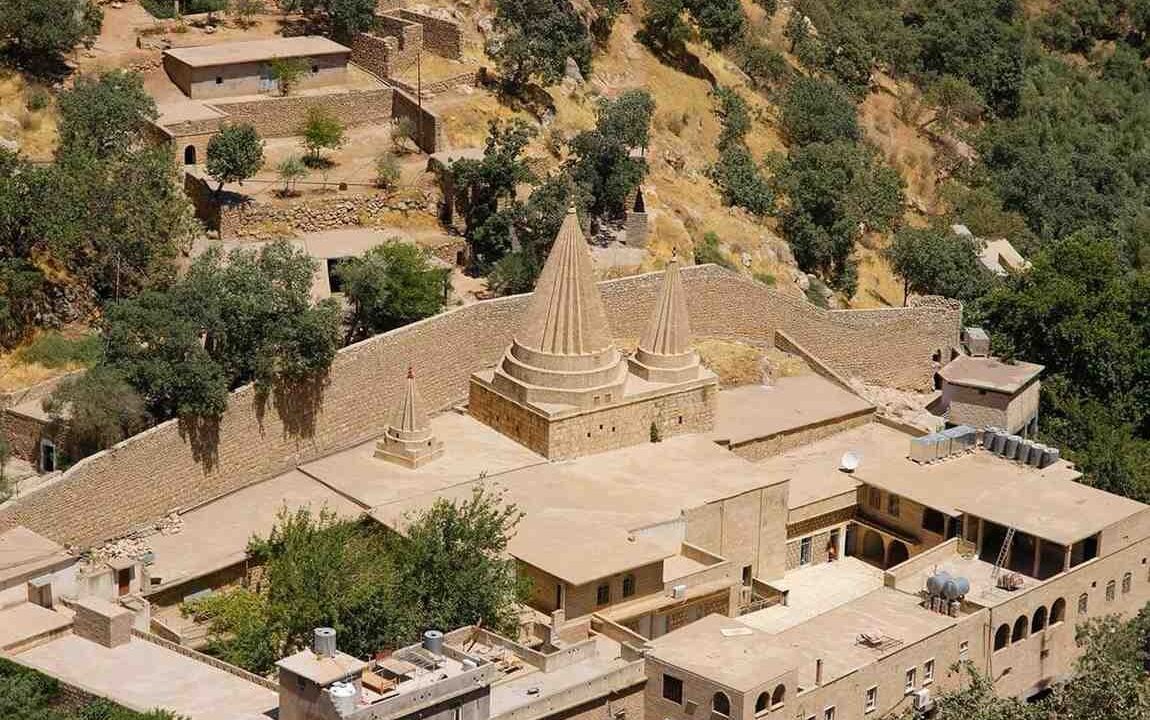
The practice continues today among members of the Ezidi clergy, faqirs and religious servants at the sacred temple of Lalish in Iraq. It is also observed by lay Ezidis who lead deeply religious lives and choose to undertake the discipline of fasting, seclusion and continuous remembrance of God.