The Ezidi New Year and its Origin
Ezidi New Year, also known as [Çarşema Serê Salê/ Çarşema Serê Nisane] or Eida Tawsi Melek, is one of the oldest and most sacred religious and social festivals in the Ezidi faith of Sharfadin. It is celebrated on the first Wednesday of April according to the Eastern calendar, which falls thirteen days after the Gregorian calendar. Unlike some Ezidi religious occasions that are limited to clergy, this festival is celebrated widely by the Ezidi people, reflecting its deep collective importance.
In Sharfadin, this holiday it is closely connected to the origins of life and the beginning of creation itself. According to sacred tradition, God created a primordial essence, often understood as a luminous pearl dur, from God’s divine light. From this origin emerged the fundamental elements of existence: water, fire, air and earth, leading to the formation of the world. In another central belief, God sent Tawûsî Melek, the chief of the angels, to earth on a Wednesday, transforming it from a lifeless state into a living world filled with fertility and color. For this reason, the festival is also associated with divine manifestation, renewal and the awakening of nature.
A verse from the sacred Ezidi qewl reflects this spiritual meaning:
[Çarşema Serê Nîsanê
Melekê zan dihê xwarê
Dênk dike lê baharê]
Translation:
On the first Wednesday of Nîsanê
The all-knowing angel manifests
Proclaiming the arrival of spring
Mesopotamia, Nisan, and the Ezidi New Year
Historically, the celebration of the new year in spring has deep roots in the civilizations of Mesopotamia. Ancient peoples of the region marked this seasonal renewal with various festivals. The Sumerians celebrated Zagmuk (“new birth”), while the Babylonians and Assyrians observed Akitu. These celebrations, dating back thousands of years, possibly as early as 5000 BCE, symbolized fertility, prosperity and the continuity of life. Within this historical context, Ezidi New Year can be understood as part of a continuous cultural and religious tradition, preserving one of the most ancient expressions of spring renewal in the region.
The month of Nisan (April) holds a special sanctity in Ezidi belief. It is often described as the Bride of the Year, symbolizing beauty, fertility and the blossoming of life. Out of respect for this sacred period, certain activities, such as marriage and agricultural labor, are traditionally avoided. The earth is left undisturbed, reflecting a deep spiritual connection between human beings and nature, and a commitment to protecting its renewal during the season of growth.
Note!
It is essential to recognize that the Ezidi New Year is not called “Çarşema Sor” or “Red Wednesday”. This term is a recent external label that does not reflect the festival’s true history or meaning. For Ezidis, it is properly called Serê Salê or Çarşema Serê Salê, celebrated on the first Wednesday of Nisan to honor the renewal of life, fertility and nature. The use of “red” has been influenced by outside traditions, particularly Persian and Kurdish Newroz rituals, and by attempts to align Ezidi practices with other regional celebrations. Historical and religious evidence shows that Ezidi sacred hymns, colors and rituals have always reflected the natural bloom of Nisan, with no singular focus on red. Preserving the authentic names is not just a matter of accuracy; it is a way to protect Ezidi identity, resist cultural assimilation and honor centuries of spiritual tradition. Misnaming the festival diminishes its meaning and obscures the unique heritage of the Ezidi people.
The Day Before the Ezidi New Year
Preparations for Ezidi New Year begin on the day before the festival, creating a lively and meaningful atmosphere throughout Ezidi life.
1. Collecting Nisan Flowers and Bênav
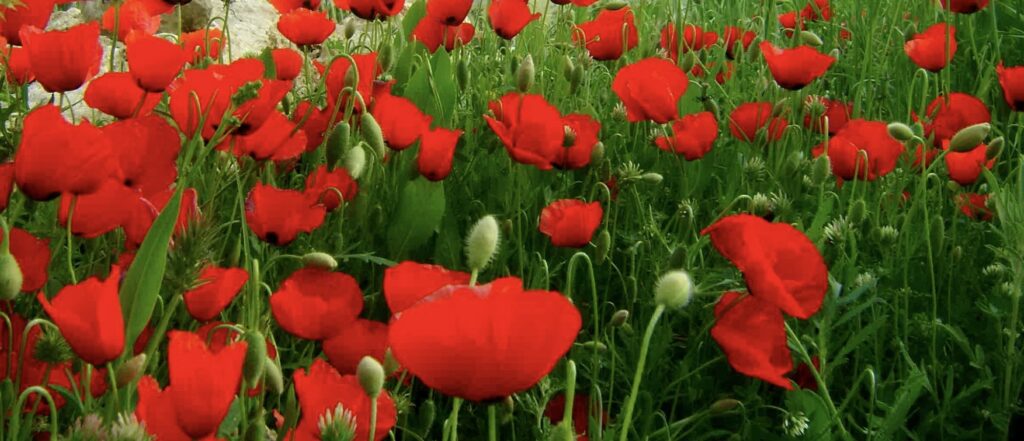
Children and young people go to villages and surrounding areas to gather seasonal Nisan flowers and Bênav/Kary. These flowers are important symbols of spring, renewal and fertility, and they are later used to decorate homes, graves and sacred spaces during the celebrations.
2. Cooking and Sharing
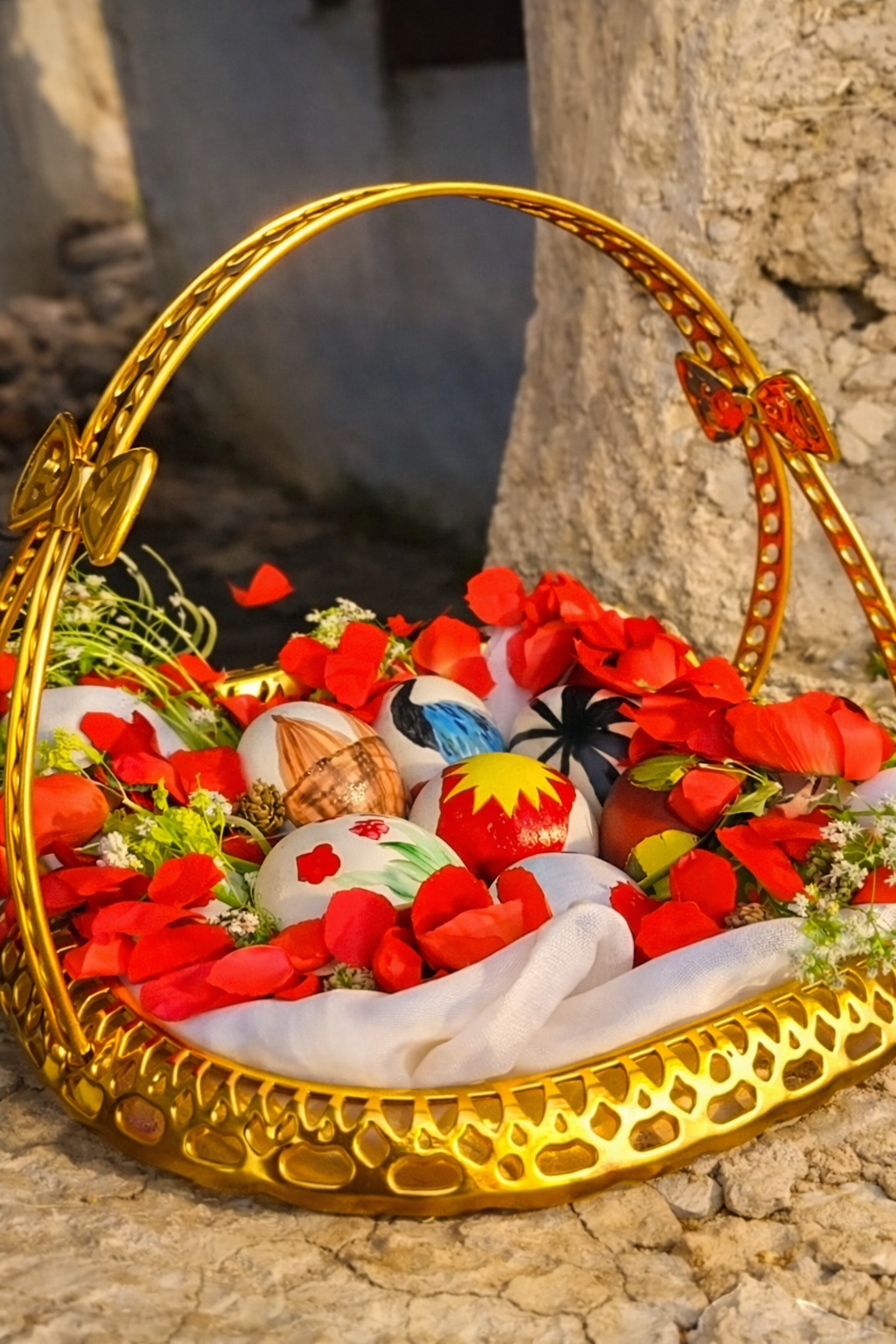
Housewives prepare boiled and dyed eggs, which symbolize the renewal of life and the fertility of the earth. They also bake a traditional bread called Sawêk, which is distributed among neighbors and relatives. Families visit the graves of their ancestors, sharing eggs, sweets and other offerings as a gesture of respect, blessing and connection.
3. Lighting the Fatiḥ (Sacred Wicks)
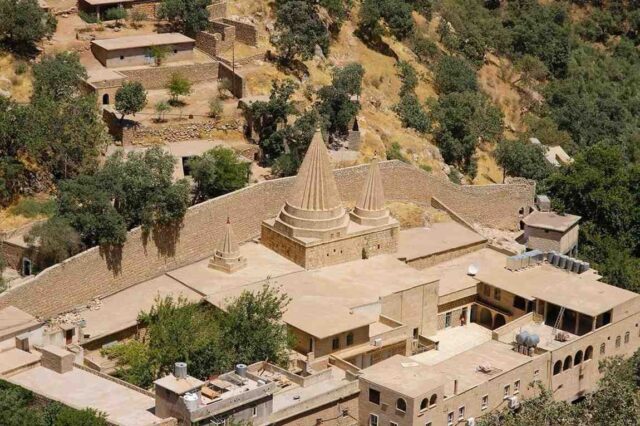
On the evening before the festival, the Baba Sheikh, the spiritual leader of the Ezidis, arrives at the sacred temple of Lalish, accompanied by the clergy, including Beshimam, Baba Jawish and Khilmtekaria, as well as a large gathering of men, women and children.
After sunset, the religious ceremonies begin. The clergy chant sacred prayers and hymns while lighting wicks made from cotton soaked in olive oil, prepared in Lalish. In Ezidi belief, nature is sacred, and the number of wicks corresponds to the number of days in the year: 365 wicks, placed on stones across the courtyard Soga Me Arife, opposite the Qai Gate. At this moment, Lalish appears as if an eternal fire has arisen, symbolizing the birth of life from the light of the Creator after the universe’s initial darkness. Similar wick-lighting ceremonies take place at Ezidi shrines and sacred sites, reflecting the deep connection of the Ezidi people to both nature and divine creation.
The Day of the Ezidi New Year
On the morning of the Ezidi New Year, families begin the day with traditional rituals that honor both nature and togetherness. Before sunrise, Ezidis wash their faces with Xwenav, a ritual symbolizing purification and renewal.
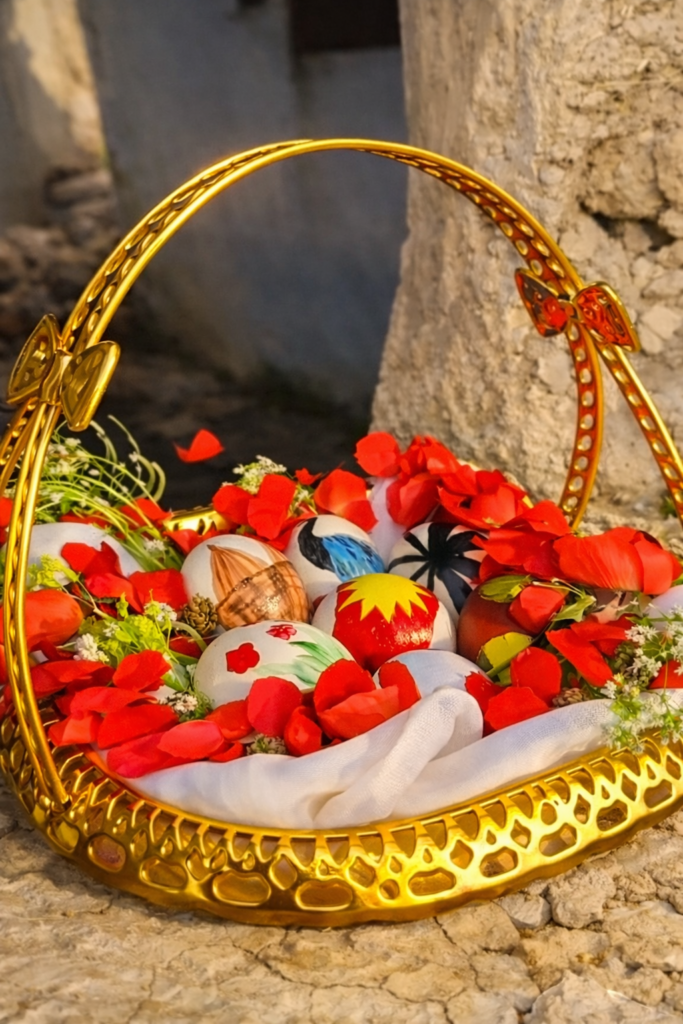
As the sun rises, housewives place bouquets of Nisan flowers, Bênav, colored eggs and some dough at the doors of their homes, inviting blessings and prosperity for the year ahead.
Children, youth and men gather in villages and open spaces to play traditional games, celebrating life and togetherness through joyful activity. On this day, sheep are not milked. Instead, the young lambs drink the milk themselves in a ritual called Stêkosh, emphasizing respect for nature and its creatures.
Farmers bring eggs to their fields, break them and scatter the colorful shells across the crops as a symbolic act to ensure fertility, growth and abundance. Similarly, sharing yogurt with neighbors is a cherished custom. Families with sheep provide yogurt to friends, who in turn give dyed eggs as gifts, reinforcing bonds of generosity and communal spirit.
Ezidi New Year is a feast of renewal, blessing and life. It unites faith, nature, memory and joy, while reminding the Ezidi people of the sacred bond between the Creator, the earth and humanity.
I wish you all a joyful and blessed Ezidi New Year.
Çarşema Nîsanê lê we pîroz be!
May this festival bring happiness, peace and hope to the whole world, and may every Ezidi family and every individual be filled with joy. Let this day also inspire positive change, and may the world embrace renewal, harmony and brighter beginnings.


Happy new year habibti I wish all the best for you I wish all the happiness to you because you deserve it .