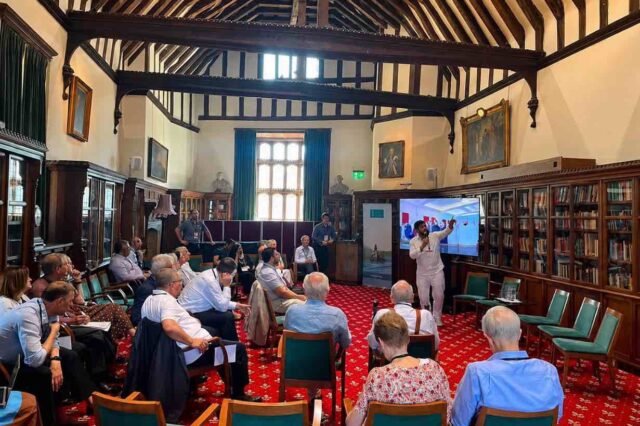

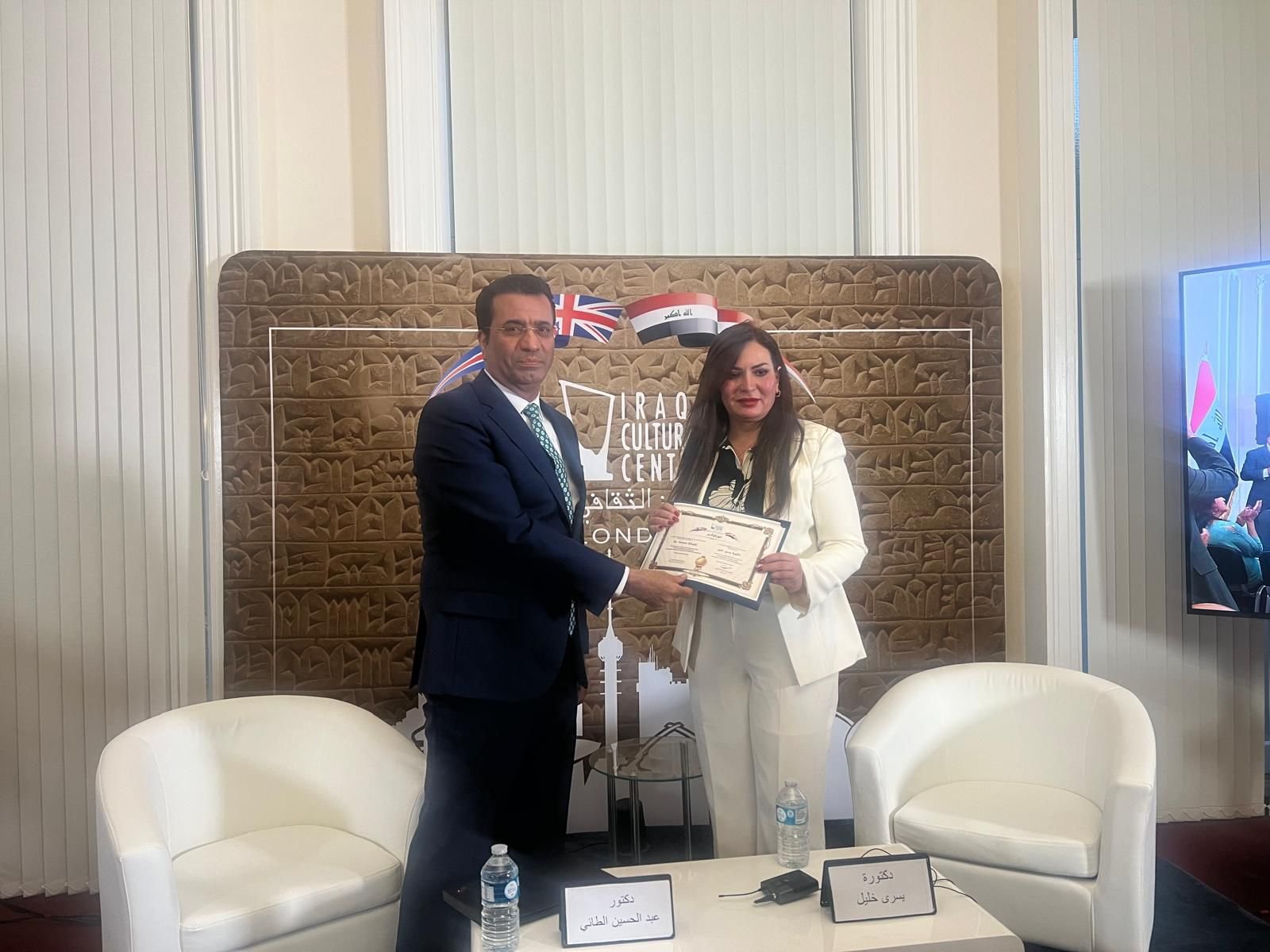
The Iraqi Cultural Center in London hosted a symposium dedicated to Ezidi culture, memory and genocide documentation, under the title “Ezidi Culture: From Lalish to the World.” The event was held in partnership with the Scientific Association for Ezidi Studies and brought together diplomats, academics, cultural figures and members of the Iraqi public in London.
The symposium focused on the protection of Ezidi collective memory and the need to transform the tragedy of the Ezidi genocide into a wider global discourse on justice, recognition and human dignity. Speakers stressed that Ezidi culture must not remain confined to local or regional discussions, but should be studied, documented and presented internationally through academic research, literature, education and cultural diplomacy.
Abdul Hamid Al-Saih, Director of the Iraqi Cultural Center in London, opened the event by speaking about Ezidi memory as an important part of Iraq’s national identity. Ambassador Saleh Al-Tamimi also addressed the symposium and described the suffering of the Ezidis as a wound in the Iraqi conscience, while emphasizing the need to preserve diversity and ensure that the voice of Ezidi victims and survivors reaches the international community.
A central theme of the symposium was the shift from silence to self-representation. Yusra Khalil, President of the Scientific Association for Ezidi Studies, spoke about the meaning of moving “from Lalish to the world,” describing it as a transition from isolation and distortion toward international research and recognition. She underlined that after 2014, a new generation of Ezidi activists, researchers and academics emerged, transforming pain into work and tragedy into awareness.
Professor Saad Salloum also addressed the long-standing problem of distorted narratives about Ezidis. He discussed how dominant historical narratives have often reduced Ezidis to narrow and inaccurate descriptions, while the new generation of Ezidi researchers is increasingly reclaiming the right of the Ezidi people to define themselves through their own knowledge, experience and academic work.
The symposium also paid attention to literature as a form of memory protection. Speakers discussed how novels, research and critical writing can preserve the experience of genocide and prevent the suffering of Ezidis from being reduced to temporary news reports. Literature was described not only as art, but also as testimony, documentation and a way of confronting the deep social wounds left by ISIS crimes.
The event concluded with recommendations aimed at turning the discussion into institutional action. These included the creation of university programmes on genocide studies, religious diversity and conflict resolution; the inclusion of the Ezidi genocide in school curricula; support for Ezidi researchers and students; preservation of oral heritage and the Ezidi language; and stronger legal measures against hate speech, religious discrimination and stereotyping.