
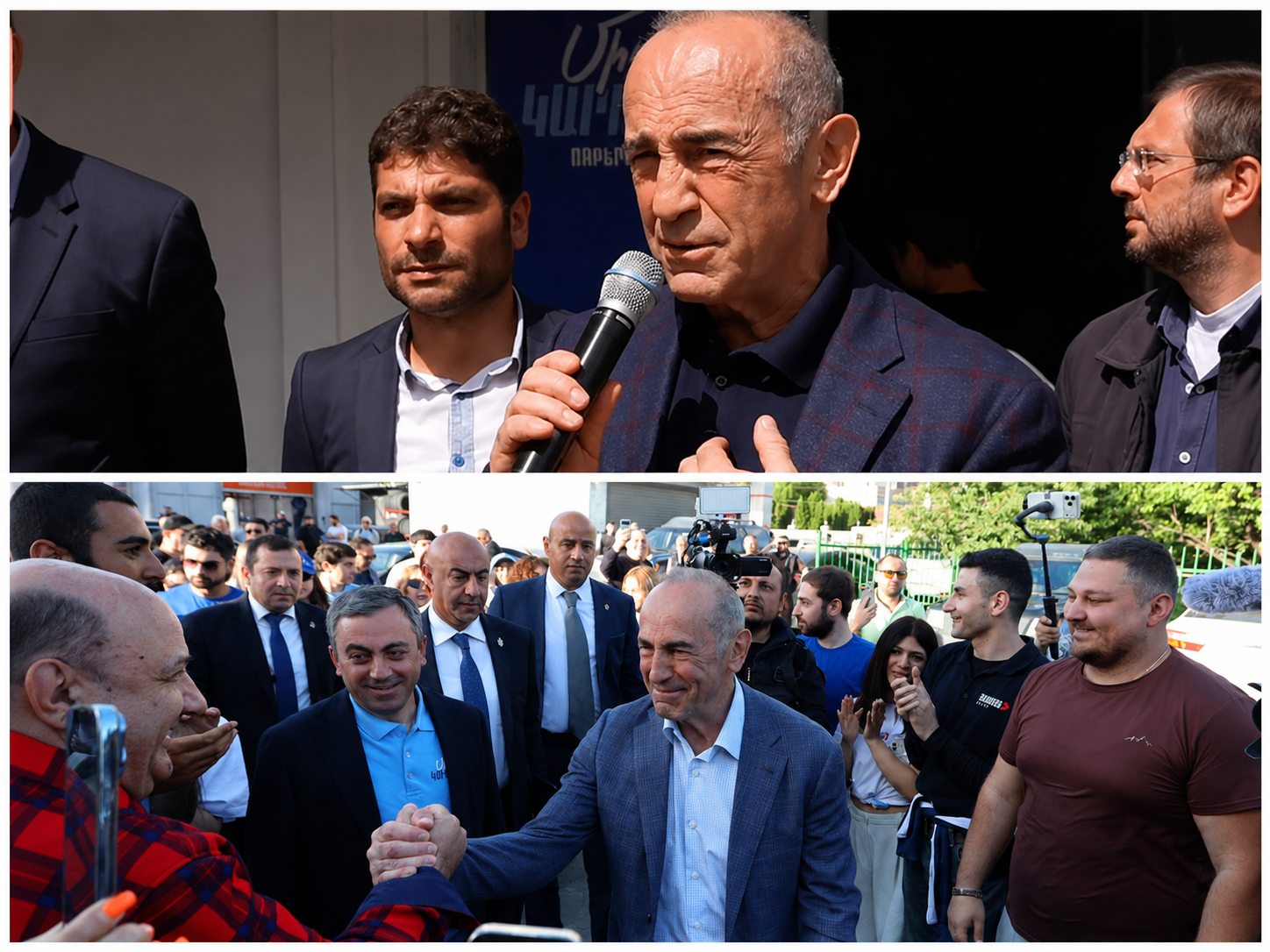
Robert Kocharyan, Armenia’s second president and candidate for prime minister from the Armenia bloc, visited the Aragatsotn region on May 21 as part of the bloc’s campaign ahead of Armenia’s parliamentary elections scheduled for June 7. The campaign stop included Aparan and the Ezidi-populated village of Alagyaz, where representatives of the bloc met with Ezidi residents and addressed issues of belonging, equal treatment and the role of national minorities in Armenia.
During the visit, Kocharyan spoke about the need for more balanced development across Armenia, stating that the country should not be built around Yerevan alone. He also repeated parts of the Armenia bloc’s election programme, including industrial development and the creation of new jobs. In Alagyaz, he addressed Ezidis directly, saying that Armenia should be a country where no national minority feels like an outsider and that this principle should be reflected in state policy. Kocharyan also said that during his presidency there had been no discrimination between Ezidis and Armenians and referred to Ezidis as devoted citizens of Armenia. Interestingly, Kocharyan has not been known for visiting Ezidis personally or paying any special attention to the needs and demands of the Ezidis in the different Armenian regions.
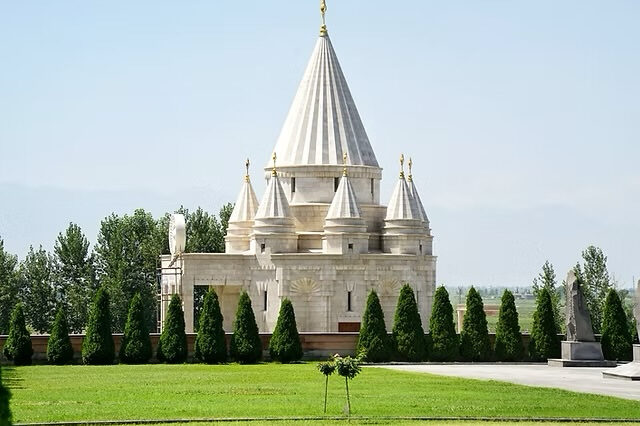
The visit comes at a time when political attention toward Ezidis in Armenia has become more visible. In April, Prime Minister Nikol Pashinyan attended the Ezidi New Year event in Aknalich and stated that every citizen of Armenia is equally protected by the state. The Prime Minister’s Office also reported that he visited the Ezidi Ziyarat Temple Memorial Complex and the Great Ziyarat Temple during the event. Prime Minister Nikola Pashinyan’s government had spoken of investments in Ezidi-populated settlements, including in education, infrastructure, cultural life, language and national identity.
For Ezidis, such political visits should be welcomed when they show genuine recognition of Ezidi citizens and their place in Armenia. Ezidis are not symbolic voters to be remembered only during election campaigns. They are an ancient people with their own identity, language, culture and religion, Sharfadin, and they have long contributed to the state while also carrying unresolved concerns in many Ezidi-inhabited areas.
At the same time, election-season attention must be judged carefully. Words about equality, homeland and loyalty are not enough if they are not followed by real improvements in daily life. Many Ezidi-populated areas have for years faced difficult conditions, including problems connected to infrastructure, public services, roads, water systems, education and cultural protection. These are not minor local issues. They are questions of equal citizenship and state responsibility. Ezidi citizens of Armenia should therefore listen to every political force, but also ask direct questions. Were Ezidi settlements visible to these politicians before election season? Did they visit when there were no votes to win? Did they improve conditions when they had power, or are they only now speaking warmly because Ezidi votes matter? Respect is not proven by campaign speeches, cameras or carefully chosen words. It is proven by records, budgets, infrastructure, legal protection and long-term commitment.
Ezidi Times welcomes the fact that more Armenian political figures are visiting Ezidi-populated areas and speaking directly to Ezidi citizens. This is a positive development. But Ezidi citizens should not allow any party or politician to reduce their rights to campaign symbolism. Every political force, whether in government or opposition, must be judged by what it has done, what it failed to do, and what it is concretely prepared to deliver for Ezidis after election day