
Armenia’s Human Rights Defender, Anahit Manasyan, has called on political forces participating in the election campaign to stop using discriminatory, degrading and hate-inciting language in public debate.
In a statement issued on May 20, Manasyan warned that public speeches and political arguments must not include language that stigmatizes people on the basis of gender, disability, ethnicity, religion or other protected grounds. She said that recent public statements containing gender stereotypes and wording that degrades the dignity of women were of particular concern, but also pointed to a broader problem in Armenian political discourse.
The Ombudsman specifically criticised the use of ethnic and religious terms as insults, including the use of “Turk” or “Ezidi” in a degrading way. She described such expressions as examples of discrimination and hate speech.
For Ezidis, this point is especially important. The word Ezidi must never be used as an insult, a label of contempt or a tool in political attacks. Ezidis are an ancient people with their own identity, culture and religion, Sharfadin. Reducing the Ezidi name to a political slur is not just offensive language; it contributes to the normalization of prejudice against Ezidis in public life.
Manasyan also stressed that offensive expressions against people with disabilities, including people with mental health conditions, are unacceptable in political debate. She further called for more careful and transparent communication by authorities on sensitive issues connected to criminal proceedings involving representatives of the Armenian Apostolic Church, noting the importance of respecting freedom of religion and international standards.
According to the Human Rights Defender, discriminatory and stigmatizing rhetoric is being used by almost all sides of the socio-political process. She urged all participants in public and political life to reject such language and conduct public discussions in a way that respects human rights and social harmony.
Shared History Requires Shared Respect – The Ezidi Name Must Never Be Used as an Insult
Ezidis make up the largest ethnic minority in Armenia after Armenians. Ezidis and Armenians have lived side by side for generations, even before the creation of modern-day Armenia, and also during the Ottoman Empire in the regions of present-day eastern Turkey. They have lived together, worked together, and in difficult moments, Ezidis have also stood with Armenia, including through participation in wars Armenia has been involved in. Ezidis continue to form an important and loyal part of Armenian society.
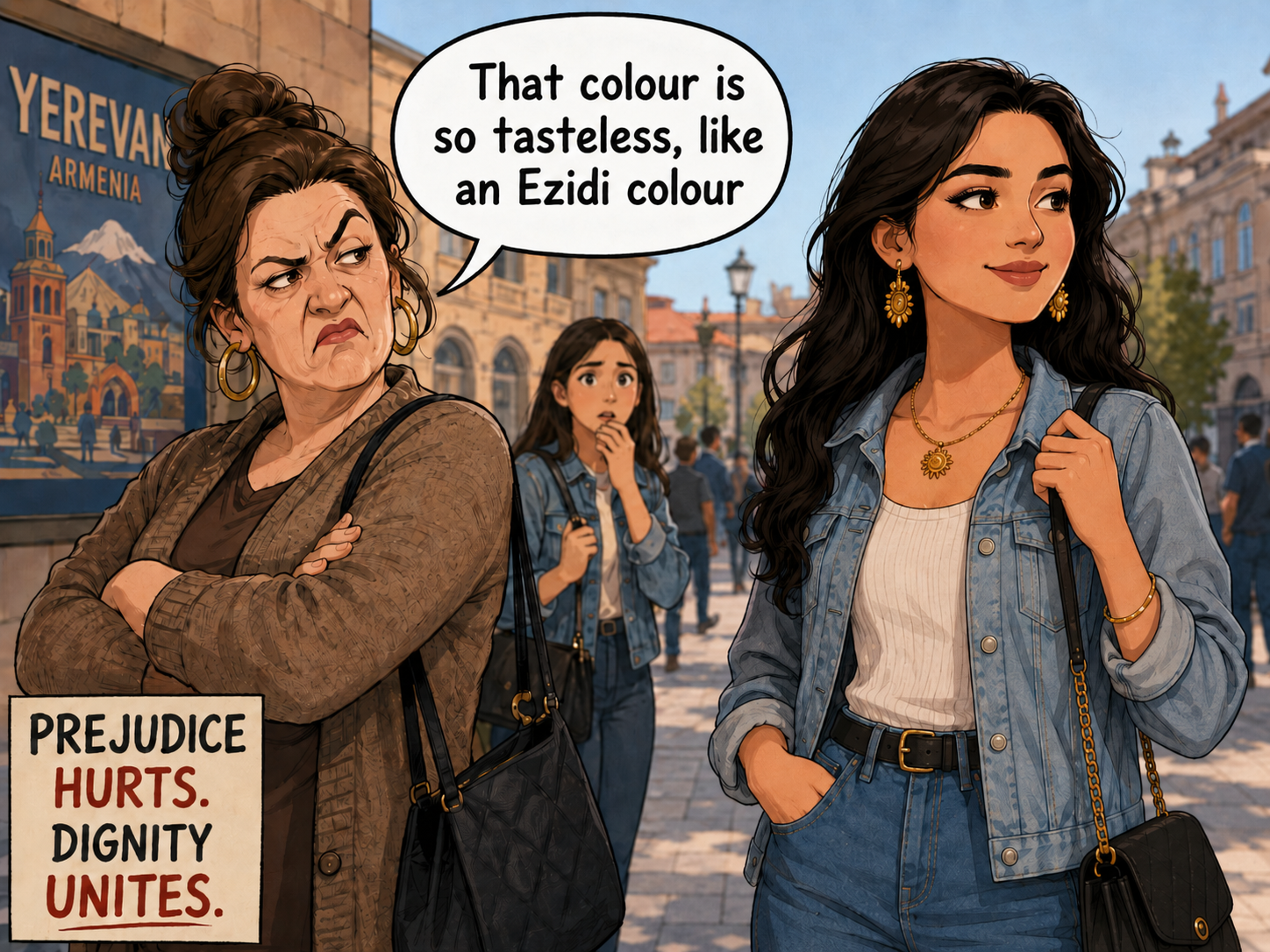
That is why it is both surprising and disappointing that such derogatory insults are still common among some Armenians. Referring to Ezidis as “lower class” or “tasteless,” and even using expressions such as “that colour is so tasteless, like an Ezidi colour,” is not harmless or insignificant. Such expressions are unfortunately still blurted out from time to time, and they show that anti-Ezidi prejudice continues to exist in everyday language.
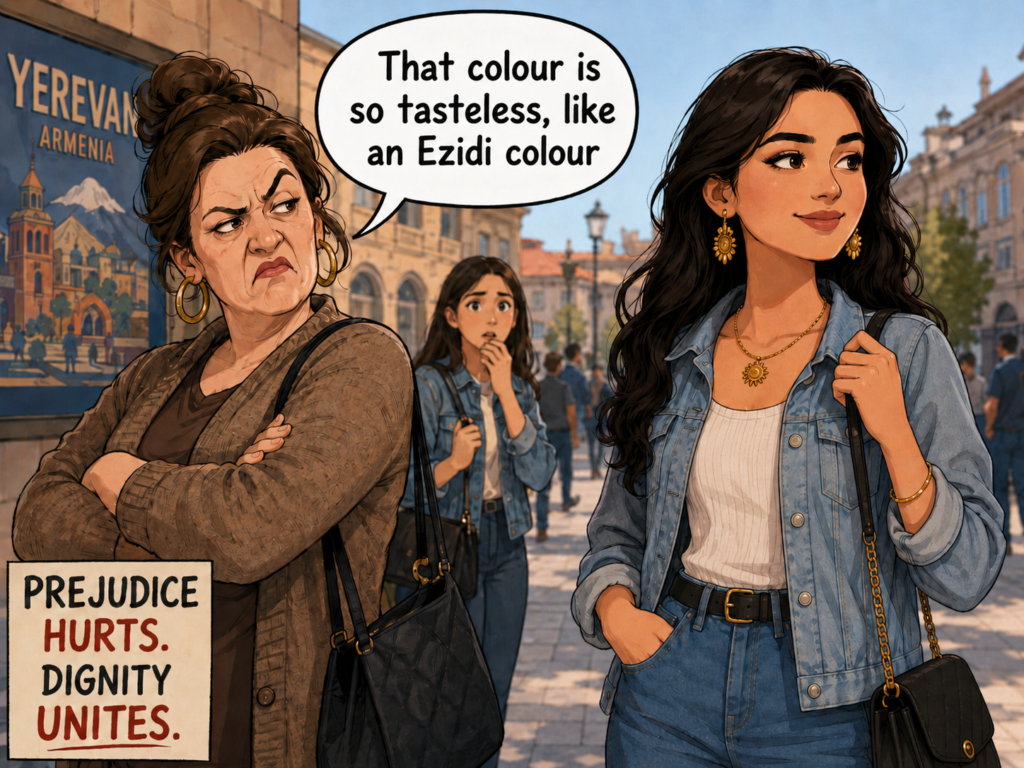
Hate speech is never acceptable against anyone. But when such language is directed at Ezidis, a people who have lived peacefully beside Armenians and contributed to the country with loyalty and sacrifice, it becomes even more painful. It reflects not only discrimination, but also a lack of education and respect for the history shared between Armenians and Ezidis.
If Armenia is serious about equality and human rights, respect for Ezidis must not only exist in official speeches or during election campaigns. It must also exist in schools, media, political language and everyday society. The word Ezidi must never be used as an insult. It is the name of an ancient people, with their own identity, culture and religion, Sharfadin, and it should be spoken with respect.