
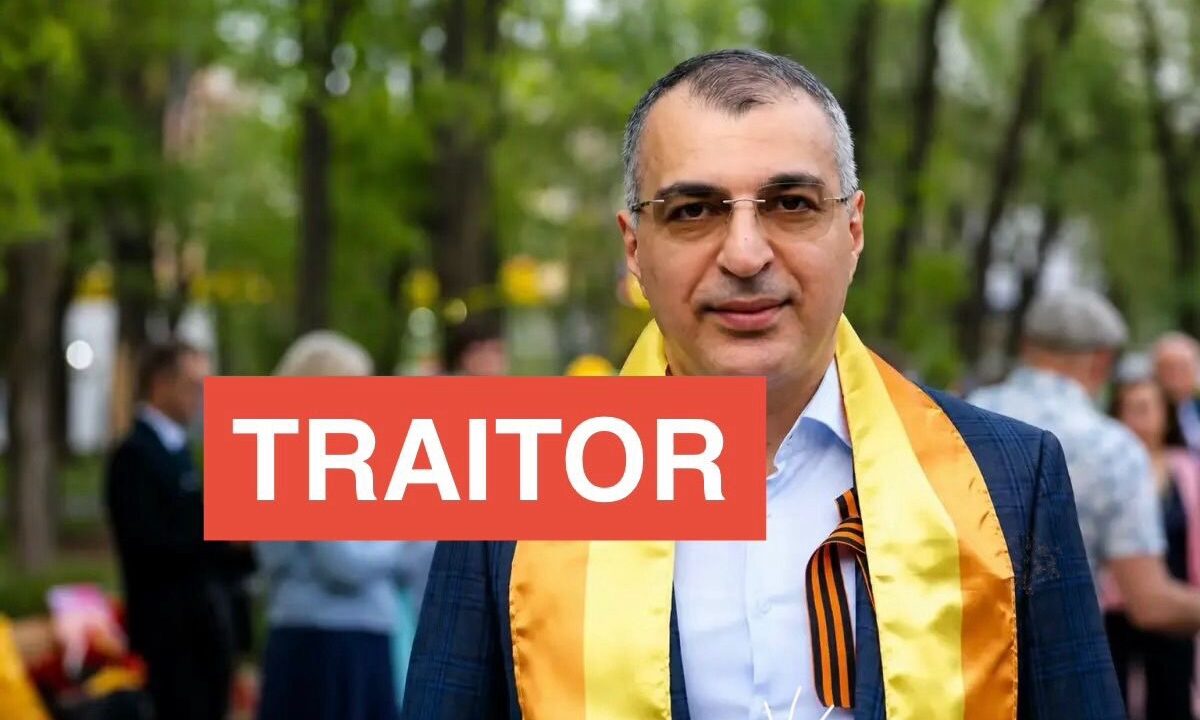
Public figures have every right to define their own political identity. They are free to join whichever political party they choose, support whichever ideology they believe in and pursue whatever career they consider meaningful. However, those choices also invite public scrutiny, particularly when they concern the identity and representation of an entire people.
Russian lawyer Yuri Nabiyev has chosen to present himself not simply as a politician of Ezidi origin, but as a “Kurdish Ezidi” politician. In recent interviews with Rûdaw, he repeatedly praises Masoud Barzani, speaks about representing the Kurdish nation, promotes closer relations between Moscow and Erbil and openly identifies himself with Kurdish political aspirations. These are not isolated remarks or unfortunate wording. They form a consistent political message that raises an unavoidable question: who exactly does Yuri Nabiyev believe he represents?
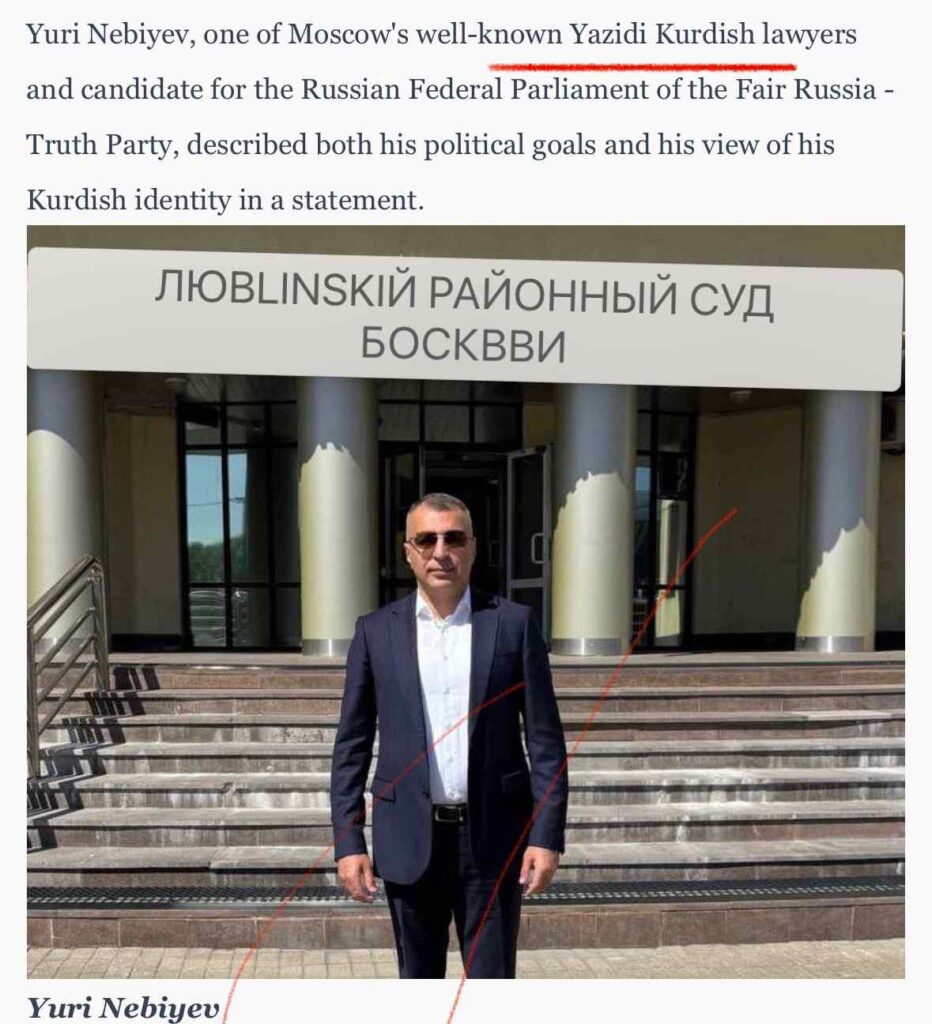
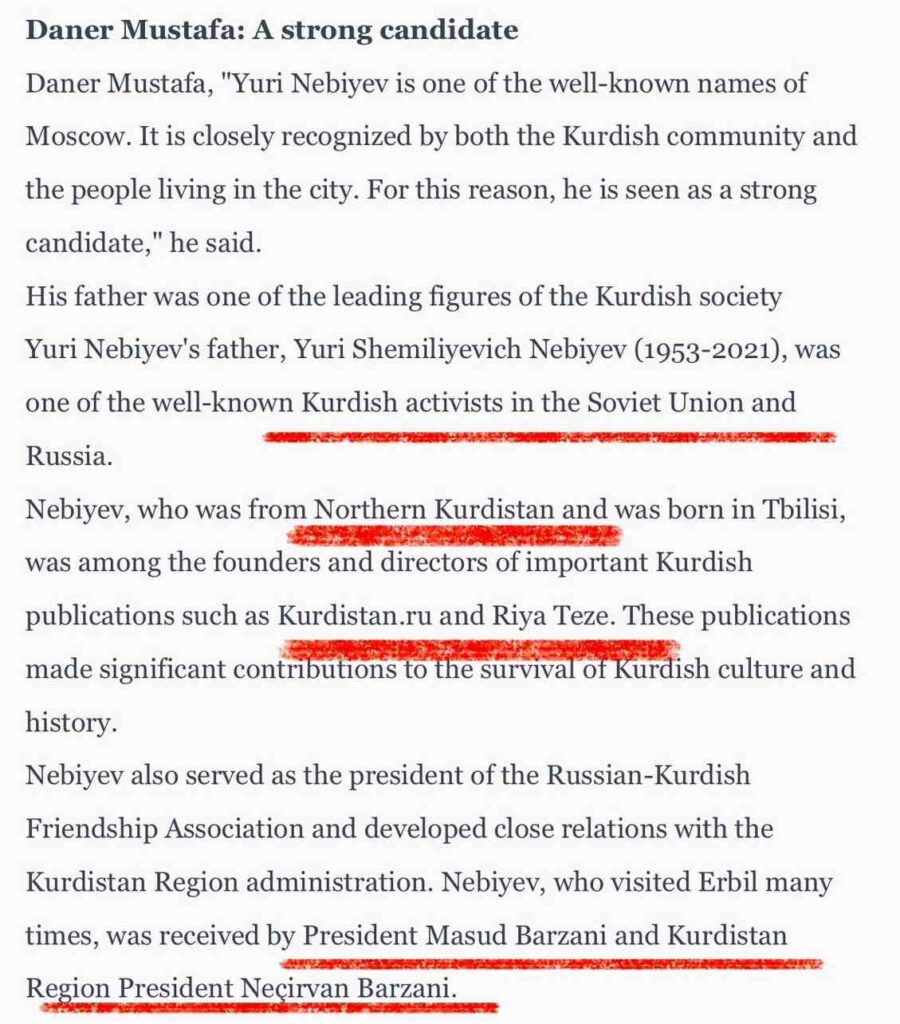
For many Ezidis, that question is difficult to ignore. For decades, Ezidis have struggled against being described as Kurds in international media, politics and academia. At the same time, Nabiyev voluntarily reinforces precisely that narrative. Rather than distinguishing the Ezidi people as a separate people with their own history, religion and identity, he repeatedly speaks about Kurdish representation while remaining almost entirely silent about the distinct identity of the Ezidi people. That silence is perhaps more revealing than any statement he has made.
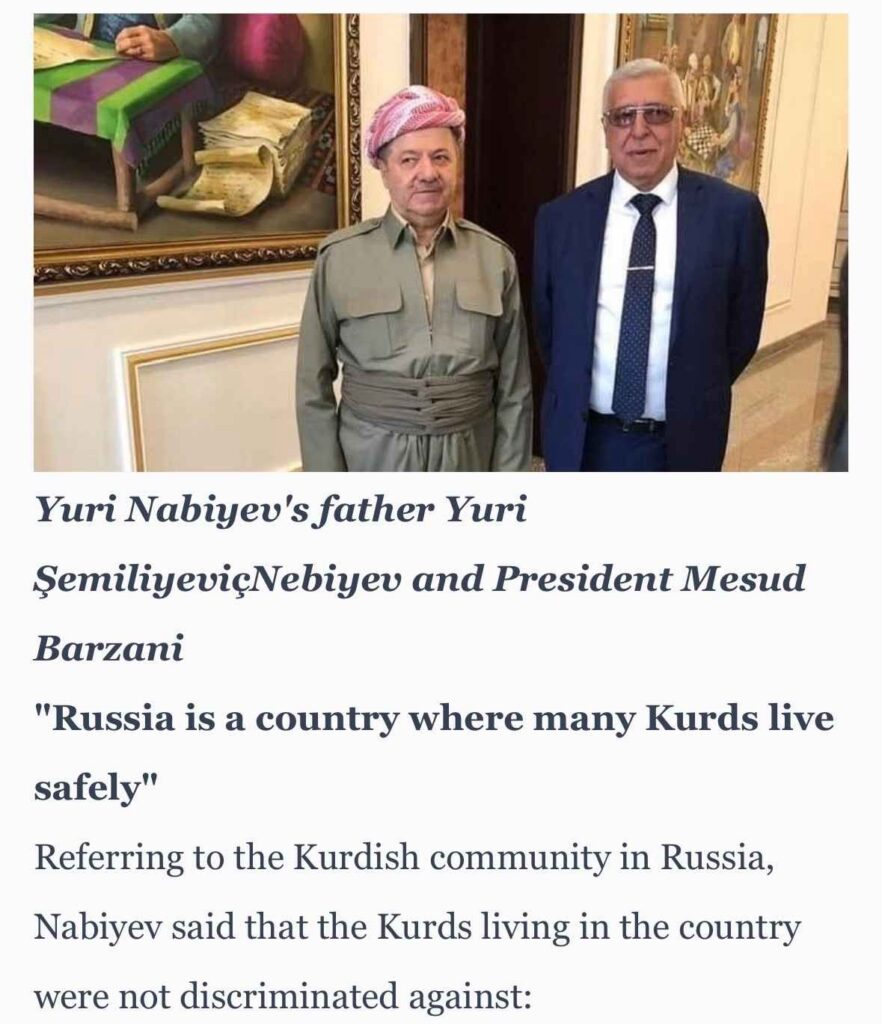
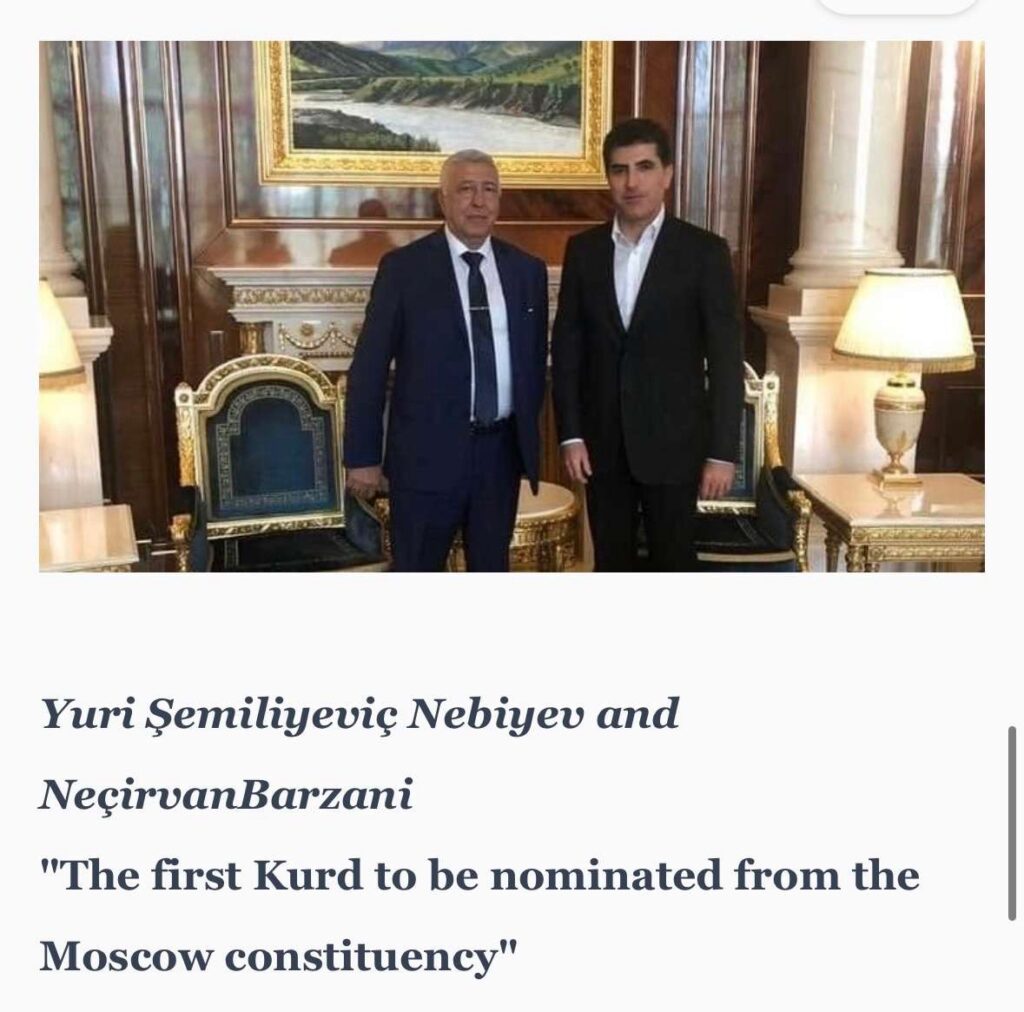
His comments about Russia are equally striking. Nabiyev describes Russia as a country where many Kurds live and presents this as evidence of a successful Kurdish diaspora. But what exactly does he mean by “Kurds”? Is he also counting the thousands of Ezidis living in Russia who do not identify as Kurdish? If so, on what basis? Population figures are not merely statistics; they become political tools. Every Ezidi who is counted as Kurdish strengthens one national narrative while making another people less visible. It is therefore entirely reasonable to ask why Nabiyev never appears interested in making that distinction.
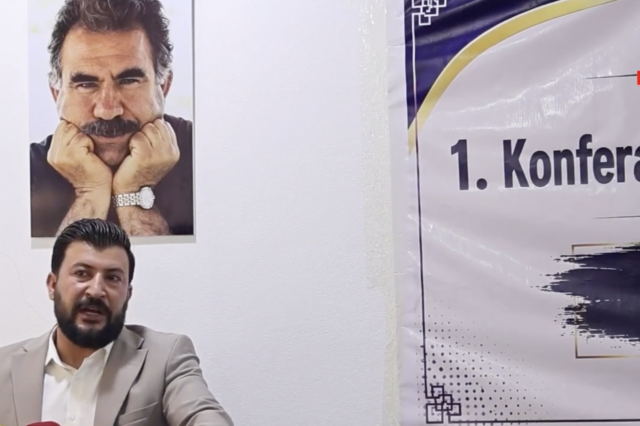
His political symbolism is equally difficult to overlook. Nabiyev repeatedly invokes Masoud Barzani as an inspiration and describes himself as continuing the work of his late father, who maintained close ties with Kurdish political organisations and leadership. The photographs published alongside these interviews leave little room for doubt about the political circles in which he wishes to be seen. Again, there is nothing unlawful about these relationships. The question is what they say about the political identity he has chosen to project publicly.
This naturally leads to another question. If nearly every public statement concerns Kurdish political interests, Kurdish representation and Kurdish national identity, where exactly do the Ezidi people fit into that vision? Readers searching his public interviews for a defence of the Ezidi people’s rights and representation in Russia, will struggle to find one. Instead, they find repeated endorsements of narratives that many Ezidis have spent years challenging.
None of this prevents Yuri Nabiyev from considering himself Kurdish if that is his personal identity. Every individual is entitled to define themselves. The issue arises when such public figures are presented—or present themselves—as speaking for people who do not share that identity. Representation carries responsibility. Words spoken by politicians are repeated by journalists, cited by researchers and relied upon by governments. They shape international perceptions that often endure for decades.
For that reason, Yuri Nabiyev’s political choices deserve careful examination. If he has decided that his political mission is to advance Kurdish nationalist interests, he is free to pursue that path. But Ezidis are equally entitled to ask whether a man who consistently promotes another nation’s political narrative can reasonably be regarded as representing theirs.
To Yuri Nabiyev:
Don’t mention the Ezidi name everywhere you go. We are ashamed and disgusted by your love and obsession with barzani. If you truly believe that Ezidis and Kurds are one and the same, then why do you constantly say “Ezidi Kurds”? Just say “Kurds.” No one says “Kurdish Christians” or “Kurdish Muslims.”
The answer is simple: because, deep down, you know that “Kurd” is not an ethnicity, and you need to attach the Ezidi name to your narrative in order to give credibility to the existence of a so-called “Kurdish nation.”
We are saddened to inform you but Mr. Yuri Nabiyev, you too are a political prostitute.