

Former Iraqi MP and Ezidi activist Moha Khalil has warned that the greatest danger facing Iraq is no longer only the remaining armed cells of ISIS, but the ideology, religious incitement and hate speech that made the genocide against the Ezidi people possible.
Khalil said the genocide did not end when ISIS lost territorial control. Anti-Ezidi rhetoric continues to justify, minimise or distort the crimes committed against Ezidis, while forced conversion and the destruction of Ezidi religious identity are sometimes presented as acceptable personal choices rather than consequences of captivity and coercion.
His warning followed public outrage over a television programme featuring an Ezidi survivor who had been abducted by ISIS in 2014 and later converted to Islam. The programme reportedly focused on her current religion while failing to place her story within the reality of abduction, enslavement, prolonged detention, psychological pressure and forced separation from her family and people.
Presenting decisions made under such conditions as ordinary expressions of free choice ignores the lasting effects of captivity. It also risks repeating the same narrative used by ISIS: that the forced religious transformation of Ezidi captives was legitimate or successful.
Khalil argued that armed terrorism may operate for a limited period, but hate speech can preserve the ideology behind genocide for generations. When religious incitement is repeated through television, social media, education and public discussion, it creates the conditions in which future violence can again be justified.
Iraqi researcher Saad Salloum has also warned that waves of anti-Ezidi incitement repeatedly intensify around the annual commemoration of the genocide on 3 August. Instead of focusing on justice, missing Ezidis, survivor support and accountability, public debate is redirected towards manufactured religious disputes and accusations against the victims.
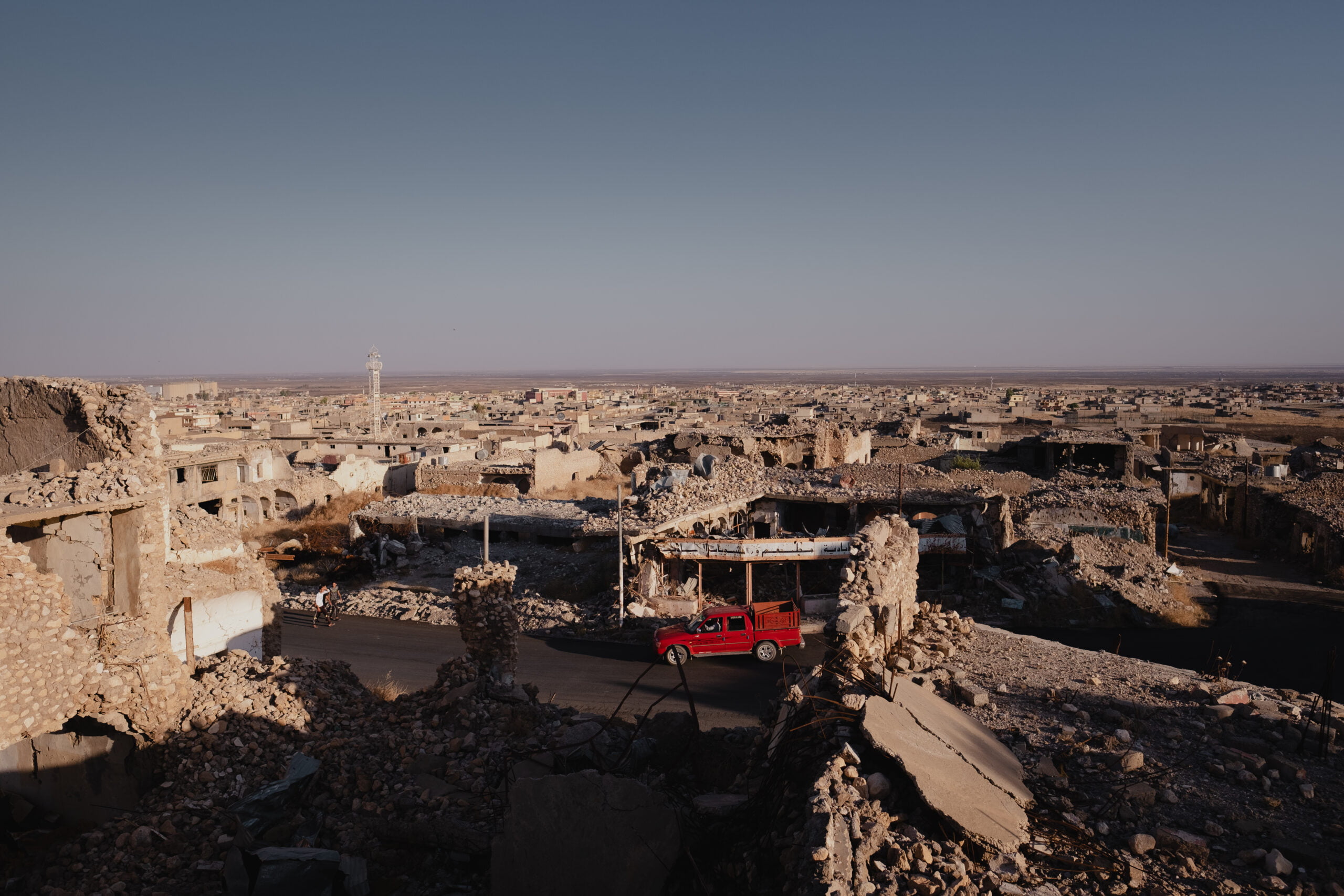
In 2023, false claims that Ezidis had burned the Rahman Mosque during tensions surrounding the return of Muslim families to Sinjar generated a major hate campaign. Salloum said the Hate Speech Monitoring Center at the Masarat Foundation recorded approximately four million hostile messages within 13 days.
A similar pattern appeared in 2024 after a video of Sinjar commander Qasim Shasho was removed from its original context and circulated as supposed evidence that he had insulted Islamic symbols. Religious incitement spread rapidly, and hundreds of Ezidi families living in the Kurdistan Region of Iraq reportedly fled towards Sinjar out of fear that camps and Ezidi civilians could be attacked.
The same accusations are repeatedly recycled, including the false claim that Ezidis worship Satan. Such language is not simply offensive. It dehumanises Ezidis, legitimises discrimination and revives the religious ideas historically used to justify forced conversion, displacement and mass violence.
Khalil called on the Iraqi government, Parliament, judiciary, Media and Communications Commission and human-rights institutions to take firm action against those who promote religious hatred, justify genocide or incite discrimination. He also called for a national strategy to confront extremism, protect Iraq’s religious and cultural diversity and prevent television and online platforms from exploiting survivors.
The Ministry of Education also bears responsibility. The continued absence of serious education about Ezidi history, Sharfadin and the genocide allows false beliefs to survive across generations. Media regulation alone cannot stop hate speech while schools and public institutions fail to challenge the stereotypes that produce it.
Protecting Ezidis requires more than annual ceremonies and statements of sympathy. It requires prosecuting incitement, confronting religious extremism, educating the public and ensuring that survivors are not turned into television material for controversy and ratings.
As Khalil stated, Iraq will not be safe unless it is safe for all its people, regardless of religion, ethnicity or affiliation. The genocide file cannot be considered closed while the ideology that produced it continues to circulate openly.