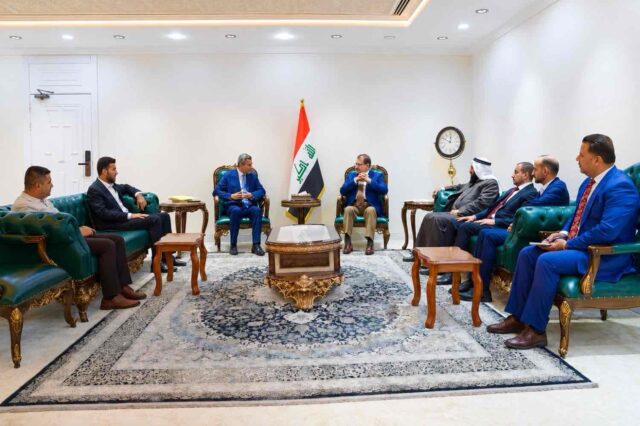

Ezidi representatives in the Iraqi Parliament have voiced opposition to proposed amendments to the Ezidi Survivors Law [Iraq Law No.8 of 2021 – Yazidi Female Survivors Law], warning that changes should not be made without consultation with and approval from Ezidi representatives.
The proposed first amendment to Law No. 8 of 2021 was placed on the Iraqi Parliament’s agenda for a first reading on 23 August 2026.
Ezidi MP Murad Ismail said that Ezidi representatives would strongly oppose changes introduced without prior dialogue with them. He stressed that any amendment affecting the legislation should be discussed with Ezidi representatives before proceeding.
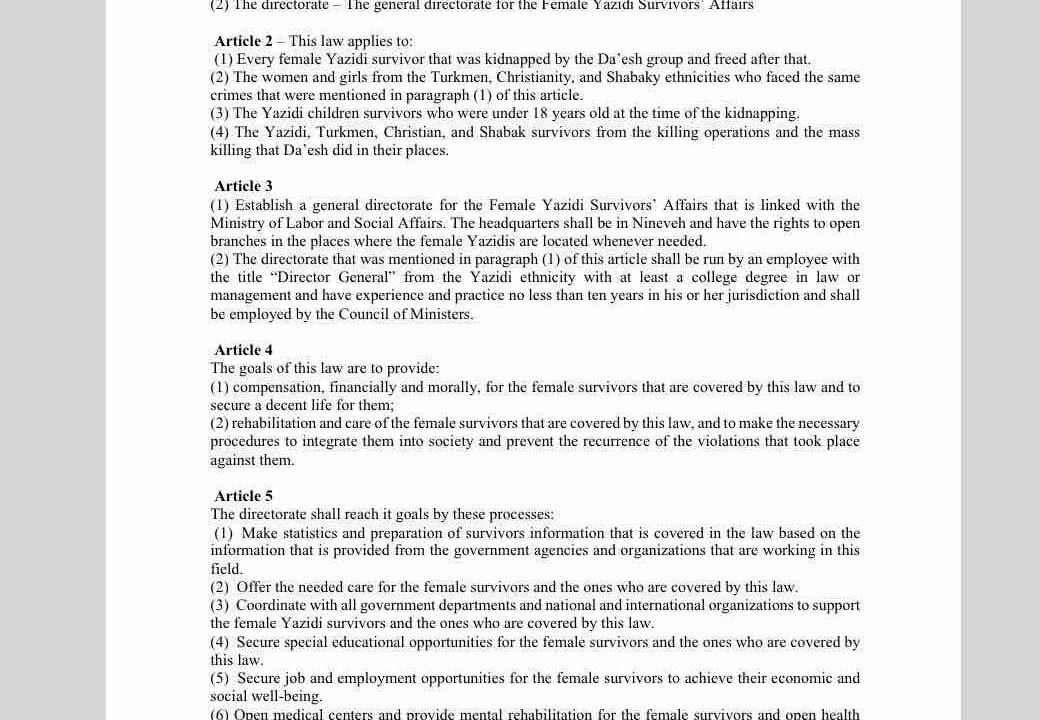
The Ezidi Survivors Law was adopted by the Iraqi Parliament on 1 March 2021, nearly seven years after ISIS launched its genocidal campaign against Ezidis in August 2014. The legislation formally recognises crimes committed by ISIS against Ezidis as genocide and establishes a framework for reparations and support for survivors.
Among its provisions are monthly financial compensation, access to housing or residential land, opportunities for survivors to resume their education, employment allocations within the public sector, and provisions for physical and psychological rehabilitation.
Although commonly known as the Ezidi Survivors Law, its protections are not restricted exclusively to Ezidi survivors. The legislation also contains provisions concerning survivors from other groups targeted by ISIS.
According to Murad Ismail, the proposed amendment follows demands from Turkmen and Shabak representatives seeking changes to the wording of the legislation. Ismail argued that the existing law already includes Turkmen, Shabak and Christian survivors and therefore questioned the need to alter its current formulation.
The dispute is particularly significant because the law is one of the principal pieces of Iraqi legislation addressing the consequences of the 2014 Ezidi Genocide. Beyond material reparations, its recognition of the crimes as genocide carries legal and symbolic importance for survivors and families affected by ISIS atrocities.
Ezidi representatives have therefore insisted that legislation created in response to the genocide and the experiences of survivors should not be amended without meaningful Ezidi participation.