
Ezidi survivors have provided harrowing testimony about the crimes committed against them during the 2014 genocide, renewing demands for meaningful legal accountability amid continued international inaction.
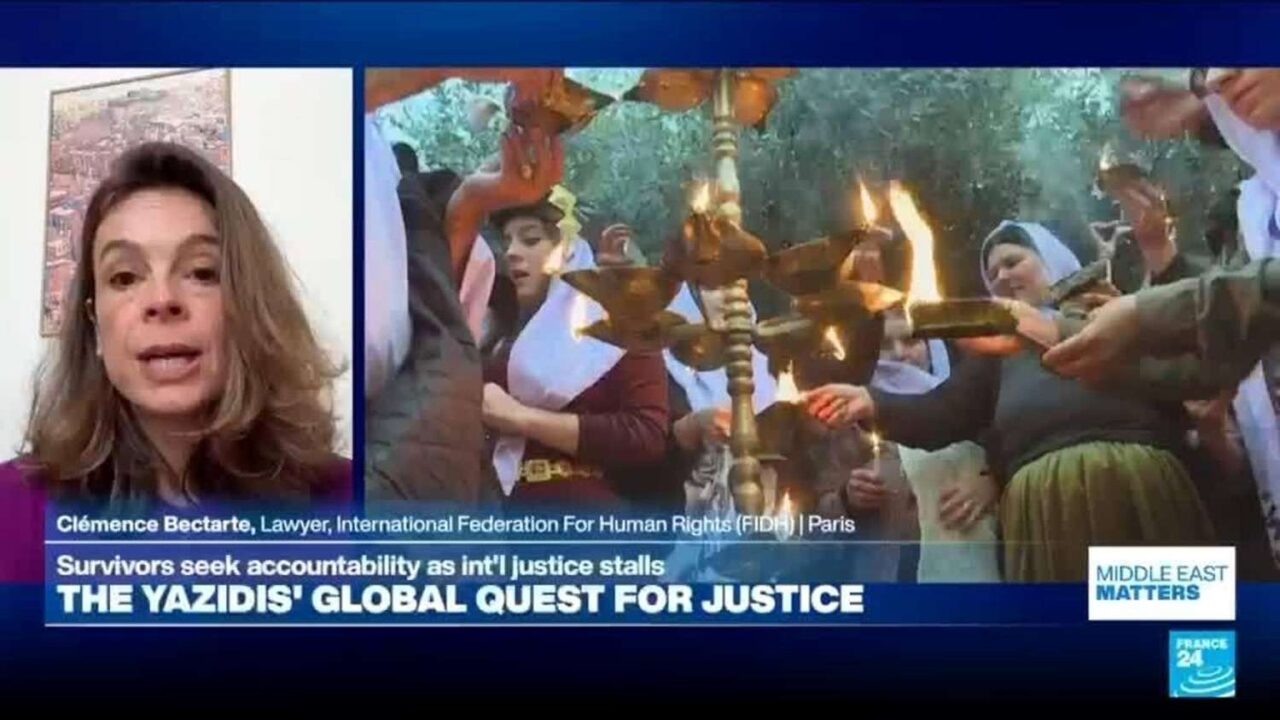
The testimonies were discussed during a conversation introduced by Nadia Massih with Clémence Bectarte, a Paris Bar lawyer specialising in international criminal law and international human rights law. Bectarte’s work with survivors has placed her directly within the continuing effort to document the genocide, preserve evidence and pursue justice for those responsible.
The survivors’ accounts describe the organised violence carried out against the Ezidi people, including mass killings, abductions, forced conversions, enslavement and other crimes intended to destroy their families, identity and religion. Their testimony is essential not only for establishing individual criminal responsibility but also for documenting the wider system through which ISIS targeted the Ezidi people.
Nearly twelve years after the genocide began, many survivors are still waiting for justice. Thousands of Ezidis remain missing, families continue searching for relatives, and many of those who planned, carried out or supported the crimes have never faced trial. International recognition of the genocide has increased, but recognition alone has not produced the level of accountability, recovery and long-term support survivors were promised.
Testifying about genocide places an enormous burden on survivors, who are repeatedly asked to revisit some of the most traumatic experiences of their lives. Their accounts should not be treated simply as material for conferences, documentaries or public statements. Every testimony creates a responsibility for investigators, prosecutors and governments to preserve the evidence, pursue perpetrators and protect the dignity of those who speak.
The survivors are also resisting the erasure of the Ezidi people. By placing their experiences on the legal and historical record, they challenge attempts to minimise the genocide, obscure responsibility or allow the crimes to disappear from international attention. Their words preserve the identities of victims and document the deliberate methods used to attack Ezidi families, Sharfadin and the future of the Ezidi people.
Justice remains necessary not only for the survivors who testified, but for the credibility of the international legal system itself. A system that records genocide in detail but repeatedly fails to prosecute those responsible sends a dangerous message: that recognition may be offered while accountability is postponed indefinitely.
Ezidi survivors have already carried the burden of remembering, documenting and speaking. The responsibility now belongs to states, courts and international institutions to turn their testimony into legal action.