
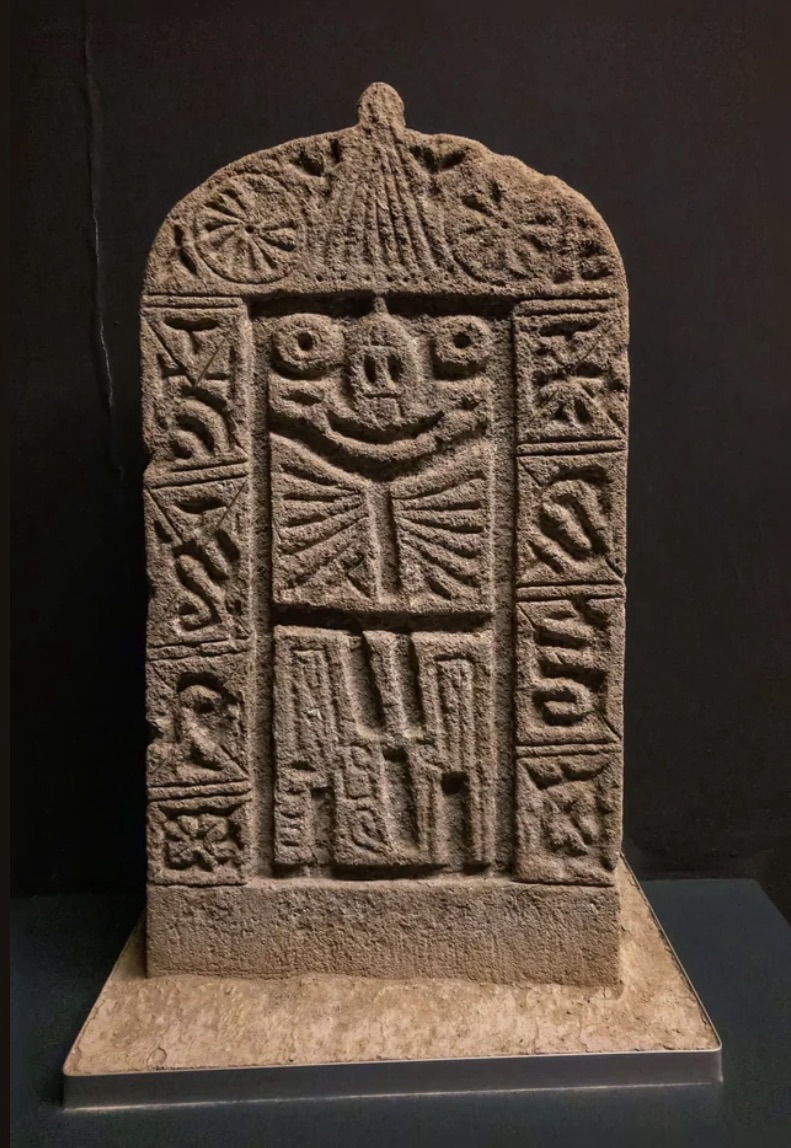
A limestone tombstone identified as an Ezidi artifact from the Ottoman period is currently preserved at the Archaeology and Ethnography Museum in Van, eastern Turkey.
The tombstone features a front-facing human figure carved in relief. The figure is stylized, with clearly defined facial features and a structured body. Around the figure, symmetrical patterns and geometric motifs are carved along the surface. The upper section includes circular and radiating elements, while the lower section contains more linear and decorative designs.
The use of limestone and relief carving is consistent with funerary markers found across the region during the Ottoman period. Such tombstones were used to mark graves and often included visual elements connected to identity, status, or cultural and religious belonging. Among the Ezidi people, burial traditions form an important part of cultural continuity within the framework of Sharfadin.
The museum label identifies the object simply as an “Ezidi Tombstone, limestone, Ottoman Period,” without providing further details about its exact origin or the individual it commemorates. However, based on the structure of the Van Museum’s collection, the tombstone was most likely collected locally.
The museum primarily holds artifacts from Van and surrounding regions, including Muş and other nearby areas in eastern Anatolia, historically part of western Armenia. Ezidis lived across these regions for centuries, making it likely that the tombstone originates from this broader geographical area.
The Ezidi tombstone contributes to the documentation of Ezidi culture and provides a visible record of historical presence in the region.
About Van Museum
The Van Museum itself was first established in 1932 as a storage facility for archaeological finds. As collections grew, it was reorganized into a museum office in 1945 and later became an official museum directorate in 1972. A new, modern museum building was opened in 2019, covering a large exhibition area with multiple halls.
Today, the museum houses artifacts from several historical periods, including Urartian, Roman, Byzantine, Seljuk, Akkoyunlu, Karakoyunlu, and Ottoman eras, as well as ethnographic objects reflecting the cultural history of the region. Many items in the collection were gathered locally, including tombstones and stelae made of limestone.