
09-04-2016 – Ezidi Times
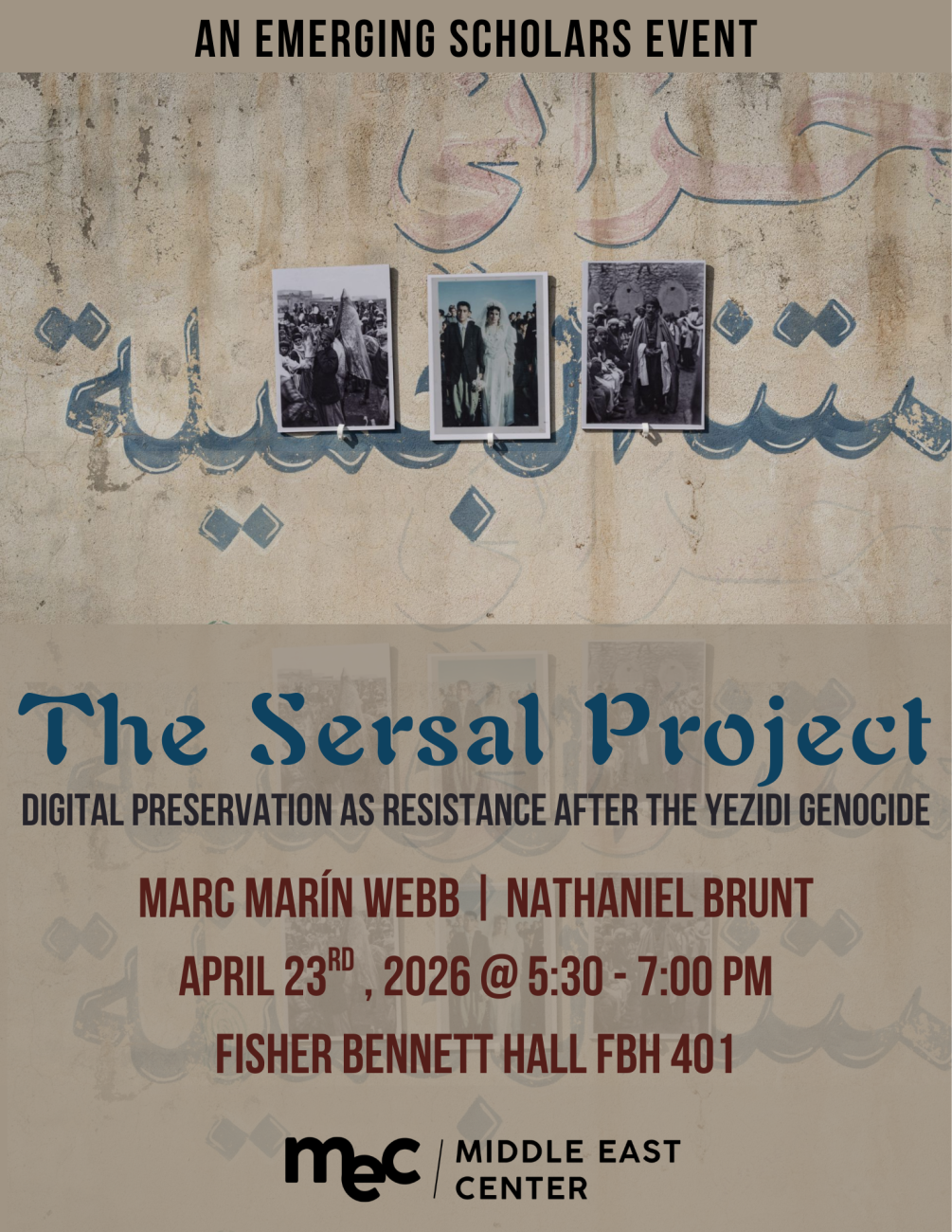
On 23 April 2026, an academic gathering titled “The Sersal Project: Digital Preservation as Resistance After the Ezidi Genocide” will take place at FBH 401from 17:30 to 19:00. The event brings attention to a critical yet often overlooked dimension of post-genocide recovery: the preservation of memory.
Following the genocidal campaign carried out by ISIS, the Ezidi people faced not only physical destruction and displacement, but also a systematic attempt to erase cultural identity. Homes were destroyed, sacred sites desecrated, and countless personal archives, family photographs, documents, and heirlooms, were lost or scattered. In this context, the Sersal Project emerges as a structured response to cultural erasure.
The initiative focuses on collecting, digitizing, and preserving visual and historical material related to ezidis. This includes recovering family photographs from private collections, locating historical images across international archives, and documenting contemporary ezidi life. The aim is not merely archival. It is reconstructive. By restoring fragmented histories, the project contributes to rebuilding identity and continuity.
Digital preservation in this sense functions as a form of resistance. Where destruction sought to eliminate traces of existence, documentation reasserts presence. The archive becomes both a repository and a statement: that ezidi history persists despite attempts to erase it.
The event will feature two scholars whose work intersects with heritage, conflict, and visual culture.
Marc Marín Webb, a PhD candidate in History and Archaeology at the University of Pennsylvania, focuses on post-conflict heritage preservation in Iraq. His research examines how reconstruction efforts engage with cultural identity, particularly in areas heavily affected by ISIS. His academic background in architecture and museum curation informs a multidisciplinary approach to heritage, combining spatial analysis with historical interpretation.
Nathaniel Brunt, a postdoctoral fellow affiliated with the University of Victoria and the Centre for Global Studies, approaches conflict through photography and archives. His work explores how visual material shapes the understanding of violence and its aftermath. With experience documenting conflicts in regions such as Iraq and Kashmir, his research highlights the importance of images not only as evidence, but as carriers of memory.
Together, their contributions frame the Sersal Project within broader discussions on cultural survival after mass violence. The project illustrates how archives can move beyond passive storage and instead act as active tools in post-conflict recovery.
For the Ezidi people, whose religion Sharfadin and cultural traditions are deeply tied to memory, oral history, and continuity, such efforts carry particular weight. Preservation is not solely about the past; it is directly linked to the future. Without memory, reconstruction risks becoming detached from identity.
This event situates digital preservation as an essential component of justice, recovery, and cultural endurance. It underscores that rebuilding after genocide is not limited to infrastructure or legal processes, it also involves restoring the intangible foundations of a people’s existence.
As initiatives like the Sersal Project continue to develop, they demonstrate that even in the aftermath of destruction, there are methods to safeguard identity. Quiet, methodical, and digital, yet profoundly consequential.
Event
📍Location
Fisher-Bennett Hall, Room 401
University of Pennsylvania, Philadelphia
⏱️ Time
April 23, 2026
17:30 – 19:00