
Women’s rights activist Yanar Mohammed killed in Baghdad
Iraqi activist Yanar Mohammed, known for defending vulnerable women and supporting survivors of violence, has been shot dead in Baghdad after returning from Canada.
Women are the quiet strength of every society. Even in the face of violence, displacement, and loss, they continue to protect their families, educate their children, and preserve culture. Among the Ezidis, women have shown that survival alone is not enough; they transform suffering into resilience and silence into voice. Their actions prove that the true power of a society is revealed not in how it dominates, but in how it values and listens to its women.
Among the most ancient and spiritually profound celebrations in the Ezidi religious (sharfadin) calendar is the sacred feast of Xidir...
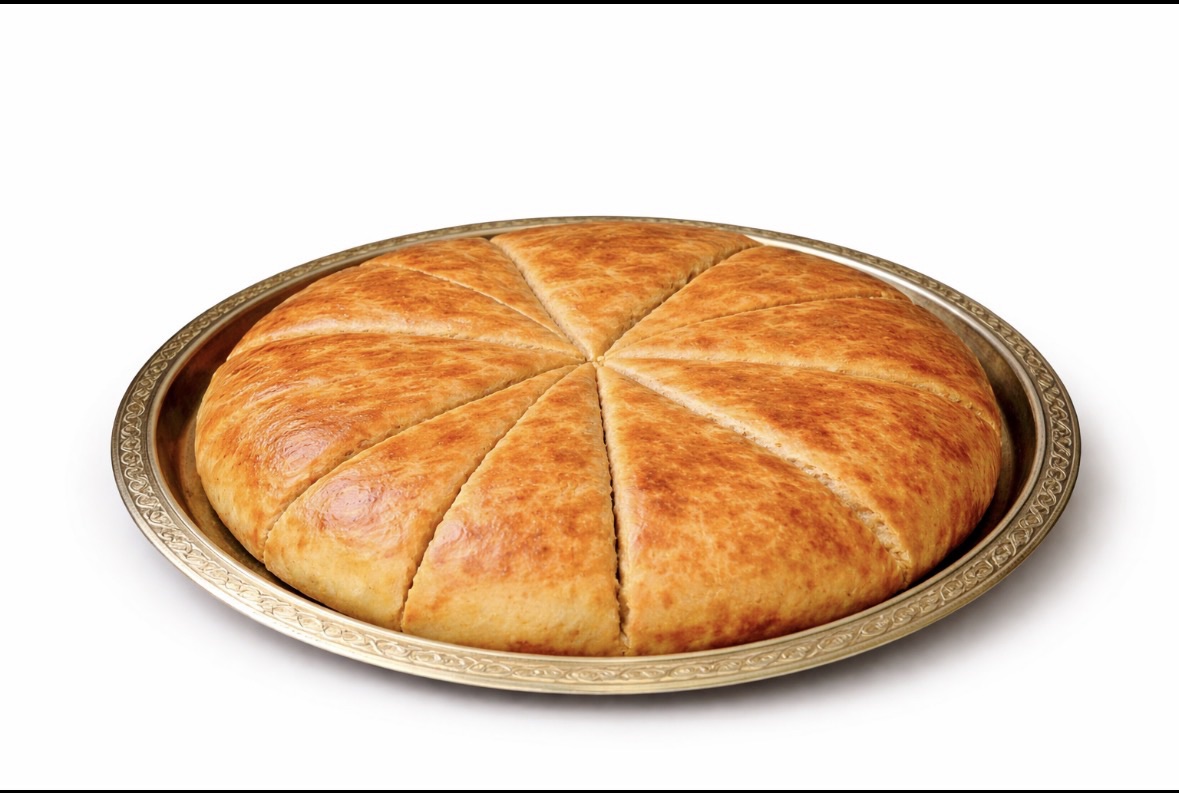
The holiday of Xidir Nebî and Xidir Êlyas is one of the most important religious celebrations among Ezidis, honoring two revered saints associated with protection, love, and life. Though venerated across multiple cultures—from Iran to Armenia and beyond—Ezidis maintain distinct traditions that blend sacred texts, local legends, and ancient rituals. The festival involves fasting, special plant-based dishes, and symbolic practices such as pêxûn preparation, hair-cutting for blessings, and matchmaking customs rooted in dreams. Folk celebrations include communal gatherings, ceremonial songs, and playful rituals like dolidang, connecting spiritual devotion with social cohesion. Across history, Xidir and Êlyas have absorbed traits from pre-Islamic and pre-Christian myths, linking Ezidi practice to ancient regional narratives of divine guidance and the quest for life-giving waters.
Праздник Хидир Элияс и Хидир Неби — это священный езидский праздник, посвящённый бессмертным святым Хидир Элиясу и Хидир Неби, хранителям жизни, любви и защиты. Отмечаемый ежегодно в феврале, праздник включает добровольный пост, приготовление символических блюд, известных как Священная семёрка, и ритуалы, приглашающие благословение в дом. От мистического знака копыта до приготовления Пехун, этот праздник воспевает исцеление, божественное наставление и обновление как тела, так и духа.
The holiday of Xidir Êliyas and Xidir Nebî is a sacred Ezidi holiday honoring the immortal saints Xidir Êliyas and Xidir Nebî, guardians of life, love, and protection. Observed each year in February, the days combine voluntary fasting, preparation of symbolic foods called the Sacred Seven, and rituals that invite blessings into the home. From the mystical hoofprint sign to the making of Pekhûn, the holiday celebrates healing, divine guidance, and the renewal of both body and spirit.
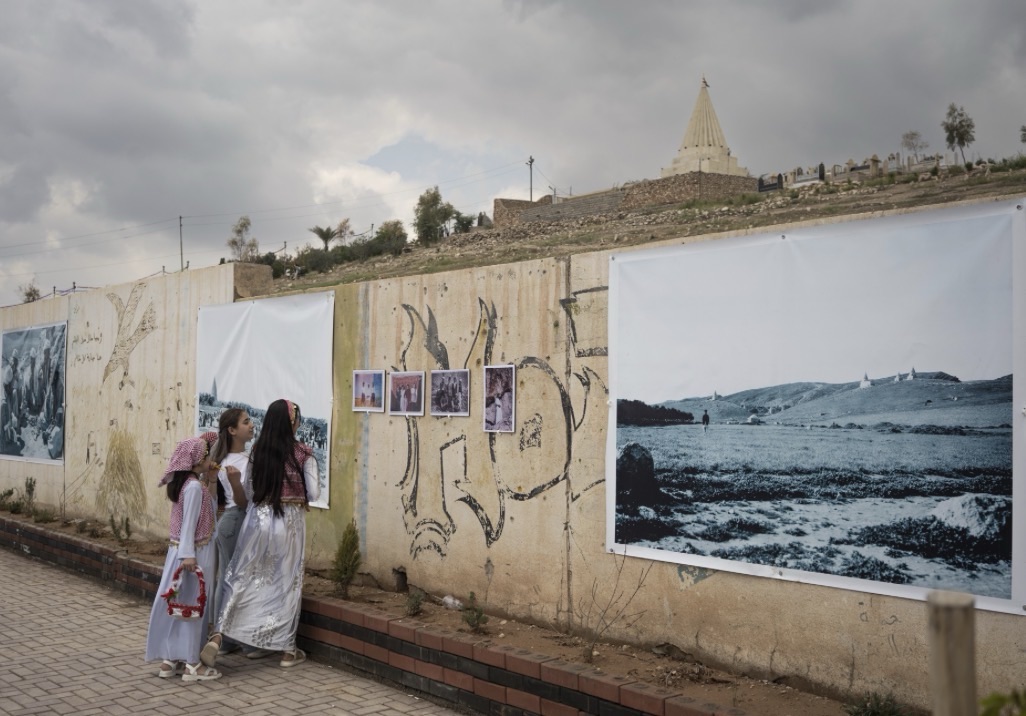
In 2014, the Mam Rashan Shrine on Mount Sinjar was destroyed in a campaign aimed at erasing Ezidis and their faith, Sharfadin. Its demolition was meant to sever a people from their sacred ground. Rebuilt on its original site, the shrine now stands as proof that destruction did not succeed. It is not only stone restored, but continuity reclaimed.
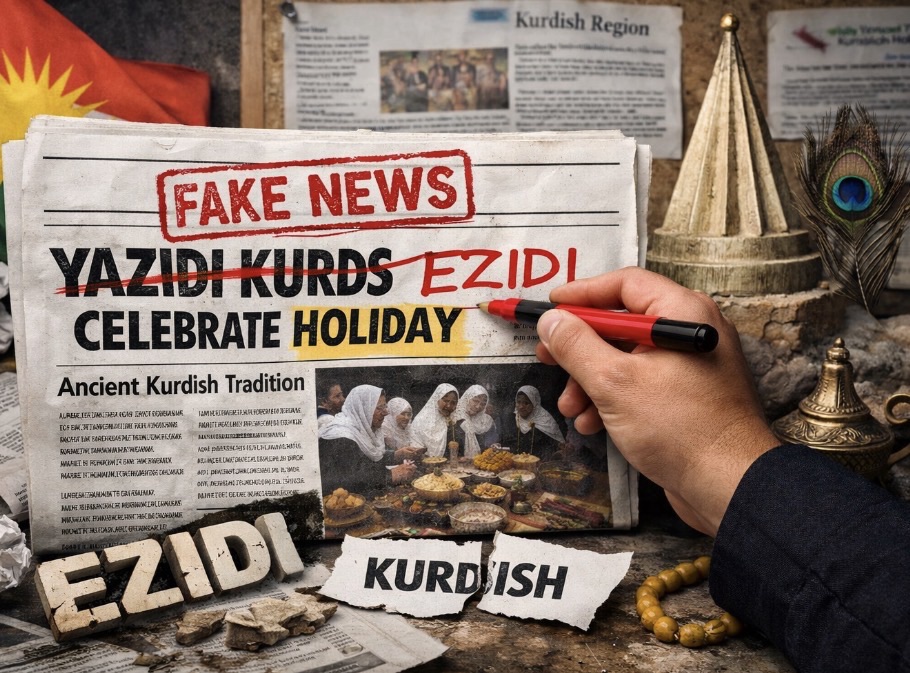
Rudaw beweert dat Ezidi’s “Koerden” zijn, en herhaalt daarmee de langdurige poging van Neçirvan Barzani en de KRG om onze identiteit toe te eigenen. Ezidi’s zijn een apart etnisch volk, volgers van Sharfadin, met een eigen geschiedenis, rechten en stem. Duitsland ondersteunt ontheemde Ezidi’s omdat dit hun verantwoordelijkheid is, niet vanwege Barzani. Ons “Koerdische Ezidi’s” noemen wist onze identiteit uit, verbergt decennia van marginalisering en probeert ons politiek te gebruiken. Ezidi’s zijn onafhankelijk, en geen enkele politicus of mediakanaal kan onze geschiedenis herschrijven of onze toekomst afnemen.
Ezidiler Kürt değil, kendi halkıdır. Barzani ve KRG, Ezidiler adına konuşamaz. Kimliğimiz, haklarımız ve geleceğimiz yalnızca bizim irademizle korunabilir.
Ezidiler, Şengal’in geleceği ve kendi temsiliyetleri üzerinde söz hakkı istiyor. KRG ve dış aktörler Ezidiler adına konuşamaz. Temsil, güvenlik ve geri dönüş hakları yalnızca Ezidilerin iradesiyle güvence altına alınabilir.
Ezidis reject outside claims to speak for them. The Yazidi Cause Alliance warns that the KRG and others cannot override their voice. Sinjar’s future, security, and representation must be determined by Ezidis themselves, free from foreign intervention or political agendas.
Rudaw claims that Ezidis are “Kurds,” repeating the long-standing attempt by Neçirvan Barzani and the KRG to co-opt our identity. Ezidis are our own people, followers of Sharfadin, with our own history, rights, and voice. Germany supports displaced Ezidis because it is their responsibility, not because of Barzani. Calling us “Kurdish Ezidis” erases our identity, hides decades of marginalization, and tries to use us for political gain. Ezidis are independent, and no politician or media outlet can rewrite our history or take away our future.
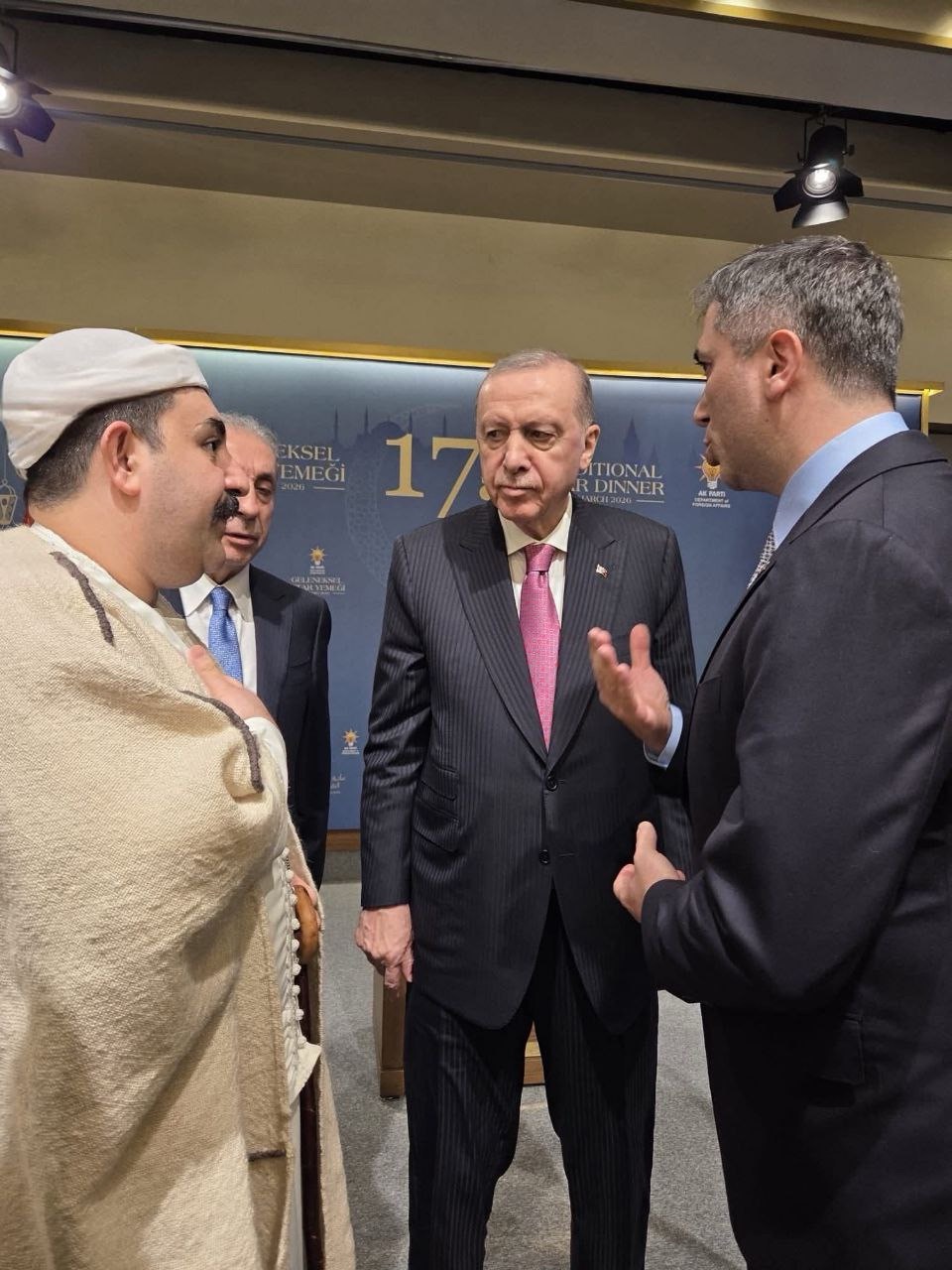
Recent months have seen the launch of the “Ezidi initiative,” a planned diplomatic effort engaging both the diaspora and local authorities in Turkey. Focused on peace, social cohesion, and voluntary return, the initiative addresses property, security, and human rights concerns while aiming to strengthen social peace and recognize the heritage of the Ezidi people and the Sharfadin faith.
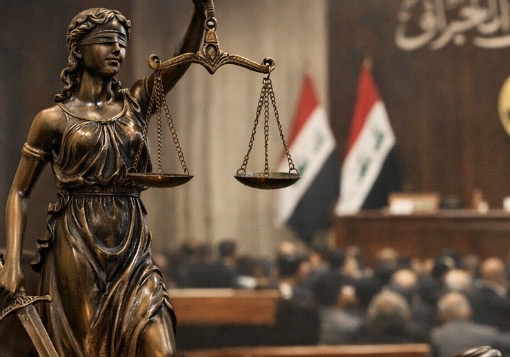
Iraq has launched new investigations into thousands of ISIS detainees transferred from northeastern Syria, including suspects accused of participating in the 2014 Ezidi Genocide. Authorities are rebuilding cases from the beginning as survivors continue to seek accountability and answers for those still missing.
Die Ezidis haben aus Erfahrung gelernt, dass Ignorieren von Warnungen tödlich sein kann. Prävention ist Verantwortung – nicht Alarmismus. Schutz muss jetzt erfolgen, bevor sich die Geschichte wiederholt.
Trust between neighbors can be as fragile as it is sacred. In northern Iraq, lifelong bonds between Ezidi families and their Arab neighbors unraveled in the face of ISIS violence. What once was a relationship built on shared meals, trade, and mutual support turned into fear and pursuit, forcing families to flee overnight. Stories like these reveal not only the brutality of violence, but also the deep emotional wounds left when trust is broken by those once considered friends.
On the night between 3rd and 4th February, 2026 marks Şevberat, the sacred night of forgiveness and purification for Ezidis....
The Hasna A. case returns to court in the Netherlands after the defendant appealed the first verdict.From 9–12 February 2026, judges at the Schiphol Judicial Complex will review the case, which addresses ISIS crimes committed against Ezidis.
The hearings are public and will be livestreamed, with translation available.
An Ezidi girl has been recognised at the Coffs Harbour Australian Citizen of the Year Awards 2026. Mayada Oso, who arrived in Australia in 2018 after surviving the Ezidi genocide, received the Young Citizen of the Year award for her achievements in education and her work supporting students. Her journey from captivity to leadership and service reflects the resilience of Ezidis and their continued strength after genocide.
E'yda Çilê Zivistanê bimbarek-pîrozbe! Twice a year, Ezidis celebrate the sacred feast of çla—the Forty Days—marking both the summer and winter...