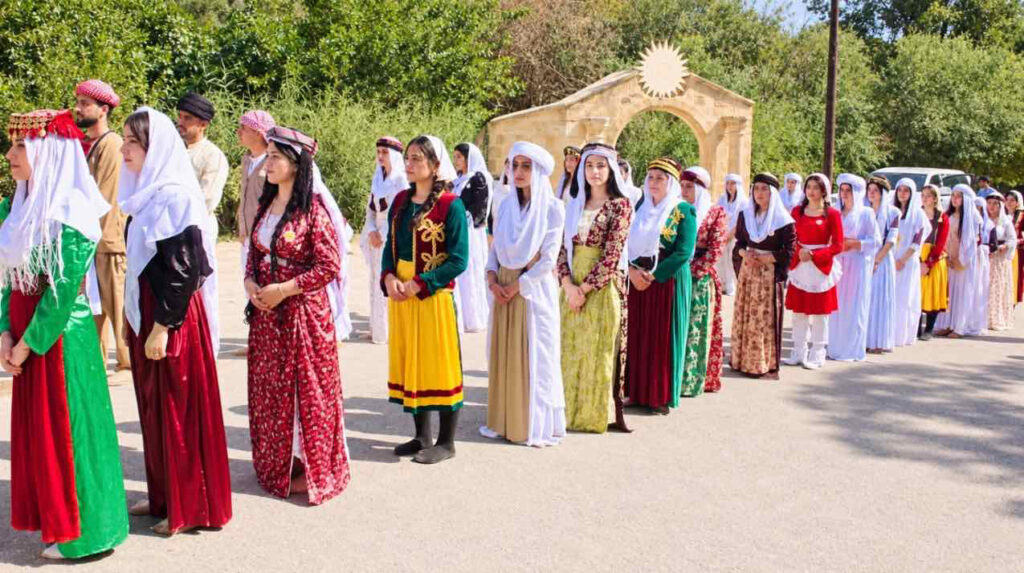
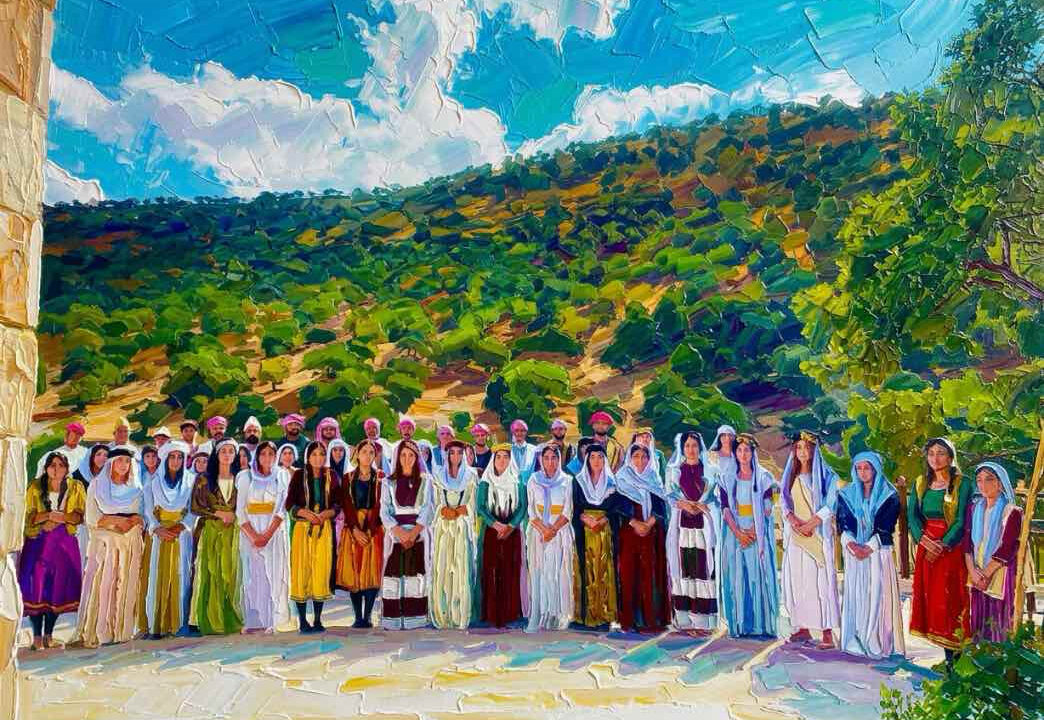
Every year on 3 October, Ezidis mark Ezidi Traditional Clothing Day, celebrating one of the most visible expressions of Ezidi culture and identity. Traditional clothing among Ezidis is remarkably diverse. The garments worn in Şengal are not necessarily the same as those found among Ezidis from other parts of Iraq, while the clothing preserved by Ezidis in Armenia, Georgia and Russia developed through another historical path. These differences are not simply variations in fashion. They reflect where different Ezidi populations lived, the environments they moved through and the history they carried with them.
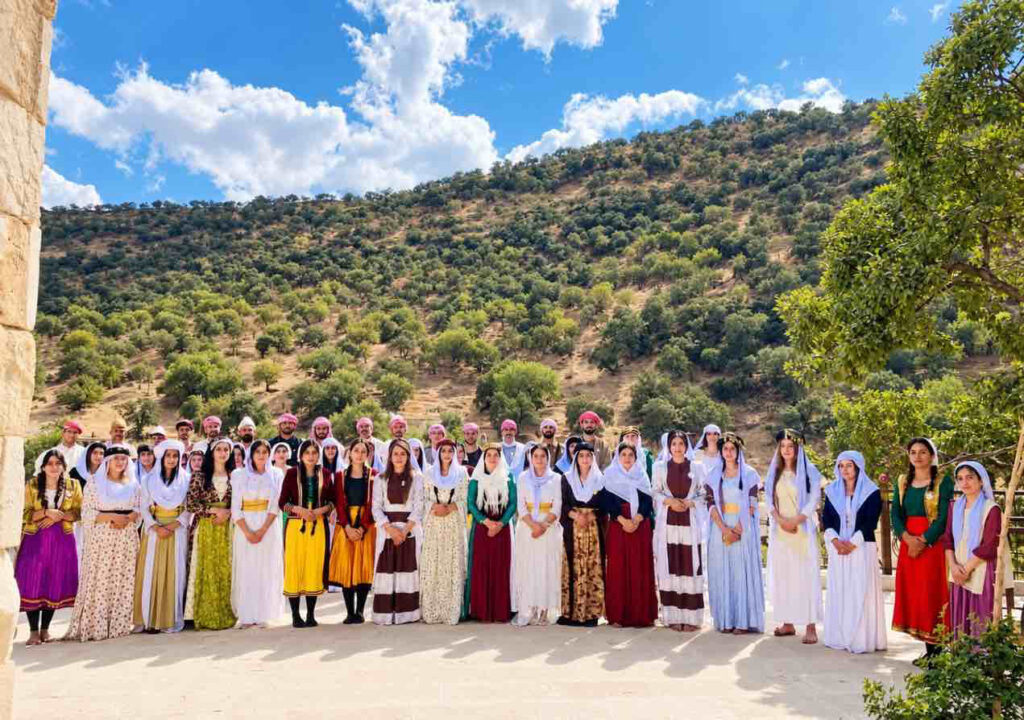
Ezidi culture has developed across a wide geographical area, but that geography has repeatedly been reshaped by persecution and forced displacement. Ezidis have been driven from their homes at different periods, sometimes moving from one region to another and sometimes being forced to establish entirely new lives in another country. This history is also visible in traditional clothing. The styles preserved by Ezidis whose families originate from areas of present-day eastern Turkey, for example, differ from many of those found among Ezidis in Iraq. Large numbers of Ezidis from areas including Van, Kars and Bayazid fled towards present-day Armenia and Georgia during the violence and genocide of 1915, following earlier waves of Ezidi displacement from the Ottoman Empire. Their clothing traditions travelled with them and were later carried further through migration, including into Russia.
Those traditions naturally changed over time. Families arriving in Armenia and Georgia after persecution and displacement were rebuilding lives that had been severely disrupted. Many had lost homes, possessions and relatives and had to begin again under difficult economic and social conditions. In such circumstances, maintaining every detail of elaborate traditional clothing could hardly be the first concern. Materials changed, access to particular fabrics and jewellery changed, and garments were gradually adapted to new surroundings. Some styles became simpler while still retaining recognisable elements of the clothing brought by earlier generations. This is precisely why the differences found today are so important: they can contain traces of geographical origin and migration that have survived long after families left the places where those styles first developed.
When traditional clothing could reveal too much
The decline of traditional clothing cannot, however, be explained only by displacement or modernisation. For Ezidis, there was also the question of safety. Centuries of religious persecution because of Sharfadin meant that openly displaying Ezidi identity was not always without consequences. In parts of the Middle East, Ezidis travelling outside predominantly Ezidi areas could face discrimination because of their religion. A merchant travelling from an Ezidi village to a larger city, for example, entered an environment where being visibly identifiable as Ezidi could attract unwanted attention, discrimination or hostility.
Clothing could make that identity immediately recognisable. For this reason, there were situations in which dressing like the surrounding population was safer or simply more practical than wearing distinct traditional Ezidi clothing. This pressure did not disappear entirely with the previous century. Even in more recent years, Ezidi women in Iraq have described harassment and pressure over clothing when travelling to places where their appearance could identify them as Ezidi. When people learn that displaying their identity can make ordinary activities such as travelling, studying, trading or working more difficult, cultural practices inevitably become affected.
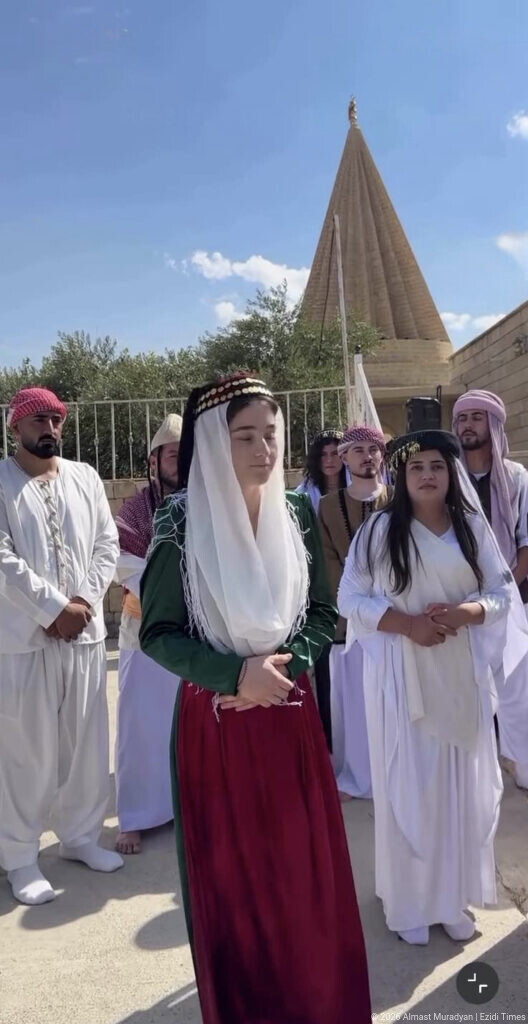
Traditional clothing therefore increasingly became associated with environments in which Ezidis could express their identity more freely: weddings, religious occasions, celebrations, festivals and gatherings within Ezidi society. Once clothing stops being worn in everyday life, however, the knowledge connected to it can also begin to disappear. One generation may know exactly how the different pieces are arranged, what they are called and when they should be worn, while the next generation may recognise the clothing without knowing all of those details.
Different clothing, shared history
This is also why Ezidi traditional clothing should not be reduced to one standardised outfit. There is no need for an Ezidi woman from Şengal to look identical to an Ezidi woman whose family came from the former Ezidi regions of the Ottoman Empire and later settled in Armenia. The same applies to men’s clothing, which also contains important regional differences. The variety itself is part of Ezidi cultural history.
Historical images from the South Caucasus already document distinct Ezidi men’s and women’s clothing more than a century ago. Some of the styles that continue to be recognised among Ezidis in Armenia, Georgia and Russia today can therefore be understood as part of a much longer cultural continuity, even where individual garments have changed or been simplified. At the same time, different traditions survived among Ezidis in Şengal and elsewhere in Iraq. Looking at these clothes side by side is almost like looking at different paths taken by the same people through history.
Modern life has created another challenge, and this one is certainly not unique to Ezidis. Across the world, peoples with traditional forms of dress are finding fewer occasions to wear them. Clothing that might once have been part of ordinary daily life is increasingly reserved for weddings, religious holidays, cultural celebrations or performances. In some cases, traditional clothing eventually becomes something people mainly encounter in museums or old photographs. This is a natural consequence of changing lifestyles to some extent, but it also creates a risk: clothing may survive as an object while knowledge about it disappears.
A day for preservation and exchange
Ezidi Traditional Clothing Day should therefore be about more than wearing traditional clothes once a year. It can also become an opportunity to document them properly. Families who still possess older garments can record where they came from, approximately how old they are and who wore them. Older generations can explain the names of individual pieces, how they were worn, which jewellery belonged with them and whether a style was associated with a particular village or region. Old family photographs are equally valuable, especially when the people pictured can still be identified and their geographical origins recorded.
This documentation is particularly important because so much Ezidi cultural heritage has already been damaged or lost through persecution, genocide and repeated displacement. Traditional clothing is part of that heritage, and much of what remains may exist not in formal archives but in family homes, photographs, memories and garments that have been passed from one generation to another.
The purpose should not be to decide which regional style is the most “authentic” or to turn the diversity into a single uniform. The purpose should be to preserve that diversity. Ezidis from Iraq, Armenia, Georgia, Russia and elsewhere can use this day to learn about traditions outside their own regional experience, compare what their families preserved and better understand how historical events shaped the clothing they know today.
Ezidis now live across many countries, and generations have grown up far from the places where their families once lived. The regional differences in traditional clothing are therefore particularly valuable: they preserve visible pieces of those histories. By documenting them, teaching younger generations about them and sharing them across geographical borders, Ezidis can ensure that traditional clothing remains more than something seen only at celebrations or behind museum glass.
On 3 October, the different garments worn by Ezidis tell different stories, but they belong to a shared cultural inheritance. Preserving those differences is not only about preserving clothing. It is also about preserving the memory of where Ezidis lived, what they endured, what they carried with them and what they were able to keep.