
The Lemkin Institute for Genocide Prevention and Human Security published a remembrance statement on 3 August 2026 honouring Ezidis who were killed, abducted and forcibly displaced during the genocide committed by ISIS in Sinjar.
The organisation said it stood in solidarity with Ezidis who continue to face religious and ethnic persecution twelve years after the attack of 3 August 2014.
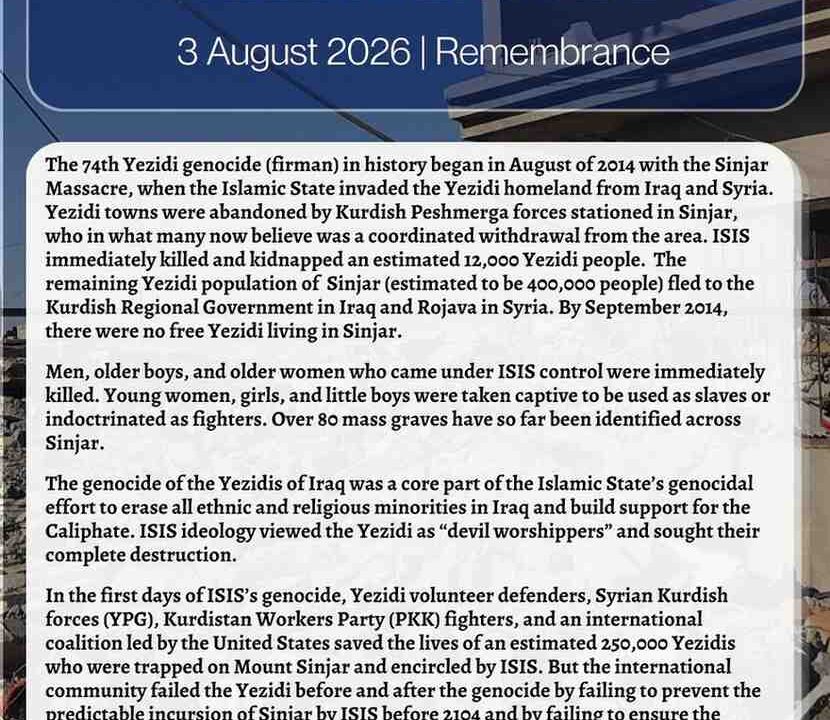
In an accompanying graphic, the institute described the genocide as the 74th firman against Ezidis. It recalled the withdrawal of Kurdish Peshmerga forces from Sinjar, the subsequent mass killings and abductions carried out by ISIS, and the flight of hundreds of thousands of Ezidis from their homeland.
The statement highlighted the murder of men, older boys and women, alongside the abduction and enslavement of women and girls. It also referred to the indoctrination of abducted boys and the discovery of more than 80 mass graves across Sinjar.
The institute said the genocide formed part of ISIS’s campaign to destroy the ethnic and religious diversity of Iraq. It emphasised that Ezidis were deliberately targeted for destruction because of their identity and Sharfadin faith.
The graphic also credited Ezidi volunteer defenders, the YPG, PKK fighters and the United States-led international coalition with helping Ezidis trapped on Mount Sinjar. These descriptions reflect the Lemkin Institute’s own account of the rescue operations and include political framing that is not universally accepted.
The institute concluded that the international community had failed Ezidis both by not preventing the attack and by failing to create the conditions necessary for their secure return to their ancestral homeland. Its remembrance message called for continued solidarity with Ezidis and recognition that the consequences of the genocide remain unresolved.