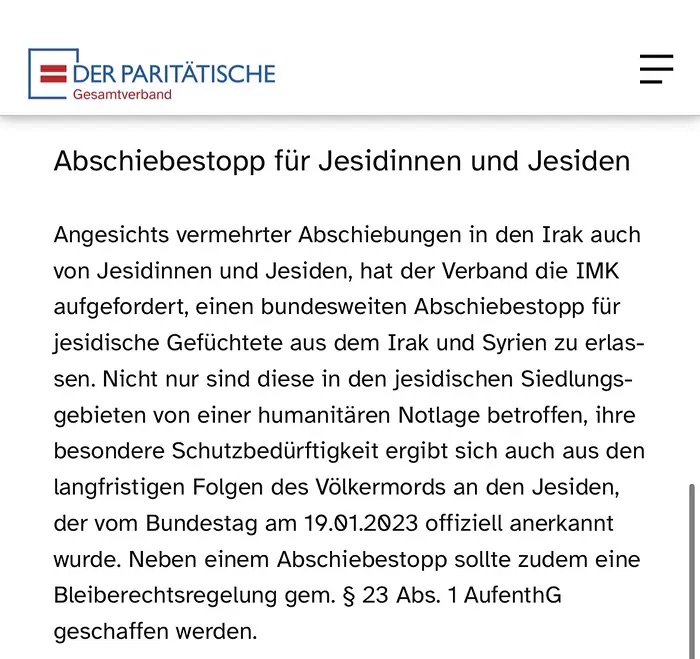

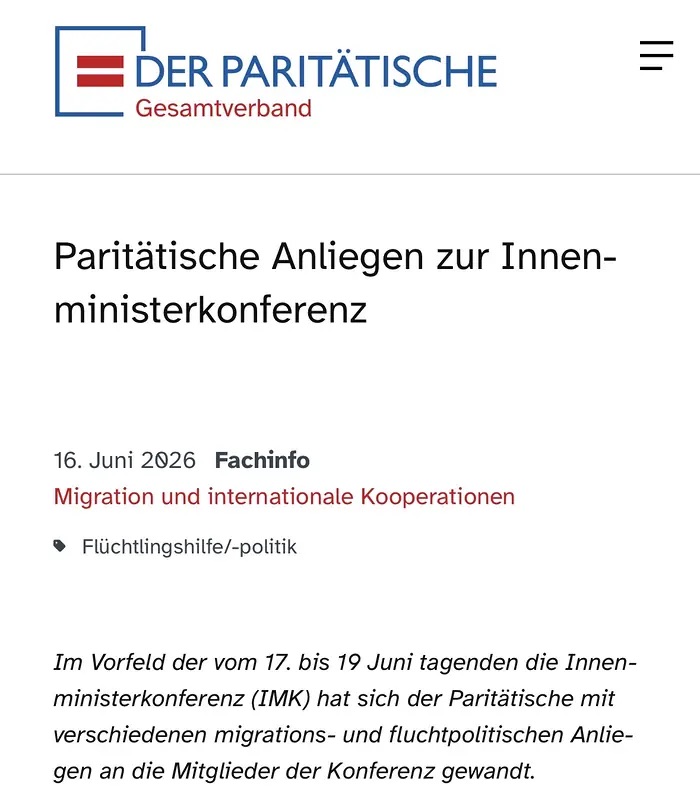
The German Parity Welfare Association, known as Der Paritätische Gesamtverband, has called for a nationwide deportation stop for Ezidi refugees from Iraq and Syria.
The appeal was made ahead of the Conference of Interior Ministers, which is scheduled to take place from 17 to 19 June 2026. The conference brings together Germany’s interior ministers and senators responsible for internal affairs at federal and state level.
In its migration and refugee policy appeal, Der Paritätische addressed several issues connected to asylum, protection, integration and residence rights. Among them was a specific demand for stronger protection for Ezidis facing possible deportation.
The association warned that increased deportations to Iraq also affect Ezidis and said that a nationwide deportation ban is necessary. It pointed to the continuing humanitarian crisis in areas where Ezidis have historically lived, as well as the long-term consequences of the genocide committed against the Ezidis.
Germany’s Bundestag officially recognised the genocide against the Ezidis on 19 January 2023. Der Paritätische argued that this recognition must also have practical consequences for current refugee and migration policy.
In addition to a deportation stop, the association called for a residence regulation for Ezidis under Section 23 paragraph 1 of the German Residence Act. Such a measure would allow German federal states to grant residence on humanitarian grounds to people who require special protection.
The appeal comes at a time when Germany is also dealing with major changes in asylum policy linked to the reform of the Common European Asylum System. Der Paritätische expressed concern that new procedures and stricter rules could place additional pressure on refugees and make access to legal advice, support and protection more difficult.
The organisation also warned against the creation of secondary migration centres and restrictions on freedom of movement, saying such measures could increase stress, conflict and frustration among refugees while also making it harder for them to access counselling and support services.
Der Paritätische further stressed the need for clear standards in the new screening procedures, especially for identifying vulnerable people and ensuring that those with special protection needs receive proper care.
The association also called for the continuation of independent asylum procedure counselling, arguing that such support is necessary for fair and efficient asylum procedures.
Beyond the Ezidi case, Der Paritätische also appealed for a nationwide deportation stop to Iran because of serious and systematic human rights violations in the country. It also called for better residence rights for well-integrated people who already live in Germany but remain at risk because they cannot fully secure their livelihood or because their protection status may be revoked or expire.
For Ezidi refugees, however, the demand is especially urgent. More than a decade after the genocide, many survivors and families continue to face trauma, displacement and insecurity. Der Paritätische’s appeal adds further pressure on German authorities to recognise that deportations of Ezidis to Iraq or Syria are not merely a migration policy issue, but a question of protection, dignity and humanitarian responsibility.