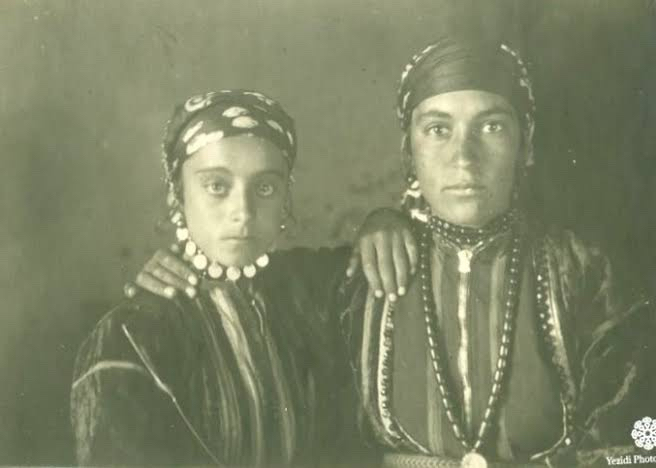
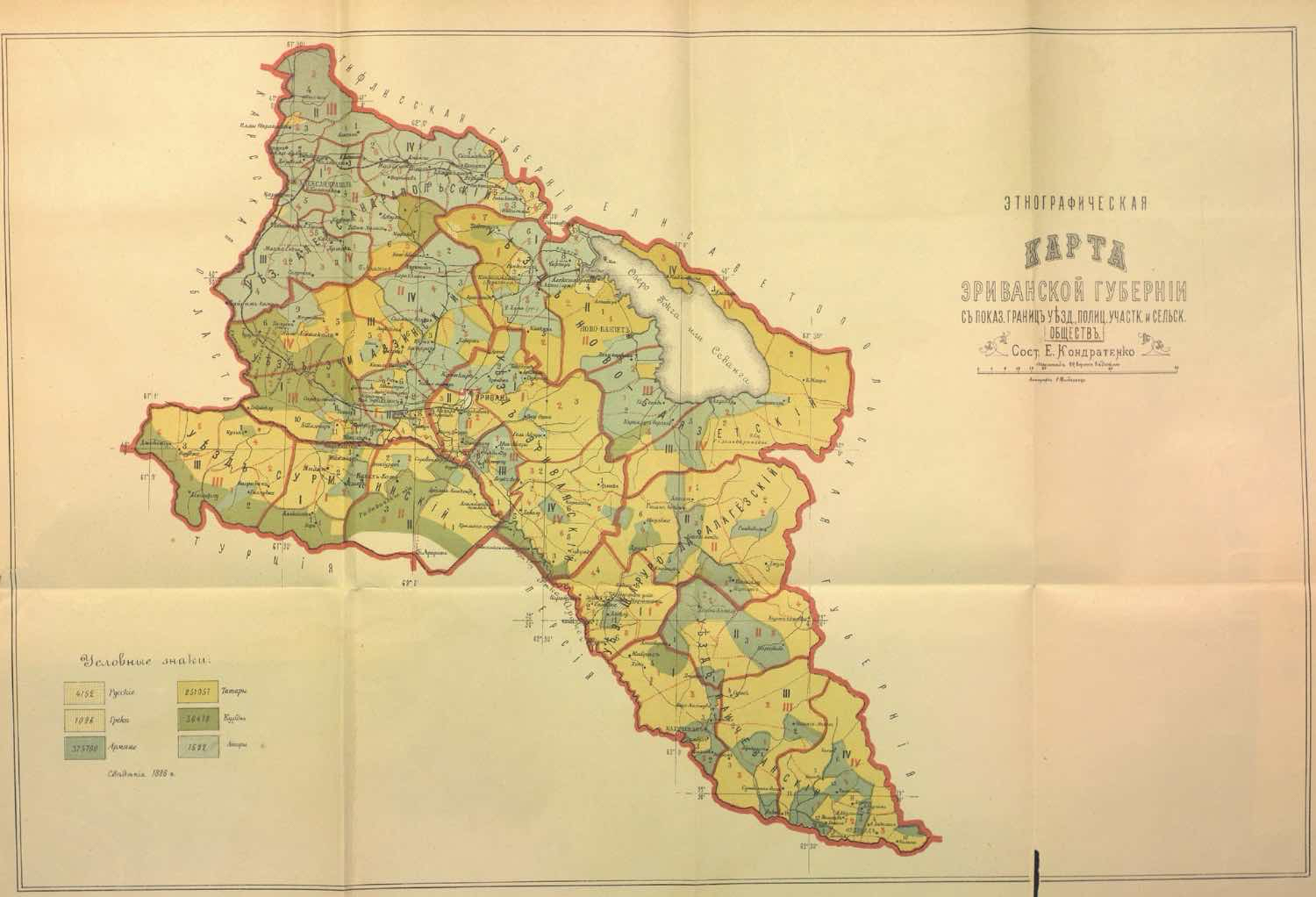
The Ezidi people are an important component of Armenia’s ethnic and cultural diversity. The presence of Ezidis in the historical territory of Armenia emerged as a result of long-term historical processes and gradually became an integral part of the country’s social, cultural, and demographic life. The historical ties, mutual contacts, and friendly relations established between Armenians and Ezidis occupy a distinctive place in the historical memory of both peoples.
Armenian-Ezidi relations became particularly evident during the nineteenth century and the early twentieth century, when political changes in the region, wars, and population movements created new conditions for the settlement and geographical expansion of the Ezidi population. This process, however, cannot be presented as a single, one-time resettlement. The formation of the Ezidi population in the territory of present-day Armenia should be considered in the context of several waves of migration, settlement processes, and demographic changes that took place throughout the nineteenth century and the beginning of the twentieth century.
The history of Ezidi settlement is also part of Armenia’s broader history: the history of changing borders, the expansion of the Russian Empire, the Russo-Ottoman wars, regional instability, and the displacement of populations fleeing violence and persecution. For this reason, studying the formation of the Ezidi population makes it possible not only to reconstruct its demographic history but also to understand the historical environment in which Armenian-Ezidi relations developed.
Russian administrative and military documents, the contemporary press, census data, ethnographic studies, and subsequent scholarly works are of particular importance for this research. Examining these sources together makes it possible to trace the process from the earliest documented presence of the Ezidi population to the establishment of permanent settlements and the geographical expansion of the Ezidi population.
The earliest waves of Ezidi migration to the territory of present-day Armenia and the South Caucasus began in the 1830s and 1840s. This early phase of Ezidi migration to the South Caucasus was associated with the Russo-Ottoman wars of the first half of the nineteenth century and the establishment of Russian authority over the territories of Eastern Armenia. Following the Russo-Ottoman War of 1828–1829, new opportunities emerged for Ezidi groups to move from the eastern regions of the Ottoman Empire, particularly the areas of Van, Kars, Doğubayazıt, and Surmalu. Scholarly literature notes that during this period some Ezidi tribal groups were permitted to move to territories under Russian control.
Studies by G. S. Asatrian and A. P. Poladian note that during the 1830s and 1840s, some Ezidis moved to Armenia to escape Turkish and Kurdish persecution, subsequently spreading from Armenia to other parts of Transcaucasia. M. Angelova shares this view, arguing that the history of Ezidi settlement in the South Caucasus is connected with the conquest of the region by Tsarist Russia and migrations from the eastern provinces of the Ottoman Empire into Russian-controlled territories.
The earliest clearly documented evidence of the Ezidi presence dates back to 1855. One Russian military report from that period mentions an Ezidi settlement in the Sardarapad area with a population of approximately 340. This testimony is significant because it demonstrates that an Ezidi population already existed in the territory of present-day Armenia before the Russo-Ottoman War of 1877–1878.
In the context of the Crimean War (1853–1856), an Ezidi military unit serving in the Russian army is also mentioned in connection with the Alexandropol direction. Thus, the data from 1855 makes it possible to rule out the view that the formation of the Ezidi population in the territory of Armenia began only after the war of 1877–1878.
Another important piece of evidence dates to 1869. John Guest’s study states that a group of Ezidi settlements already existed in the Yerevan Governorate, around Alagyaz and Sadunts, comprising approximately 260 households in eight villages. This indicates that, before the war of 1877–1878, the Ezidi presence in the region had already extended beyond individual families or small groups. Rural settlements had emerged, their economies being based primarily on animal husbandry.
One of the most significant stages in the history of Ezidi settlement in Armenia was connected with the Russo-Ottoman War of 1877–1878. In the summer of 1877, Russian troops under the command of General Arshak Ter-Gukasov captured Doğubayazıt and advanced towards the Alashkert plain. However, in the face of the threat of an Ottoman counteroffensive, Russian forces were compelled to retreat. Numerous civilians crossed the border alongside the retreating Russian troops. Among these refugees were approximately 3,000 Ezidis led by Ali Beg. After the war, some of them were resettled in Alexandropol Uyezd.
This wave of migration played an important role in the growth of the Ezidi population in the Yerevan Governorate. According to the sources, following the war of 1877–1878, the total number of Ezidis in the Yerevan Governorate reached approximately 8,000 by 1879. In 1878, one of the principal tasks facing the Russian administration of the Yerevan Governorate was the accommodation of Armenian and Ezidi refugees arriving from the Ottoman Empire, the organization of their settlement, and the regulation of their Russian citizenship status. For this purpose, a special body was established: the “Committee for Helping the Migrants from Turkey.”
The 1878 administrative census records Ezidi settlers in several uyezds of the Yerevan Governorate: Surmalu — 24 families, 240 inhabitants; Etchmiadzin — 16 families, 146 inhabitants; Alexandropol — 65 families, 471 inhabitants; Nor Bayazet — 27 families, 177 inhabitants. The total was 132 families and 1,008 inhabitants.
Russian administrative documents also preserve family registers listing the name of the head of each household, the number of family members, their sex, and their age. It should be noted that resettlement did not proceed without difficulties. By early 1879, only 82 families remained in Alexandropol Uyezd. In the administrative document, they were described as “Ezidi Kurds” and expressed their desire to settle permanently and engage in agriculture, with no intention of returning to Turkey.
The main reasons for the settlers’ dissatisfaction included a shortage of land, limited means of subsistence, difficulties in pursuing agriculture, and climatic conditions. One administrative report from Surmalu Uyezd states that 33 families had dispersed among various villages as a result of the severe winter and food shortages. Some were prepared to settle wherever the government directed them, while others wished to move to the Kars region, as its climate was more suitable for their traditional way of life.
From 1879 until approximately 1882, another significant movement of the Ezidi population took place. Ezidis belonging to the Sipki tribe moved from the Doğubayazıt area of the Ottoman Empire to Kaghzvan Uyezd in Kars Oblast, which had recently come under Russian control. Within a few years, they established 14 villages there, with a total population of approximately 1,733. This process demonstrates that, by the end of the nineteenth century, the geographical distribution of Ezidis was no longer confined to the Yerevan Governorate. It also encompassed the Kars region.
According to the 1897 First General Census of the Russian Empire, approximately 14,726 Ezidis were recorded in the South Caucasus.
This figure is significant because it makes it possible to examine the history of the Ezidi population not only in terms of individual waves of migration but also within the demographic framework of the South Caucasus as a whole. According to data from 1912, the number of Ezidis in the South Caucasus had reached approximately 24,508. According to John Guest, more than 17,000 lived in the Yerevan Governorate, approximately 2,000 in the Tiflis region, and more than 5,000 in the provinces transferred to Russia in 1877.
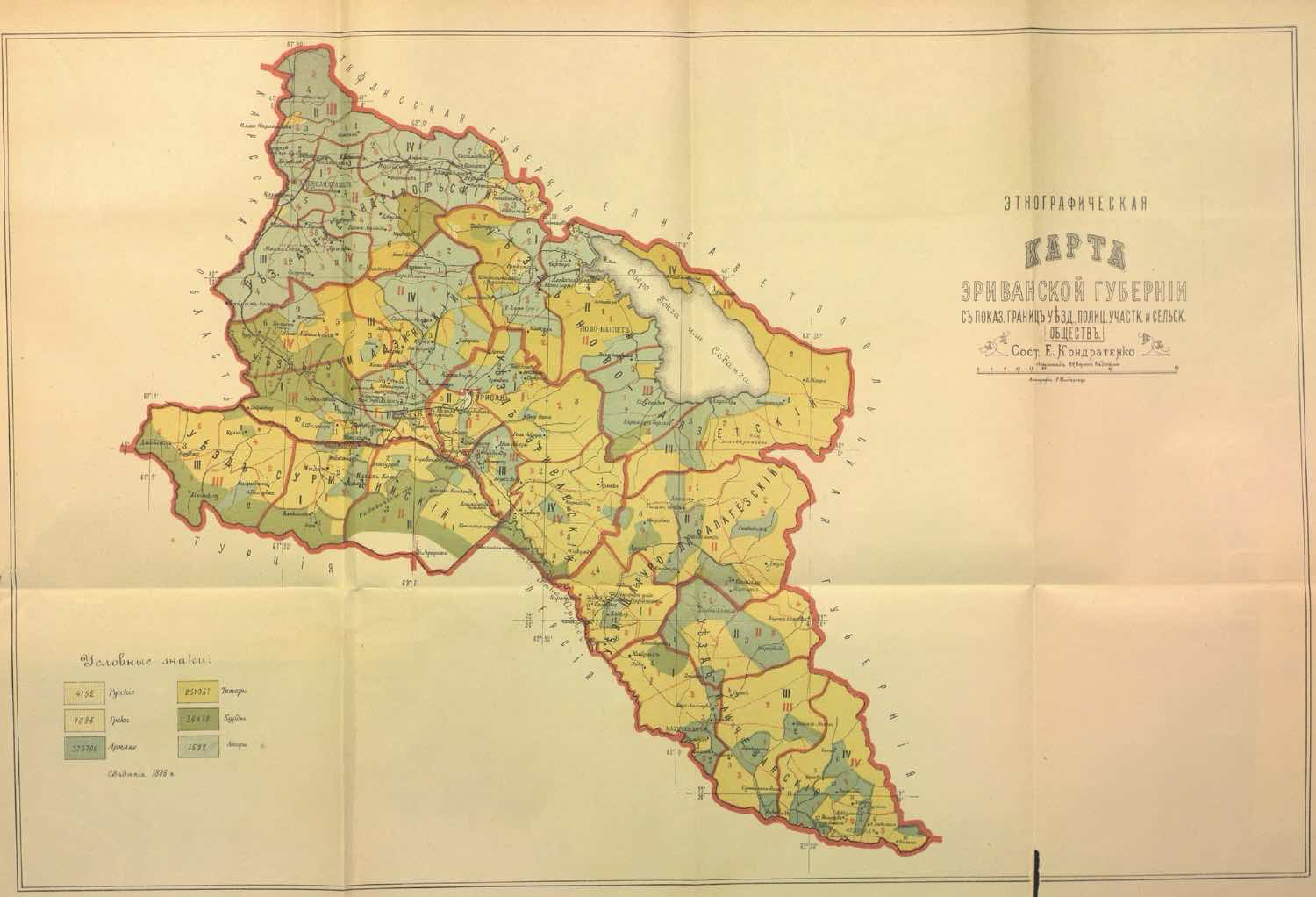
Four years later, in 1916, the Ezidi population of the South Caucasus had reached approximately 40,882. The main part of this increase was associated with population changes in the territories transferred to Russia in 1877–1878. These demographic figures demonstrate that, by the beginning of the twentieth century, the settlements established at the end of the nineteenth century had already developed into stable and expanding areas of Ezidi settlement.
The final major phase of Ezidi migration to the South Caucasus was connected with the military and political events of 1918. During the final stage of the First World War and amid the advance of Ottoman troops, Ezidi groups joined the refugees moving to Armenia. Some of them settled particularly in villages on the southern slopes of Mount Aragats, where certain groups of the previously resident Kurdish and Turkish populations had left. Thus, 1918 can be regarded as the final major wave of migration in the pre-Soviet period of Ezidi settlement in the territory of Armenia.
Ezidis during the Period of the First Republic of Armenia
The presence of Ezidis in the public and administrative life of the First Republic of Armenia is also documented. Among the participants of the first congress of district governors convened in Yerevan on 25 May 1919 was Yusuf Beg Temuryan, an Ezidi by ethnicity, representing Surmalu. During the period of the First Republic, Ezidis were not merely an ethnic and religious people; they were also involved in the administrative system of the newly established republic.
One important indication of the organizational development and political self-awareness of Ezidis was the first congress of the Ezidis of Armenia, held in Alexandropol on 21 September 1920. According to a report in the contemporary press, the congress opened at the People’s House in Alexandropol. It was attended by 80 delegates, as well as representatives of the press and public figures. Lazo was elected chairman of the congress, Yusuf Beg vice-chairman, and Alikhan Sheikh and Ter Minasyan secretaries. The following report about the congress has been preserved in the press:
“On September 21, the congress of the Ezidis was solemnly opened at the People’s House in Alexandropol.”
It is noteworthy that the congress agenda included the Ezidi people’s attitude towards a United and Independent Armenia. This reflected the friendly relations that had developed between Armenians and Ezidis, as well as the Ezidis’ aspiration to establish their place in the political and public life of the Republic of Armenia.
The history of Armenian-Ezidi relations occupies an important place in the history of Ezidis in Armenia. In a study by G. S. Asatrian and A. P. Poladian, we find the testimony of Stepan Kanayants from 1910, according to which close relations had developed between Armenians and Ezidis in both Western and Eastern Armenia. Kanayants specifically mentions Usub Beg:
“Many of the Ezidis in Russia speak Armenian so well that it is often difficult to distinguish them from an Armenian peasant. Usub Beg, the present leader of the Ezidis of Russia, studied at the Gevorkian Seminary of Holy Etchmiadzin during the time of Catholicos Makar.”
This testimony demonstrates the ties between representatives of the Ezidi elite and the Armenian educational environment. It also attests to the depth of Armenian-Ezidi social contacts. Usub Beg’s education at the Gevorkian Seminary further indicates that certain representatives of the Ezidi elite in Armenia were integrated into the system of Armenian educational institutions.
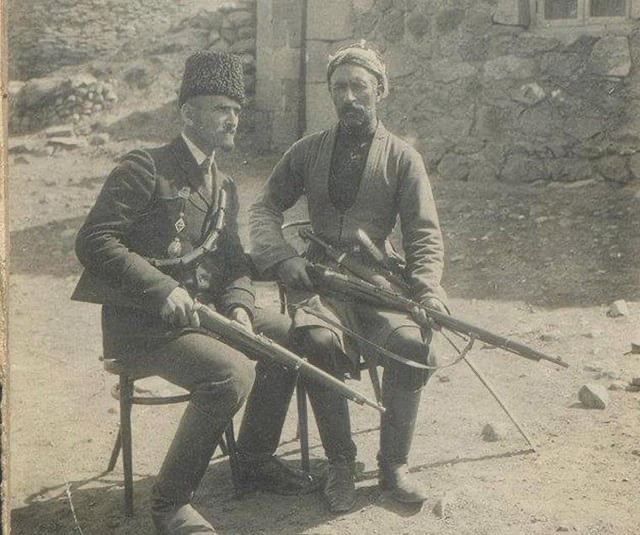
The work by G. S. Asatrian and A. P. Poladian also mentions a message sent in 1909 by Mir Ismail, an Ezidi spiritual leader who had visited Etchmiadzin from Iraq. The message was addressed to Archbishop Gevorg Surenian, the Patriarchal Vicar of the Armenian Apostolic Church. In it, the Ezidi spiritual leader emphasized the relations between Armenians and Ezidis and asked the Armenian ecclesiastical authorities to treat the Ezidis as a friendly and kindred people.
Russian administrative and scholarly interest in the Ezidis increased particularly towards the end of the nineteenth century. In 1874, the governor of the Yerevan Governorate received a petition from Sunni Muslim clerics requesting permission to collect tithes from the local Kurds. When the administration established that a significant proportion of the governorate’s “Kurds” were Ezidis, the request was rejected, and a special ethnographic and legal study of the Ezidis was initiated. The study was compiled in 1884 and subsequently published in 1891 by the Caucasus Department of the Imperial Russian Geographical Society. Its author was the Armenian legal scholar Solomon Adamovich Yeghiazarov. The study comprised approximately 65 pages and is an important primary source, as it examines the Ezidis not only from an ethnographic perspective but also in terms of administrative and legal matters.
At the end of the nineteenth century and the beginning of the twentieth century, the main centres of the Ezidi population in the territory of Armenia developed particularly in areas favourable to traditional animal husbandry. The principal settlement areas included the mountainous and foothill regions of Aragats, the surroundings of Alagyaz, the Aparan area, the Talin region, Etchmiadzin Uyezd, the territories of Sardarapad and Surmalu, as well as Alexandropol Uyezd. Later, Ezidi settlements also spread towards Kars, particularly in the Kaghzvan area. Contemporary studies also mention Ezidi settlements in the vicinity of Yerevan, Armavir, Aparan, Talin, Etchmiadzin, Masis, Artashat, and Ashtarak.