An Ezidi family from Duhok, Iraq, has been separated in Turkey after being detained at İzmir Adnan Menderes Airport on 31 July 2026, while attempting to travel onwards to Europe. The family says the journey was intended to enable their four-year-old son, who has severe epilepsy, to continue medical treatment.
Turkish authorities detained the parents and their two children, aged four and six, after questioning the validity of their travel documents. The father, Araz R., was subsequently placed in pretrial detention on suspicion of forgery of an official document, while the mother, Shahbaz A., was released from the criminal proceedings under judicial supervision and subjected to an international travel ban.
Despite that release, migration authorities subsequently placed Shahbaz and the two children under administrative detention at the Harmandalı Removal Centre in İzmir.
The result is a family divided between two detention systems: the father remains in prison while the mother and two young children are held in a removal centre. At the centre of the case is the health of four-year-old Alveer R., whose lawyer says he requires regular anti-epileptic medication and specialist neurological care.
A criminal investigation and a separate immigration process
The legal proceedings against the parents must be distinguished from one another.
On 1 August 2026, Araz was ordered into pretrial detention in connection with the alleged use of forged travel documentation and transferred to a prison facility in Aliağa. He has not been convicted, and the accusations against him remain subject to the criminal process.
The mother was not placed in criminal detention. A court instead released her subject to a travel ban. However, the Migration Management authorities then placed her and the children under administrative detention at Harmandalı.
Their lawyer, Edhem Kuruş, has challenged both the continued administrative detention of the mother and children and the necessity of keeping the father in pretrial detention. The defence argues that less restrictive measures are available and that the particular circumstances of the children, especially Alveer’s medical condition, require an individual assessment.
Turkish law itself provides alternatives to administrative detention. Article 57/A of Law No. 6458 on Foreigners and International Protection allows measures including residence at a specified address, reporting obligations, guarantees and electronic monitoring. Turkey’s Migration Management confirms that such alternatives can be imposed instead of continued administrative detention.
In this case, the family has identified a fixed address in Menemen, İzmir, where the mother and children could stay. A Turkish citizen has reportedly undertaken to provide accommodation and assist with their basic needs. The mother is also already subject to a travel ban.
Those circumstances raise an obvious question of proportionality: whether immigration supervision genuinely requires a mother and two very young children to remain inside a closed removal facility when measures specifically provided for under Turkish law could potentially achieve the same supervisory purpose.
Concerns over the four-year-old child’s epilepsy treatment
The most urgent concern is Alveer’s health. Medical documentation concerning his epilepsy and neurological condition has reportedly been submitted in the proceedings. His lawyer says the child depends on regular anti-epileptic medication and that the supply of medicine the family brought with them has run out, with difficulties subsequently arising in obtaining further medication.
The family is seeking uninterrupted access to the prescribed medication, assessment by an appropriate specialist and transfer to a medical facility if his condition requires it.
There have also reportedly been difficulties communicating with the family because they do not speak Turkish, creating additional concerns about interpretation in a situation involving both complicated legal proceedings and a child’s continuing medical needs.
Turkey’s own Migration Management states that people held in removal centres must have access to emergency and basic health services. Its published rules also specifically state that the best interests of children must be observed in removal centres.
The family’s lawyer challenged the administrative detention, drawing attention to the child’s medical condition, the availability of accommodation outside the centre and the father’s imprisonment. That challenge was rejected. According to the defence, the decision relied on general grounds rather than separately addressing the particular medical circumstances raised on behalf of the child.
The rejection does not end the legal questions surrounding the case. Administrative authorities are required under Turkish rules to reassess whether continued detention remains necessary, and alternatives to detention are expressly available within the country’s migration legislation.
The rights of the children cannot become secondary
The case also engages Turkey’s international obligations concerning children. Turkey is a party to the United Nations Convention on the Rights of the Child, which has been in force for Turkey since 1995. Article 3 requires the best interests of the child to be a primary consideration in decisions by courts and administrative authorities. Article 24 recognises children’s right to the highest attainable standard of health and access to treatment, while Article 37 provides that deprivation of a child’s liberty must be lawful, non-arbitrary and used only as a measure of last resort and for the shortest appropriate period.
Those principles do not automatically determine the outcome of an individual immigration or criminal case. Authorities remain entitled to investigate suspected document offences and enforce immigration law. But enforcing the law does not remove the obligation to examine how those measures affect children.
Here, neither child is accused of an offence. One is four years old and has a documented neurological condition requiring continuing medication. Their father is already detained separately, and their mother is subject to a travel ban. An address and accommodation outside the removal centre have reportedly been offered.
The question is therefore not whether Turkish law should simply cease to apply to the family. It is whether the purposes of that law can be achieved through measures that do not require two young children, including one with serious medical needs, to remain in a closed removal facility.
The father’s detention also remains contested
The defence has separately sought reconsideration of Araz’s pretrial detention. His lawyer disputes that the available material establishes intentional participation in document forgery and argues that judicial supervision or other less restrictive measures could be considered while the criminal investigation proceeds.
Those arguments will ultimately have to be assessed through the Turkish judicial process. Ezidi Times cannot determine from publicly available information whether the documents were forged, how they were obtained or what either parent knew about their validity. An accusation of document forgery is not a conviction, and reporting on an ongoing criminal case should not transform allegations into established facts. At the same time, the existence of a criminal investigation against one parent does not resolve the separate questions concerning the welfare, health and administrative detention of the children.
Public interest does not justify exposing the family
There is another serious aspect of the coverage surrounding this case that should not be ignored.
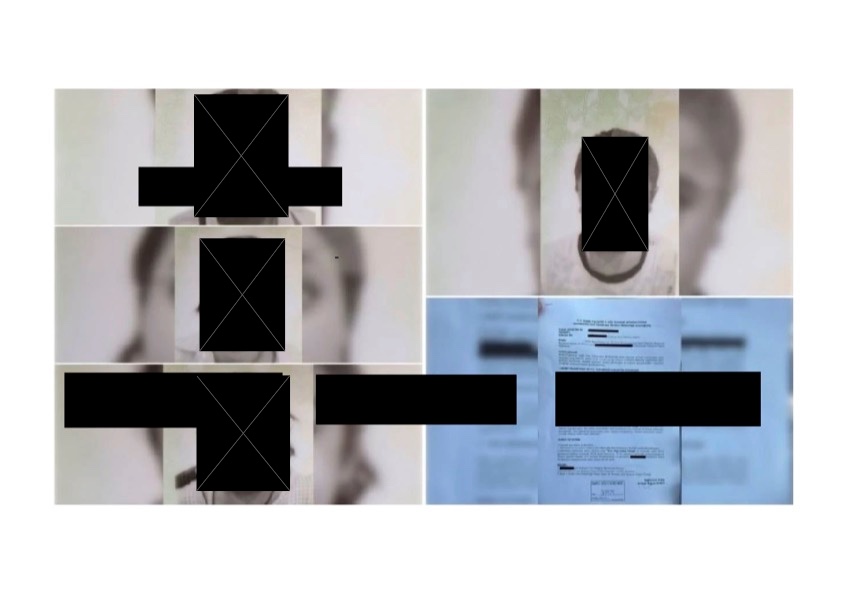
Turkish media have published identifiable photographs of members of the family, including the children, alongside their full names. Ezidi Times has deliberately chosen not to reproduce those photographs and has limited identifying information in this article.
There is legitimate public interest in the case. The detention of children, the medical needs of a four-year-old with epilepsy, the use of immigration detention and the proportionality of measures imposed on the parents are matters that deserve scrutiny. But public interest in a legal case does not require the faces of young children to be permanently circulated online.
The family has already found itself in an exceptionally vulnerable position: stranded during an attempted journey, separated between prison and a removal centre, facing criminal and immigration proceedings in another country and dealing simultaneously with a young child’s medical condition. Publishing the children’s faces adds nothing necessary to public understanding of those legal questions.
The same standard should apply regardless of nationality or ethnicity.
No Turkish institution or news organisation could reasonably be expected to welcome a situation in which every border, visa or document dispute involving Turkish citizens in European countries was reported online with the full names and identifiable photographs of the entire Turkish family, including their young children. Ezidi families deserve precisely the same respect for their privacy, dignity and children.
Being foreign does not make a family public property. Being involved in an immigration proceeding does not extinguish a child’s privacy. And intense public interest in a case does not require exposing every person caught within it.
Media organisations can report the facts, scrutinise authorities, examine court decisions and debate immigration policy without publishing the faces of four- and six-year-old children.