
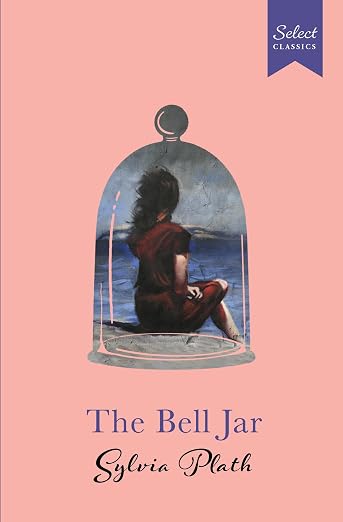
First published in 1963 under the pseudonym Victoria Lucas, The Bell Jar is the only novel written by American poet Sylvia Plath. The semi-autobiographical story follows Esther Greenwood, a talented young woman whose promising future begins to collapse under the weight of depression, social expectations and uncertainty about the life she wants. Through Esther’s experience, Plath explores identity, ambition, mental illness and the pressure placed on young women to choose a single acceptable path.
Recommended for: Readers interested in psychological fiction, identity, mental health, feminist literature and deeply introspective novels.
I think The Bell Jar by Sylvia Plath is one of those books that stays with you. Honestly, I feel haunted by it, and I think anyone who reads it will feel something similar. Before even talking about the story, I believe it is important to know a little about the author’s life. Understanding Sylvia Plath herself makes the book feel much deeper and more real.


When you read it with that awareness, you begin to realise that Esther, the main character, reflects parts of Plath’s own life. It no longer feels entirely like fiction; it feels personal. What makes this even heavier is that Plath died by suicide shortly after the novel was published. Knowing this changes the entire reading experience and makes every emotion in the book feel more intense and unsettling.
One of the most powerful parts for me was the fig-tree metaphor. Esther imagines life as a tree full of figs, with each fig representing a different future or dream. The problem is that choosing one means giving up all the others. Instead of choosing, she waits and watches the figs slowly die.
That idea really stayed with me. It reminded me of something simple but true: when you want to do everything, you often end up doing nothing. I think many people, especially when they are young and ambitious, can relate to that feeling.
Another thing that stood out to me is how the people around Esther see her life as full of opportunities. From the outside, everything appears perfect, but from her perspective, it feels completely different. She does not see herself the way others see her, and that gap between reality and perception becomes part of her struggle.
Overall, The Bell Jar is not only about depression. It is also about identity, pressure and the fear of making choices. It is a quiet but powerful book that leaves you thinking long after you finish it.
That is what makes the novel so difficult to forget. Sylvia Plath leaves the reader with a question that lingers after the final page: Is there a way out of the mind?