
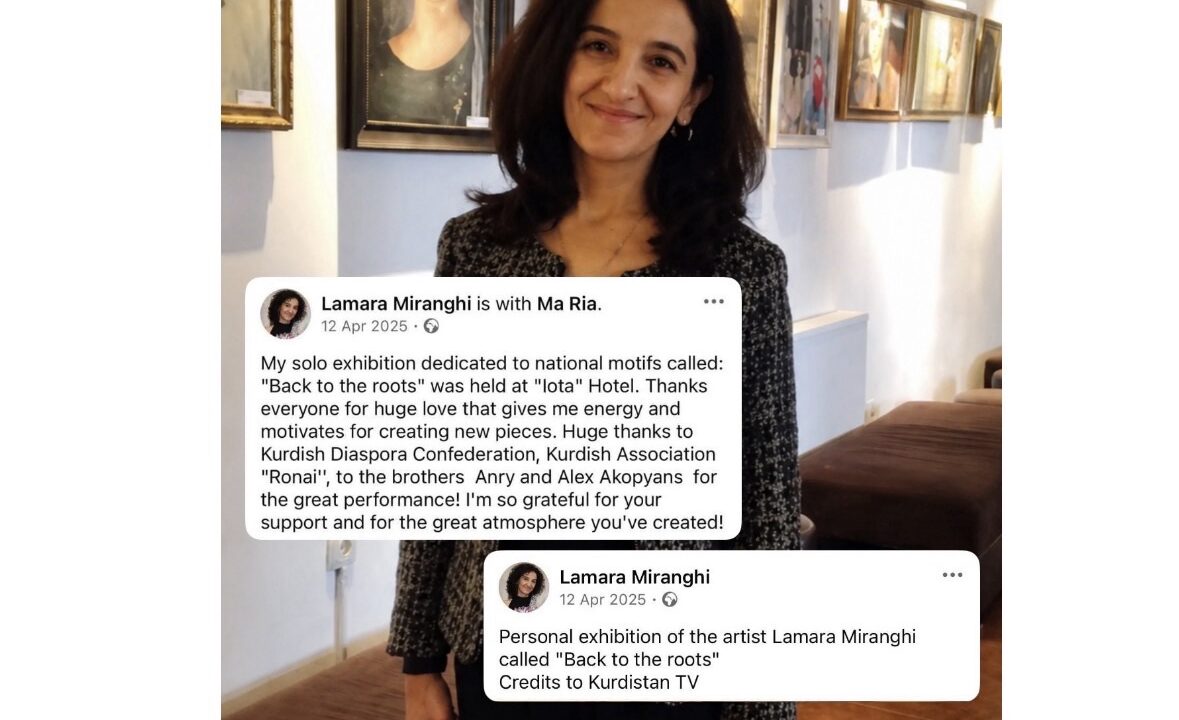
When Ezidi Times first encountered Lamara Mirangi’s paintings, we intended to publish an article celebrating her work. Her portraits of Ezidi children, women, elderly people and religious figures are visually striking, and her attention to traditional clothing, family life and Sharfadin imagery appeared to offer something valuable: an artistic record of Ezidi culture and memory.
That article was never written because a closer examination of Mirangi’s exhibitions, interviews and social-media activity changed the story completely. The problem was no longer what she painted, but what she allowed those paintings to represent. Again and again, unmistakably Ezidi people, clothing and religious symbols appeared inside Kurdish nationalist spaces and were presented as expressions of “Kurdish culture”.
This cannot be dismissed as an innocent misunderstanding created by an organiser or journalist. Mirangi has repeatedly participated in these environments, promoted the organisations involved and publicly supported the political framework surrounding her work. The pattern is too consistent to ignore: Ezidi culture is placed on the canvas, while Kurdish nationalism is placed around it.
Ezidi culture repackaged under a Kurdish label
The subjects in Mirangi’s work are often clearly Ezidi. One painting portrays Jamad, a female Ezidi religious figure, surrounded by lambs, peacock imagery and symbols connected to Sharfadin. Other works depict Ezidi children in traditional dress, Ezidi women performing everyday tasks and elderly people carrying the memories of earlier generations.
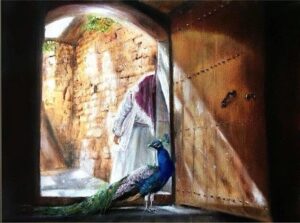
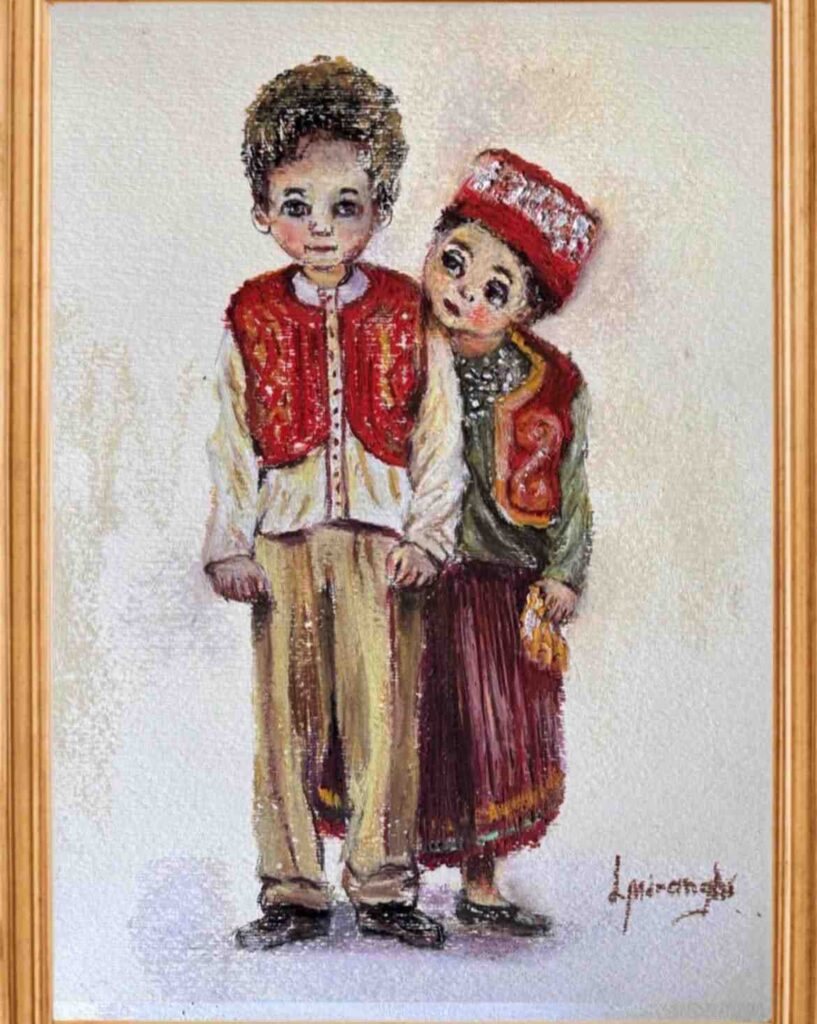
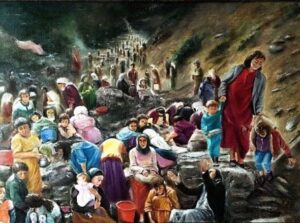
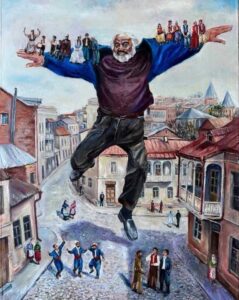
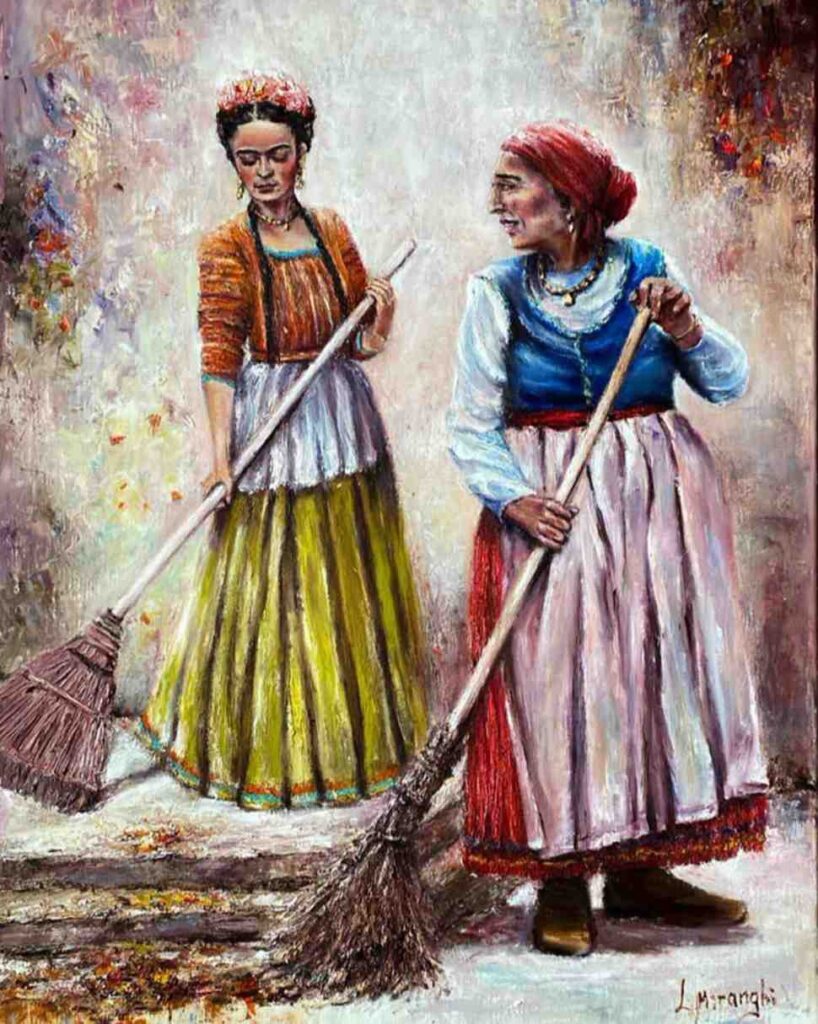
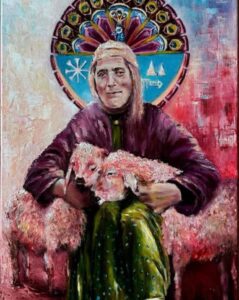
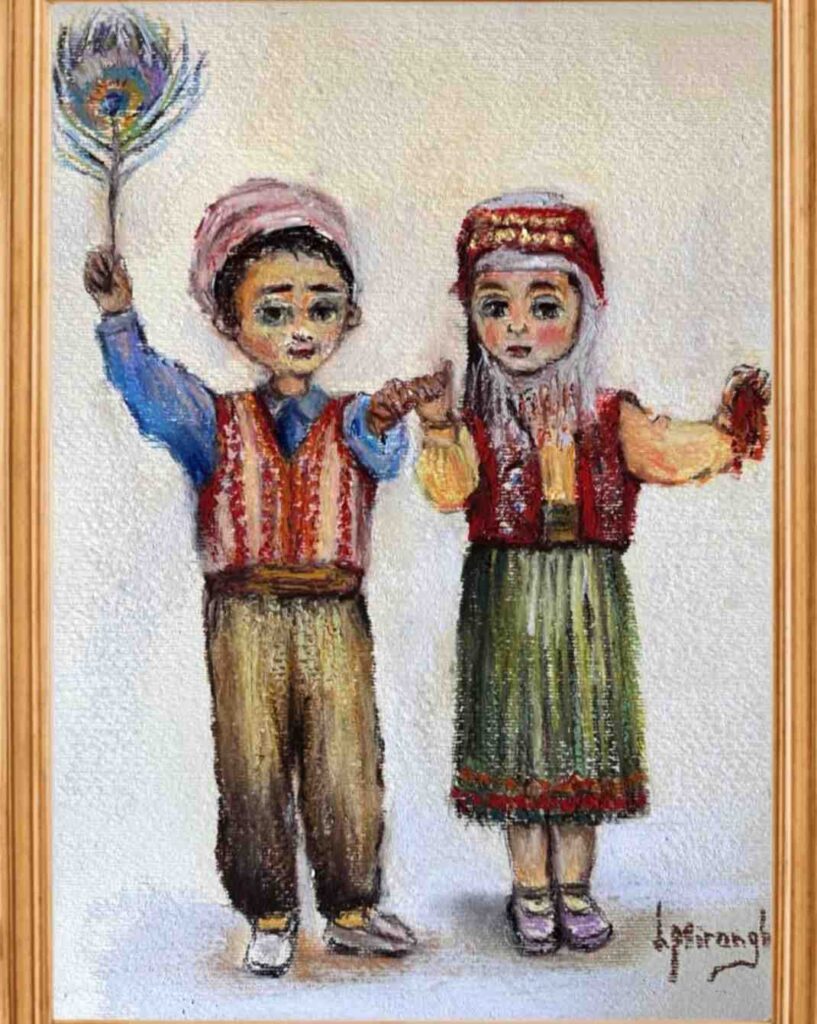
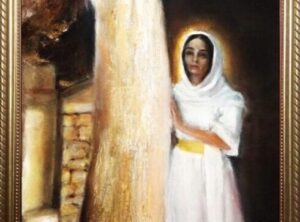
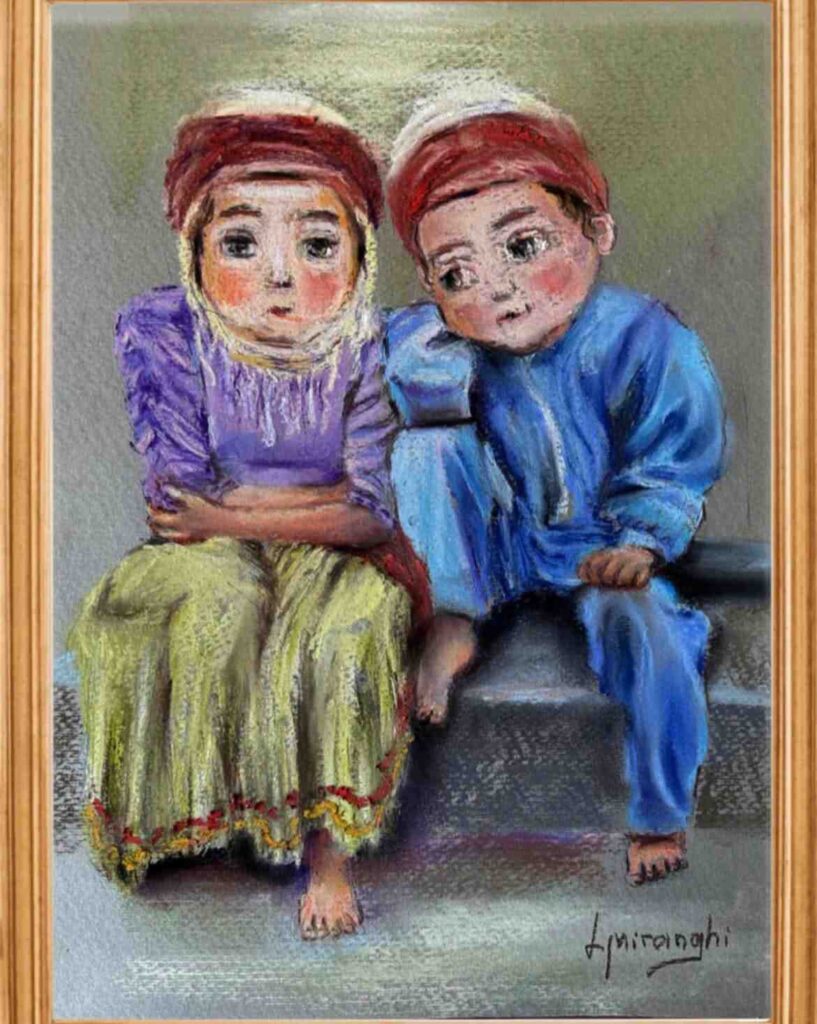
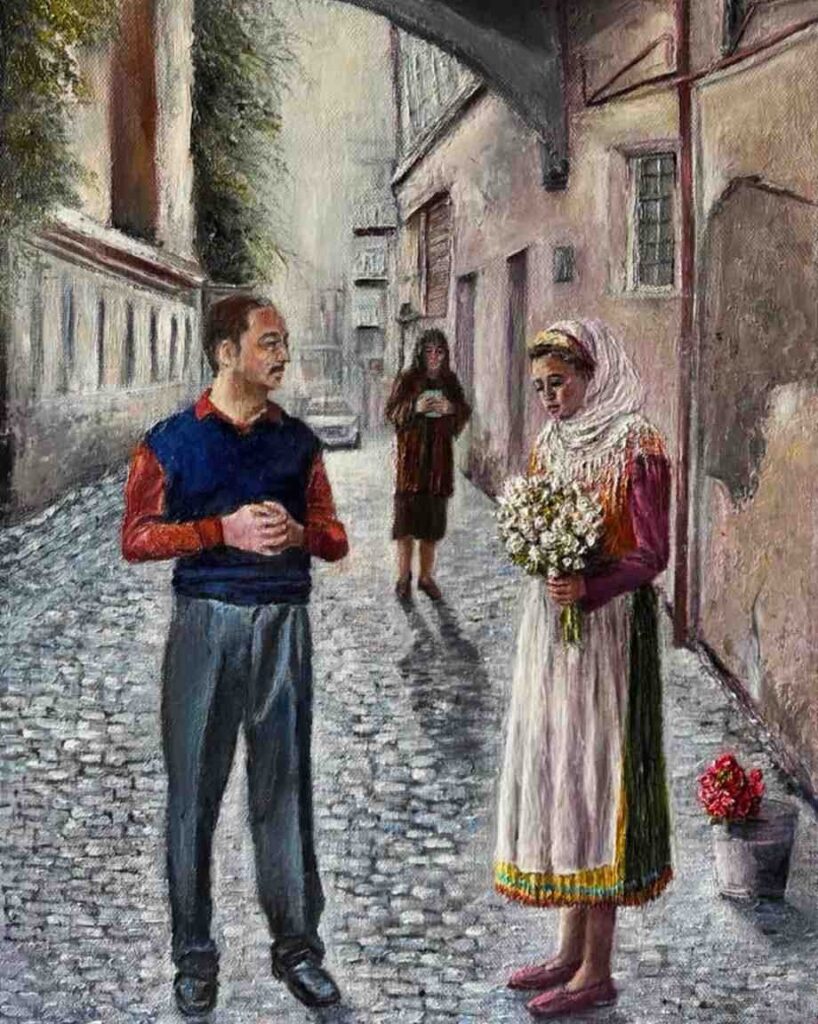
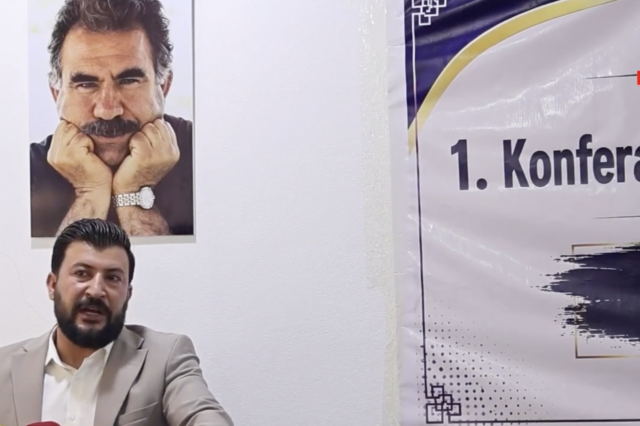
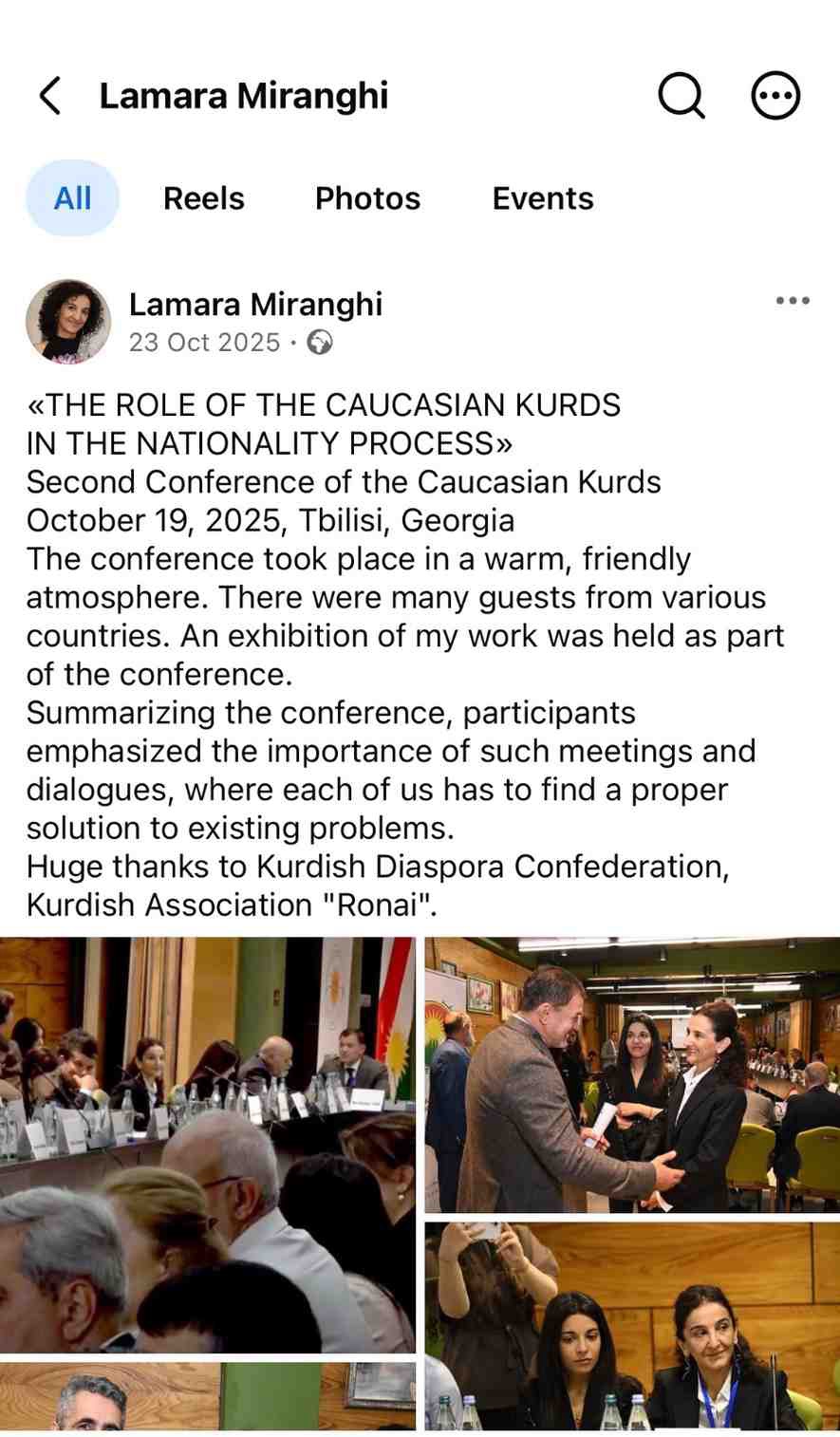
Yet these paintings have not always been presented to the public as Ezidi art. Mirangi’s exhibition Back to the Roots was linked to the Kurdish Diaspora Confederation and the association Ronai, while promotional material placed the work within a Kurdish cultural framework. She also participated in a conference about the role of Caucasian Kurds in a national political process, where her paintings appeared alongside Kurdish flags and nationalist messaging.
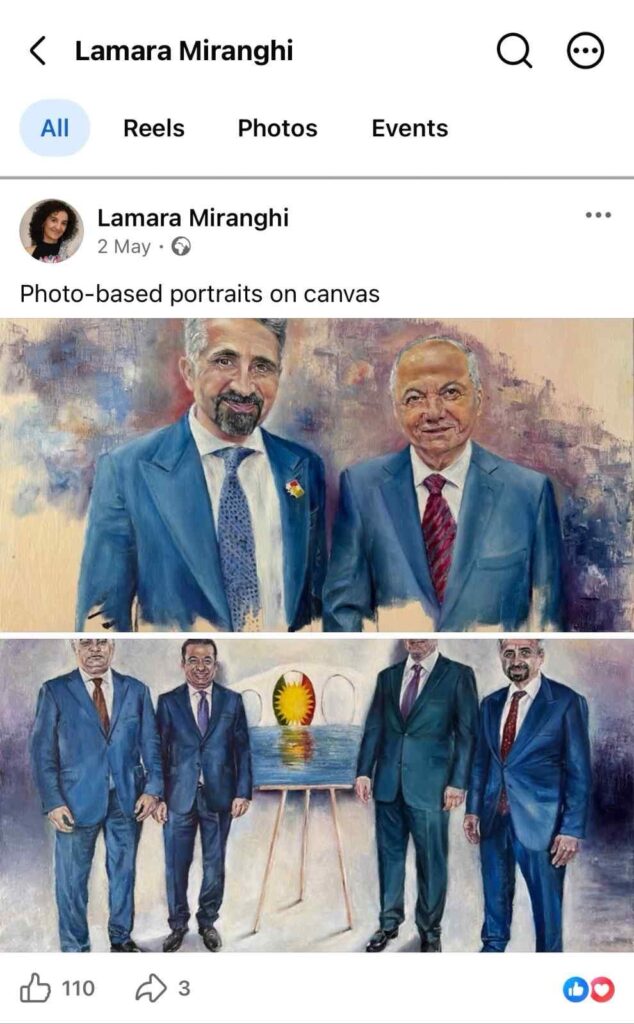
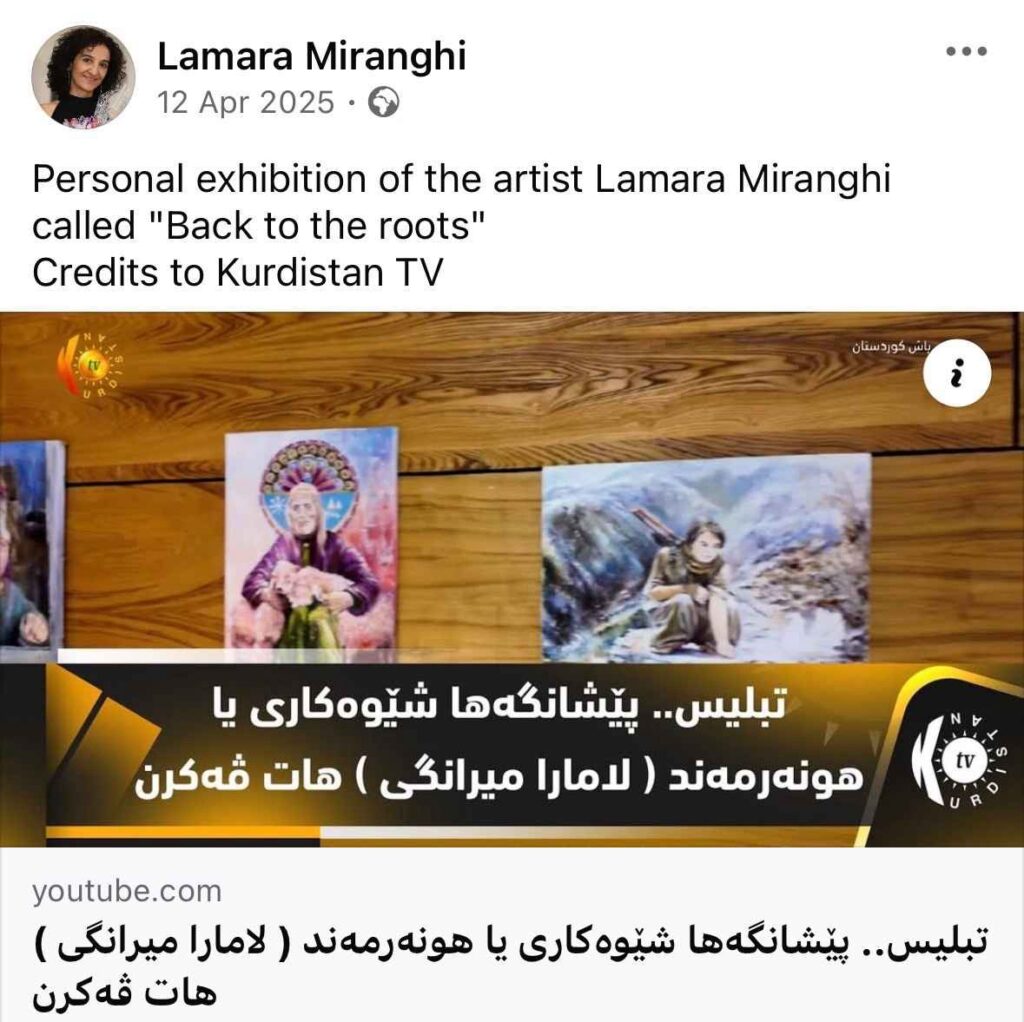
The title Back to the Roots therefore raises an obvious question: whose roots were being presented? When the people on the canvas are Ezidi, the clothing is Ezidi and the religious imagery belongs to Sharfadin, presenting that heritage as Kurdish culture is not preservation. It is repackaging.
No political organisation gains ownership of Ezidi culture by funding an exhibition or placing its flag beside a painting. Shared geography does not erase the identity of the people being portrayed, and political cooperation does not transform one people’s heritage into the property of another national movement.
It could be argued that Mirangi did not control how others described her work. That explanation might have been believable if this had happened once, but her own public activity makes it difficult to maintain. She has promoted the organisations involved, thanked them publicly and continued participating in events where Ezidi imagery is absorbed into a Kurdish political narrative without offering any visible objection.
Her own public record removes the excuse
The political framing does not come only from exhibition organisers. In a published interview, Mirangi spoke approvingly about “today’s Kurdish culture,” discussed Kurdish artists and Kurdish women fighters, and referred to the culture of “our people.” The publication presented her within a Kurdish national framework, and she answered without clearly separating the Ezidi identity represented in her paintings from the Kurdish identity promoted around them.
Mirangi may not have directly stated in that interview that Ezidis are Kurds, but direct wording is not the only way political assimilation takes place. When an artist repeatedly presents Ezidi faces, clothing and sacred symbols in Kurdish nationalist settings, the audience is encouraged to understand those subjects as Kurdish.
Her paintings are not abstract works without an identifiable cultural origin. They show specific people, religious figures, garments and traditions, and those details carry political meaning when they are placed beneath another national label. A painting of an Ezidi child displayed among Kurdish flags does not remain politically neutral simply because it is beautiful.
Art can preserve identity, but it can also rewrite it. Mirangi’s work becomes propaganda when Ezidi culture is used to provide emotional depth, historical roots and visual legitimacy to a Kurdish nationalist project that refuses to recognise Ezidis as a separate ethnic and religious people.
The contradiction is impossible to overlook. The paintings rely on Ezidi distinctiveness to attract attention, but the political setting around them erases that same distinctiveness. Ezidi culture is valuable enough to exhibit, celebrate and market, but apparently not valuable enough to identify truthfully.
Sharfadin is not material for nationalist branding and political propaganda
The use of Sharfadin imagery makes this more serious than an argument over clothing or artistic style. Sharfadin is the religion of the Ezidi people, and its sacred figures, symbols, hymns and religious texts are not politically ownerless material available for another national movement to claim.
An artist has the right to paint religious subjects and draw inspiration from the culture in which she was raised. That right does not include the authority to detach sacred material from the people to whom it belongs or allow it to be publicly presented as part of Kurdish culture.
Mirangi has shared Ezidi religious material and sacred hymns in settings connected to Kurdish cultural and political activity. The relevant question is therefore not whether she has the artistic freedom to use them, but whether she has respected their identity. Were they clearly presented as belonging to Sharfadin and the Ezidi people, or were they used to strengthen a wider Kurdish national narrative?
Her public record does not show a serious effort to protect that distinction. There is no consistent correction when Ezidi religious imagery is described as Kurdish, no clear rejection of attempts to absorb Sharfadin into Kurdish identity and no visible insistence that the people represented in her work must be identified as Ezidi.
This is where cultural appreciation ends and appropriation begins. Painting Ezidi traditions does not give an artist collective ownership over them, just as artistic talent does not grant political authority over the identity of an entire people.
Talent does not give her authority over Ezidi identity
Mirangi is free to support Kurdish politicians, attend Kurdish events, display Kurdish flags and cooperate with Kurdish organisations. Ezidi Times is not attempting to control her political loyalties, but those loyalties do not give her the right to place Ezidi culture beneath another national identity. What she is doing is selling her soul and body to the Kurdish extremist politicians who are attempting to diminish all ancient ethnicities minorities like Ezidis and Assyrians in order to rewrite history.
No artist has been elected to speak for the Ezidi people. No painter receives authority over Ezidi ethnicity because she reproduces traditional clothing skilfully, and no exhibition can convert Sharfadin into Kurdish heritage simply by displaying its symbols in a Kurdish political setting.
Mirangi presents her work as an effort to preserve memory, tradition and identity, but preservation begins with telling the truth about what is being preserved. Ezidi culture cannot be protected by removing the name Ezidi from it, and Ezidi women cannot be honoured by turning them into symbols of another people’s nationalism.
The consequences extend beyond one artist or one exhibition. International institutions, journalists and cultural organisations often understand Ezidis through the material placed before them. When Ezidi clothing, Ezidi religious figures and Ezidi daily life are repeatedly described as Kurdish culture, that framing enters museums, media reports, academic work and political discussions as though it were an established fact.
Ezidis then face the same erasure at every level. Their culture is praised while their ethnicity is denied, their religion is displayed while its ownership is blurred, and their suffering is used to attract international sympathy while their independent identity is pushed aside.
Ezidi Times originally intended to praise Mirangi because the paintings themselves appeared worthy of recognition. We will not, however, publish empty admiration while ignoring the political purpose those paintings are being made to serve. Beauty does not cancel propaganda, and talent does not place an artist beyond criticism.
Lamara Mirangi must decide whether she is preserving Ezidi culture or making it easier for others to appropriate. Her political loyalties are her own; she can continue to sell herself to the Kurds as much as she wants- but our Ezidi culture, Ezdiki language, sacred hymns and Sharfadin are not hers to sell.
Ezidi Times message to Lamara Mirangi:
Go and paint “Kurdish” culture without using Ezidi culture and religious traditions. And if the answer is that there is nothing left to draw then that is your answer. Stop stealing Ezidi culture to fill in an empty and shallow “Kurdish culture”.
It’s such a shame. You could have used your talent and contacts to promote Ezidi culture and raise awareness about the Ezidi genocide and the problems Ezidi women are facing, but you have chosen the to turn your back on your own people while also stealing their culture.
Shame on you Lamara, you are a disgrace to Ezidis and to the title of “artist”. Artists should paint and create art – not become political prostitutes.