
Twelve years after ISIS launched its genocidal attack against the Ezidi people, many survivors in Iraq remain displaced, living in camps with little prospect of returning home or building a stable future.
German aid worker and commentator Thomas von der Osten-Sacken recently addressed the continuing situation of Ezidis in Iraq during a radio interview. His assessment was deeply pessimistic. According to accounts from colleagues working in displacement camps near Duhok, suicide and increasing drug use have become two of the most serious concerns among residents.
For families who have spent almost twelve years in temporary accommodation, such despair is not difficult to understand. Many have lived through genocide, the killing or disappearance of relatives, years of displacement and repeated promises that conditions would improve. Yet safe return, reconstruction, employment and meaningful psychological support remain unavailable to many.
Life in displacement has become permanent
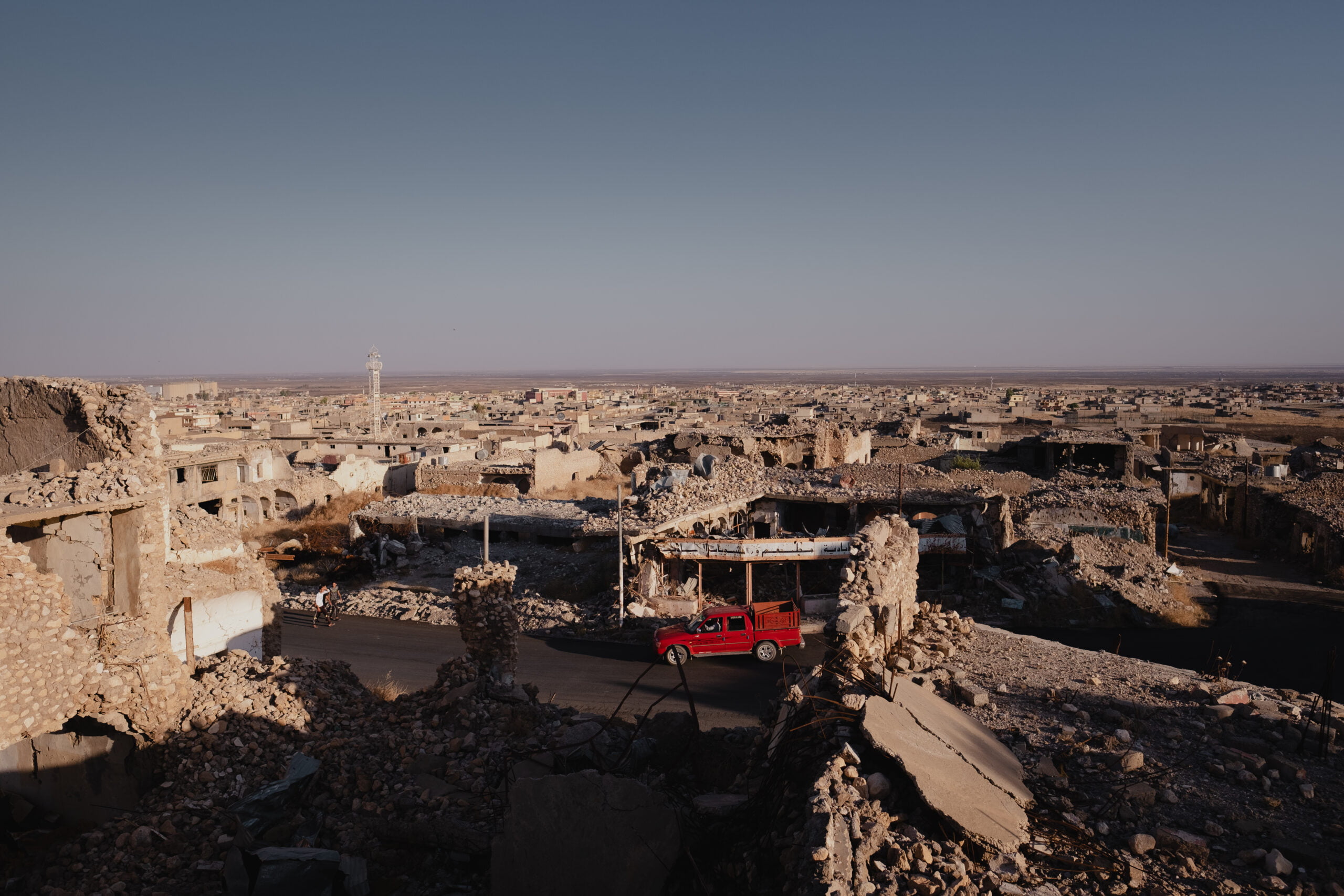
Thousands of Ezidis fled Sinjar after ISIS began its coordinated attack on 3 August 2014. Men and elderly women were massacred, women and girls were abducted and enslaved, children were separated from their families, and entire villages were destroyed or emptied.
What was initially presented as temporary displacement has, for many, become a permanent condition.
Families living in camps in and around Duhok continue to face uncertainty over housing, income, education and security. Children who arrived as infants have now spent almost their entire lives in camps. Others were born there and have never known a stable home outside displacement.
The prolonged absence of a credible future has created severe psychological pressure. Trauma from the genocide has been compounded by poverty, dependency, unemployment and the inability to return safely to Sinjar.
According to the account shared by von der Osten-Sacken, workers in the camps increasingly encounter conversations centred on suicide and drug abuse. These concerns reflect not only individual suffering but also the consequences of years of political neglect.
Return to Sinjar remains difficult
Although ISIS no longer controls Sinjar, the end of its territorial rule did not create the conditions required for a safe and dignified return.
Security remains fragmented, political disputes continue, basic infrastructure has not been fully restored, and many homes and villages remain damaged or destroyed. Families are also reluctant to return while missing relatives remain unaccounted for and mass graves are still being investigated.
For survivors, returning is not simply a matter of travelling back to a geographical location. It requires security, housing, schools, medical services, employment and confidence that another attack will not be allowed to happen.
Without these conditions, calls for displaced Ezidis to return risk becoming a way of closing camps without resolving the underlying causes of displacement.
European deportations add another layer of insecurity
At the same time, Ezidi asylum seekers and survivors in Germany and other European countries continue to face the possibility of deportation to Iraq.
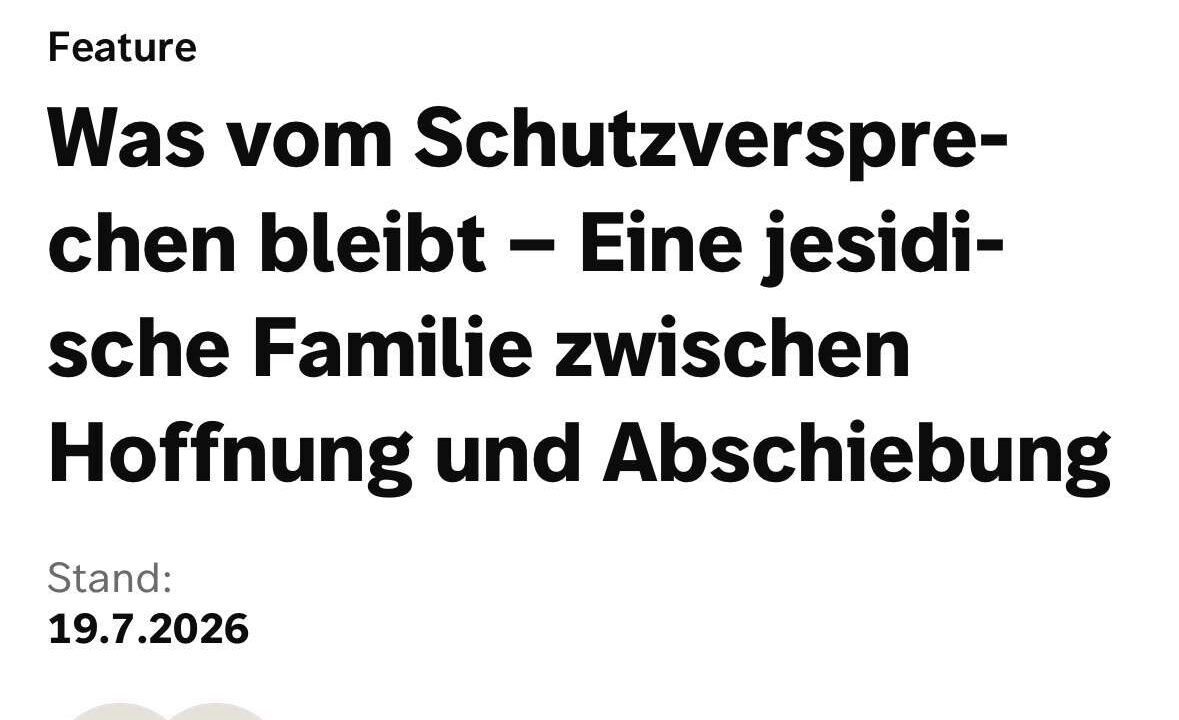
An upcoming SWR Kultur radio feature examines the experience of one Ezidi family that narrowly escaped the genocide and later received protection in Germany. The family subsequently faced removal after authorities concluded that return to Iraq was possible.
According to the programme description, the family challenged the negative decision. However, in July 2025, they were removed from their accommodation during the night and deported to Iraq while a court decision was reportedly still expected.
The programme states that a period of only eleven minutes separated the deportation from the legal proceedings that might have affected the family’s case.
The case raises serious questions about how deportation decisions involving Ezidi survivors are assessed. A formal conclusion that Iraq is generally safe does not necessarily reflect the specific risks faced by Ezidis, the conditions in displacement camps or the continuing instability affecting Sinjar.
Recognition without protection
Several countries and institutions have recognised the crimes committed by ISIS against the Ezidi people as genocide. Yet recognition alone has not produced the long-term protection survivors were promised.
Many Ezidis remain displaced. Thousands are still missing. Survivors continue to wait for justice, reparations and proper psychological care. Families who sought refuge in Europe may still face removal to a country where they have no secure home, income or realistic future.
The contradiction is increasingly difficult to ignore: governments commemorate the genocide, recognise the suffering of the Ezidi people and speak publicly about justice, while survivors remain in camps or face deportation to the same conditions from which they fled.
Twelve years after the genocide began, the crisis is no longer only the result of what ISIS did in 2014. It is also the result of what governments and institutions have failed to do since.
Radio programme information
Name: What Remains of the Promise of Protection — An Ezidi Family Between Hope and Deportation
Original title: Was vom Schutzversprechen bleibt – Eine jesidische Familie zwischen Hoffnung und Abschiebung
Date: 24 July 2026
Time: 15:05–16:00
Broadcaster: SWR Kultur
Authors: Maria Caroline Wölfle and Johanna Sagmeister
Production: rbb, 2026