
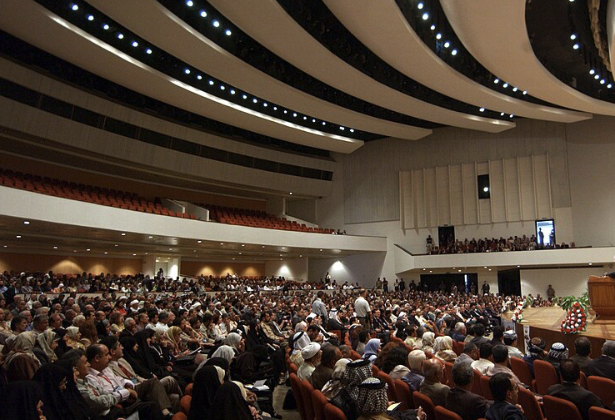
The Iraqi Parliament (Council of Representatives) consists of 329 seats, of which 9 are constitutionally reserved for minority quotas. These are designed to guarantee representation for smaller ethno-religious communities that would otherwise struggle to win seats in the national election system dominated by larger Arab and Kurdish blocs.
Any Iraqi voter — regardless of ethnic or religious background — can vote for quota candidates. There is no separate voter registry demarcated for members of that minority. That is one of the most controversial characteristics of Iraq’s quota system.
Purpose of the Quota System
The quota system was introduced to:
- Ensure political inclusion of Iraq’s minorities (Ezidis, Christians, Shabaks, etc.)
- Prevent total marginalization of smaller communities within the larger national framework.
- Stimulate the development of a pluralistic, multi-ethnic democracy after decades of victimization, discrimination, and totalitarianism.
However, in practice, this system has often been manipulated by some political parties to enhance their parliamentary power rather than empower minorities.
The 2025 Elections: What Happened
Overall Numbers
Around 53 candidates competed for the 9 quota seats. More than 120,000 votes were cast for quota candidates across Iraq. Out of these 9 seats, 5 were won by candidates affiliated with or supported by the KDP (Kurdistan Democratic Party).
Ezidi Quota Seat
The Ezidi quota seat for Nineveh province was won by Khalid Sido, who received approximately 9,686 votes. He ran with backing from the Kurdistan Democratic Party (KDP). Competing Ezidi candidates who ran as independents or represented local Ezidi movements from Sinjar received fewer votes, largely because they lacked the organizational and financial machinery of major Kurdish parties.
Why the KDP Won the Ezidi Quota Seat in 2025
There are five main reasons behind the KDP’s success in grabbing the Ezidi quota:
1. Open Voting System:
The Iraqi election law allows any voter to vote for any quota candidate. This means that non-Ezidi voters (mainly Kurdish supporters of the KDP) could vote for an Ezidi candidate affiliated with their party. In Nineveh, the KDP mobilized thousands of Kurdish voters in the Duhok and Sheikhan areas — traditionally strongholds of KDP influence — to vote for their chosen Ezidi candidate.
2. Party Machinery and Resources:
The KDP has one of the strongest political networks in northern Iraq, including Duhok and parts of Nineveh. It used its organisational structure, funding, and media presence to promote its endorsed Ezidi candidate far more effectively than independent Ezidi figures could.
3. Weak Independent Ezidi Representation:
Many Ezidi activists and survivors from Sinjar (Shingal) lack political party support or sufficient funding. Independent Ezidi candidates often campaign with limited outreach and security challenges in Sinjar, where instability and disputes between Baghdad and Erbil persist. This fragmentation allowed the KDP to consolidate votes under one banner.
4. Political Strategy by the KDP:
The KDP views minority quota seats — especially Ezidi, Christian, and Feyli Kurdish seats — as strategic assets to increase its overall seat count in Parliament. Controlling these seats boosts the KDP’s influence during coalition negotiations in Baghdad. This strategy is not new; it has been used effectively since the 2018 elections.
5. Voter Displacement and Diaspora Issues:
A large portion of Ezidis displaced from Sinjar after the 2014 ISIS genocide still reside in camps in Duhok. These camps fall under KDP-administered territory, meaning voting logistics and access are largely influenced by the KDP’s administration. Displaced Ezidis in Duhok thus became the primary voter base — a population more reachable by KDP than independent Ezidi movements in Sinjar.
Criticism of the Quota System
1. Representation vs. Party Control
Minority leaders and civil society organizations (including Ezidis and Christian groups) have accused large political parties of “hijacking” the quota system, turning it into a political extension of dominant Kurdish or Shi’a blocs. “The quota system was meant to empower minorities, not to give extra seats to ruling parties,” said an Iraqi political analyst to Rudaw in October 2025.
2. Minimal Impact for Minorities:
While the existence of an Ezidi seat symbolises representation, the real political power of that seat is limited, particularly if the MP owes allegiance to a major party rather than their community.
3. Weak Accountability:
Ezidi and Christian quota MPs often face no accountability from their communities, since their voter base extends beyond their minority. This undermines their legitimacy as true representatives of their people.
Impact on the Ezidi Population of Sinjar
The 2025 outcome carries deep implications for Ezidis, especially those from Sinjar:
1. Limited Voice for Sinjar’s Issues:
The Ezidi MP affiliated with the KDP primarily reflects party policy, not necessarily the independent interests of Sinjar’s displaced population. Such as reconstruction, reparations, and security reform — risk being sidelined.
2. Deepening Divisions Among Ezidis:
Ezidis are now divided between Erbil-aligned groups and Baghdad/Sinjar-based independent actors. This division weakens Ezidi political unity and bargaining power at the national level.
3. Loss of Political Independence:
Many Ezidis argue that they have a quota “on paper,” but not a free voice in Parliament, since that seat is effectively under party control.
4. Calls for Reform:
Ezidi intellectuals and activists are increasingly calling for electoral reform, demanding that:
- Quota votes be restricted to members of the minority itself.
- Independent Ezidi candidates from Sinjar should be supported internationally to ensure authentic representation.
The Ezidi quota seat in the 2025 Iraqi elections, while theoretically a mechanism for inclusion, has once again been captured by a dominant party — the KDP — due to structural flaws in Iraq’s electoral system.
Instead of empowering Ezidis to speak for their devastated community in Sinjar, the system allowed a major political actor to consolidate influence under the guise of minority representation.
To achieve genuine representation:
- Iraq must amend the quota voting law so that only members of each minority can vote for their respective candidates.
- Ezidi civil society, intellectuals, and diaspora groups should work toward building independent electoral lists that represent Sinjar’s survivors and displaced population, not party interests.
- International partners and rights organizations should support Ezidi-led political initiatives, ensuring the community has both a humanitarian and political voice in Iraq’s post-conflict reconstruction.
About the Author
John Peterson
Salman Ibrahim is a correspondent for Ezidi Times. From an Ezidi family in modern-day Turkey, he documents survivor stories and co-produced the award-winning film Mediha. He reports on Ezidi history, contemporary issues, and their future in Iraq.