
New Bill Aims to Recognise the unique ethnic Identity of the Ezidis – Kurdish MPs are furious
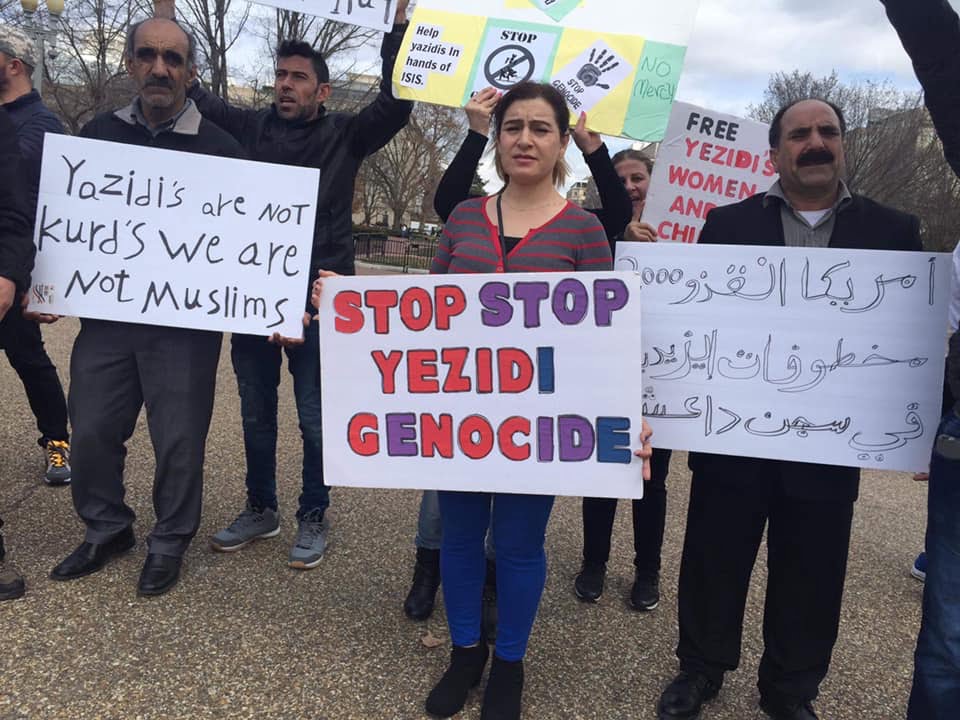
Yazidi demonstration in front of the White House in Washington DC. (March 15, 2019) The poster on the left says...
Yazidi demonstration in front of the White House in Washington DC. (March 15, 2019) The poster on the left says...
On July 10, 2024, an Iraqi court sentenced Asma Mohamed, one of the wives of the Islamic State leader Abu...
Кто дал вам право сделать eзидов “курдами”?
Зачем использовать езидов, чтобы играть жертву, когда сами являетесь типичным угнетателем? Вы забыли, каким образом было обеспечено, что в Ване не осталось езидов (или других меньшинств, кстати)? Ван, который вы с гордостью называете своим родным городом. Вы забыли, как ваши предки истребили езидов из Вана, чтобы вы могли укорениться в этом городе?
Why use the Ezidis to play victim when you yourself radiate typical oppressor behaviour? Have you forgotten how the fact has come to be that there are no Ezidis (or other minorities, for that matter) left in Van? Van which you proudly claim as your hometown. Have you forgotten how you ancestors massacred the Ezidis from Van so that you can spread your roots in Van?
Hvorfor bruge Ezidi-folket til at spille offer, når du selv udstråler typisk undertrykkeradfærd? Har du glemt, hvordan det er blevet sådan, at der ikke er nogen Ezidier (eller andre minoriteter for den sags skyld) tilbage i Van? Van, som du stolt hævder som din hjemby. Har du glemt, hvordan dine forfædre massakrerede Ezidierne fra Van, så du kunne sprede dine rødder i Van?
Stockholm - 25 January 2024 Stockholm District Court. Photo: Wikimedia Commons. A Swedish National - previously sentenced for enlisting her...
Ezidi Times extends heartfelt greetings and warm wishes to all on the auspicious occasion of Charshama Sare Sale, marking the...
Ezidi Times (Эзиди Таймс) от всего сердца приветствует и отправляет теплые пожелания всем в связи с благоприятным событием Чаршама Саре...
Ezidi Times sender sine inderligste ønsker om overflod, velstand og velsignelser til jer. Må dette Nytår bringe jer muligheder for vækst og opfyldelse, og må det være fyldt med øjeblikke af glæde, fred og velstand.
Foto: Logan Weaver på Unsplash. Den tyske anklagemyndighed har taget beslutning om at handle mod personer, der mistænkes for grusomme forbrydelser, herunder...
Фото: Логан Уивер на Unsplash. Немецкая прокуратура приняла решительные меры против лиц, подозреваемых в тяжких преступлениях, в том числе геноциде,...
Photo: Logan Weaver on Unsplash. The German Prosecution has taken decisive action against individuals suspected of heinous crimes including genocide, crimes against...
Немецкий суд отклонил апелляцию Дженнифер В. - женщины, поработившей езидку и ее дочь. Приговор в виде 14 лет лишения свободы...
German Court rejects the appeal of Jennifer W. - the woman who enslaved a Ezidi woman and her daughter. The...
Recently the news about the ISIS leader “Abu Bakr al-Baghdadi” surfaced on the internet, after his wives and daughter gave an interview on Al-Arabiya. Al-Baghdadi has allegedly been killed in a US operation in northwestern Syria in 2019, however, during his time as an IS fighter, he has held more than 10 Ezidi children and women as slaves in his household. According to the narratives of the wives and his daughter; the Ezidi girls and women were treated “well”. This is a concerning statement which Ezidi Times finds crucial to address.
Photo by Seth Frantzman on Flickr. The plight of the Ezidis, who suffered horrific atrocities at the hands of the...
Photo: CC Wikimedia Commons Newroz, a time-honored tradition signifying "New Day," holds profound cultural and historical significance for millions of...
In a world marred by the atrocities of ISIS, the voices of Ezidi women echo with the weight of unmet...
I år i august vil det være 10 år siden, at IS angreb Sinjar, begik grusomme forbrydelser og tvang flere hundrede tusinde Ezidier til at forlade deres forfædres land. Indtil i dag rapporteres det, at mellem 100.000 og 200.000 Ezidier bor i internflygtningelejre over hele Mellemøsten. Det irakiske repræsentantråd har vedtaget Yezidi Survivors Law (YSL), som havde til formål at bringe retfærdighed til Ezidierne, men også til Turkmenerne, Kristne og Shabaks. Alligevel er ingen irakisk domstol endnu blevet dømt for at begå folkedrab mod Ezidi-folket. På trods af dette er der håb blandt Ezidierne, der bor i internflygtningelejre, om at vende hjem til Sinjar.
This year in August it will be 10 years since the IS attacked Sinjar, committed heinous crimes, and forced several hundred thousand Ezidis to leave their ancestral land. To this day it’s reported that between 100 000 to 200 000 Ezidis live in IDP camps across the Middle East. The Iraqi Council of Representatives has adopted the Yezidi Survivors Law (YSL) which was aimed to bring justice to Ezidis but also Turkmen, Christians and Shabaks. Yet, to this day, no Iraqi court has sentenced anyone for committing genocide against the Ezidi people. Despite this, there are hopes among the Ezidi people, living in IDP camps, to return home to Sinjar.