
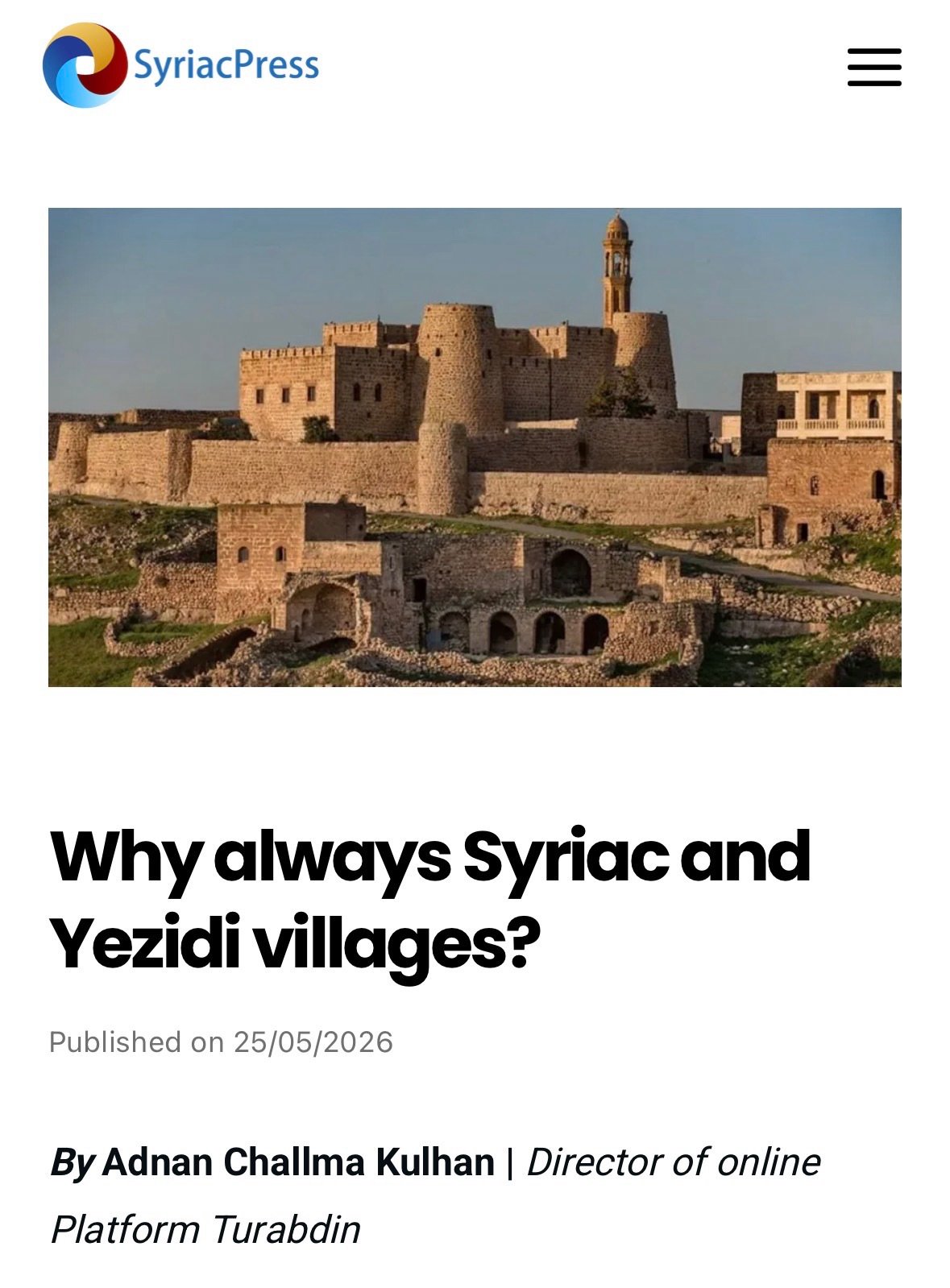
This op-ed by Adnan Challma Kulhan, Director of the online platform Turabdin, was first published by SyriacPress on 25 May 2026. The article raises concerns about the growing number of renewable energy projects planned around Syriac and Ezidi villages in Tur Abdin, including the Syriac village of ‘Aynwardo and the Ezidi village of Baçinne. The author argues that the issue is not renewable energy itself, but the lack of local consent, the threat to agricultural land and village life, and the repeated targeting of historically vulnerable minority villages.
The number of renewable energy projects is increasing rapidly across Turkey. What is striking, however, is that a significant number of these projects in the country’s southeast region are being planned and developed around Syriac and Ezidi villages. One of the latest examples is the planned “G25 Solar Power Plant” project in the Syriac village of ‘Aynwardo (Inwardo), known in Turkish as Gülgöze, in Midyat District.
In official correspondence, the project is defended under “compelling” slogans such as “For the public interest,” “Domestic energy,” and “Development.”
For the Ezidi village of Baçinne (Turkish: Güven), which faces similar issues, Syriac parliamentarian George Aryo has already raised the issue in a speech he delivered in the Turkish Grand National Assembly.
The issue is not only about energy. The main question is this: Why are these investments concentrated in minority villages like those of the Syriac and Ezidi people, whose population numbers have decreased, who have been politically weakened, and who struggle to make their voices heard?
There is one more urgent matter. The Syriac and Ezidi villages of the Tur Abdin region are among the oldest settlements, with important religious sites. In recent years, they have attracted serious numbers of domestic and international tourists, making major contributions to the region’s development. The planned large-scale energy projects will cause significant harm to tourism.
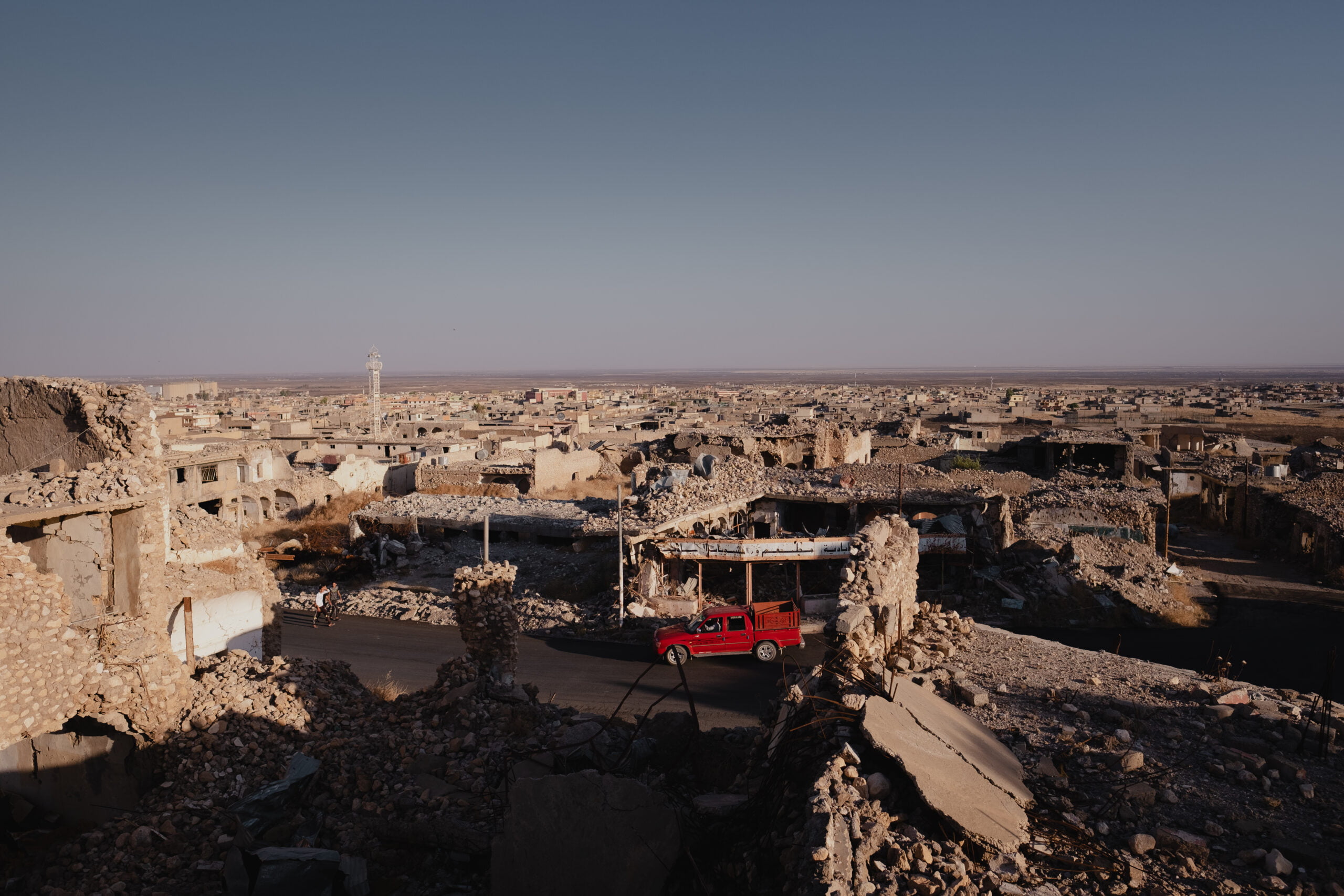
The geography of Tur Abdin is continuously labeled as “ownerless land.” Syriacs and Ezidis lack strong political influence in Ankara. Most of these villages were emptied during the 1990s, forcing their inhabitants to migrate around the world, primarily to Europe. And today, at a time when hopes for return to these villages are being revived, their agricultural lands and pastures, essential for the livelihood of these people, are being opened up to large-scale energy projects.
The people of ‘Aynwardo have publicly stated that the G25 Solar Power Plant project will negatively affect their grazing lands, water resources, and agricultural production. The objections of the local population, however, are being ignored.
The fundamental issue here is not renewable energy itself, but rather decision-making without the consent of the people and the destruction of the villages’ living spaces. If “public interest” were truly being considered, alternative locations would have been evaluated. Because development cannot be achieved by ignoring a people’s historical memory and living environment.
What is happening today in the villages of ‘Aynwardo and Baçinne may tomorrow happen in other Syriac or Ezidi villages. Therefore, the energy, mining, and similar projects being developed in Syriac and Ezidi villages must be immediately reconsidered. Projects that threaten agricultural lands and living spaces and do not have the explicit consent of local people must be halted. Minority villages should be regarded not as economically weak and vulnerable areas, but as historical, cultural, and heritage sites that must be protected.