

This article is written by Giorgi (“George”) Gigauri, Visiting Fellow at Pembroke College, University of Oxford, and former IOM Chief of Mission in Iraq. In this piece, he reflects on the future of the Ezidi people after genocide, displacement, and migration.
History is full of peoples who survived conquest, persecution, and exile, only to disappear in times of peace. The danger facing many small ethno-religious communities today is not necessarily annihilation but dispersal. Forced displacement, followed by voluntary migration, can gradually dissolve communities that have existed for centuries, even millennia.
The modern world celebrates mobility. Humanitarians quite rightly seek safety, opportunity, and dignity for those uprooted by conflict. Yet there is an uncomfortable question that deserves greater attention: what becomes of a people whose identity is inseparable from a particular place when that people no longer lives there?
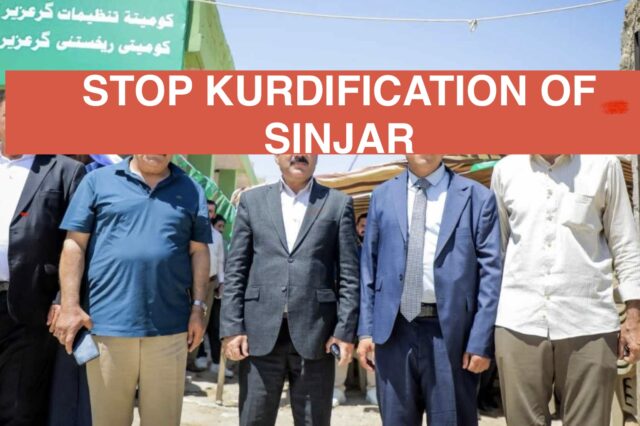
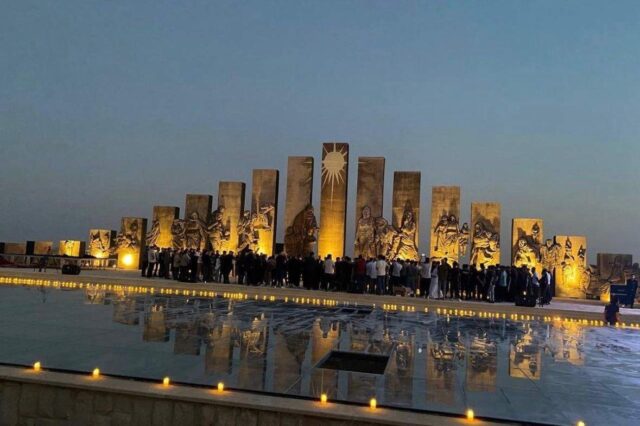
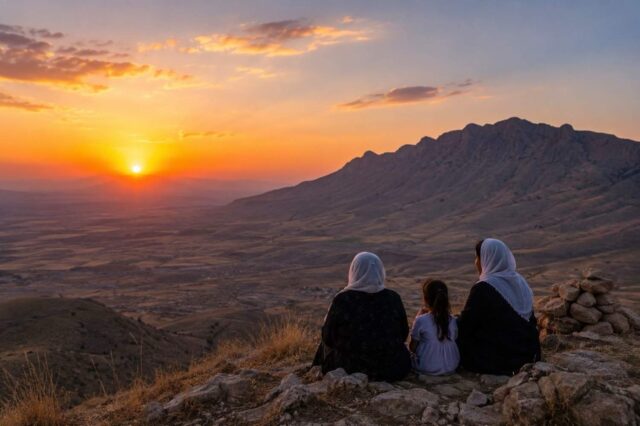
The Ezidis are perhaps the clearest example. For centuries they have inhabited the lands of around Sinjar and maintained their spiritual centre in Lalish, in modern-day Iraq. Their faith, traditions, and collective memory are deeply rooted in this landscape. Unlike many religions that can be practised anywhere, Ezidism possesses a profound geographical dimension. The connection between people, faith, and land is not incidental; it is foundational.
I witnessed this dilemma first-hand during my work in the region. Following the atrocities committed by ISIS in 2014, humanitarian actors faced the immense challenge of supporting Ezidi survivors. We worked to facilitate voluntary returns to areas of origin, while also helping those who chose other futures, including resettlement abroad. Both pathways were legitimate. Both responded to real needs.
Yet the consequences of these choices extend beyond individual lives.
More than a decade after the genocide, large numbers of Ezidis remain displaced. Hundreds of thousands left Sinjar, and many have not returned. Germany alone is now home to one of the largest Ezidi communities outside Iraq, with estimates ranging from 150,000 to 200,000 people. Thousands more have settled elsewhere in Europe, North America, and Australia. At the same time, insecurity, limited services, political fragmentation, and lack of economic opportunities continue to discourage return to communities of origin.
From a humanitarian perspective, the logic is straightforward. Our responsibility is to support people in achieving durable solutions. These may include return, local integration, or resettlement elsewhere; always on voluntary basis with a focus on protection. The choice belongs to those affected.
But history invites us to look further ahead.
What happens if a generation of young Ezidis decides not to return? As was the sentiment among many teenagers I conversed with in Sharia camps in Kurdistan. Likewise, what happens if children born in Berlin, Stockholm, or Toronto grow up detached from Sinjar and Lalish? What becomes of a community whose identity was shaped by a specific geography when that geography becomes merely an ancestral memory?
The disappearance of the Ezidis, if it occurs, is unlikely to happen through violence. At least given the current state of affairs. It may, however, happen through success: through education, integration, prosperity, and gradual assimilation. A people can survive physically while diminishing culturally. History offers many such examples.
This is not an argument against migration, nor against the right of survivors to build new lives wherever they choose. Rather, it is an argument for broadening our perspective. Humanitarian action should not only protect individuals; it should also consider the survival of cultures, traditions, and collective heritage. Especially of historically persecuted groups.
The future of the Ezidis raises questions that extend far beyond Iraq. In an age of unprecedented mobility, we must ask whether safeguarding vulnerable communities means more than ensuring their physical safety. It may also require preserving the bonds of place, memory, and identity that have sustained them for generations.
Otherwise, we may discover that a people who survived genocide could not survive dispersal.
About the author
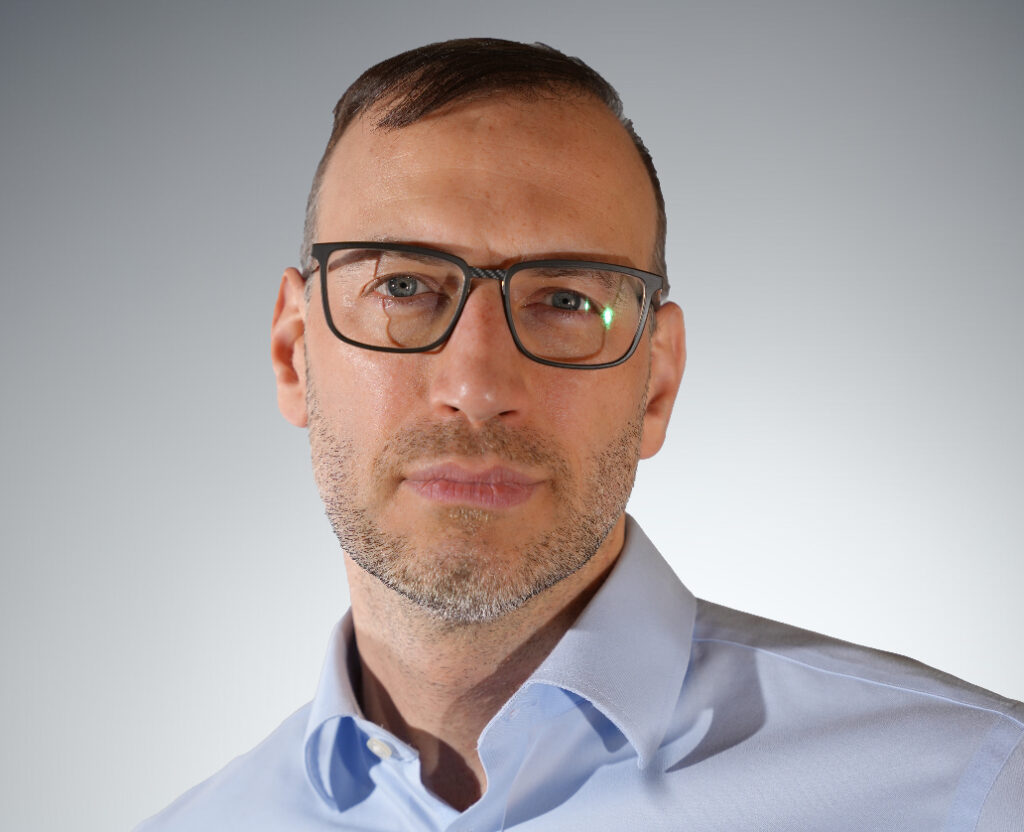
Giorgi (“George”) Gigauri is a humanitarian leader and policy expert with more than twenty years of experience in the United Nations system. He is currently a Visiting Fellow with the Global Security Programme at Pembroke College, University of Oxford, where his research focuses on peacebuilding and security dynamics in the Middle East. Until 2025, he served as Chief of Mission for the International Organization for Migration (IOM) in Iraq, overseeing initiatives on protection, durable solutions, and post-conflict stabilisation. During his time in Iraq, he worked closely with the Ezidi communities on efforts related to recovery in Sinjar, transitional justice, reparations for survivors of ISIS atrocities, memorialisation, and the long-term reintegration of displaced populations. Over the course of his career, George has held senior leadership positions across the Middle East, Asia, and Eastern Europe, including in Bangladesh, Indonesia, Papua New Guinea, and Ukraine, managing large-scale humanitarian, migration, and development programmes. He holds postgraduate degrees from the Universities of Oxford and Cambridge, speaks three languages, and contributes to academic and policy debates through his research, publications, and guest lectures.