
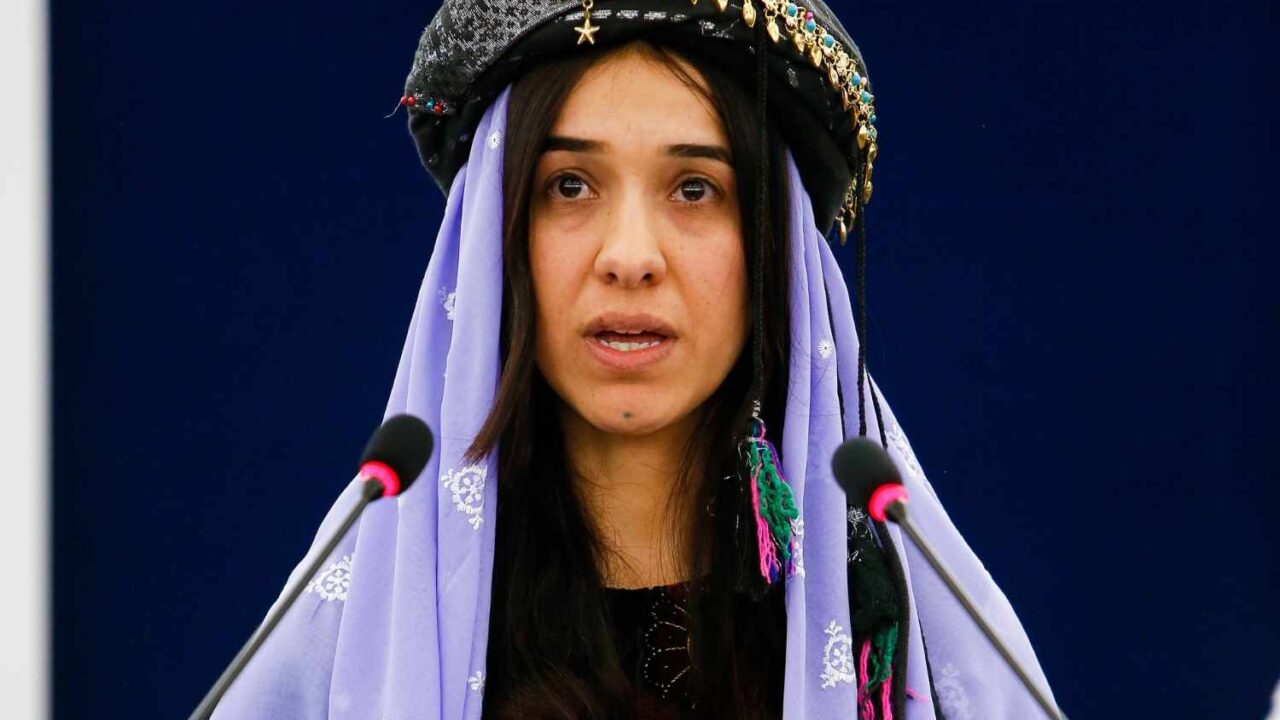
Nobel Peace Prize laureate Nadia Murad and other Ezidi women who survived ISIS captivity addressed a press conference at the United Nations Office in Geneva on 30 July 2026, warning that justice for the genocide against Ezidis remains far too slow twelve years after the crimes were committed.
The press conference was organised by France ahead of the commemoration of the genocide on 3 August. Murad called for stronger international action to prosecute ISIS members, recover those who remain missing or captive, identify human remains and create conditions that would allow displaced Ezidis to return safely to their homes.
“After surviving, many of them have decided to use their voice to fight for justice for our people,” Murad said. She noted that many survivors still have relatives in captivity, while the remains of family members who were killed have not been identified and returned.
Murad also drew attention to Ezidis who continue to live in displacement camps.
“For twelve years, we have been repeating the same issues: the missing women and children, the remains to be identified, the need for Ezidis to be able to return home, and justice to be delivered for survivors,” she said.
Although some progress has been made, Murad said it has been painfully slow.
“For many families, it is torture, because they still wait every day in tents, while many remain in captivity,” she said. “Prevention starts with justice and accountability — and that is what we are all here for.”
Murad was joined by other Ezidi women who survived sexual violence and enslavement under ISIS. Among them was Khawa Ali, who warned that some ISIS members had returned to Europe and were now “walking free”, while their victims continued to live in fear.
Ali welcomed the conviction in Belgium last year of the man who had held her captive and called on the international community to continue bringing ISIS members to trial.
“Our hope is that justice will be delivered and that the international community will continue the trials,” she said.
ISIS attacked Sinjar on 3 August 2014 as part of a systematic campaign to destroy the Ezidi people. Thousands of men were killed, while thousands of women and children were abducted and taken into captivity. Women and girls were sold, trafficked, forcibly converted and subjected to systematic sexual violence and enslavement.
Twelve years later, thousands of Ezidis remain missing, many mass-grave victims have still not been identified, and large numbers of survivors and displaced families have yet to return permanently to Sinjar.
The Geneva press conference renewed calls for prosecutions, the recovery of the missing, the identification and return of victims’ remains, and meaningful international support for survivors.