

On 3 August 2026, Ezidis in several countries gathered to commemorate the victims of the genocide that began in Sinjar on 3 August 2014. Memorial ceremonies, public gatherings, exhibitions, film screenings and moments of silence honoured those who were murdered, remembered the missing and renewed demands for justice and accountability.
Iraq
Sinjar
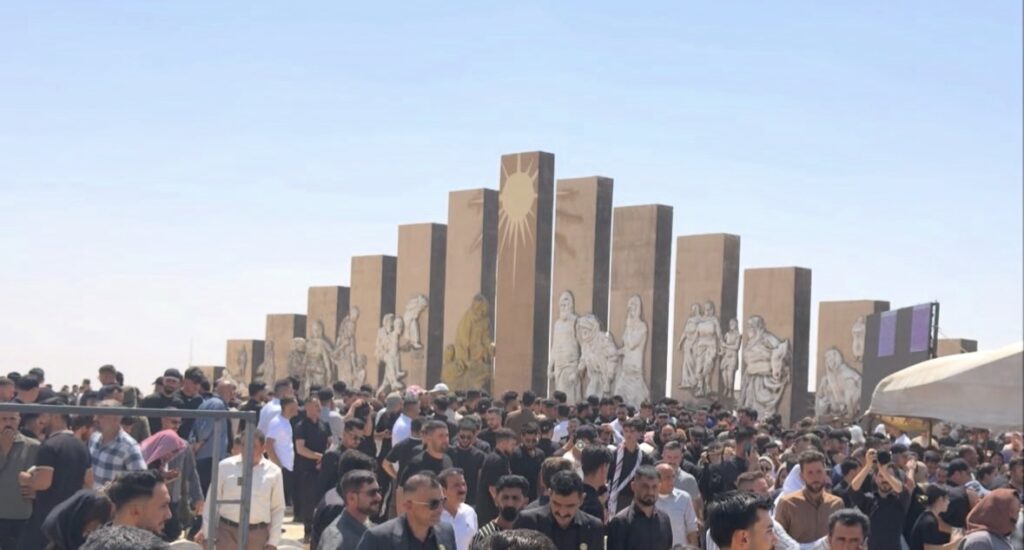
Ezidis gathered in Sinjar, where the genocide began, to honour the murdered, remember those who remain missing and stand with survivors. The commemorations also renewed demands for reconstruction, accountability and the safe return of displaced Ezidis to their homeland.

Armenia
Yerevan
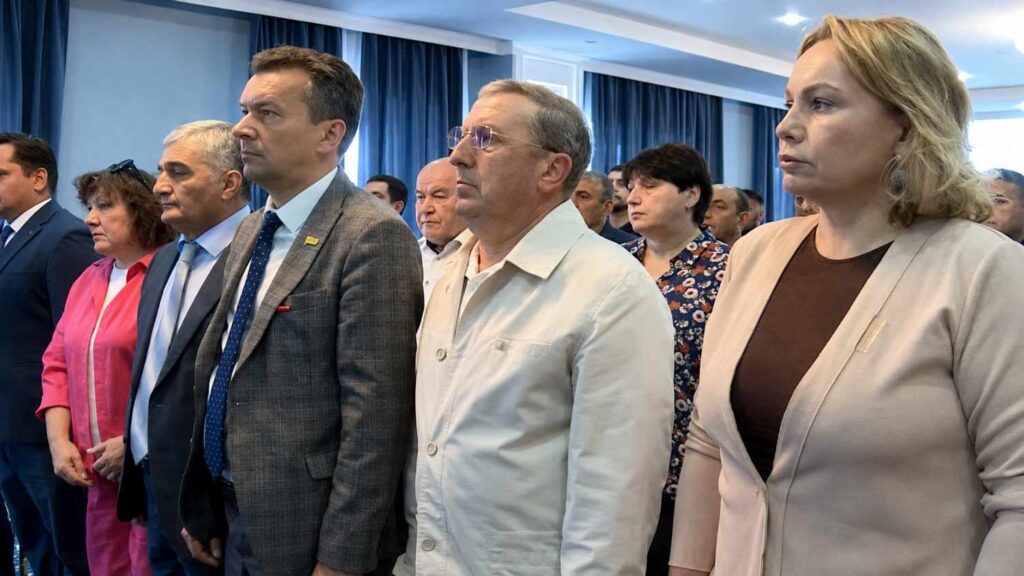
In Armenia, MP Rustam Bakoyan called on members of the National Assembly to stand and observe a minute of silence in memory of the victims of the 3 August 2014 Ezidi genocide. The parliamentary tribute reflected Armenia’s official recognition of 3 August as a national commemoration day for the victims.
Australia
Toowoomba
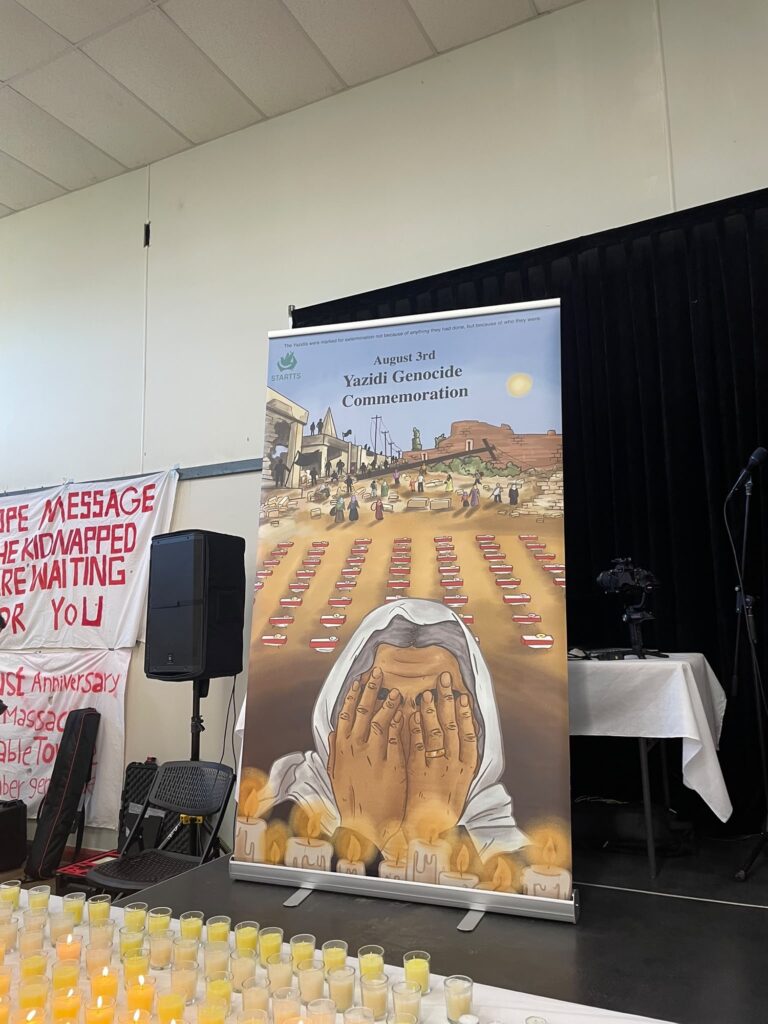
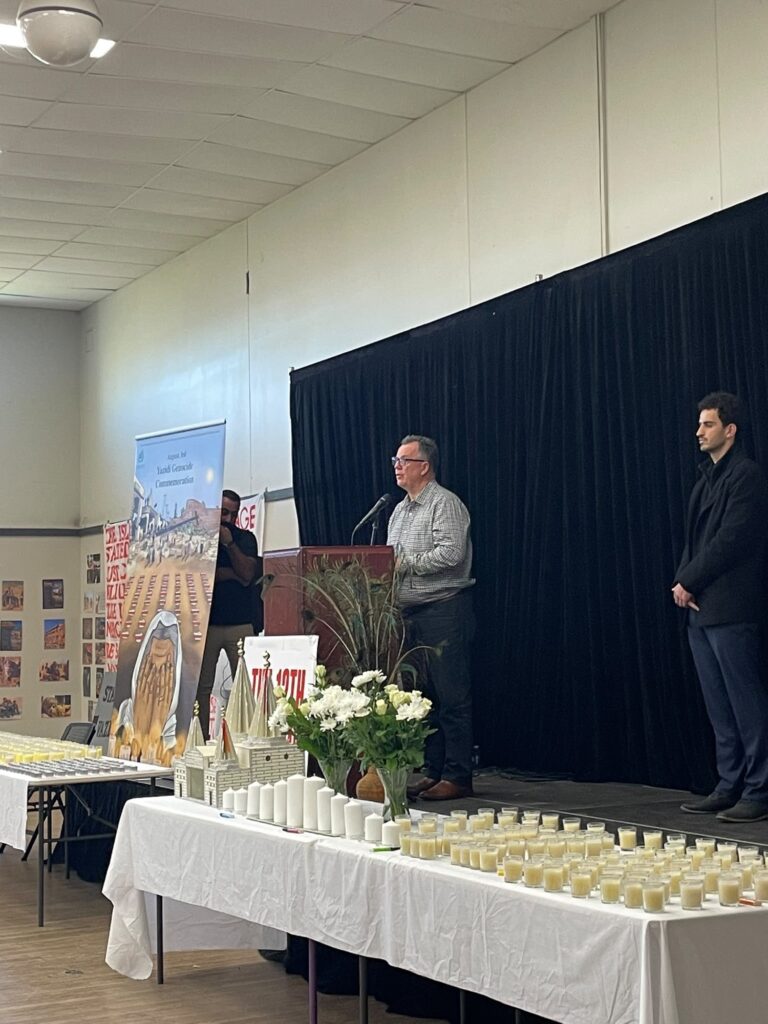
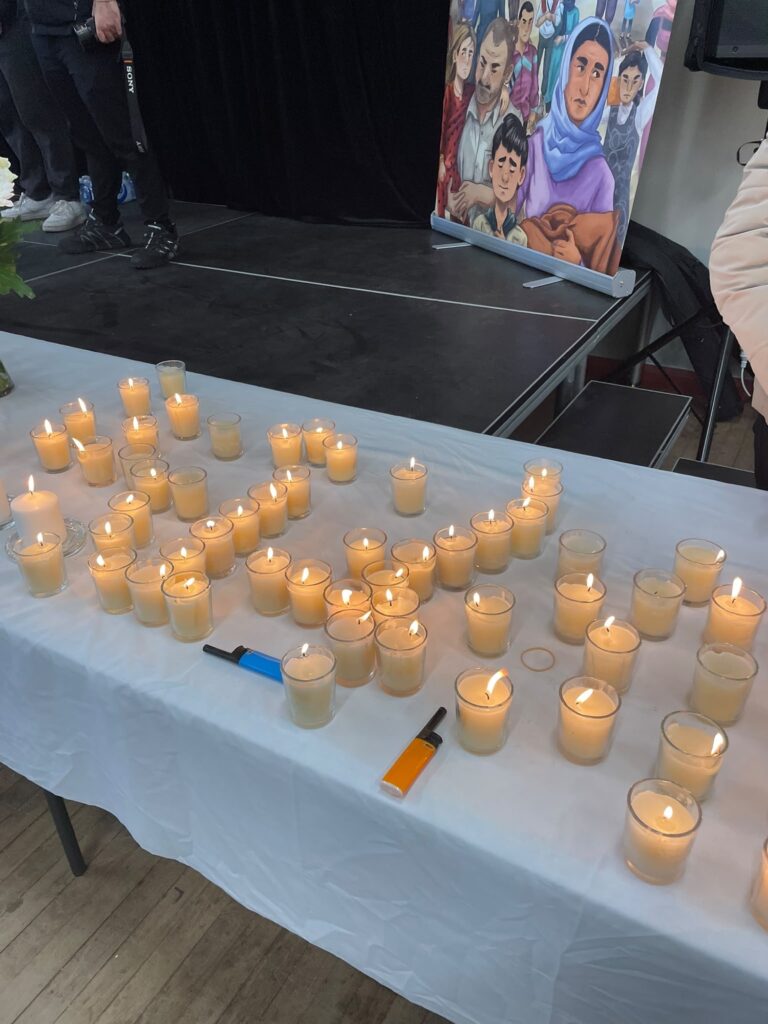
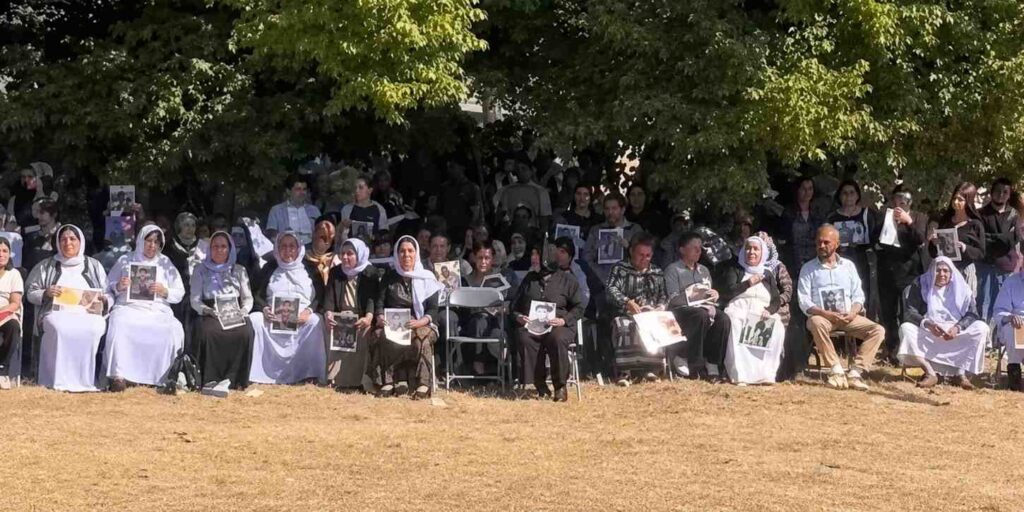
Hundreds gathered in Toowoomba for a public commemoration attended by Ezidi families, survivors and Australian representatives. Photographs of victims were displayed as speakers reflected on the continuing suffering of displaced families, the Ezidis who remain missing and the need for international action and justice.
Austria
ORF Radio Coverage
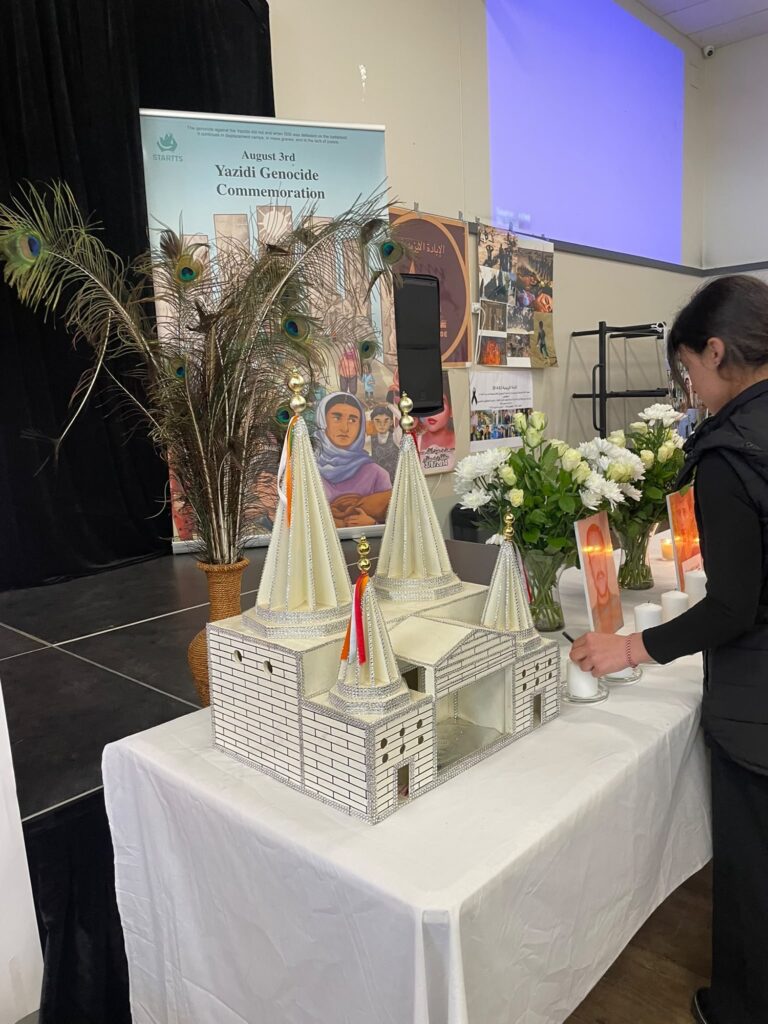
Austria’s public broadcaster ORF marked the commemoration of the genocide against Ezidis in its Religion aktuellprogramme on 3 August 2026.
The segment recalled the ISIS attack on Sinjar on 3 August 2014, during which thousands of Ezidi men and boys were killed, thousands of women and girls were abducted and enslaved, and hundreds of thousands of Ezidis were displaced. ORF also noted that the crimes have been recognised as genocide by the United Nations and several states.
France
Montauban
A ceremony was held at the Jardin des Plantes in Montauban to commemorate the victims of the 3 August 2014 genocide against Ezidis. The gathering took place beside an olive tree planted by the city as a memorial and was attended by local elected representatives and the Bishop of Montauban.
The event was organised by AMVGK France. During the ceremony, its president called on the French authorities to recognise what he described as genocides committed against the Kurdish people. The commemoration therefore placed the genocide against Ezidis within a broader Kurdish political narrative rather than recognising it solely as a genocide committed against the distinct Ezidi people.
Georgia
Tbilisi
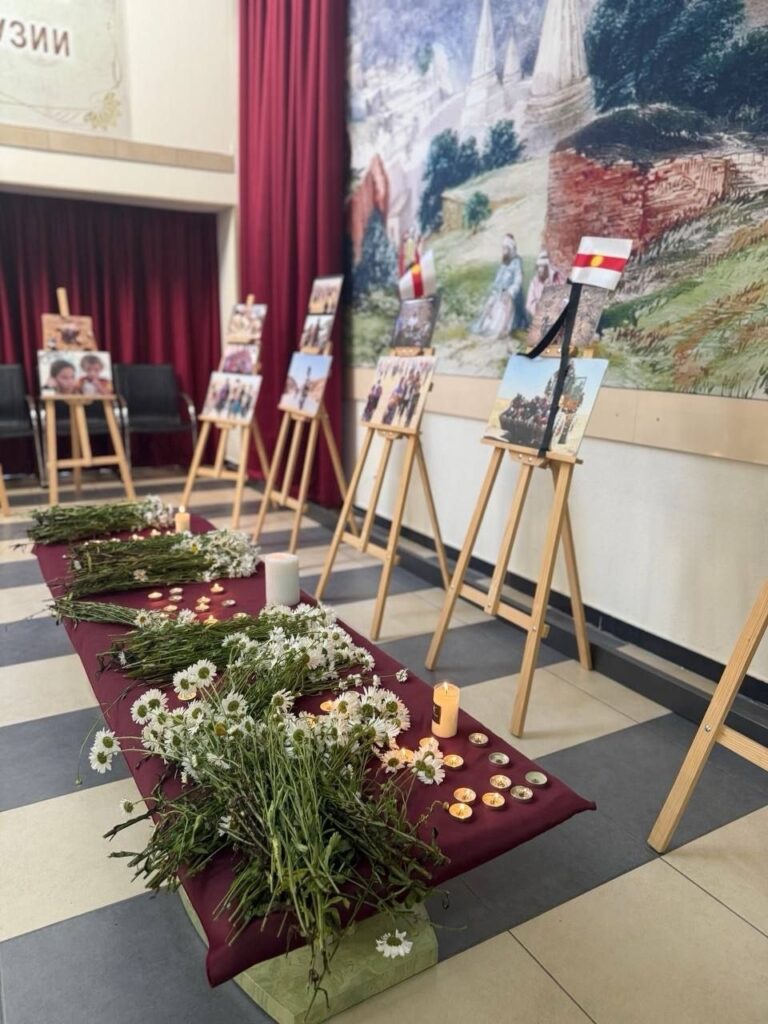
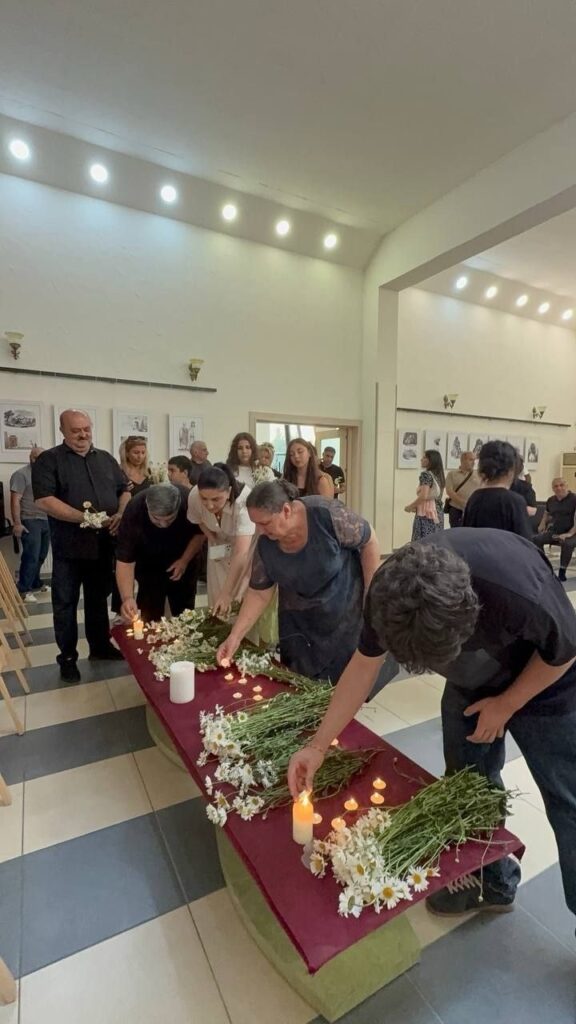
Ezidis gathered at the Ezidi Cultural Centre in Tbilisi, where a photographic exhibition documented the genocide and preserved the memory of its victims. Participants reaffirmed their commitment to Ezidi identity, Sharfadin and historical truth, while the national flag of Ezidxan was raised as a symbol of resistance, dignity and survival.
Germany
Berlin
Ezidis gathered opposite Berlin’s Rotes Rathaus on 3 August 2026 to commemorate the genocide committed against their people by ISIS twelve years earlier. The gathering formed part of a procession through central Berlin towards the Platz der Republik.
The chairman of Jesidische Kultur- und Gemeinschaft Berlin e.V. and one of the organisers, recalled that more than 400,000 Ezidis were forced to leave their homeland, while others were killed or abducted by ISIS. Participants called for continued remembrance, justice for survivors and greater attention to the long-term consequences of the genocide.
Cologne
In Cologne, Ezidis gathered on 2 August 2026 at Bahnhofsvorplatz for a candlelight commemoration marking the 12th anniversary of the Ezidi genocide. Participants lit candles in memory of the victims and in solidarity with survivors and the families of the missing.
The commemoration recalled the ISIS assault on Sinjar on 3 August 2014, during which thousands of Ezidis were killed and women and girls were abducted and subjected to violence and enslavement. The gathering also drew attention to the more than 2,500 women and girls who are still missing, as well as the continuing insecurity and displacement that prevent many Ezidis from returning home.
Diepholz
Around 70 Ezidis, including adults and children, gathered in Diepholz to commemorate the victims of the genocide committed on 3 August 2014. Participants assembled at the railway station before marching through the town centre to the Rathausplatz with banners, photographs and Ezidi flags.
Speaking at the gathering, the organiser described the ISIS attack on Sinjar as a deliberate attempt to destroy a people and their religion. He recalled the thousands of men who were killed, the women and girls who were abducted and enslaved, the children who lost their families and the hundreds of thousands forced to flee.
The organiser also thanked the city, local organisations, churches, volunteers and residents who have supported Ezidis in Germany. He concluded by calling for the names and stories of the victims to be preserved and passed on.
Hamburg
A commemorative ceremony was held beside the memorial plaque at Hamburg’s Millerntor Stadium. The programme included speeches, music and reflections on the victims and survivors, while participants stood against hatred, exclusion and religious persecution. The location also contains two elm trees planted in remembrance of the genocide.
Add it to the city-by-city event article. It contains a major public commemoration in Hanover, with organisers estimating between 4,000 and 5,000 participants. The wider discussion about asylum decisions and deportations could later support a separate article.
Hanover
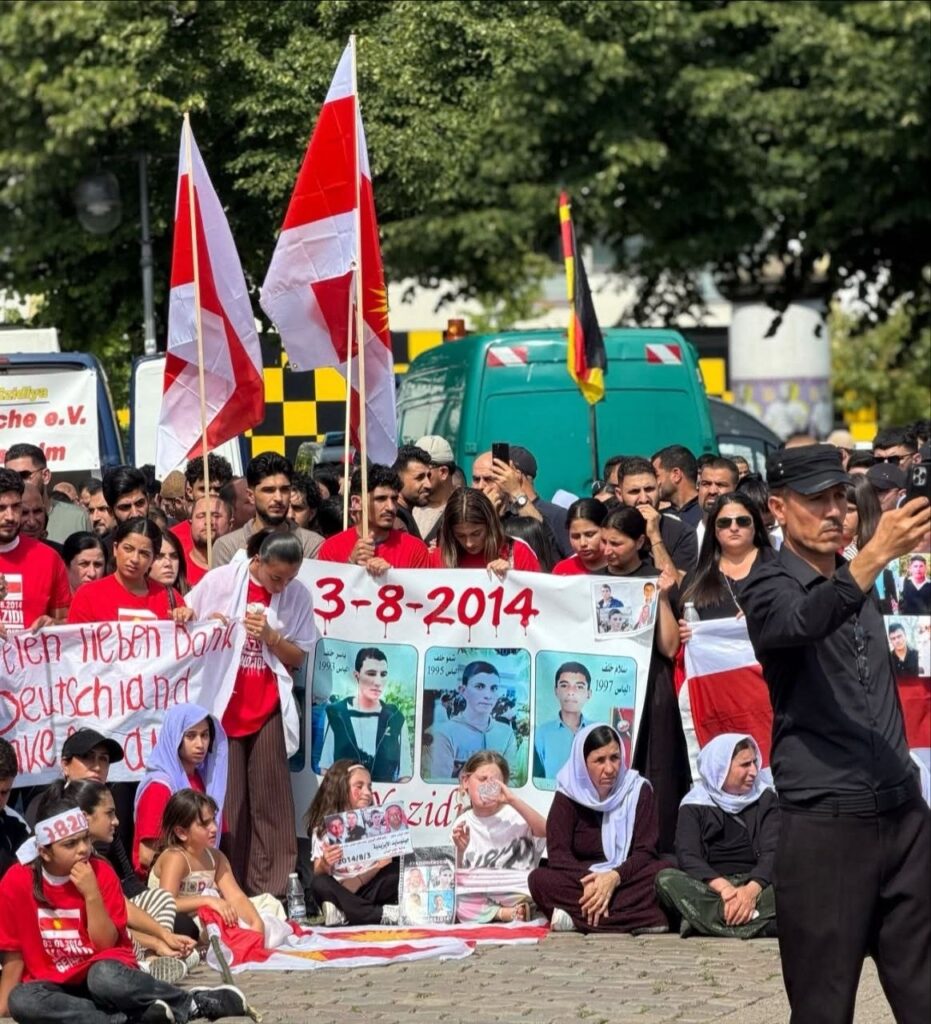
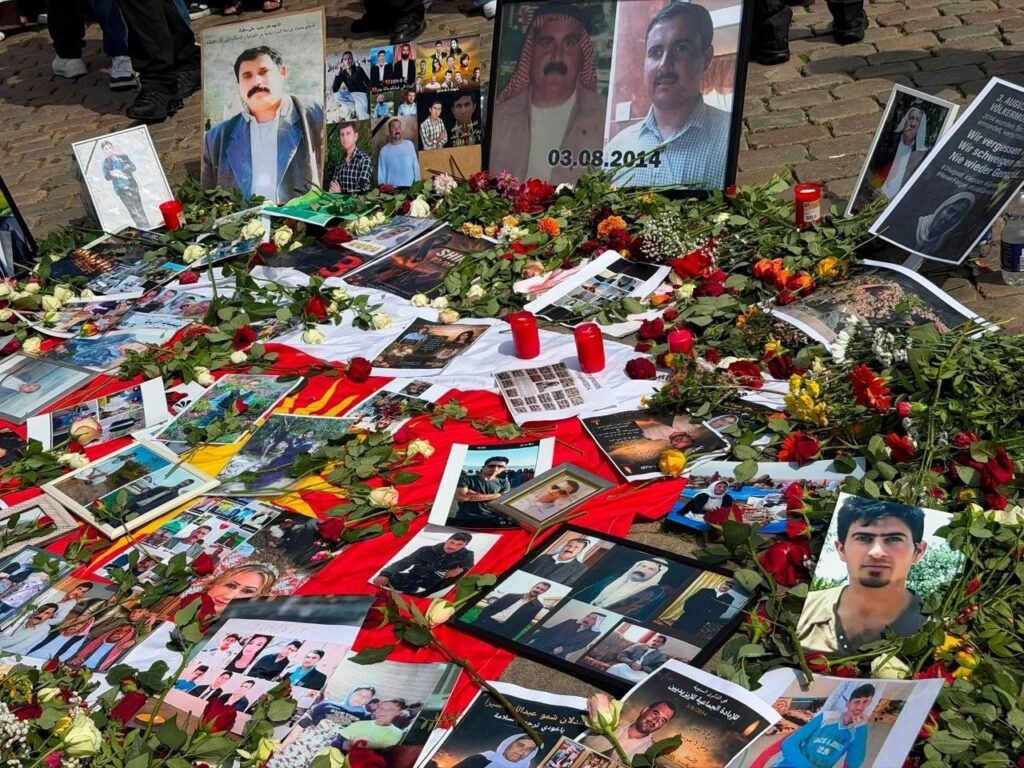
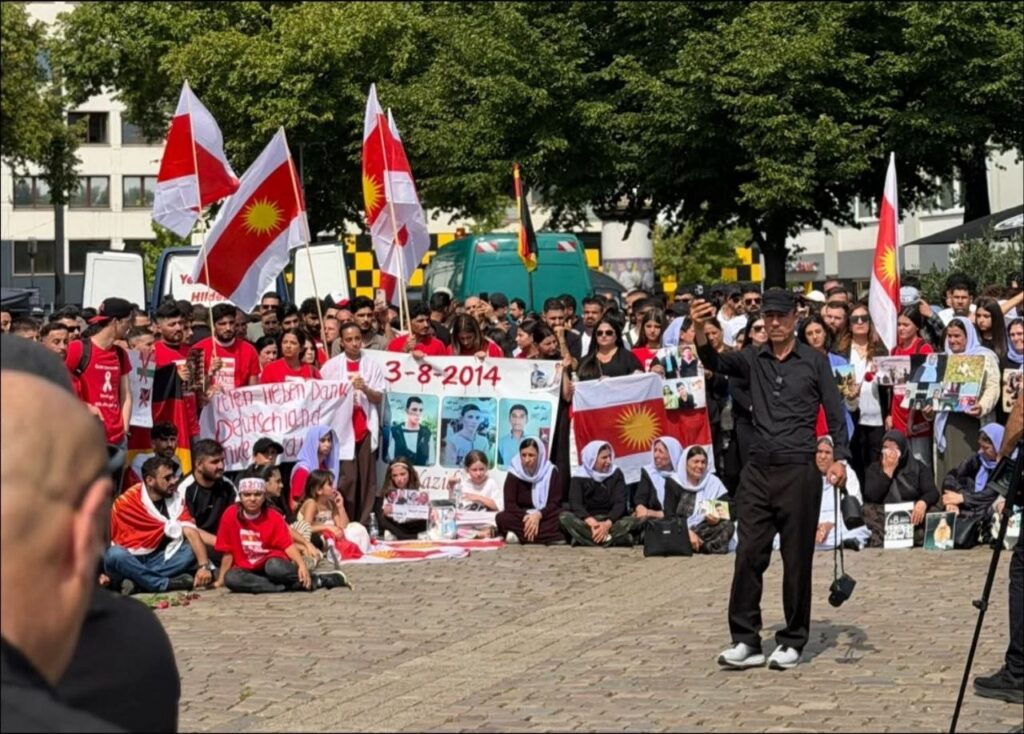
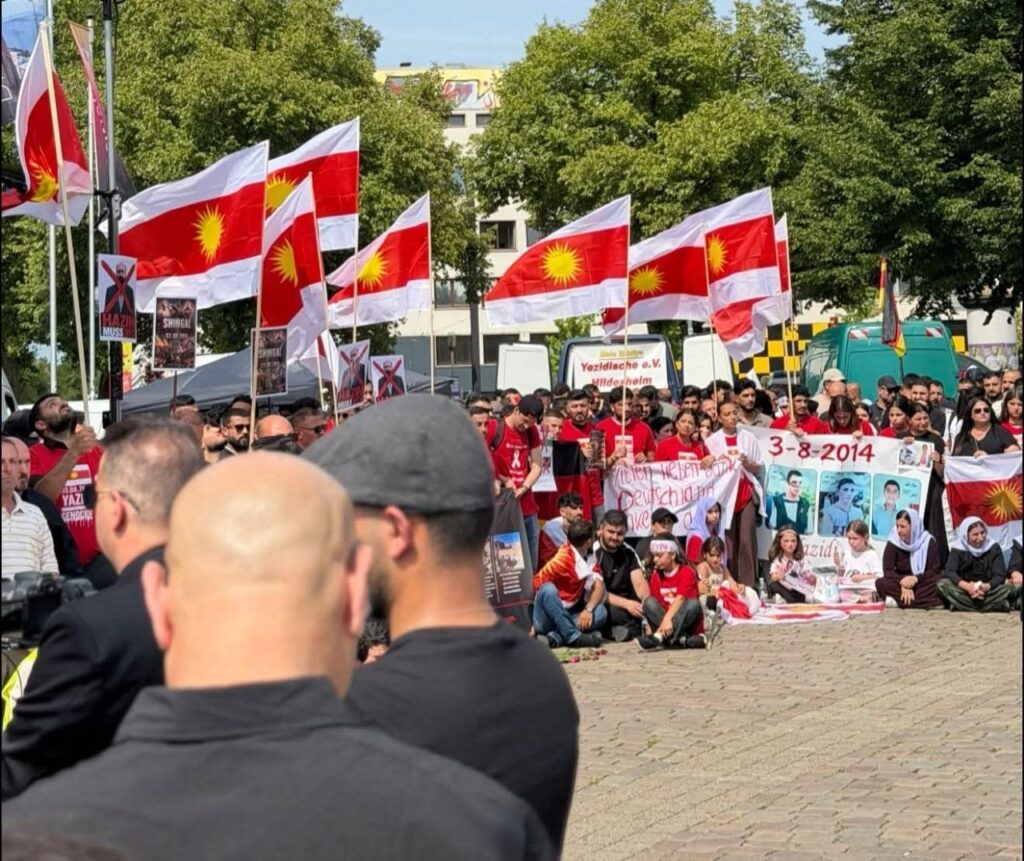
Thousands of Ezidis gathered at Steintorplatz in Hanover to commemorate the victims of the genocide committed on 3 August 2014. Organisers estimated that between 4,000 and 5,000 people attended, carrying Ezidi flags and enlarged photographs of relatives who remain missing.
Speakers and participants called for the opening of mass graves, the identification and return of victims’ remains, the reconstruction of destroyed villages and conditions that would allow displaced Ezidis to return safely to Sinjar. The gathering also drew attention to the continuing deportation of Ezidis from Germany to Iraq, despite Germany’s formal recognition of the genocide.
Representatives from municipal, regional, state and federal politics attended the commemoration. Michael Fürst, president of the Regional Association of Jewish Communities in Lower Saxony, criticised the limited presence of major German media outlets.
Nienburg
In Nienburg, Germany, Ezidis held a commemorative march and candlelight vigil on Sunday, 2 August 2026, ahead of the twelfth anniversary of the Ezidi genocide. Organised by the Ezidi Cultural Forum of Nienburg, the event began at 20:00 with a procession from the railway station to the town hall, where participants gathered for a vigil, lit candles and listened to short speeches in memory of the victims.
The evening timing was chosen deliberately, both to make the candlelight remembrance visible at dusk and to mark the beginning of the genocide, which started in the early hours of 3 August 2014.
Oldenburg, Germany
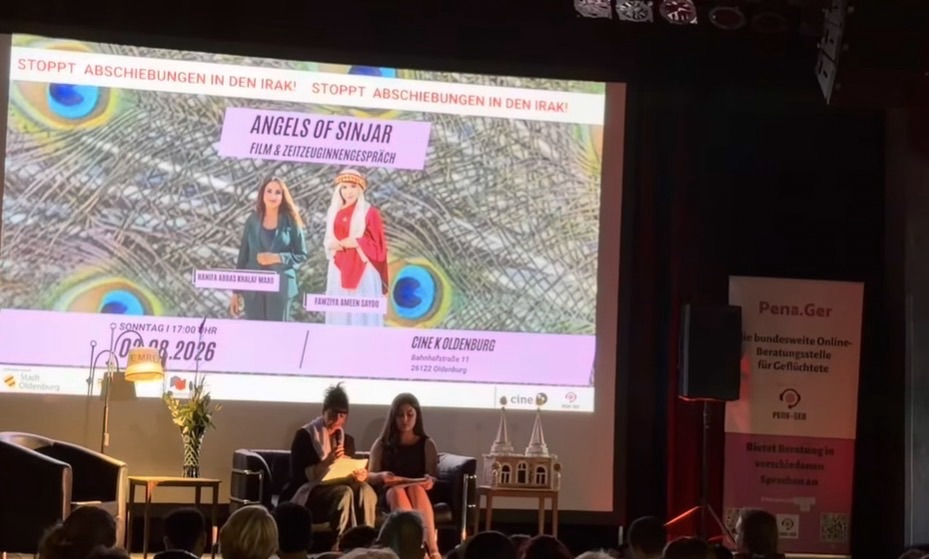
In Oldenburg, the documentary Angels of Sinjar was screened as part of a commemorative event marking twelve years since the genocide. The screening was followed by a discussion with Ezidi witnesses, placing survivor testimony and the continuing search for justice at the centre of the programme.
Stuttgart
Ezidis gathered at two locations in Stuttgart to commemorate the victims of the 3 August 2014 genocide and protest the continuing lack of justice. The gatherings included speeches and traditional lamentations, while participants spoke with members of the public about the killings, abductions, enslavement and displacement committed by ISIS in Sinjar.
Speakers stressed that remembrance must be accompanied by accountability, recognition of the genocide and continued efforts to locate the missing. The event concluded with the message: “We will not forget.”
Netherlands
The Hague,
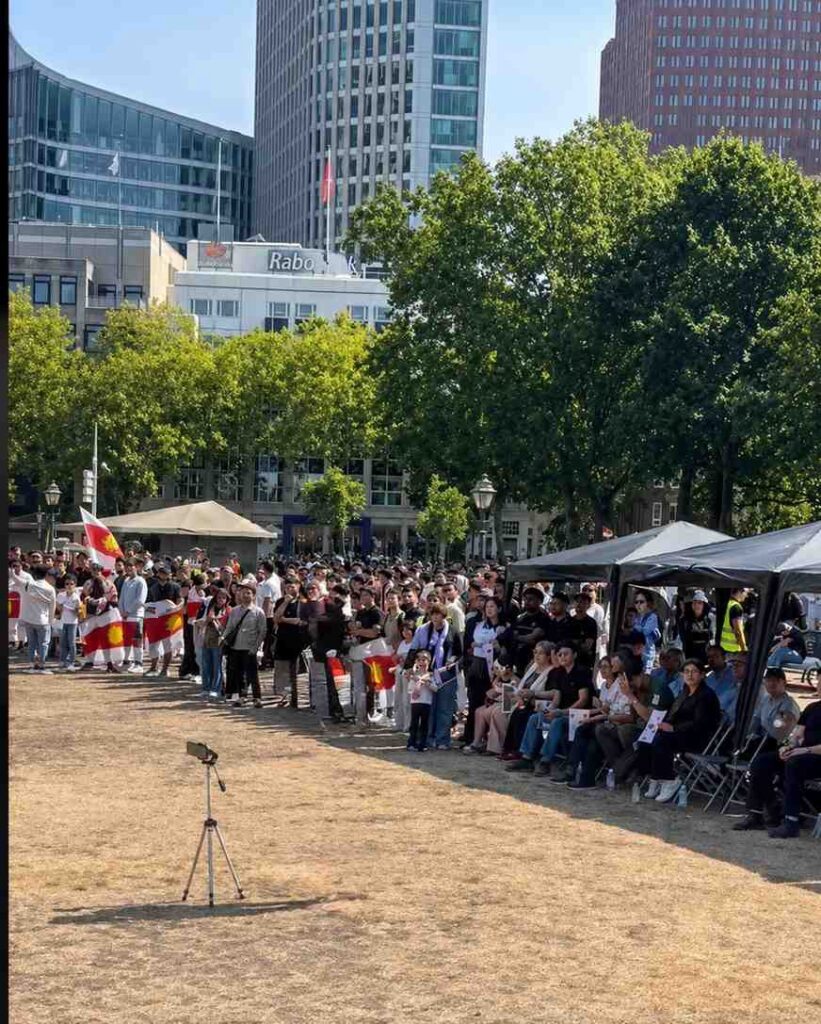
A commemoration of the genocide against Ezidis was held in The Hague, where a representative of the Dutch political party PRO addressed the continuing consequences of the ISIS attack on Sinjar.
The speaker said remembrance alone was insufficient while Ezidis remain missing, families continue to wait for answers and survivors are still seeking security and justice. The address called on political leaders and the wider public not to turn away from the continuing suffering of survivors.
Speaking on behalf of PRO, the representative connected remembrance with human dignity, solidarity and democratic responsibility, stressing that the words “never again” carry meaning only when followed by action.

Russia
Yaroslavl
The Ezidi population of Yaroslavl commemorated the victims of the genocide committed by ISIS against Ezidis in Sinjar in August 2014. Local television recalled the mass killings, displacement and flight of survivors to Mount Sinjar.
Fayzo Polatov, head of the Ezidi diaspora in the Yaroslavl region, stressed that the genocide must be remembered as a crime against humanity and called for broader international recognition as a means of preventing future atrocities.
Andrey Kovraysky, an official from Yaroslavl’s municipal public-relations department, attended the commemoration and emphasised the importance of opposing terrorism collectively.
Statements
Thuringia, Germany
On 3 August 2026, Katharina König-Preuss, migration-policy spokesperson for Die Linke in the Thuringian Parliament, called for stronger legal protection for Ezidis facing deportation from Germany.
König-Preuss said recognition of the genocide must be followed by practical measures to protect survivors and their relatives. She urged the Thuringian government to support a nationwide suspension of deportations of Ezidis to Iraq and Syria, secure admission routes, protection against forced returns and a permanent right to remain in Germany.
She argued that Germany’s recognition of the genocide has not resulted in a collective protection status or adequate residence rights for Ezidis. She also said that the particular experiences of women and girls who survived enslavement and gender-based violence must be properly reflected in asylum and residence decisions. König-Preuss further criticised the tightening of European asylum policy, warning that remembrance would remain symbolic unless it resulted in effective protection for survivors. Die Linke has made similar calls for a deportation halt and permanent residence rights for Ezidis in previous years.
Germany – CDU/CSU Calls for Conditions Enabling Ezidis to Return to Sinjar
On 31 July 2026, Norbert Altenkamp, chairman of the CDU/CSU parliamentary group’s working group on human rights and humanitarian assistance, called for conditions that would allow Ezidis to return safely to their ancestral homeland in Sinjar.
Altenkamp said the future of Ezidi religion and culture depended on preserving the connection between Ezidis, Sinjar and its holy sites. He placed responsibility on both the Iraqi government and the Kurdistan Regional Government to establish peaceful and secure conditions, while also calling on the international community to remain engaged.
He warned that although ISIS had been militarily defeated, its ideology continued to pose a serious threat to peace and to the people targeted by the organisation. The return of Ezidis as central to safeguarding the future of their people, religion and culture.
Basma A. Warns of Worsening Conditions for Displaced Ezidis
Ezidi activist Basma A. warned that deteriorating conditions in displacement camps and the continuing insecurity in Sinjar are threatening the future of Ezidis in Iraq.
Speaking in an interview published by the Vienna-based think tank Mena-Watch on 3 August 2026, Aldikhi said the withdrawal of international aid organisations had further reduced essential services for displaced families. She reported that schools were closing because of funding and staffing shortages, while healthcare in the camps had been reduced to a minimum.
Aldikhi also described severe psychological distress among camp residents, including suicidal thoughts, as families continue to face prolonged displacement, poverty and uncertainty. She said most displaced Ezidis remained unable to return to Sinjar because of insecurity, damaged infrastructure and the absence of sustainable economic opportunities.
She further drew attention to Ezidis who remain missing after being abducted by ISIS and criticised the deportation of Ezidi survivors from Europe, particularly Germany, to Iraq. Aldikhi warned that unless security, reconstruction, justice and long-term support are addressed, ISIS may ultimately have succeeded in destroying the collective future of Ezidis in their homeland.