
Ezidi Family Preserves Christian Church in Alqosh
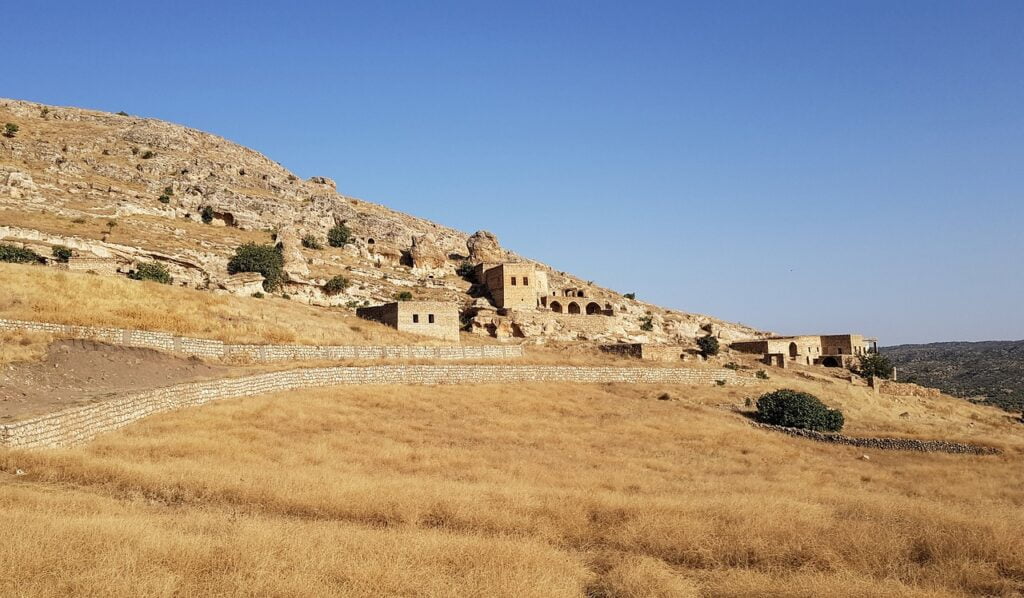
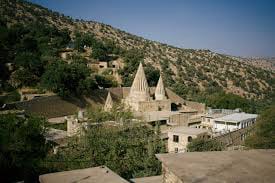
A Ezidi (Yezidi) family in Alqosh, Iraq, has been caring for the Mar Odisho Church, which has been abandoned for...
Nobel Laureate and UN Goodwill Ambassador Nadia Murad will speak at 7 p.m. on Nov. 14 at the University at...
The UNITAD report suggests that many Ezidi boys and men have been sexually abused by IS terrorist. Oftentimes, these male victims are not able to fully disclose what they have been through and therefore, they have even worse access (than female victims) to the much needed medical and psychological support.
East facade of the Palais de Justice in Paris. Photo: Wikimedia Commons FIDH has reported that on October 9, 2024,...
The risk of not acknowledging this fact is that some may try to exploit the suffering that Ezidis have endured. Certain actors in the Middle East, particularly those who refuse to accept the unique Ezidi ethnic and religious identity.
The Swedish national, named Lina Ishaq, is accused of having nine Ezidi children and women in her home in Raqqa, Syria between 2014 and 2016.
Weighting on table. Free public domain CC0 photo. More: View public domain image source here 25.09.2024 A 35-year-old French woman,...
This case is of historic importance since it is first time an individual is being prosecuted for the crime of genocide against the Ezidi people in Sweden. The victims currently live outside Sweden.
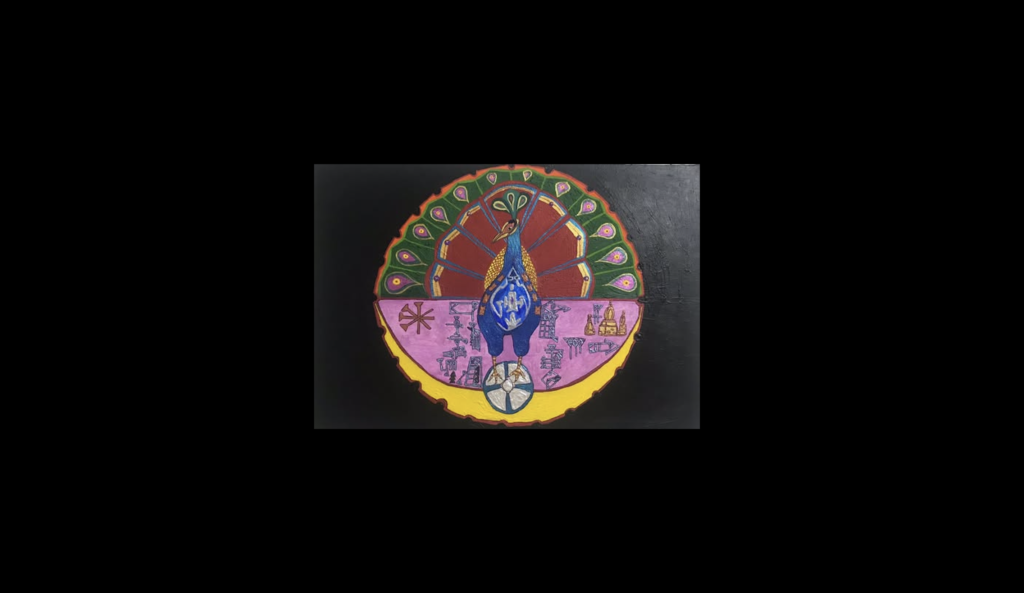
When asked about how he first started to paint and his path to discovering his artistic talent, Hisham explains that he has always been into art. Surprisingly, Hisham recalls how someone else took credit for his artwork which made him stop to draw for a while. The incident happened at the Talent Center in Khansour Complex at which Hisham had completed a course and was asked to draw paintings for the closing ceremony. However, on the day of the ceremony, Hisham’s name had been removed from his artwork and instead been replaced by the name of a girl. This incident made the artist disappointed and caused him to stop drawing for a while.
The Yezidis, also known as Ezidis, are an ethnoreligious people predominantly residing in the Middle East, including Iraq, Syria, Turkey, and Armenia. The Yezidis are a distinct and separate group with their own unique identity. In this article we explain the multifaceted reasons why the Yezidis should not be mixed with the different people who see themselves as “Kurdish”.
When IS attacked the Ezidis and when many were forced to seek refugee in the Sinjar mountains, some effort were made to support and assist them. According to Farhad, the distribution of assistance was perhaps not optimal but it was at least something, considering that they had just survived a genocidal attack(s). However, due to the war between Ukraine-Russia and the situation in Palestine-Israel, the Ezidi genocide and all issues related to the Ezidis have been forgotten. Farhad explains that “Our people continue to suffer, and the effects of the genocide are still ongoing”, yet the suffering of the Ezidis has been overshadowed by other global issues that are of bigger political interest for the global powers.
Ezidi district of Al-Qahtaniyah, west of Nineveh governorate, Ezidi people who are currently living in IDP camps still remember August 14, 2007, as the day when their region experienced the deadliest series of bombings in Iraq since the 2003 U.S. invasion.
As an ancient ethno-religious minority, the Ezidis have faced persecution for centuries due to their faith. The self-proclaimed Islamic State of Iraq and Syria viewed Ezidis as heretical devil worshippers.
The Yezidis are an ethno-religious minority with the majority speaking Kurmanji, one of the main Kurdish dialects, according to researchers. Geographically, they are classified as a dispersed minority in demographic centres where population density is homogenous and concentrated. They are mainly located in contested areas across several residential clusters, notably in the Sinjar region (locally known as Shingal) and the Nineveh Plain, which falls administratively under the central government. This region includes the Shekhan district, along with numerous Yezidi villages and towns in the Tel Keppe district, as well as the cities of Ba’shiqa and Bahzani in Nineveh province. There are also smaller population clusters in the southern and western parts of Duhok province, which have been part of the Kurdistan region since 1991, including towns and cities such as Sharya, Khanke, Ba’adre, and Derabun.
The third Iraqi women’s conference, held on 25 July in Baghdad and organized by the Iraqi Women’s Association and the Yazidi Women’s Freedom Movement (TAJÊ), focused on uniting against femicide and commemorating the victims of the 2014 Yazidi genocide. The conference included speeches highlighting the impact on women and children, the unknown fate of many captured by ISIS, and the need for women to organize against patriarchal violence.
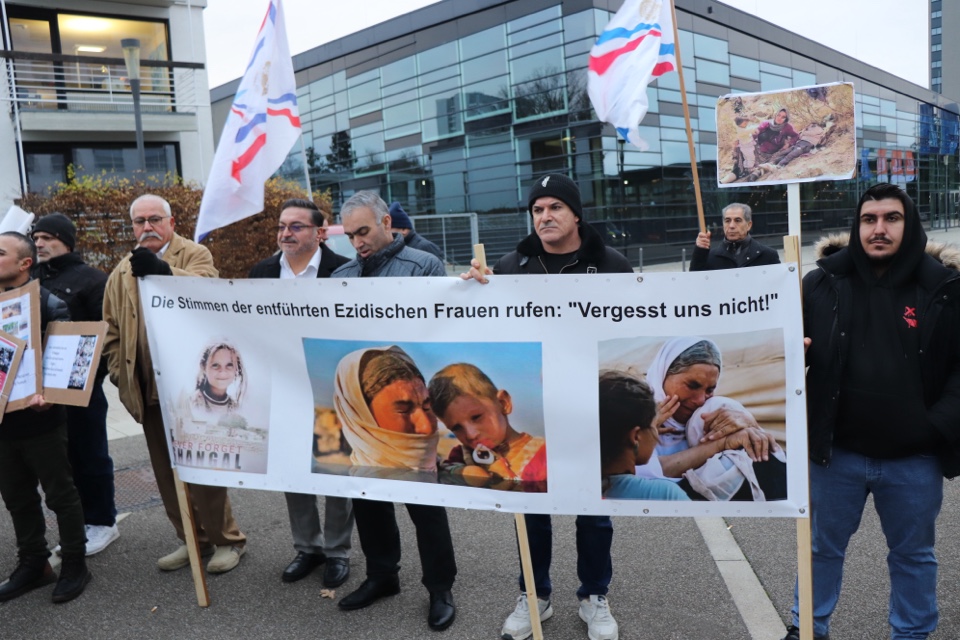
This week marks the 10th anniversary of the Yazidi genocide. It has been ten years since over 10,000 Yazidis were brutally murdered. Ten years since more than 7,000 women and children were subjected to abduction, violence, and enslavement. Ten years since thousands have disappeared and over 2,600 are still missing without a trace. This article is republished on Ezidi Times with the kind permission of Jurist.org.
Secretary of State Antony Blinken hosted Ezidi activists at the State Department on July 23 ahead of the 10th anniversary of the Ezidi genocide by ISIS.
In this article we give you a recap of the main events related to the Ezidis. Ezidi Athlete Yurik Mamedov...
The Iraqi flag. Foto: Bryan Jones on flickr. The relationship between Kurdish political parties and the Ezidi population in Iraq has become...
Supreme Court of Kosovo. Foto: Wikimedia Commons. Kosovo's Special Prosecution has indicted a Kosovo citizen, identified as M.D., for crimes...