

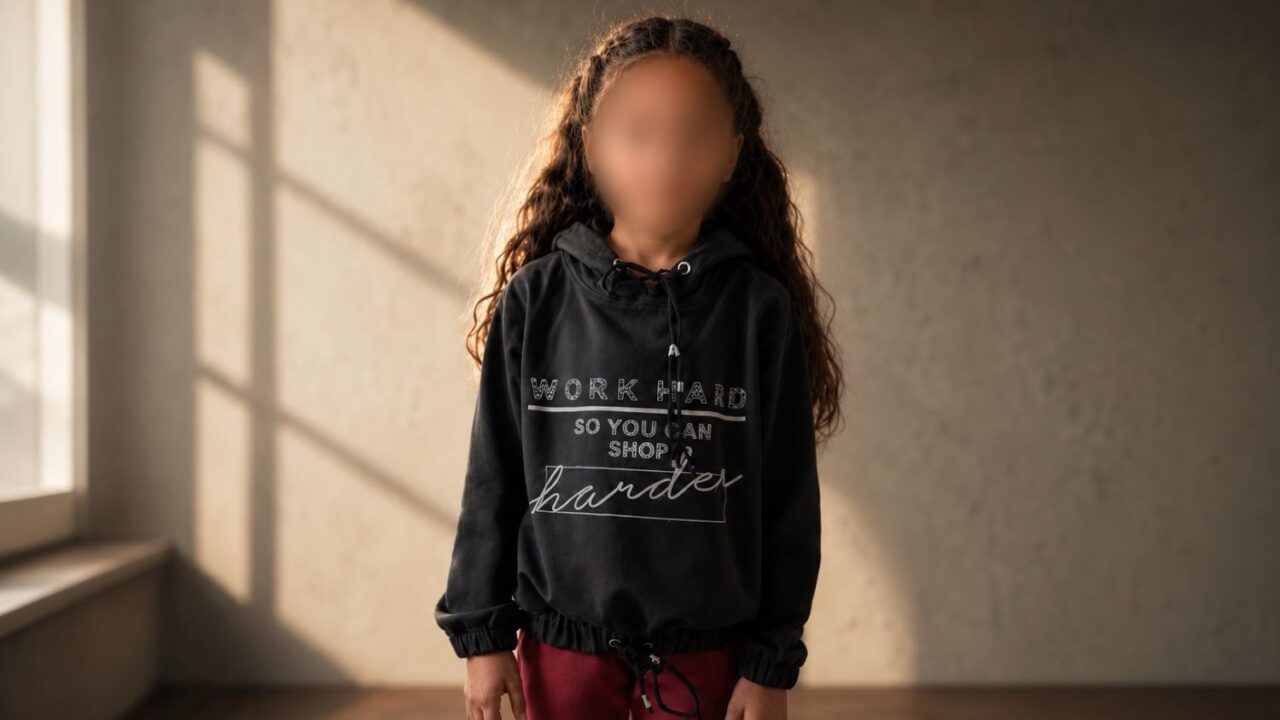
When Turkish police entered a basement apartment in Ankara in February 2021, they found a young Ezidi girl whose life had already been shaped by genocide, enslavement and displacement. She had been taken from Sinjar during the ISIS attack of August 2014, sold in Iraq, given another identity and eventually brought across the border into Turkey. Images released after the police operation showed her leaving the building accompanied by female officers and carrying a doll.
More than five years have passed since that rescue, yet one of the most basic facts about the child remains unknown: her real name. The Arabic name under which she was subsequently registered was given to her after her abduction. The name given to her by her Ezidi parents before ISIS took her has disappeared from every official record.
Turkish investigative journalist Hale Gönültaş has followed the case for several years, examining court files, official documents and decisions concerning the child. For her protection, she refers to her by the pseudonym “Dilan”. Her investigation has exposed not only what happened to the girl under ISIS, but also serious questions about how she was treated after Turkish authorities had supposedly brought her to safety.
A child reduced to a price
According to prosecution material reported by Gönültaş, Dilan was believed to be approximately two years old when she was brought to an Iraqi household in 2014. Sabbah Ali Hussein Oruç, who later became a defendant in Turkey, reportedly told investigators that his older brother had returned home with the little girl after purchasing her from ISIS for $500. He allegedly told the family that the child was Ezidi and had been bought at an ISIS slave market.
In one of the most disturbing details of the case, the first surviving information about the child after her abduction was therefore not her name, the names of her parents or the village where she was born. It was the price for which she had allegedly been sold.
What happened to Dilan formed part of the wider system created by ISIS after its attack on Sinjar on 3 August 2014. Ezidi families were separated, thousands of people were killed or abducted, and women and children were transported through an organised system of captivity and enslavement. Children faced another form of destruction as well: they could be separated from their relatives, renamed, forcibly converted and raised away from Sharfadin, their language and their Ezidi identity.
For very young children, years of captivity could also erase their own memories of who they had been before ISIS. Dilan appears to be one of those children. She survived, but the connection between the life she has today and the family from whom she was taken has still not been restored.
After the death of the man who had reportedly purchased her, Dilan was eventually taken through Syria and into Turkey with members of his family. There she was registered under the identity created after her abduction. The case came to the attention of Turkish authorities in February 2021, when a photograph of the child reportedly appeared on an encrypted online platform used by ISIS members. Communications surrounding the photograph suggested that negotiations could take place if her Ezidi family wanted her back.
Turkish counter-terrorism investigators traced the activity to an apartment in Ankara’s Yenimahalle district. On 24 February 2021, officers entered the property, detained three Iraqi nationals and removed the child. For Ezidis who had spent years searching for thousands of relatives abducted by ISIS, such a rescue should have marked the beginning of the process of reconnecting a child with her people and, if possible, her surviving family.
Instead, the case took a deeply troubling turn.
Rescued from the household — then returned to it
Dilan was initially placed in a state-run child-care institution and received psychological support. Ezidi organisations continued trying to establish who she was and whether any of her relatives had survived. Photographs circulated among Ezidis in Iraq and Europe, but nobody could identify her with certainty. According to Gönültaş’s reporting, requests by Ezidi representatives to meet the child and assist with efforts to identify her relatives were denied.
At the same time, the first criminal proceedings focused largely on alleged ISIS membership rather than on the crimes allegedly committed against the child herself. Oruç was released pending trial in June 2021 after cooperating with investigators and providing information about alleged ISIS members.
He later sought permission for Dilan to spend weekends with the household connected to the allegations surrounding her captivity. That permission was granted. In June 2022, the child protection order was lifted entirely and Dilan was formally handed back to the same household from which Turkish police had removed her.
The decision remained largely outside public knowledge until Gönültaş obtained the official handover document and reported on it. The revelation raised an obvious question: how could an Ezidi child presented as having been rescued from an ISIS-linked environment be returned to the people connected to the allegations concerning her captivity?
The legal proceedings that followed added further confusion. Members of the household sought custody of Dilan, arguing among other things that she was Muslim and had been lawfully adopted in Iraq. A family court rejected those claims and referred to evidence indicating that, as an Ezidi child, she had been treated under the ISIS system of captivity before being brought to Turkey.
Yet another court later appointed a woman from the household as Dilan’s legal guardian. That decision remained in place until November 2024, when the guardianship was revoked after the matter became public and an independent lawyer was sought to represent the child’s interests.
A separate criminal investigation eventually developed after a group of Turkish women lawyers argued that the case should not be reduced to membership of ISIS. Prosecutors brought a human-trafficking charge against Oruç, alleging that Dilan had been purchased in Iraq, unlawfully brought into Turkey, registered under a false identity and forced to remain with the household instead of being handed to the relevant authorities.
The proceedings became the first reported prosecution in Turkey in which an alleged ISIS member faced human-trafficking charges involving an Ezidi child. By 2026, however, Oruç and his family were no longer in Turkey. Authorities have not publicly clarified when they left or where they went. The available material does not establish that he deliberately fled the proceedings, but the principal defendant in this unprecedented trafficking case is nevertheless now outside the country.
The search for the family she lost
While the courts dealt with questions of trafficking, guardianship and criminal responsibility, the most personal question remained unanswered: who were Dilan’s parents?
In 2023, an Ezidi woman from Sinjar contacted Gönültaş after seeing photographs of the rescued child and became convinced that she might be one of the daughters taken from her during the genocide. For her protection, Gönültaş refers to the woman as “Viyan”. She had spent nine years searching for her missing daughter and compared old family photographs with pictures of Dilan, studying the child’s eyes, face and other details she remembered.
With assistance from an Ezidi organisation, Viyan travelled to Ankara in 2024 and underwent DNA testing. Dilan was tested as well. The result showed that they were not biologically related.
For Viyan, the result meant another devastating return to uncertainty. Her two daughters remain missing. For Dilan, it meant that the search for her own family had once again reached a dead end.
DNA may ultimately provide the answer that names and documents cannot. But DNA identification requires a surviving relative to be found and tested. Parents may have been killed, entire families may have disappeared, surviving relatives may now live in different countries, and missing-person records may have been created under names that no longer correspond to the identity under which Dilan now lives.
The part of genocide that continues after survival
Dilan’s case reveals a consequence of genocide that numbers alone cannot capture. ISIS did not only attempt to remove Ezidis physically from Sinjar. It also attempted to break the connection between Ezidi children and their families, Sharfadin, language, history and identity.
A child can survive and still lose almost everything that once told her who she was. She can be rescued from captivity while remaining separated from her parents. She can receive an official identity document while the name written on it was created after her abduction.
Somewhere there may still be an Ezidi family that has spent twelve years wondering what happened to a daughter taken from Sinjar. They may not know that she survived. Dilan may not know that they survived either.
Turkish authorities can provide protection, courts can appoint guardians and prosecutors can bring charges. None of those measures can by themselves restore the most fundamental thing that was taken from this child. The court file contains the names of defendants, judges, prosecutors, lawyers, police officers and officials who have become involved in her case over the years.
The only person whose real name is still missing is the Ezidi child at the centre of it.
Until her family is found, one question remains unanswered: who was she before ISIS took her?


The trauma for all the parents who are missing their daughters, and sons, and mothers… this is also so horrific. I cannot imagine the pain felt by a mother, a father, whose child is still not found…
Thank you for posting this so we never ever forget altrose murdered, and all those still missing