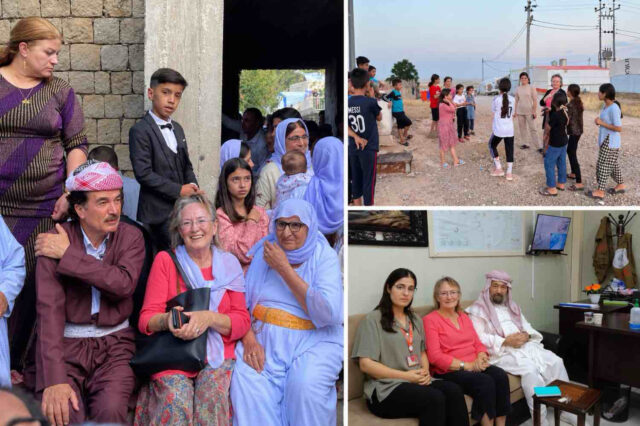
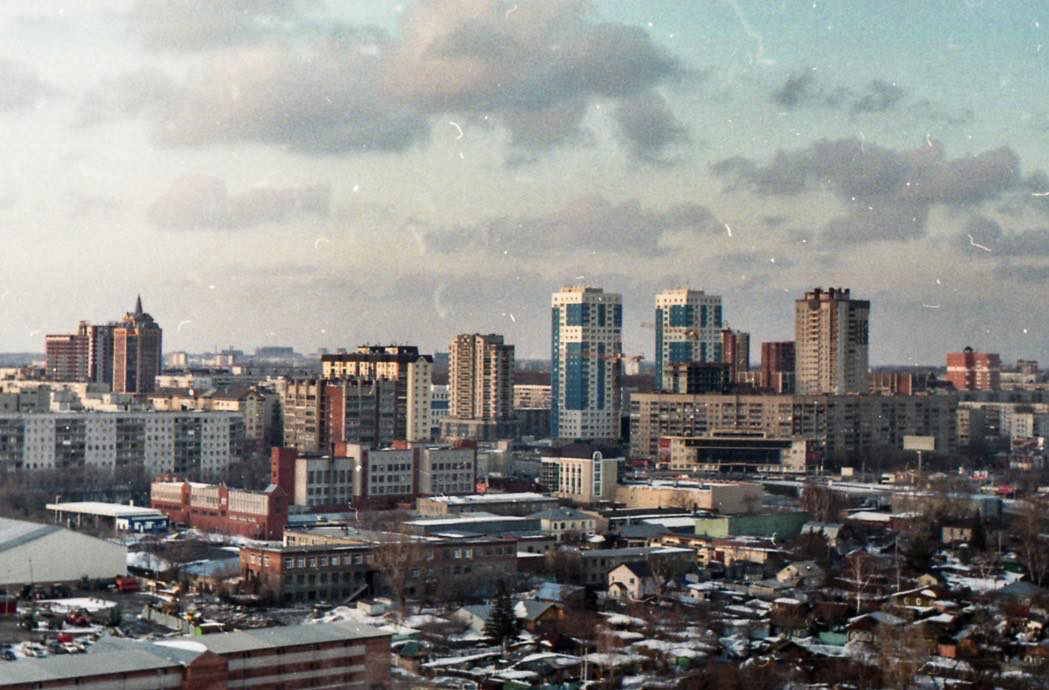
A new Russian-language feature has offered a rare look at the lives of an estimated 4,000 Ezidis in Novosibirsk, where families are working to preserve their identity, Sharfadin faith and traditions while participating fully in the life of the Siberian city.
The report, published by Novosibirskie Novosti on 20 October 2026, featured Kyaram Smoyan, chairman of the Ezidi Cultural Society, and Sheikh Shamo Amoyan. They spoke about religious life, the upbringing of younger generations, mutual assistance and the continuing effort to establish an Ezidi temple and cultural centre in the city.
Preserving Identity in a Growing City
According to Smoyan, approximately 4,000 Ezidis currently live in Novosibirsk. Many reside in the Zaeltsovsky and Dzerzhinsky districts, while an increasing number of families are settling on the city’s left bank.
For Ezidis living far from their ancestral lands, one of the principal concerns is ensuring that younger generations do not lose their language, traditions or understanding of who they are.
The aim is not to withdraw from wider society. Instead, local representatives described the importance of remaining visibly and confidently Ezidi while contributing to the city in which they live.
Modern technology has become part of that effort. Through social media and online communication, Ezidis in Russia remain connected with Ezidis in Armenia, Georgia, other European countries and Iraq. These connections allow families to exchange news, follow religious and cultural events and maintain relationships across national borders.
Faith and Continuity
Sheikh Shamo Amoyan spoke about Sharfadin and the principles that guide Ezidi religious life. He described the faith as being centred on avoiding harm, performing good deeds and wishing peace and well-being for others.
The original feature also documented the Bisk ceremony, during which a family’s sheikh offers prayers and removes a small lock of hair from a young boy’s head. The ceremony represents an important bond between the child, the family and its religious guide.
Amoyan also discussed sacred objects preserved by Ezidis in Novosibirsk. Among them is a ceremonial vessel that its local custodians believe to be several centuries old. It is kept protected and is displayed only on a particular religious occasion each year.
Religious observances, prayer and the careful preservation of sacred objects provide continuity for families living thousands of kilometres from other major centres of Ezidi life.
Education, Sport and Mutual Support
The report also showed how Ezidi life in Novosibirsk is developing across generations.
Parents place importance on education, discipline and responsibility while encouraging young people to pursue different professions. Social media has changed how younger Ezidis meet and communicate, but family participation and personal choice remain important in decisions concerning marriage.
Sport also provides a space for connection. Novosibirsk has an Ezidi football team that participates in interethnic tournaments. Ezidi teams from several Russian cities have previously organised competitions in which the winning city hosted the following tournament. Families and local supporters have helped young players meet travel expenses so they can participate.
Mutual assistance remains equally important. When a family experiences a fire, financial hardship or another emergency, Ezidis in the city help by collecting money, providing essential items and offering practical support.
Hospitality continues to hold particular significance. Guests are traditionally welcomed with generosity and offered the best that a household can provide.
A Temple and Ezidi House for Novosibirsk
The most significant unresolved issue raised in the report is the absence of a dedicated Ezidi religious and cultural space.
Large gatherings can attract hundreds of people, particularly during funerals, yet Novosibirsk currently has no suitable place capable of accommodating them.
Local representatives therefore hope to secure land for the construction of an Ezidi temple and an Ezidi house. The proposed complex would provide space for prayer, religious observances, cultural gatherings and meetings. It could also support efforts to teach younger generations the Ezidi language, traditions and foundations of Sharfadin.
Sheikh Shamo Amoyan said such a centre would help protect Ezidi culture for future generations and provide the city’s approximately 4,000 Ezidis with a permanent place in which to gather.
Efforts to obtain approval and land have not yet succeeded, according to the report. Nevertheless, the proposal remains an important objective for Ezidis in Novosibirsk.
Belonging Without Losing Identity
The request for a temple and cultural centre is not an attempt to separate Ezidis from the wider city. It reflects the belief that participation in society should not require a people to abandon its identity.
Ezidis in Novosibirsk work, study, raise families, participate in sport and support neighbours in times of hardship. At the same time, they want their children to understand their heritage and remain connected to Sharfadin.
The feature presents Ezidis not as temporary residents or outsiders, but as part of Novosibirsk; a people contributing to the city while asking for the space necessary to preserve their distinct identity.
Source Note
This article was independently written by Ezidi Times using information reported by Marina Averina in the Russian-language feature “We Are Part of Novosibirsk”: How Ezidis Live in the City on the Ob, published by Novosibirskie Novosti on 20 October 2026.
The original photographs were taken by Rostislav Netisov and are not reproduced here.