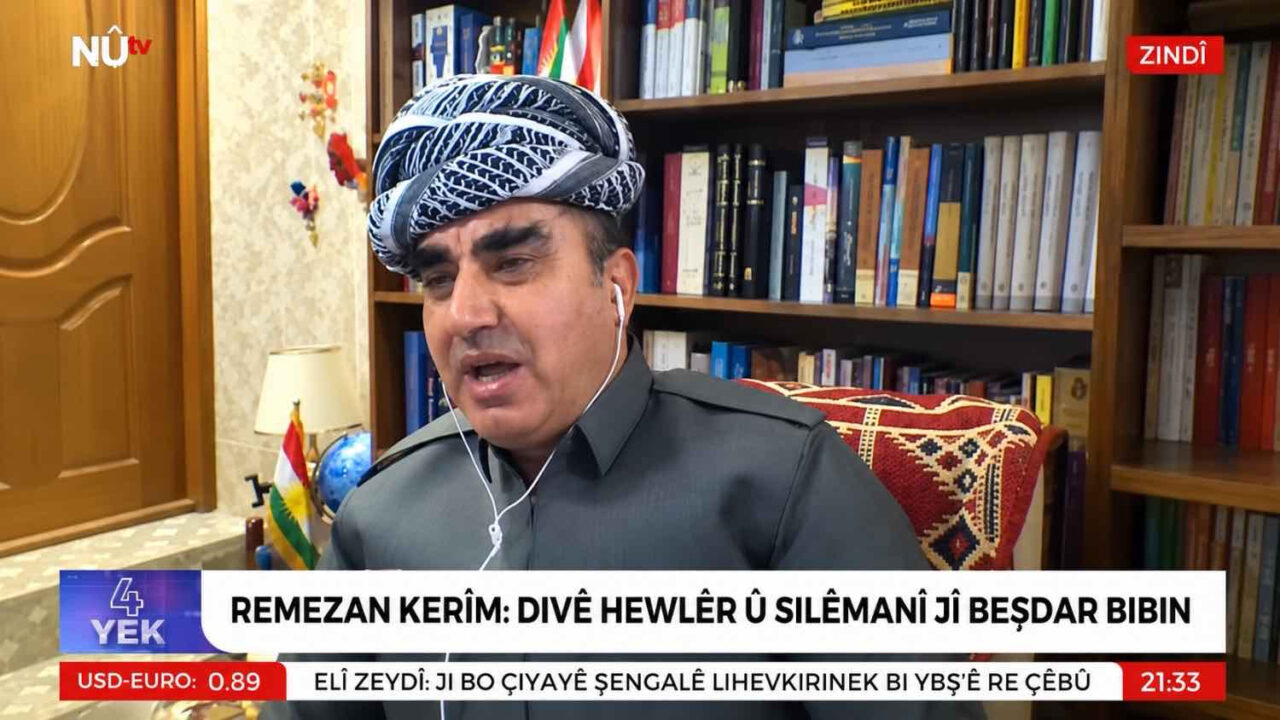
During a Nuçe TV discussion about proposed changes to Iraq’s Constitution, Rîham H. from Sinjar asked the kurdish participant, Remezan Kerîm, to stop imposing a kurdish identity on her by calling her a “kurdish-Ezidi.” In response, Remezan Kerîm screamed aggressively at her, forcing the host to end the interview abruptly.
“We are not kurds, nor Arabs. We are Ezidis,” Rîham H. told him.
According to Remezan Kerîm’s logic, Ezidis are kurds because Peshmerga fighters suffered casualties while supposedly “protecting” them. This is both factually dishonest and logically absurd.
Why are you screaming? And what exactly is your argument?
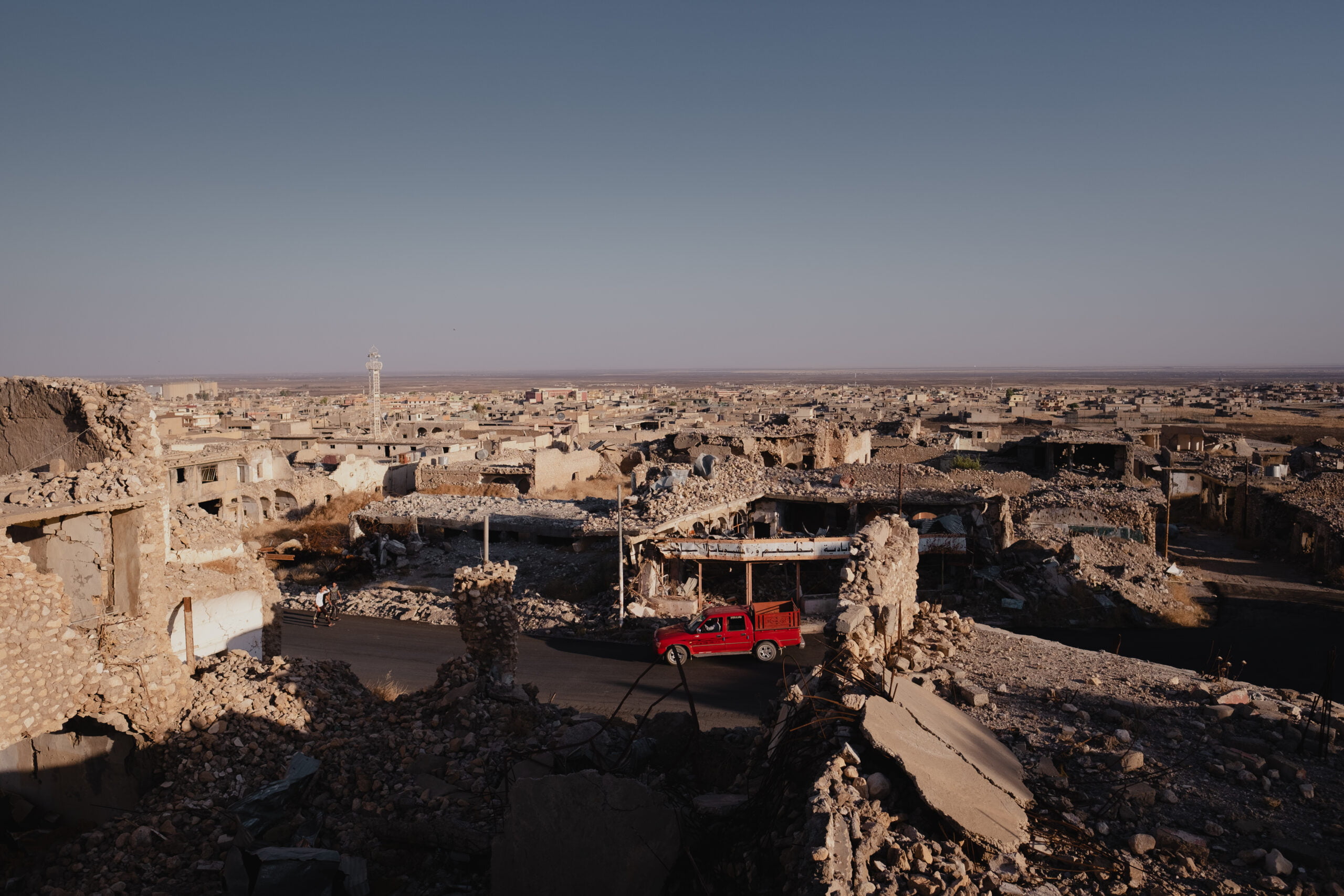
The kurdish forces controlling Sinjar had fully disarmed Ezidis before the 2014 genocide. Then, as ISIS approached, the Peshmerga fled and left the same people they had disarmed behind. Their withdrawal effectively rolled out a red carpet for ISIS to enter Sinjar and reach defenceless Ezidi families.
We have previously published an article documenting these facts, including footage showing kurdish forces collaborating with ISIS fighters. Read also the investigative article by the Cradle here.
A United Nations investigation found that Peshmerga forces were the only organised security presence throughout Sinjar when ISIS attacked on 3 August 2014. The Peshmerga withdrew without effectively informing Ezidis or issuing evacuation orders, leaving Sinjar defenceless. Read the UN report here.
A 2024 report published through Yale University also records Ezidi testimonies stating that Peshmerga forces systematically confiscated their weapons before the genocide. Other testimonies describe Ezidis being prevented from leaving and Peshmerga opening fire during confrontations with those attempting to escape or demanding weapons to defend themselves. Full report here.
These facts cannot simply be erased by shouting “600 Peshmerga” on television.
Yes, some kurdish fighters later fought ISIS and helped Ezidis reach safety. Nobody is denying that. But their actions do not erase the disarming of Ezidis, the Peshmerga withdrawal or the abandonment of Sinjar. They certainly do not give Remezan Kerîmor, or anyone else, the right to claim ownership over Ezidi identity.
Even if we completely set aside the factual record of 2014, his argument still makes no sense. If an armed group protects another people, it has performed a military function. It has not purchased their ethnicity.
Otherwise, every people ever defended by a foreign army would be required to abandon their own identity and adopt the ethnicity of the soldiers who defended them.
Rîham H. did not ask Remezan Kerîm to tell her who she was. She told him who she was. Instead of listening, he screamed over her and tried to force his preferred identity upon her until the host had to end the interview.
This did not happen privately. It happened publicly, on television, with presenters, guests and viewers watching. Yet Kerîm still felt comfortable screaming at an Ezidi woman and insisting that he knew her identity better than she did.
Now imagine what Ezidis living among extremist kurdish nationalists face every day when there are no cameras.
If this is how an Ezidi woman is treated during a televised interview, what happens at checkpoints, inside displacement camps, in workplaces, schools, political institutions and other places where kurdish parties and authorities hold power?
How many Ezidis remain silent because speaking openly could cost them employment, assistance, security or the ability to return to their own homeland?
This video is not simply about one man losing his temper. It exposes a political mentality in which Ezidis are allowed to speak only for as long as they repeat the identity assigned to them by kurdish nationalists.
The moment an Ezidi says, “I am not kurdish; I am Ezidi,” the fake friendliness ends and the intimidation begins. This is assimilation and forced kurdification.
Ezidi Times has no intention of shouting back at Remezan Kerîm. As the saying goes, if you argue with a donkey, you will be lowered to its level. We are not writing this to convince him. We are writing it so that the rest of the world can see what is happening.
Governments, NGOs, journalists, human-rights organisations and every institution supporting the kurdish political struggle must look beyond the image of permanent victimhood presented to them.
The world constantly hears how Kurdish political movements are treated. In Iran, they are claiming to fight for women’s rights, yet we see how a woman’s voice is treated. It rarely asks how those same movements, parties and armed structures treat Ezidis when they hold political, military or institutional power over them.
The same actors who demand that the world recognise and defend their separate identity are refusing to extend that basic right to Ezidis. They demand protection from assimilation while attempting to assimilate another people. How come the Kurds are the victims, when they themselves are the worst threat and danger for Ezidis?
Do kurdish civilians have human rights and deserve protection when they are persecuted? Of course. But that does not mean kurdish political movements deserve unconditional support, immunity from criticism or automatic innocence.
Someone can be oppressed in one situation and become the oppressor in another. Past suffering does not give anyone a permanent licence to harass, assimilate or silence other peoples. However, any entity that is supporting the kurdish movement should ask itself what it is actually supporting: is it the victims and fighters for freedom, or is it all a fake freedom movement that is yet another tyrannical movement?
The international community must stop asking only how kurdish political movements are treated. It must also ask how they treat Ezidis, Assyrians and other indigenous peoples of Mesopotamia when they are the ones holding power.
Rîham H.’s words were not an attack or a provocation. She was asking to be left alone to identify as what she is:
“We are not kurds, nor Arabs. We are Ezidis.”
No political party, armed force, casualty figure or man screaming on television has the authority to rewrite that.
And the kurdish man having an emotional breakdown over the fact that someone doesn’t identify as kurdish because she isn’t, in fact, a Kurd, speaks volumes about what the so-called “kurdish identity” really is.