What began with a conversation with survivors of the 2014 Ezidi Genocide has grown into an international volunteer-led educational initiative. Dutch educator Margaret Rijkelijkhuizen speaks about the founding of Yazidi at School, the challenges of teaching in displacement camps and the determination to make English-language education accessible to Ezidi students.
Founded in the Netherlands in 2023, Yazidi at School is a charitable foundation providing free online English-language education to Ezidi students, including those living in displacement camps in Iraq.
The foundation reports having reached more than 850 students since its establishment, issued more than 300 certificates and distributed over 150 educational devices, including laptops, smartphones and printers. In 2026, it recorded 478 student enrolments and expanded its teaching team to 16 active volunteer teachers.
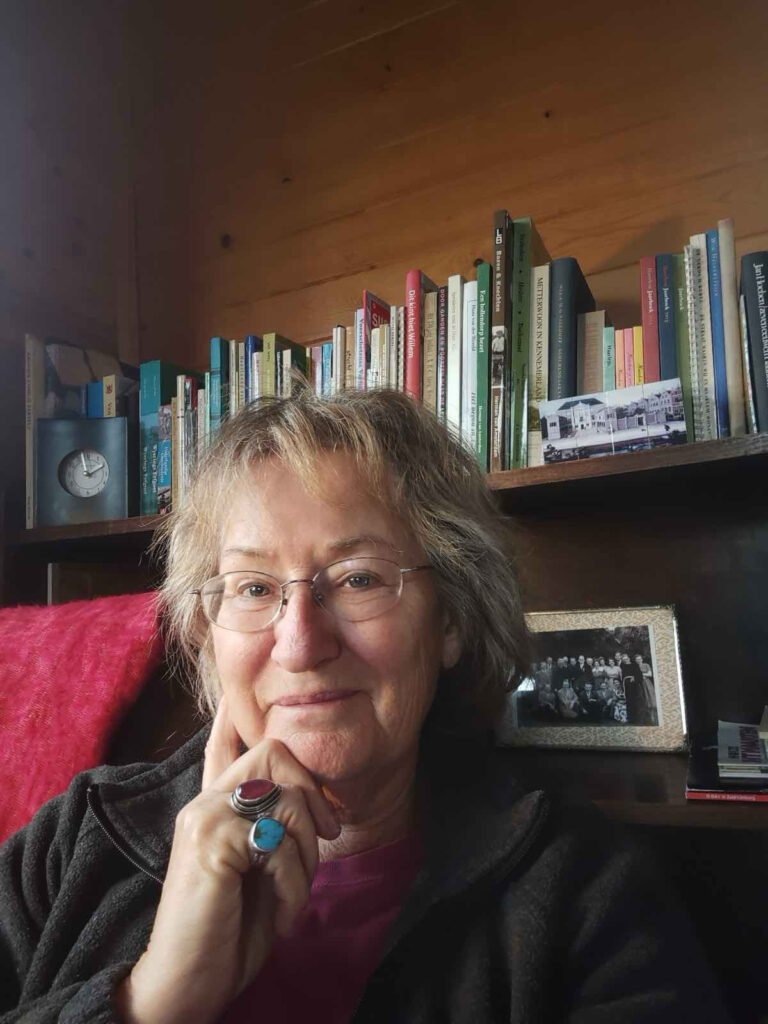
Behind these figures is a project that began not in a classroom, but at a documentary screening in the Netherlands, where Margaret Rijkelijkhuizen met young Ezidi women whose education had been interrupted by the 2014 genocide.
In this interview, conducted by the foundation’s board member Elisa Trossero, Margaret recounts how that encounter led her to Iraq, what she learned while living in Mam Rashan camp and how the initiative developed into an international online school.
A Question That Started Everything
Where did Yazidi at School begin?
Margaret: It began in 2023, at a screening of a documentary about Ezidi genocide survivors, Daughters of the Sun, directed by Reber Dosky. I watched the stories of girls who had survived the genocide of 2014, many of them taken when they were ten or eleven years old, dragged away from school, from their families, from anything that looked like a normal life.
After the screening, I complimented Reber on the integrity with which he had made the documentary. He then translated for me as I spoke with five of the girls who had been sponsored to attend the showing. That is when I asked them a simple question: “What is your biggest challenge now?” They replied: “Education!”
My first thought was: some of these girls had not even finished elementary school, and most still needed high school. What they needed was a team, people who could teach them in their own language, and that was not something I could offer.
One of the girls immediately added: “And I want to study International Human Rights Law.” Something clicked for me. To study that, anywhere, in any country, whatever her future looked like, she was going to need English. Good English. And not only she. All of them.
My mind went into overdrive in the next few minutes. Who would do this? The answer was simple: I would. My hands were free, and I had earned a Master’s degree in Teaching Foreign Languages when I was fifty. How long would I stay? At least a year, until the program was stable enough to spread to all fourteen Ezidi camps.
And I just knew that international volunteers would join in to teach them English, good English. I turned to Reber and said it out loud: “English. They need to learn English.”
That is how Yazidi at School was born. Not from a strategy meeting. From one girl telling me, honestly and out loud, what she needed.
From the Netherlands to Mam Rashan Camp
How did you go from that moment to the camps?
Margaret: After that first screening, I told my friends about it. The second time, I drove two hours to Zutphen to see the film again, with my high school friend Siddhi and some Syrian refugees who were learning Dutch at her home. I met the girls again and gave each of them a pearl necklace from my previous business as a jewelry maker, because a pearl is a symbol not just of survival, but of what we can create during difficult times: something beautiful, full of light.
The third and final time, I brought my singing partner Ellen, then eighty-four years old. Afterward, a woman asked to sit and talk with me. She was connected to the documentary, though I did not yet know how.
It turned out to be Carla van Os, a Dutch orthopedagogue and legal expert known for her work in human rights, child protection, and migration law, and dedicated to protecting vulnerable minors. She also happened to be Reber Dosky’s partner.
Carla told me that another lady wanted to support the survivors and suggested we all meet. That lady turned out to be Angela, a Soroptimist and future co-founder of Yazidi at School.
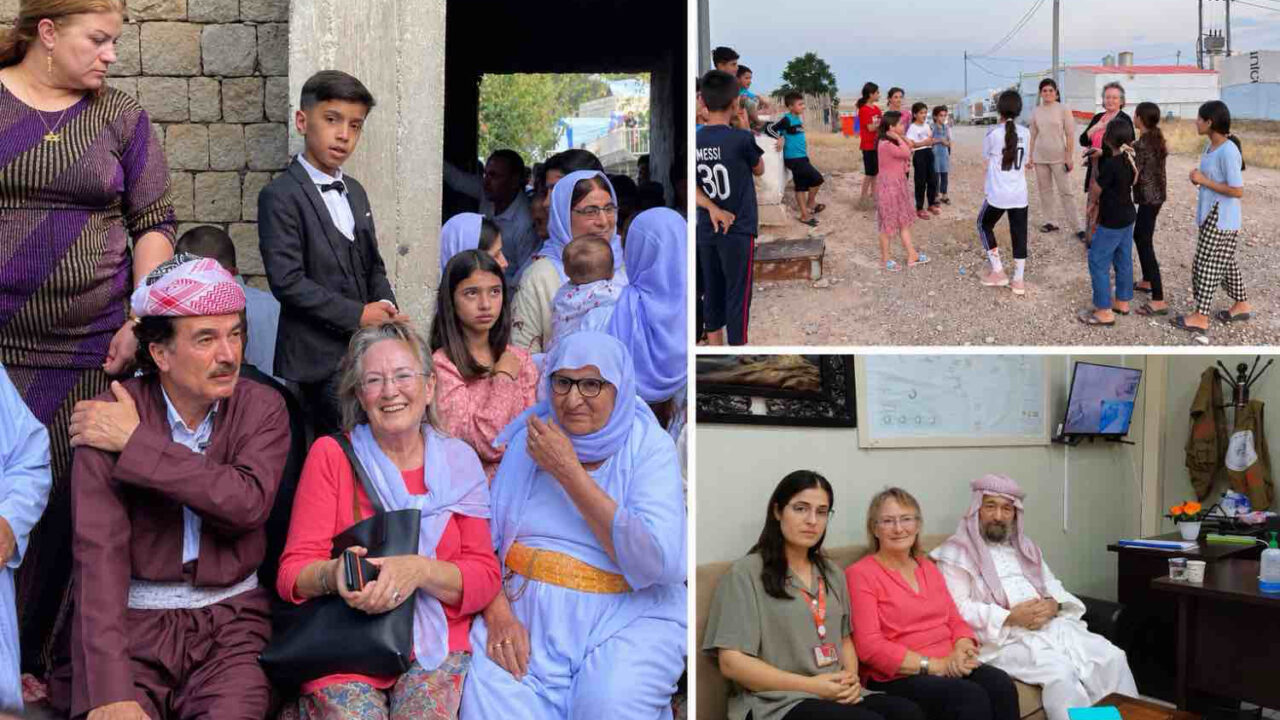
The three of us, Reber, Angela, and I, went on an orientation trip together, and I received permission to live in one of the camps, something we had never heard of happening before.
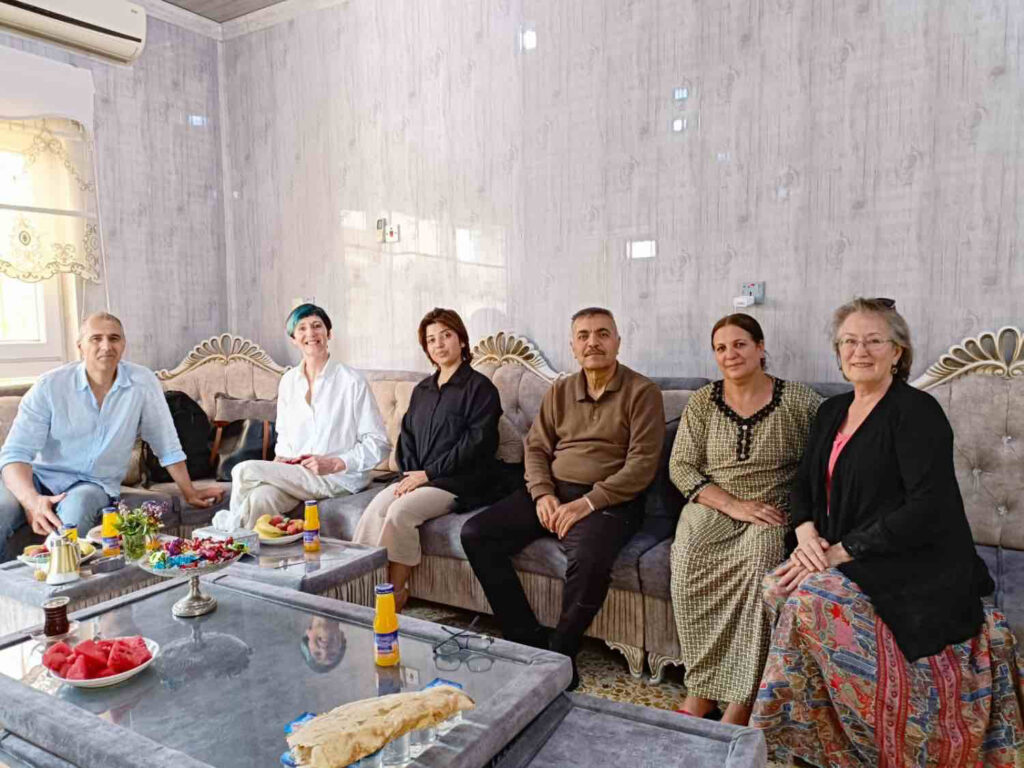
Margaret Rijkelijkhuizen, Angela Smits and Reber Dosky during an orientation visit to Iraq in 2023. Photo: Courtesy of Yazidi at School.
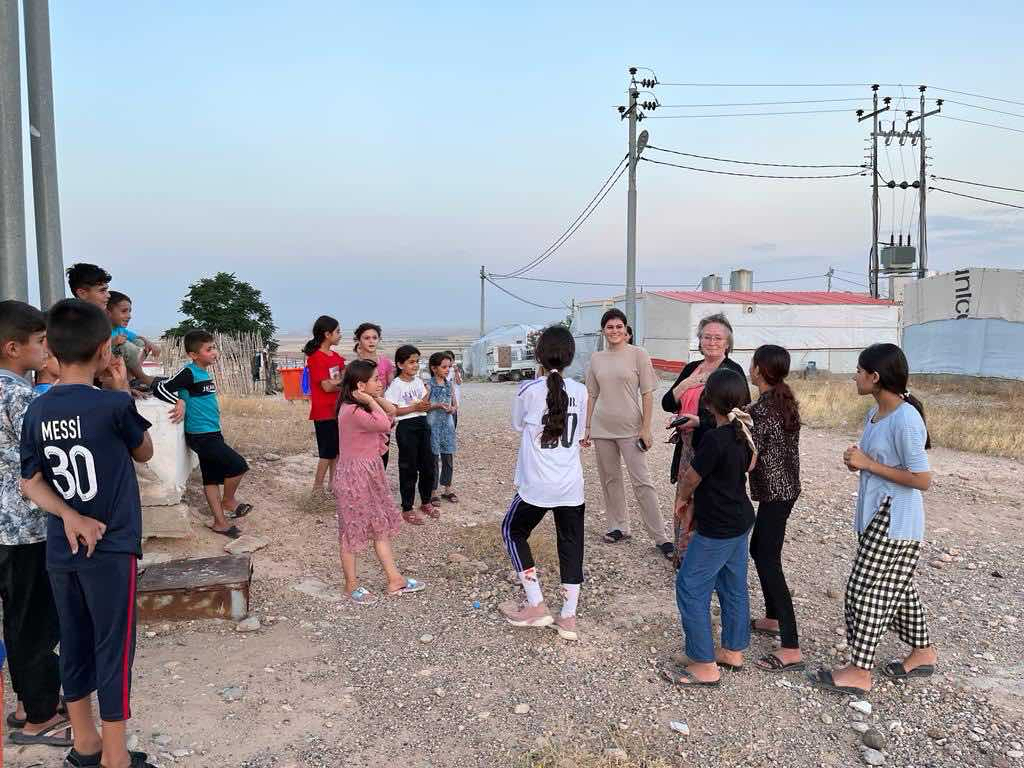
After preparations, I moved into the camp in September. There, I taught a small group of adults and another of teenagers, but I understood quickly that I could reach far more Ezidis if I brought the program online.
Moving Education Beyond the Camps
You went to the camp thinking you could help in person. What made you decide to build something online instead?
Margaret: While I was there, I realized quickly that I had been naïve in my plans. If I wanted to reach survivors in the other thirteen camps, I needed to go online. Carla convinced me to come back, and in my final weeks I observed some online classes that Ezidis had already organised themselves, over Zoom.
Coming back from the camp was not easy. I felt as though I was walking away from something I had promised to stay loyal to. But I posted on LinkedIn that I needed volunteer teachers, because we were moving online.
I knew almost nothing about how to teach online. However, a recurring pattern throughout my life has been stepping into new challenges, to take the leap, and master it as I go. And this time I would not be alone.
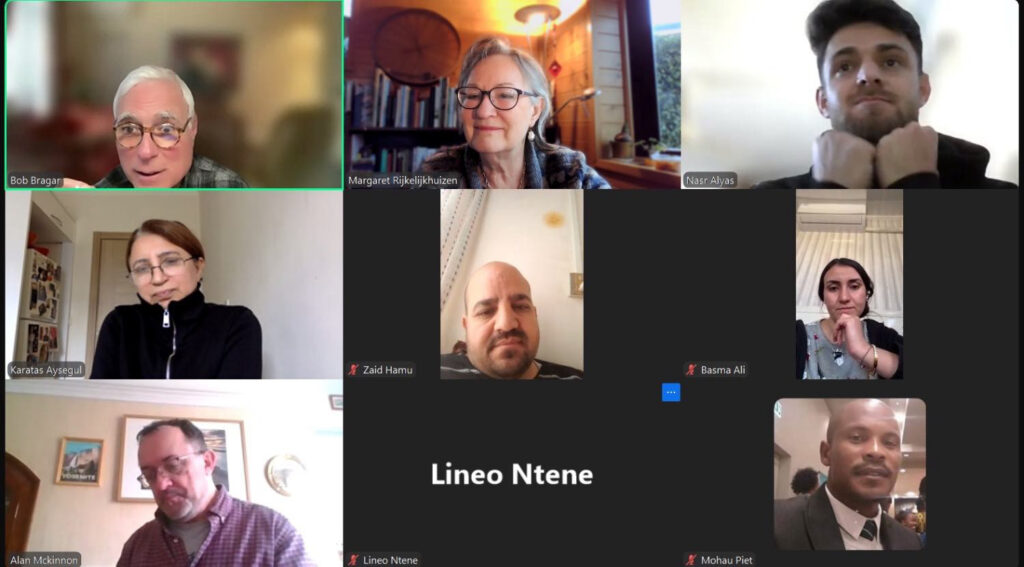
Within six weeks, a small group of teachers started teaching online. We built the school together, from scratch, really.
Learning to Communicate, Not Just Pass Exams
What does the teaching actually look like?
Margaret: We teach communicative English, which almost none of our students have had before. They come to us and say, “I cannot talk.”
Even students who have gone through years of formal English education and who have passed all their tests still cannot hold a conversation, because they have been taught to the test, not taught to communicate.
Our approach is closer to how a child learns a language: acquisition first, grammar follows naturally. No rote learning. And no translation. We also read wonderful books with them. One cannot get anywhere close to fluency without reading.
Every teacher has their own style, and that is so exciting, besides the common thread that runs through all of it: real engagement, real conversation, and hearts that are genuinely in it.
That last part matters more than people think. Our volunteer teachers show up because they care, not because they are paid.
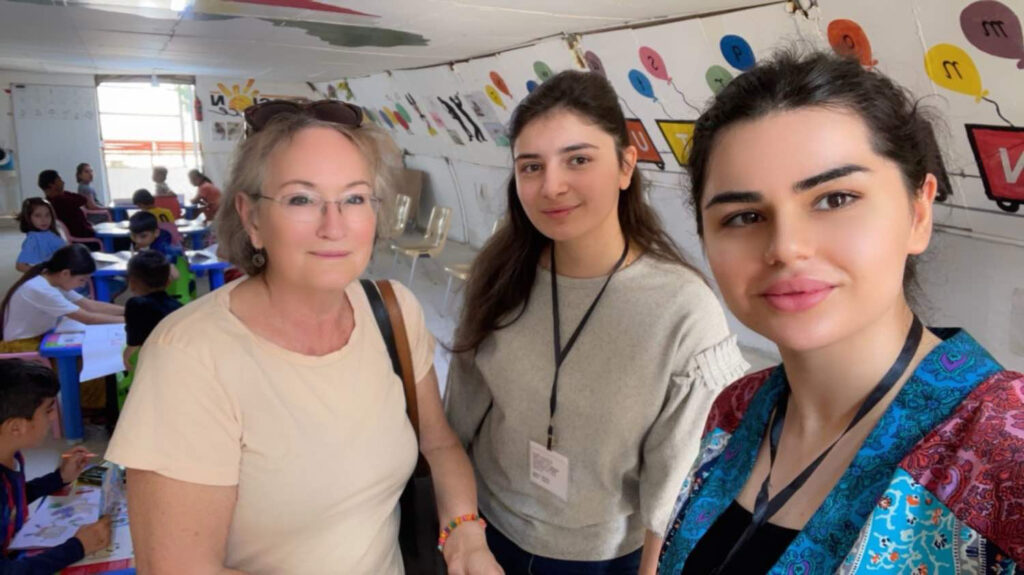
When I visited a class recently, I saw it firsthand: every student engaged, supporting each other, asking questions. That kind of energy does not come from a paycheck.
How is the school actually run, day to day?
Margaret: We work with two semesters and an eight-week summer session.
We follow the Common European Framework of Reference for Languages (CEFR) to provide a clear, standardized language curriculum. Rather than using vague labels, the CEFR relies on concrete “can-do” descriptors that are widely trusted by universities and employers worldwide.
Retention is honest work and based on trust and sincere relationships between students and teachers.
To earn a certificate, we ask for 80% attendance and 80% homework completion. We do not pretend anyone finishes a full level in one term; most of our teachers teach twice a week, and even then, real fluency takes far longer than people expect.
We are not short on demand. But our teaching team fluctuates. People’s lives change, some are not the right fit, there might be a long-term family crisis, and some have simply given a year already and need to step back. So I am always looking for more near-native or native-speaking teachers.
Most of our classes this semester are at beginner and intermediate levels. Each teacher teaches twice a week, an hour and a half each session.
A Growing International School
How many teachers and students do you have at the moment?
Margaret: We currently have 16 active volunteer teachers and have reached more than 850 students since our foundation in 2023. In 2026 alone, 478 new students enrolled, representing approximately 60% growth compared to 2025. We have also issued more than 300 certificates since 2023. Our volunteer team has roughly doubled this year, with several expat teachers living in Amsterdam joining us for the autumn semester. Each new semester, we grow: more students, more groups, more teachers.
How do new students even find you?
Margaret: Almost entirely by word of mouth. A student joins, and two weeks later their cousin wants to join, then their sister.
It spreads through trust, mostly, trust that takes time to build, because so many organizations have come and gone among these people, and ours does not look like the others.
We are volunteers, and that is a strange enough idea that people ask what a “volunteer” even is.
One of our own students in Iraq once made a recruitment poster on his own, without being asked, just because he wanted the school to grow.
That is the spirit of our organization: people show up because they want to, not because someone told them to.
A Dream for Ezidi Students
Is there a moment that captures what this really means to the students themselves?
Margaret: Yes. I once told one of our Ezidi volunteers, who now helps run the practical IT side of things for us, that I had a dream for him and for all our students: that one day they would be known as the best English speakers, the best English teachers, in all of Iraq.
Not despite everything that had happened to them as Ezidis, but as their own answer to it. That the way people saw them could change entirely.
He told me afterward that he would never forget that, that because of what I had said, he was staying, not for a job, not for money, but because it was for his people.
And that is how it is with almost everyone who stays. They are not doing it for us. They are doing it for each other.
And now?
Margaret: Now we have teachers on four continents, students online, learning, showing up.
It has been two years since we went fully online, and in that time this has stayed exactly what it started as: a spontaneous, volunteer-run initiative, without the paid overhead most organizations carry.
That is not an accident. It is the whole point.
It is still small. It is still, in a lot of ways, just starting. But every piece of it traces back to that one moment: a documentary that changed the course of things, and a girl who answered a question honestly.
I think that is the story worth telling. Not because it is dramatic, though it is. But because it is true, and because it is still happening, one student, one teacher, one “yes, I want to learn English” at a time.
Beyond English Lessons: Making Online Education Accessible
The foundation’s work extends beyond the virtual classroom. In additional information provided to Ezidi Times, Yazidi at School explained that access to suitable electronic devices and reliable internet connections remains one of the greatest obstacles facing its students.
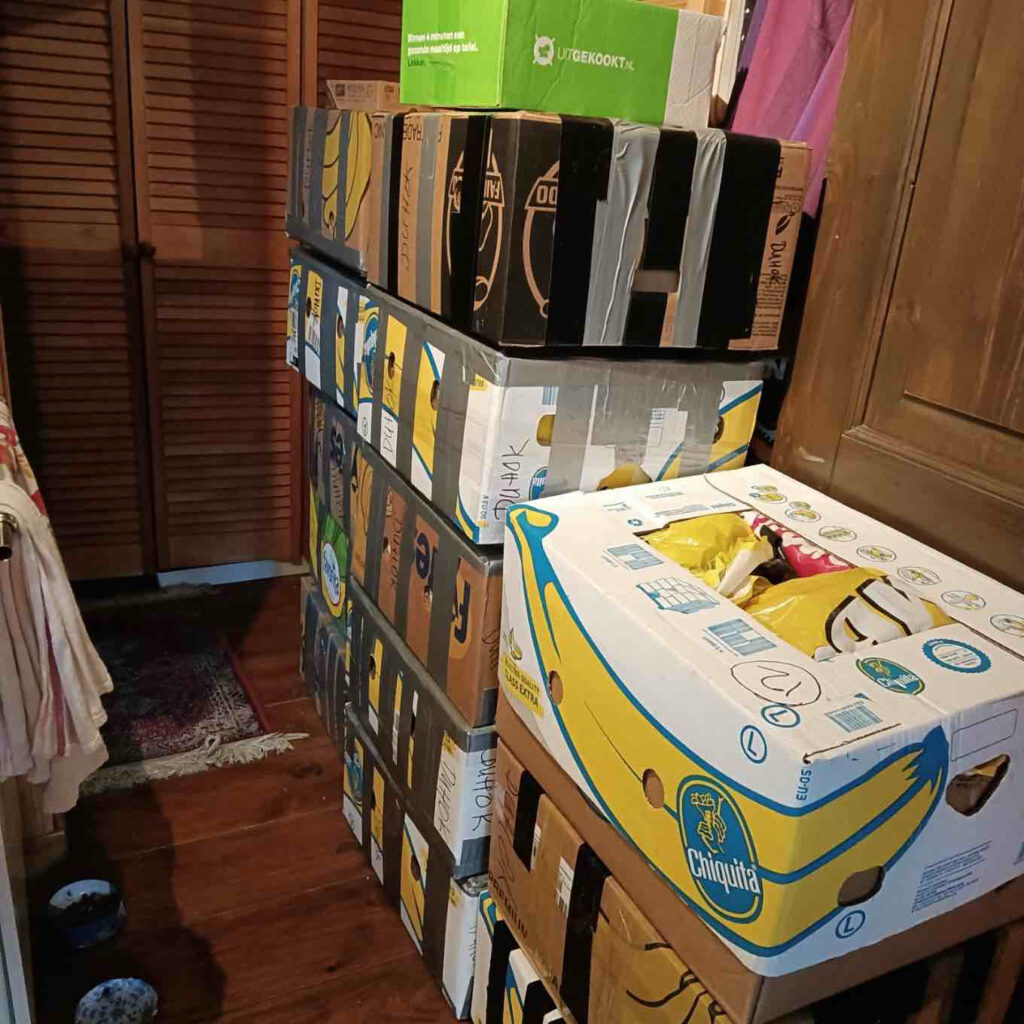
According to the foundation, more than 150 devices, including smartphones, laptops and printers, have been distributed since 2023. Some have been shipped directly to students living in displacement camps in Iraq.
The organisation also repairs and maintains donated laptops, helps cover selected connectivity costs and provides an eight-week course in basic IT skills.
Instead of a single classroom, the programme operates across Moodle, Zoom, Microsoft 365 and Google Workspace. Behind the scenes, Nasr Hassan keeps this digital learning environment running by managing registrations, supporting its technical systems and helping students and teachers use the platforms with confidence. His work helps ensure that technology opens the classroom rather than becoming a barrier to it.
The foundation also cooperates with Sinjar Academy, local NGOs and educational institutions, while distributing donated learning materials.
These activities are particularly important for students living in displacement camps, where access to technology and a reliable internet connection cannot be taken for granted.
Funding the School’s Future
Yazidi at School is registered as a charitable foundation in the Netherlands. Its teachers and board members serve voluntarily and receive no salaries, although the organisation pays an IT contractor for specialised technical services.
According to its published 2025 financial statement, the foundation received donations from individuals, crowdfunding campaigns and Soroptimists. Its expenses included website development, digital subscriptions, equipment repairs, shipping, travel and volunteer coordination.
As the number of students grows, the foundation is seeking additional financial support to maintain its online infrastructure, provide more devices, improve technical assistance and ensure that its educational activities can continue.
The Obstacles Behind the School’s Establishment
The school’s development has not been without difficulties.
Before moving online, Margaret and her colleagues encountered obstacles while attempting to establish English-language classes inside Mam Rashan camp in Iraq.
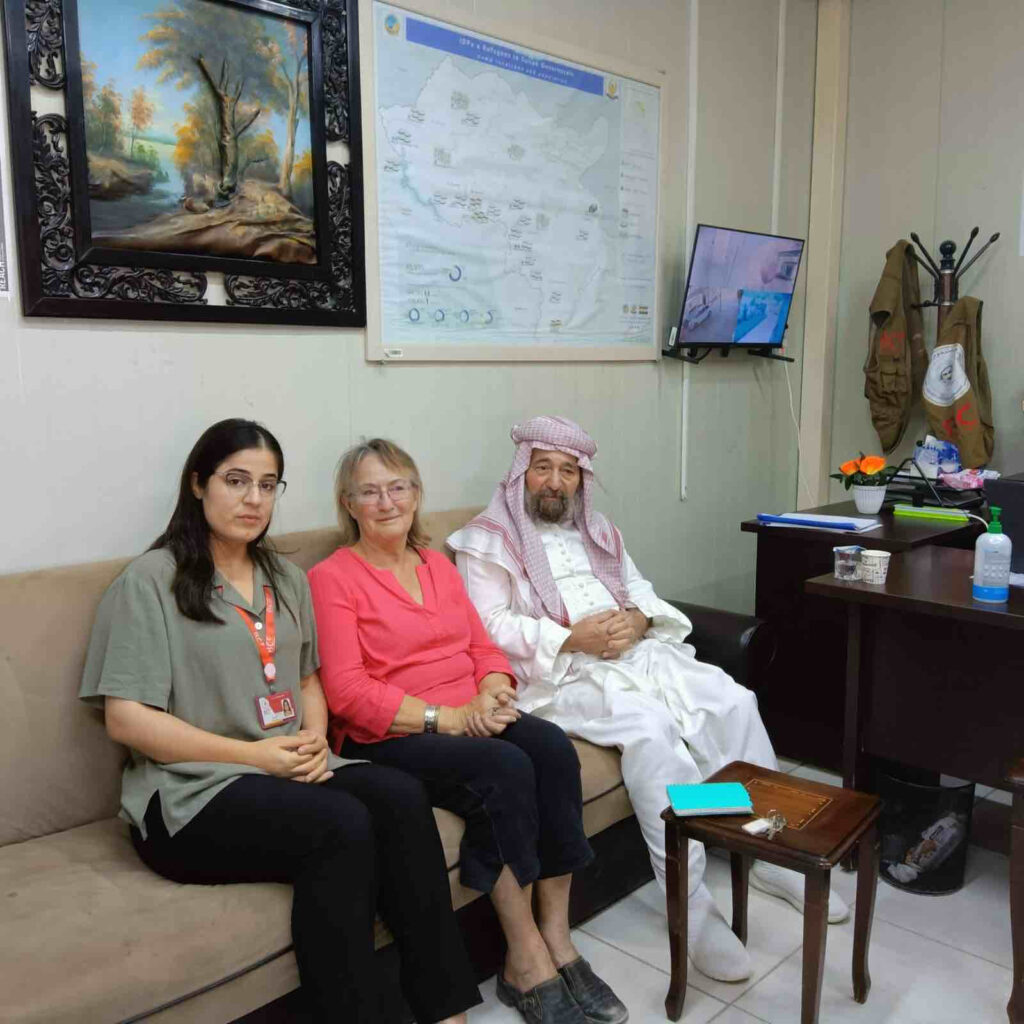
In a public fundraising update in December 2024, Margaret stated that the Barzani Charity Foundation (BCF) had refused to provide a classroom she said had previously been promised. She identified the setback, alongside the desire to reach students in other displacement camps, as a reason for transferring the programme online.
A separate account published in the Dutch Soroptimist magazine in April 2025 also described difficulties securing teaching facilities and permission from the authorities when Margaret and Angela returned to the camp in September 2023.
Despite these early setbacks, the initiative continued its work, developing an online teaching model that allowed volunteer educators from different countries to reach Ezidi students beyond a single camp.
Supporting the Next Generation
Ezidi Times thanks Margaret Rijkelijkhuizen, Angela Smits, the foundation’s volunteer teachers and everyone involved in Yazidi at School for their efforts to make education accessible to Ezidi students, particularly those who have spent years living in displacement following the 2014 Ezidi Genocide.
For many of these students, learning English represents more than gaining another language. It can open opportunities for higher education, employment, international exchange and greater independence.
The continued commitment of the foundation’s volunteers demonstrates the importance of educational initiatives that respond to the needs and ambitions expressed by Ezidi students themselves.
Readers interested in volunteering, donating educational equipment or supporting the foundation financially can visit Yazidi at School or contact info@yazidiatschool.org.
Follow Yazidi at School on their social media plattform to stay updated on their latest activities and initiatives.
Interview conducted by Elisa Trossero, Board Member of Yazidi at School.
Elisa Trossero’s LinkedIn