
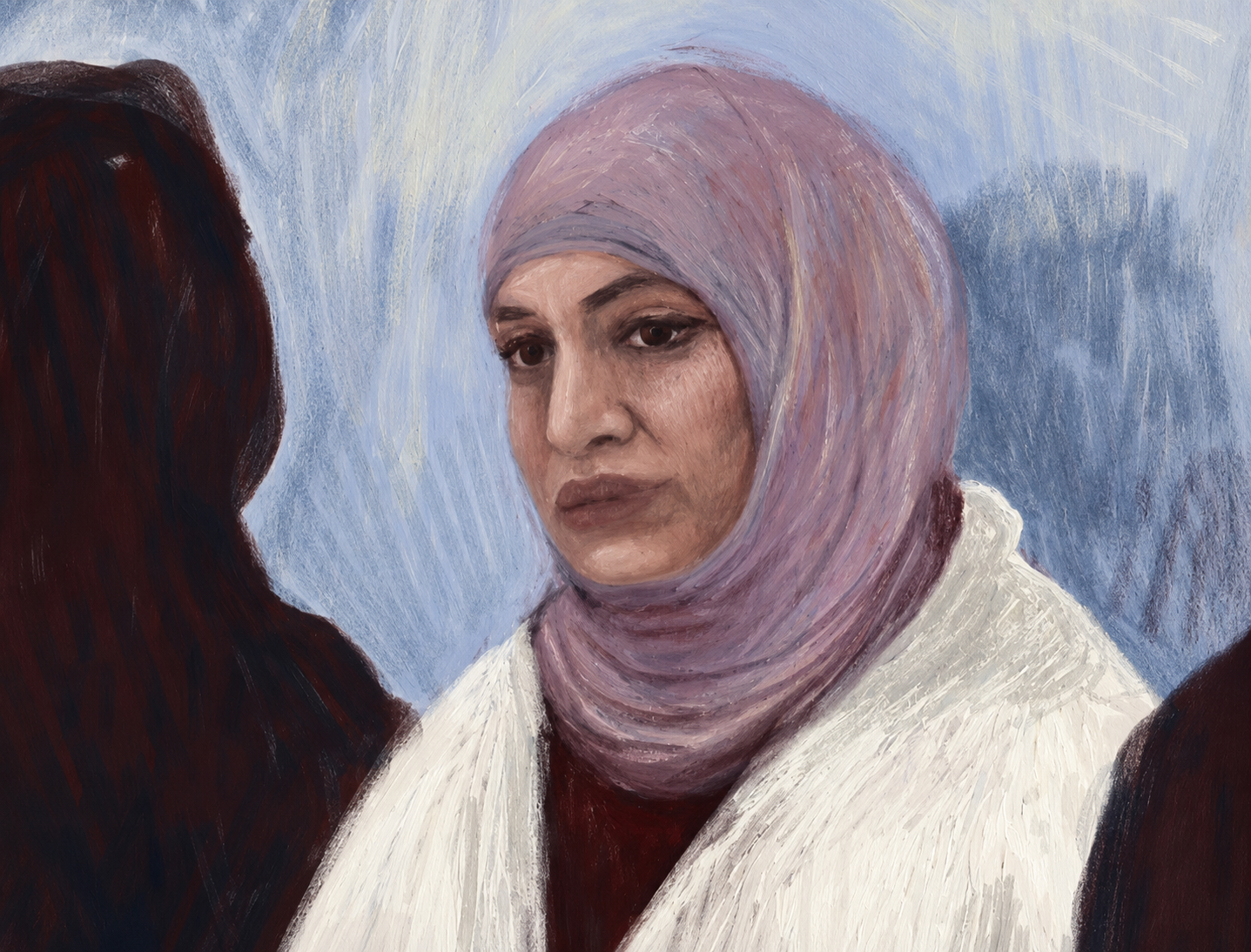
MELBOURNE, Australia — The case against Zeinab Ahmad, an ISIS-linked Australian woman accused of involvement in the enslavement of an Ezidi teenager in Syria, has entered a new stage as prosecutors fight her application for bail in Melbourne Magistrates’ Court.
Ahmad, 31, returned to Australia in May from Al Roj camp in Syria and was arrested after arriving at Melbourne International Airport. She has been charged with crimes against humanity — enslavement, and use of a slave. Each offence carries a maximum penalty of 25 years in prison.
Her mother, Kawsar Ahmad, also known as Kawsar Abbas, has separately been charged with slavery-related offences, including enslavement and slave trading. Both women have been in custody since returning to Australia.
The latest court hearing has brought new details into public view. According to evidence read in court, prosecutors allege that in 2017 Ahmad’s father, Mohammad Ahmad, bought a 15-year-old Ezidi girl for US$10,000 while the family was living in ISIS-held Syria. The teenager was allegedly forced into domestic work and sexual servitude in the family’s home.
The court heard that Mohammad Ahmad, who is now imprisoned in Iraq, allegedly subjected the girl to repeated sexual and physical abuse. Police told the court that Zeinab Ahmad did not physically hurt the teenager, but allegedly treated her badly, threatened her, and ordered her to carry out housework.
For Ezidis, the details heard in court are not abstract legal allegations. They reflect the same system of slavery, trafficking, rape and forced labour used by ISIS during its genocidal campaign against the Ezidi people and their Sharfadin faith. The court was told that around 6,800 Ezidi women and children were captured by ISIS and sold through markets for sexual exploitation and household labour. Many remain missing.
The bail application focused not only on the alleged slavery offences, but also on whether Ahmad would pose a risk if released into the public. Prosecutors argued that she had travelled to Syria with her family to support ISIS, had made social media posts supporting the group, carried an ISIS identification card, received income from the group, and had been married to ISIS-linked men.
Detective Senior Constable Marc Clendenning told the court that Ahmad had not explicitly renounced ISIS since her surrender in 2019. Police argued that her ideology remained unclear and that proposed bail conditions would not remove the risk.
Ahmad’s defence argued that women living under ISIS had severe restrictions placed on their movements and freedoms. Her lawyer also proposed conditions including accommodation with her uncle, a $75,000 surety, electronic monitoring, and participation in a countering violent extremism program.
Police opposed those proposals. The court heard that a control order with electronic monitoring could not be used as a bail condition in the way suggested by the defence, and that countering violent extremism programs were not considered suitable in Ahmad’s circumstances.
The court also heard that Ezidis in Australia, as well as the alleged survivor herself, would be fearful if bail were granted. Prosecutors argued that this fear was relevant to the question of risk and public safety.
Ahmad’s bail hearing has not concluded. It is expected to continue on 15 June, when further police evidence is due to be heard.
The allegations against Ahmad have not been proven, and she remains entitled to the presumption of innocence. But the case is already being closely watched because it raises a central question that Ezidis have asked for years: whether countries whose citizens joined ISIS will seriously prosecute those accused of participating in the genocide, slavery and destruction inflicted on the Ezidi people.
For the survivor at the centre of this case, and for thousands of Ezidi families still searching for the missing, every hearing matters. Justice has been slow, fragmented and painful. But each prosecution also sends a message: ISIS slavery was not only a crime committed in Syria or Iraq. It was an international crime, carried out with the involvement of people from many countries, and those accused must face the law wherever they are found.