
According to reports and a post made by MP Murad Ismael, a new organized return process has begun for displaced Ezidi families who have spent more than a decade in camps after ISIS attacked Shengal in 2014.
Different sources have reported different figures regarding the number of families and persons involved. One report stated that 235 displaced families from Qadia Camp had registered to return to Sinjar/Shengal, while another reported that 150 Ezidi families had already returned. Other reporting has referred to nearly 600 families expected to return in the current phase, while the exact number of individuals involved remains unclear because the sources use different figures, timeframes, and counting methods.
The families are returning after nearly twelve years of displacement. Many were forced to flee in August 2014, when ISIS carried out genocide against the Ezidi people in Shengal, killing civilians, abducting women and children, destroying homes, and forcing hundreds of thousands from their ancestral land.
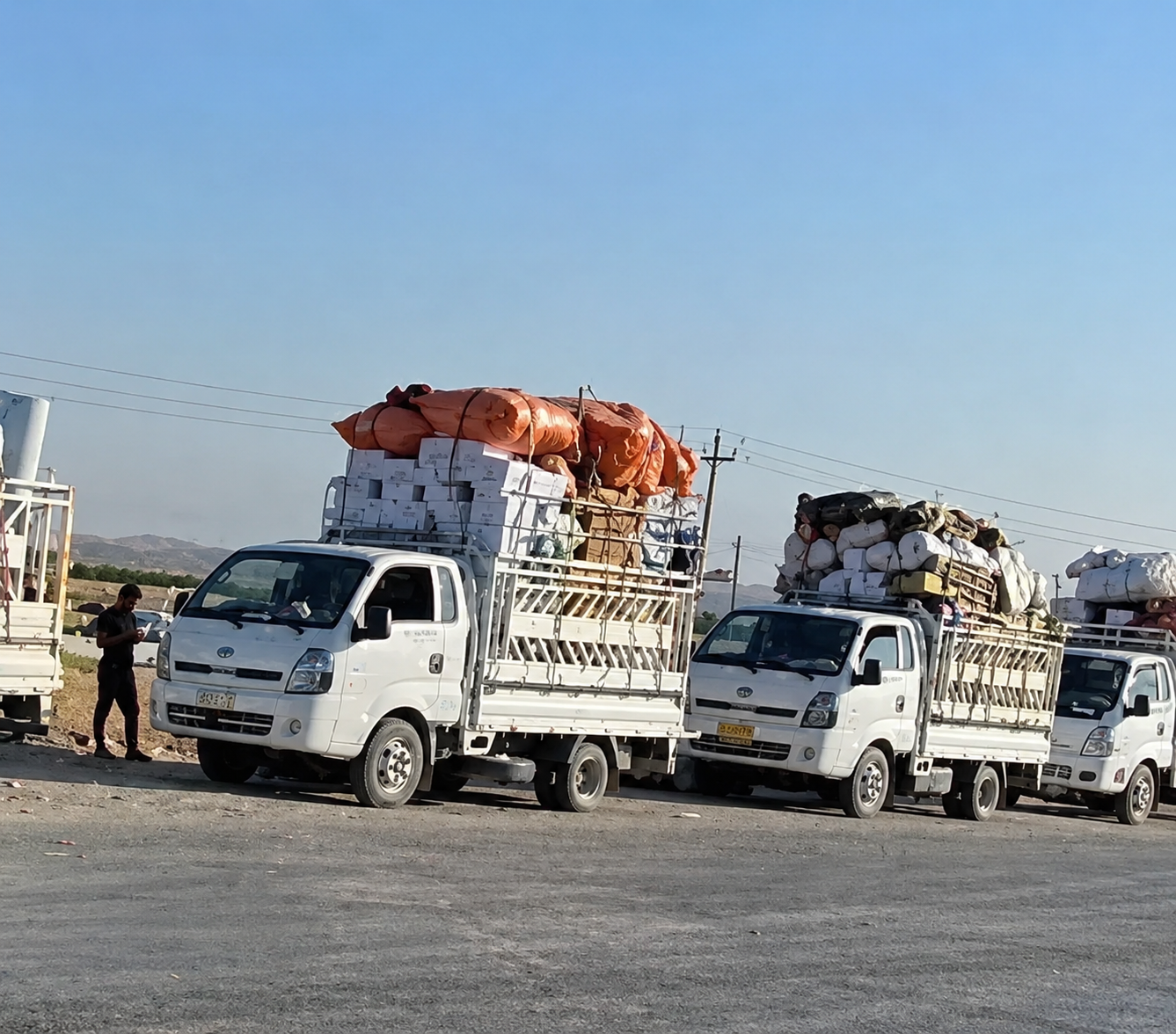
The return process has reportedly been organized in stages. According to one report, 47 families departed in the first convoy, followed by another group of 59 families. Camp authorities coordinated the process with Iraq’s Ministry of Migration and Displacement, and each returning household reportedly received financial support of around 1.558 million Iraqi dinars to help cover the transport of furniture and personal belongings.
However, the return remains difficult and incomplete. Some families have delayed leaving the camps because they do not yet have adequate housing in Shengal. Others have raised concerns about weak public services, damaged infrastructure, limited job opportunities, and ongoing security uncertainty.
MP Murad Ismael also highlighted the continuing obstacles facing displaced families, noting that many still do not possess a home or even a piece of land to return to. His comments underline a central issue in the return process: the desire of Ezidis to return home is strong, but return cannot be reduced to transportation alone. Families need housing, schools, healthcare, basic services, security, and real reconstruction.
Reports also indicate that more than one thousand families may still be unable to return because of difficulties with official documentation. Separately, previous figures have suggested that tens of thousands of Sinjar residents remain in displacement camps and are still unable to return.
For many Ezidi families, leaving the camps is an emotional step. Children who were born or raised in displacement are now seeing their families prepare to return to a homeland they may barely know. For older generations, the return carries the weight of memory, loss, and the hope of rebuilding life after genocide.
More than a decade after ISIS attacked Shengal, return is still not possible for many families because reconstruction, compensation, security, and services remain insufficient.