
The Holiday of Xidir Êliyas and Xidir Nebî in Sharfadin

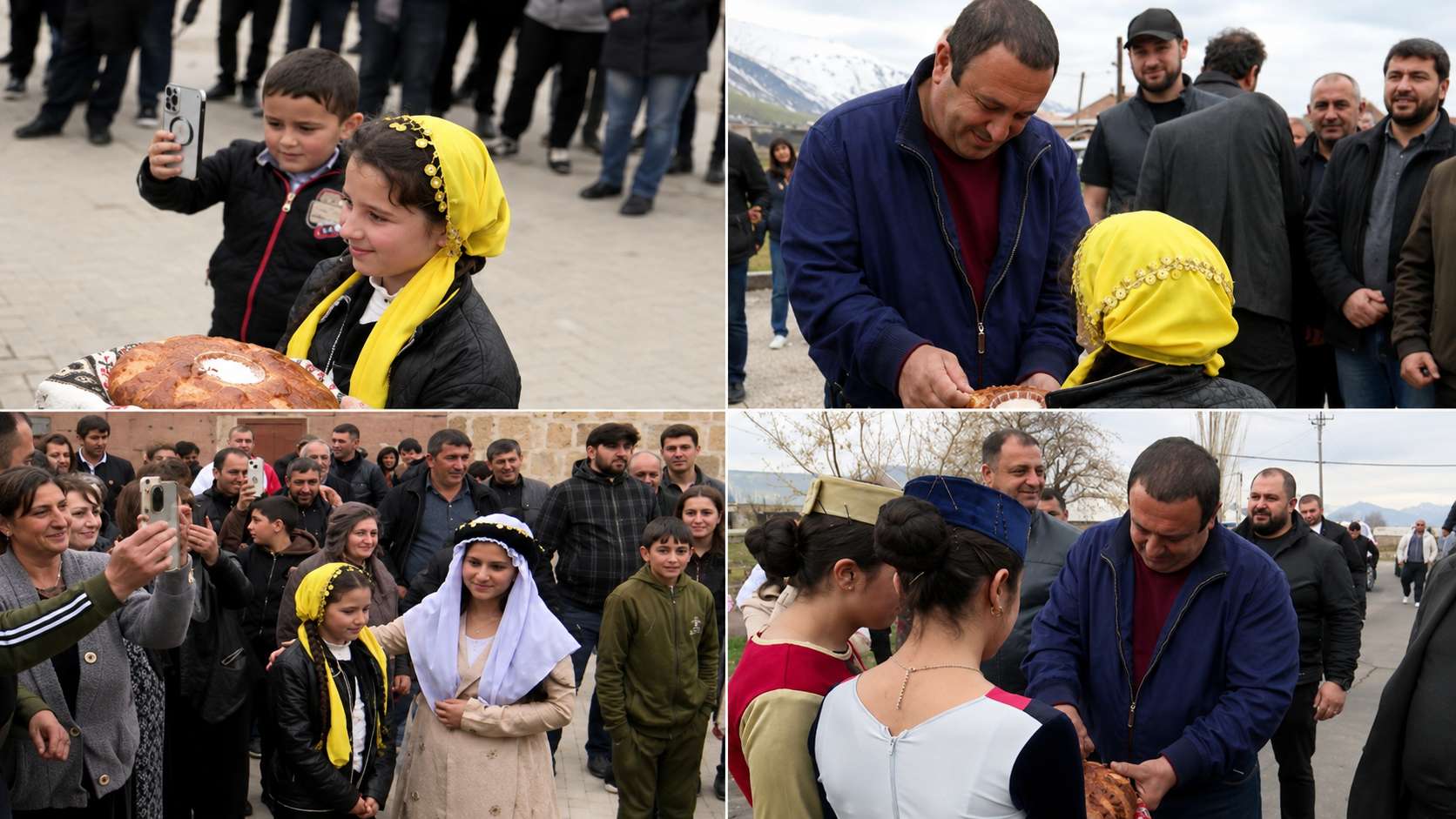
The holiday of Xidir Êliyas and Xidir Nebî is a sacred Ezidi holiday honoring the immortal saints Xidir Êliyas and Xidir Nebî, guardians of life, love, and protection. Observed each year in February, the days combine voluntary fasting, preparation of symbolic foods called the Sacred Seven, and rituals that invite blessings into the home. From the mystical hoofprint sign to the making of Pekhûn, the holiday celebrates healing, divine guidance, and the renewal of both body and spirit.

Nadia Murad Meets European Parliament President, Renewing Focus on Accountability for Crimes Against Ezidis

Nadia Murad met with European Parliament President Roberta Metsola in a discussion reinforcing international attention on accountability for the 2014 genocide against Ezidis in Iraq. A survivor of the genocide, Murad has spent the past decade advocating for justice, recognition, and protection for survivors of sexual violence in conflict. The meeting highlights continued engagement between European institutions and global advocates working to ensure that crimes committed against Ezidis and their Sharfadin faith remain recognised and addressed at the international level.

Protecting Our People Before History Repeats

The Ezidis know the consequences of ignored warnings. Ongoing instability in the region, particularly in Sinjar, has renewed serious concerns about safety and protection for a people who have already survived genocide. The conditions that enabled the atrocities of August 3, 2014, have not been fully resolved, leaving Ezidis vulnerable to renewed threats. Protecting Ezidis today is essential not only to acknowledge past crimes, but to prevent history from repeating itself.

‘They Were Our Friends’ — Betrayal in Iraq

Trust between neighbors can be as fragile as it is sacred. In northern Iraq, lifelong bonds between Ezidi families and their Arab neighbors unraveled in the face of ISIS violence. What once was a relationship built on shared meals, trade, and mutual support turned into fear and pursuit, forcing families to flee overnight. Stories like these reveal not only the brutality of violence, but also the deep emotional wounds left when trust is broken by those once considered friends.

ISIS Woman on Appeal Trial in the Netherlands

The Hasna A. case returns to court in the Netherlands after the defendant appealed the first verdict.From 9–12 February 2026, judges at the Schiphol Judicial Complex will review the case, which addresses ISIS crimes committed against Ezidis.
The hearings are public and will be livestreamed, with translation available.

Ezidi Girl Receives Citizen of the Year 2026

An Ezidi girl has been recognised at the Coffs Harbour Australian Citizen of the Year Awards 2026. Mayada Oso, who arrived in Australia in 2018 after surviving the Ezidi genocide, received the Young Citizen of the Year award for her achievements in education and her work supporting students. Her journey from captivity to leadership and service reflects the resilience of Ezidis and their continued strength after genocide.

Recognition of Bangladesh Genocide: Assessing Through the Lenses of International Criminal Law

Bangladesh’s 1971 genocide remains largely unrecognized internationally, despite clear evidence of mass killings, sexual violence, and attacks on intellectuals. This analysis examines the events through international criminal law, highlighting the urgent need for recognition, justice, and remembrance—lessons that resonate deeply with Ezidis and all peoples who have endured systematic persecution.

Introducing Russian Children to Ezidi Culture Through Fairy Tales

A new Russian-language book, Ezidi Folk Tales, opens a window into the rich culture and traditions of the Ezidi people. Published by Mesopotamia under the leadership of Samvel Saidovich Mstoyan, with illustrations by Aida Mstoyan, the collection brings centuries-old stories and values to life, introducing Russian children to the history, customs, and worldview of one of the world’s oldest peoples.

Displaced Ezidis Face the Freezing Winter Without Heating Support

Ezidis did not choose to live in camps, and they certainly did not choose to become targets of ISIS in 2014. With the current and evident attempts to force Ezidis out, the question arises: where are these families supposed to settle? Are they expected to return to Shingal, to homes that remain in ruins and for which the Iraqi government has allocated no funds for reconstruction? Where should Ezidis seek refuge and rebuild their lives without risking becoming targets of ISIS or other extremists hiding behind the false mask of harmless neighbors?

Germany’s Prosecution of ISIS Crimes against Ezidis

Germany has successfully prosecuted ISIS members for crimes against humanity against Yazidis, including murder, torture, rape, and enslavement. Trials, starting in 2019–2020, relied on Yazidi survivor testimony, police and NGO reports, and expert evidence on Yazidi culture and ISIS structures. Despite challenges such as re-traumatization of witnesses and language barriers, courts deemed the testimony credible, leading to multiple convictions. International cooperation proved essential at every step, highlighting the importance of global accountability mechanisms.