
UNESCO Iraq is looking for a senior consultant to lead work on inventorying and safeguarding Ezidi intangible cultural heritage in Iraq.
The position is part of a UNESCO Iraq project carried out in collaboration with the Nadia Initiative and the Lalish Cultural Centre. The project focuses on documenting Ezidi intangible cultural heritage, strengthening local capacity, and creating tools that can help preserve and transmit Ezidi heritage knowledge to younger generations.
The consultancy is listed as a senior Level 3 consultant position under UNESCO’s Culture Sector. The duty station is Duhok, while the work is mainly remote. The assignment is part-time and home-based, with three planned missions to Iraq.
Applications are open to external candidates. The deadline to apply is 26 June 2026 at midnight UTC+3.
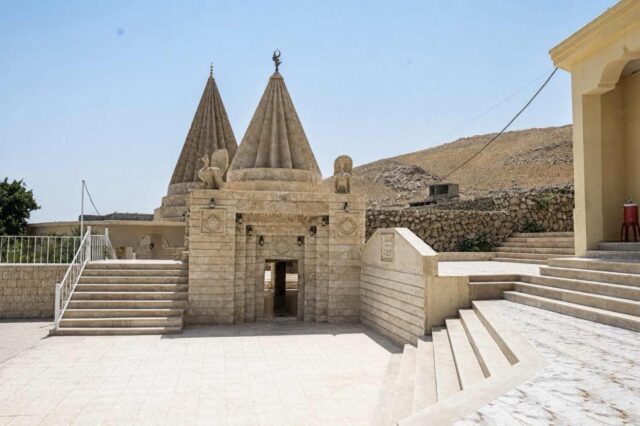
The project comes in response to the destruction caused by ISIS, which targeted not only Ezidi lives, but also Ezidi shrines, sacred artefacts, traditions and cultural identity. UNESCO’s initiative aims to support the safeguarding of Ezidi heritage through research, documentation, training, participatory workshops and digital tools.
According to the vacancy, the project builds on a 2023 survey of 97 shrines and 88 related practices. The new phase will focus on documenting non-religious aspects of Ezidi intangible cultural heritage. The planned outcome includes a searchable online database, a quality-assured inventory and a publication presenting documented Ezidi cultural expressions.
The selected consultant will provide technical leadership for the project. This includes preparing specialised workshops, supporting locally led documentation, overseeing the quality and validation of collected data, and helping prepare a comprehensive inventory of Ezidi intangible cultural heritage.
The consultant will also support the development of methodology, data collection tools, training material, final reports and an online catalogue of selected Ezidi cultural elements.
UNESCO is seeking a candidate with an advanced university degree in a relevant field such as anthropology, cultural heritage studies, ethnology, sociology, cultural studies, museum studies, archaeology or a related discipline. The position also requires at least ten years of professional experience in intangible cultural heritage, cultural heritage management or locally led cultural documentation.
Candidates are also expected to have experience with UNESCO’s 2003 Convention for the Safeguarding of the Intangible Cultural Heritage, capacity-building programmes, field-based documentation, technical reporting and heritage inventory work. Familiarity with Ezidi cultural heritage and the Iraqi context is listed among the requirements.
Fluency in English is mandatory. Working knowledge of Arabic is also required.
Applicants must apply through the official UNESCO Careers website. UNESCO states that the application must include a CV, a suitability statement, a technical proposal, a financial proposal in US dollars and contact details for at least three references.
UNESCO also states that it does not charge any fee at any stage of the recruitment process.
For the Ezidi people, the project is significant because cultural heritage protection after genocide is not only about documentation. It is also about memory, continuity and the transmission of knowledge connected to Ezidi life, culture and Sharfadin. The appointment of a senior consultant will be an important step in shaping how this heritage is recorded, protected and made accessible for future generations.
Apply for the position
Official UNESCO Careers vacancy here.