

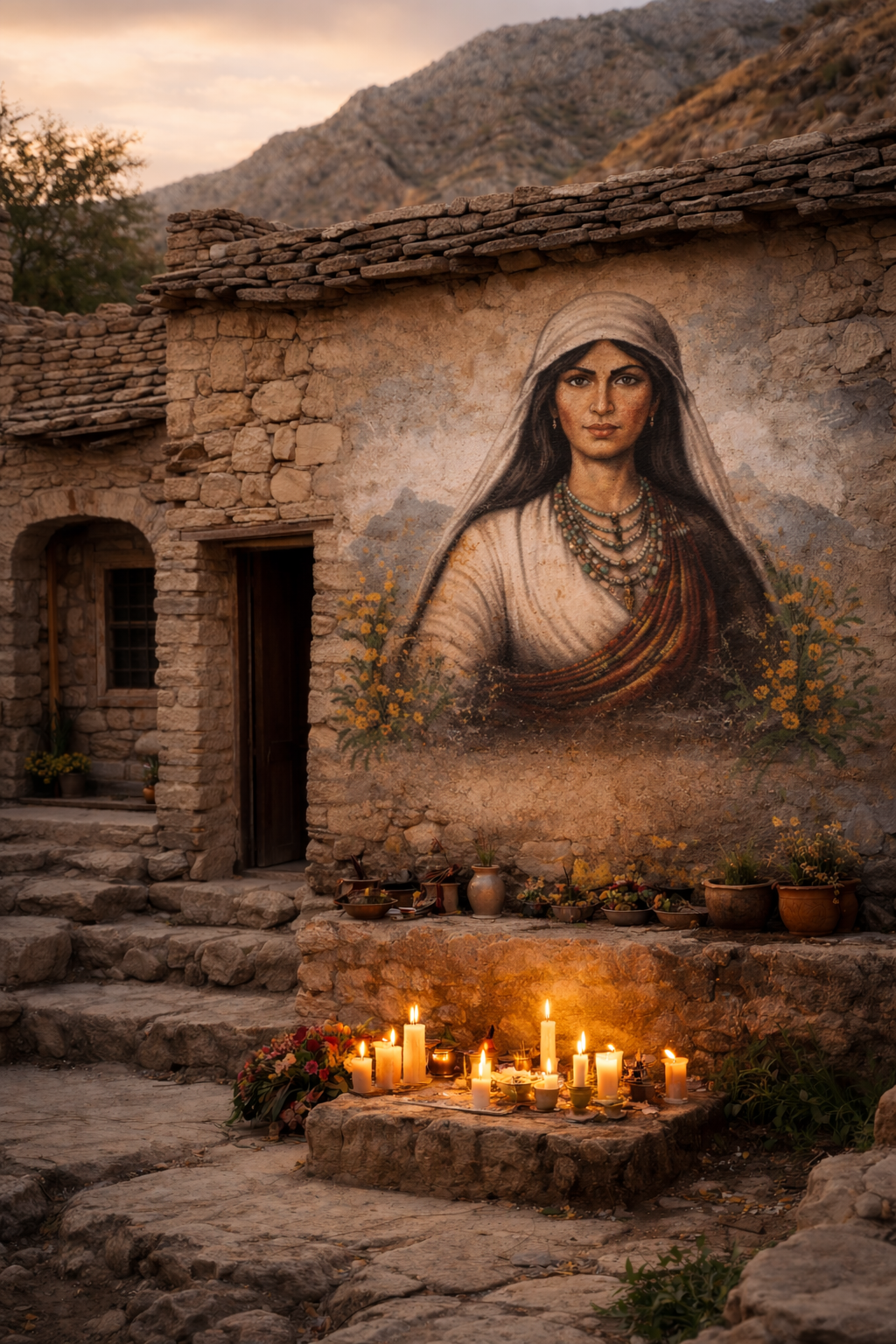
In the mountainous landscape of Şengal, where history and memory are deeply intertwined, the name Zerîfe Ûsê continues to live on as a powerful symbol of Ezidi resistance. Her story, passed down through generations, reflects not only courage in the face of oppression but also the enduring strength of Ezidi identity and the values of Sharfadin.
Zerîfe Ûsê is remembered as a woman who stood against Ottoman authority and helped mobilize her people during a time of threat and instability. According to local accounts, she played a central role in organizing resistance, guiding her community, and defending their way of life. Her actions were not only acts of defiance but also of protection—of land, belief, and dignity.
Today, her house in the village of Bekira, located at the foot of Mount Şengal, remains a place of deep cultural and spiritual significance. Built of stone and preserved through time, it is visited by Ezidis who see it as more than a historical site. It is a place of remembrance, where candles are lit on Wednesdays and during religious occasions, reflecting traditions rooted in Sharfadin. In times of hardship, people have also turned to this place seeking protection and strength.
The story of Zerîfe Ûsê also highlights a broader and often overlooked reality: the central role of Ezidi women in history. Across generations, women have not only preserved culture and belief but have actively shaped moments of resistance and survival. Figures like Zerîfe Ûsê stand as reminders that leadership and courage within Ezidi society have never been limited by gender.
Despite her importance, Zerîfe Ûsê (like many historical Ezidi women) remains largely absent from mainstream historical narratives. Efforts today aim to recover and document these stories, ensuring they are not lost. Researchers and cultural initiatives in Şengal continue to trace these histories, emphasizing their relevance for future generations.
The connection between the Ezidi people and the mountains of Şengal is also central to this story. For centuries, these mountains have served as places of refuge and survival. As one local perspective reflects: it is the mountains that have protected the Ezidis, preserving their existence through repeated periods of persecution.
Zerîfe Ûsê’s legacy is therefore not confined to the past. It continues to shape identity, memory, and resilience in the present. Her name lives on in stories, in songs, and even in the names given to Ezidi girls today: ensuring that her courage is neither forgotten nor silenced.