From the Memory of Genocide to Justice and a New Life
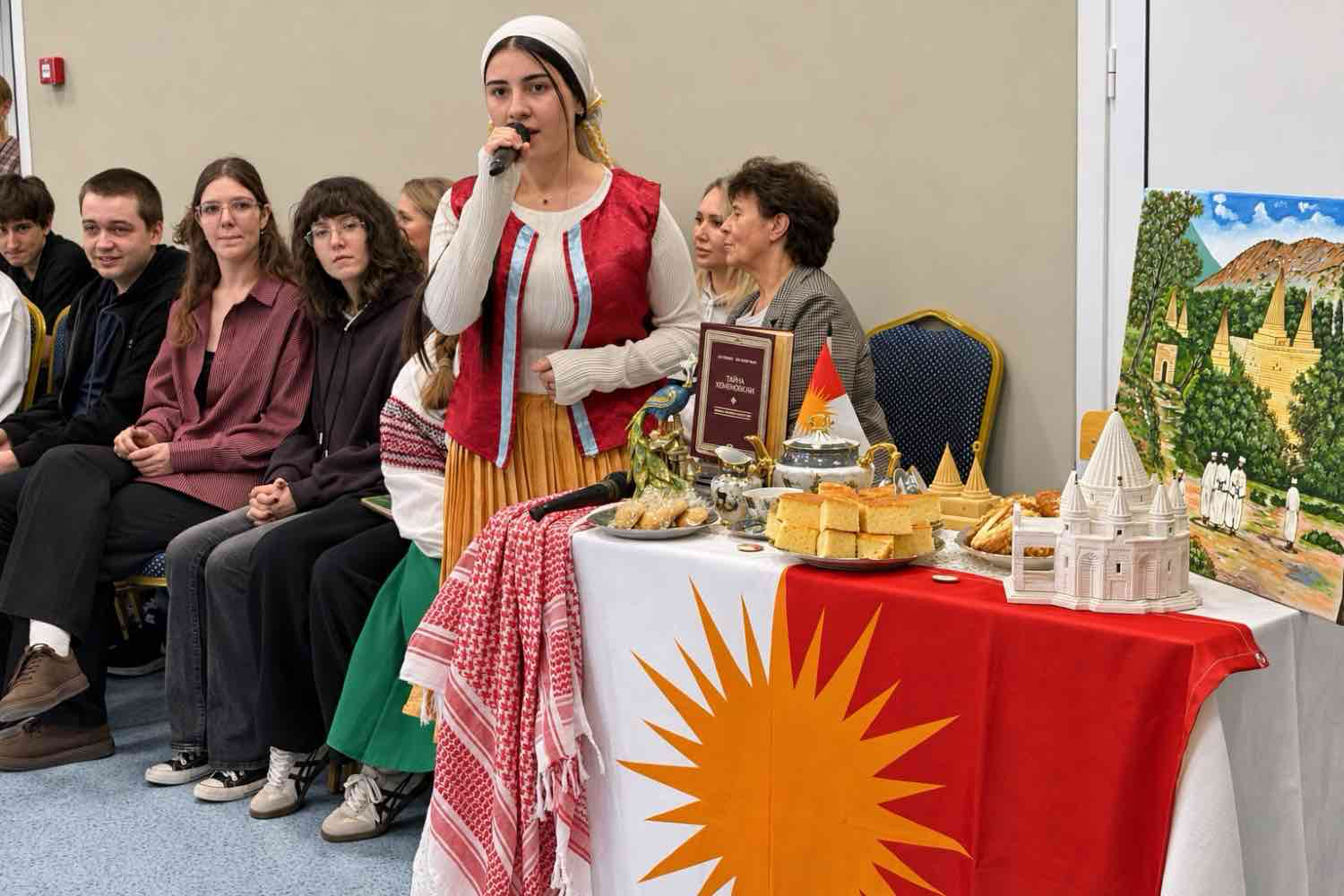
Trauma is often perceived as an event belonging to the past, something from which a person gradually moves away. Yet profound psychological trauma does not remain confined to the moment in which it occurred. It can continue to shape memory, identity, relationships, and everyday life. When an individual carries not only personal suffering but also the historical burden of a family and an entire people, trauma becomes collective, extending across generations and affecting cultural memory and the future of a people. The genocide committed against the Ezidis in the Shingal region of Iraq in August 2014 was such a catastrophe. The Islamic State (ISIS) attacked the ancient Ezidi people, killing hundreds of men and older women, abducting thousands of women and children, and forcibly separating families. The consequences extended far beyond the immediate violence: the destruction of family ties, the displacement of survivors, the search for missing relatives, and the threat to the Ezidi people’s cultural and religious continuity.
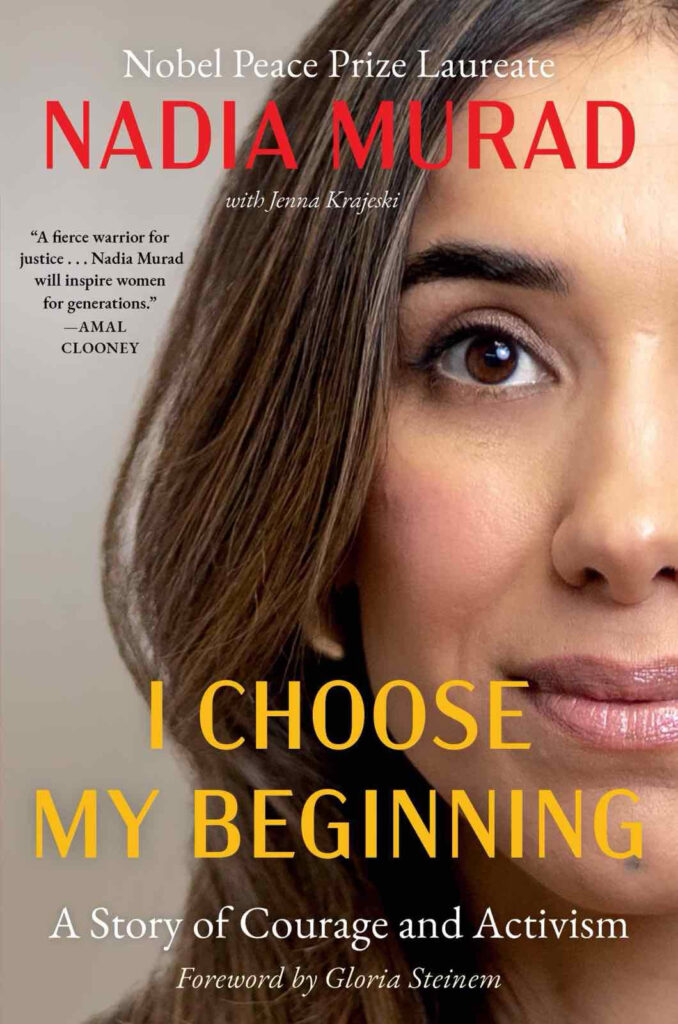
Among those who survived the genocide was Nadia Murad, whose personal testimony became one of the most widely recognised accounts of ISIS crimes. She transformed her experience into a public demand for justice, speaking not only for herself but also for thousands of Ezidi women and girls. Her new book, I Choose My Beginning: A Story of Courage and Activism, explores what comes after survival. While her first memoir, The Last Girl, documented captivity and the systematic violence committed by ISIS, the new book examines the difficult process of reclaiming individuality, dignity, and the right to a future.
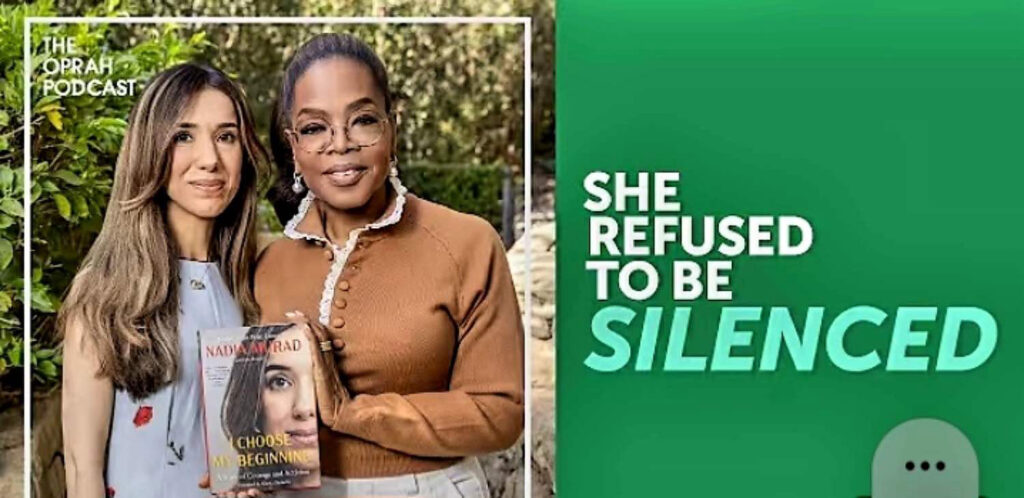
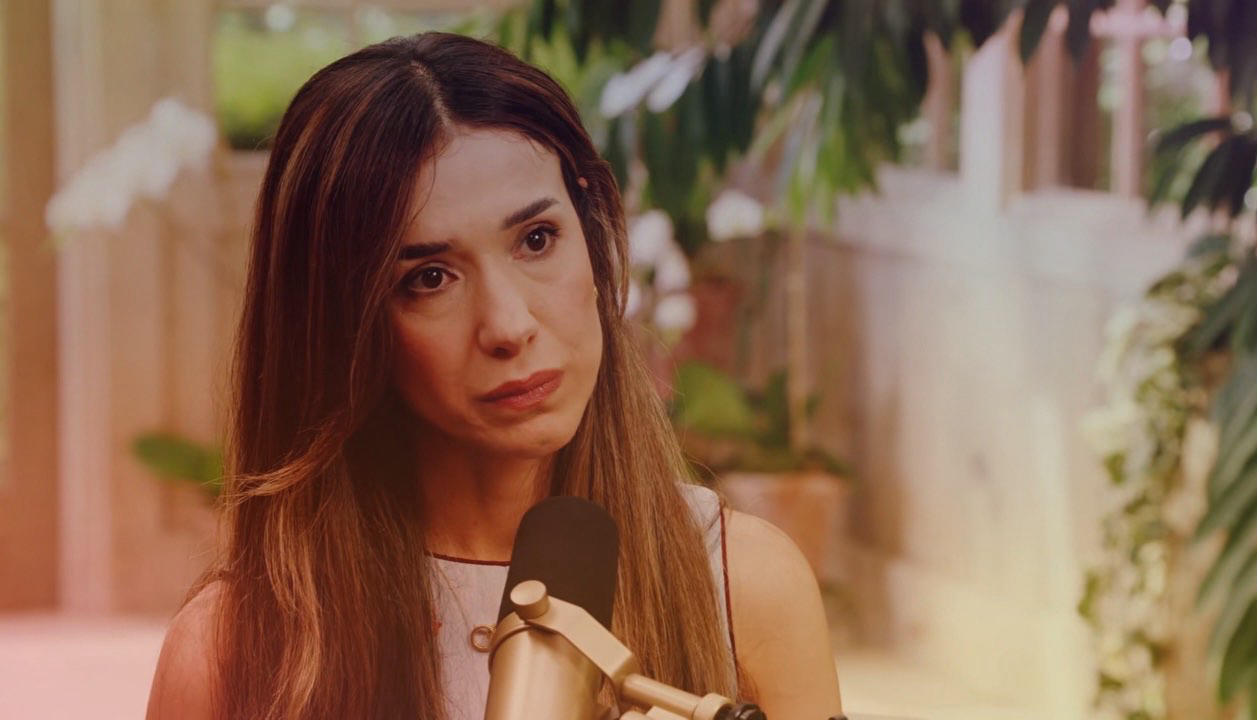
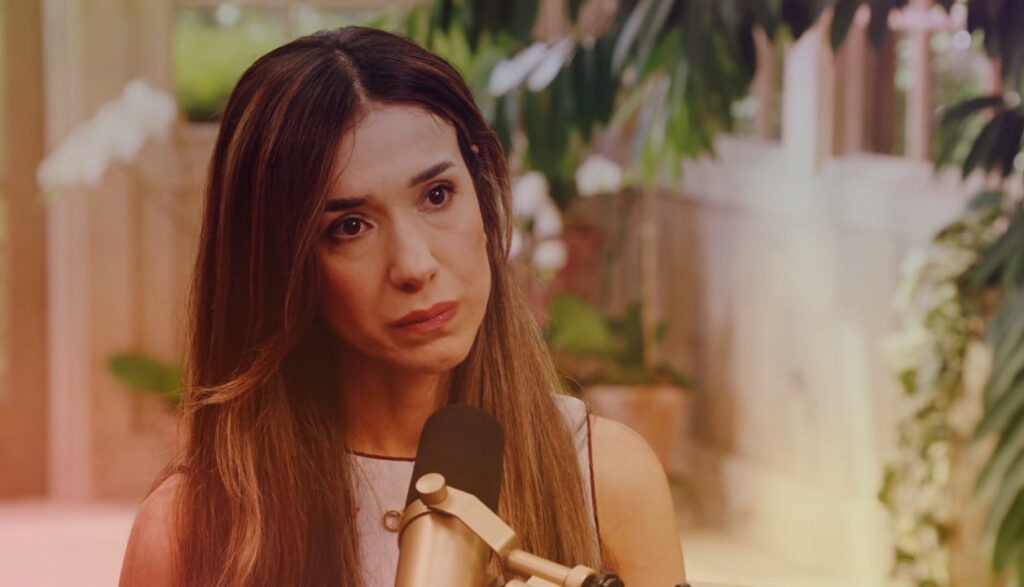
In a conversation on The Oprah Podcast, Murad and international human rights lawyer Amal Clooney discuss the psychological, social, and legal consequences of genocide: the burden of memory, the search for missing relatives, the pursuit of justice, social stigma, and the right of survivors to rebuild their lives.
Survival Is Not the End of the Story
Introducing Murad, Oprah Winfrey describes her as a testament to the resilience of the human spirit and praises her courage in speaking for those whose voices were silenced.
“She showed us what it means to survive the unthinkable, and what it means to find inside yourself the courage to start speaking up for yourself and using your voice for others whose voices were silenced,” Winfrey says.
Murad explains that her two books reflect different stages of her life. Through The Last Girl, she wanted the world to understand that sexual violence was not an incidental consequence of war, but a deliberate instrument of destruction.
“I really wanted the world to see rape for what it is: a weapon of war, and not just a small side effect of war. They used rape as a weapon of war to destroy us, to destroy our families and communities. And I wanted to share that with the world so that hopefully we can prevent it from happening again to other women and girls.”
The title of her first book expressed a deeply personal hope:
“I wanted to be the last girl in the world with a story like mine.”
Sadly, that hope has not been fulfilled. Murad continues to speak on behalf of women and girls who experience similar crimes. Her new book, however, focuses on the life that follows survival and on the possibility of building a future without allowing the past to define every aspect of it.
“Survival is never the end of the story,” she says. “It was just the very first step.”
The Wound of Repeated Testimony
For years, journalists, politicians, and representatives of humanitarian organisations repeatedly asked Murad to recount her experience. Although she understood the importance of bearing witness, the process often came at a considerable psychological cost.
Winfrey reads a passage from Murad’s book:
“Some days I feel proud to be able to tell my story. Other days I hate myself for sharing it. I’ll wake up in the morning feeling proud. I spend the day talking to journalists or politicians, and go to bed angry at myself for opening up, for still living it, for still being there in the past. Survival isn’t the same as finding peace. It’s an ongoing negotiation with memory.”
Murad describes the experience of repeatedly recounting her story as reopening a wound that cannot heal if it is constantly disturbed.
“It’s like a wound. People keep asking me to go and open that wound. It never heals if you go back and keep opening it. And for years I had to do that. Sometimes I would give my story five times a day to people, and it was always the same questions: What happened? What did they do to you?”
She emphasises the difference between choosing to speak in order to prevent further crimes and being expected to relive traumatic experiences whenever others demand it. A survivor’s testimony, she argues, must be approached with respect for the individual and the psychological consequences of recounting violence.
Kathrine: The Reason Behind the Fight
One of the most painful parts of Murad’s story is the fate of her niece and childhood best friend, Kathrine. The two were taken into captivity when ISIS attacked the Ezidi people. While Murad eventually escaped, Kathrine remained imprisoned. During captivity, Kathrine managed to maintain contact with her family through a stolen phone. She also followed Murad’s public testimony. In one of her messages, she told her:
“You speak so well. Please keep telling them what they are doing to us.”
Those words became one of the reasons Murad continued speaking publicly. She hoped that international attention might help secure her niece’s release. Kathrine eventually attempted to reach safety but did not survive. Her death remains inseparable from Murad’s memory and activism. It also illustrates why survival cannot automatically be equated with freedom or peace: while one person escapes, loved ones may remain missing or in captivity.
The Nobel Peace Prize and the Image of the “Perfect Victim”
In 2018, Nadia Murad received the Nobel Peace Prize alongside Congolese physician Denis Mukwege. The award recognised their efforts to end the use of sexual violence as a weapon of war and armed conflict. Murad recalls that she had not even heard of the Nobel Peace Prize before 2014. She insists that recognition was never the reason she decided to speak publicly.
“I didn’t share my story for awards and stuff. I shared it so the world could prevent this and act,” she explains.
She also cautions against believing that an award or an individual can resolve such deeply rooted problems:
“It is a recognition. It does amplify your message, open doors. But the issues that I’m fighting for and working on with other people like Dr. Denis Mukwege—no one award or one person will be able to solve them.”
One of the most revealing aspects of I Choose My Beginning is Murad’s criticism of the expectations imposed on survivors. She describes how humanitarian organisations and sections of the international community sometimes treated survivors as symbols rather than as individuals with their own personalities, ambitions, and choices. Winfrey reads a passage from the book:
“They thought, because the world had taught them this, that being a survivor meant all you had was your sadness and your story. They had the connections and the military and political knowledge. All I had was the ability to make people cry. And I was the window dressing and they were the substance.”
Murad recalls that some organisations expected her to wear dark clothing and maintain a particular appearance whenever she represented the cause. Even smiling, wearing makeup, falling in love, or getting married could be interpreted as evidence that she had forgotten her suffering.
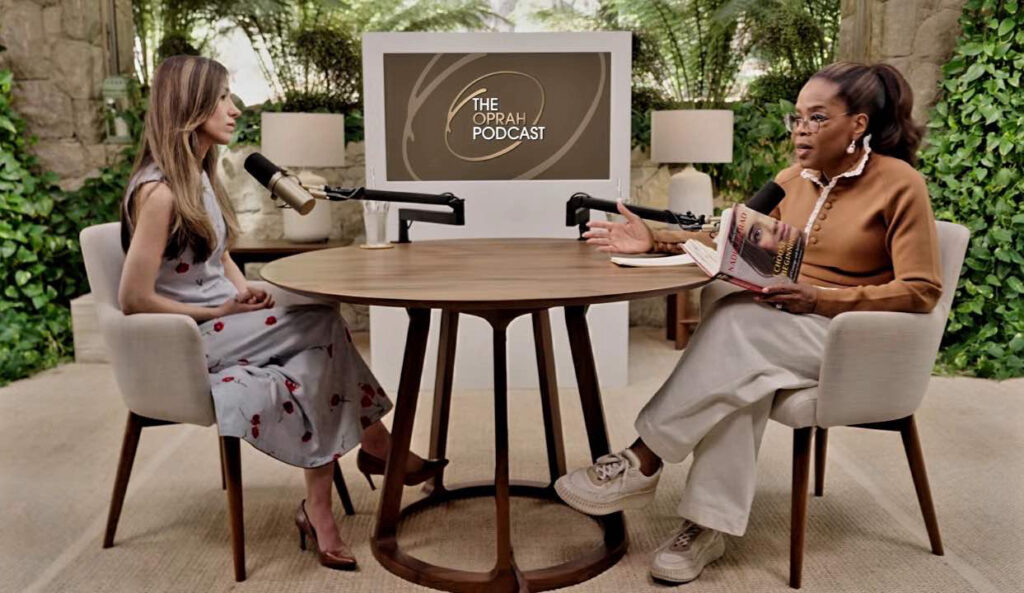
“People expected you to not ever have a life again,” Murad says. “To be that very perfect victim.”
She gradually realised that accepting this image would mean surrendering her individuality. Her identity could not be reduced to the tragedy she had endured, and her right to happiness did not diminish the seriousness of the crimes committed against her. Murad also recalls the accusations she encountered on social media, including claims that she had fabricated her testimony and invented her mother’s death. Responding to those accusations, she writes:
“If my mother is alive, that’s really all I need in the world. I would celebrate until the day I died. But I know that she is not. My sister saw it. I would have given anything to be wrong. I would have traded everything to be the liar that these critics on Facebook accused me of being.”
Despite the hostility, she continued to speak, believing that silence would mean abandoning her responsibility towards other survivors.
Amal Clooney and the Pursuit of Justice
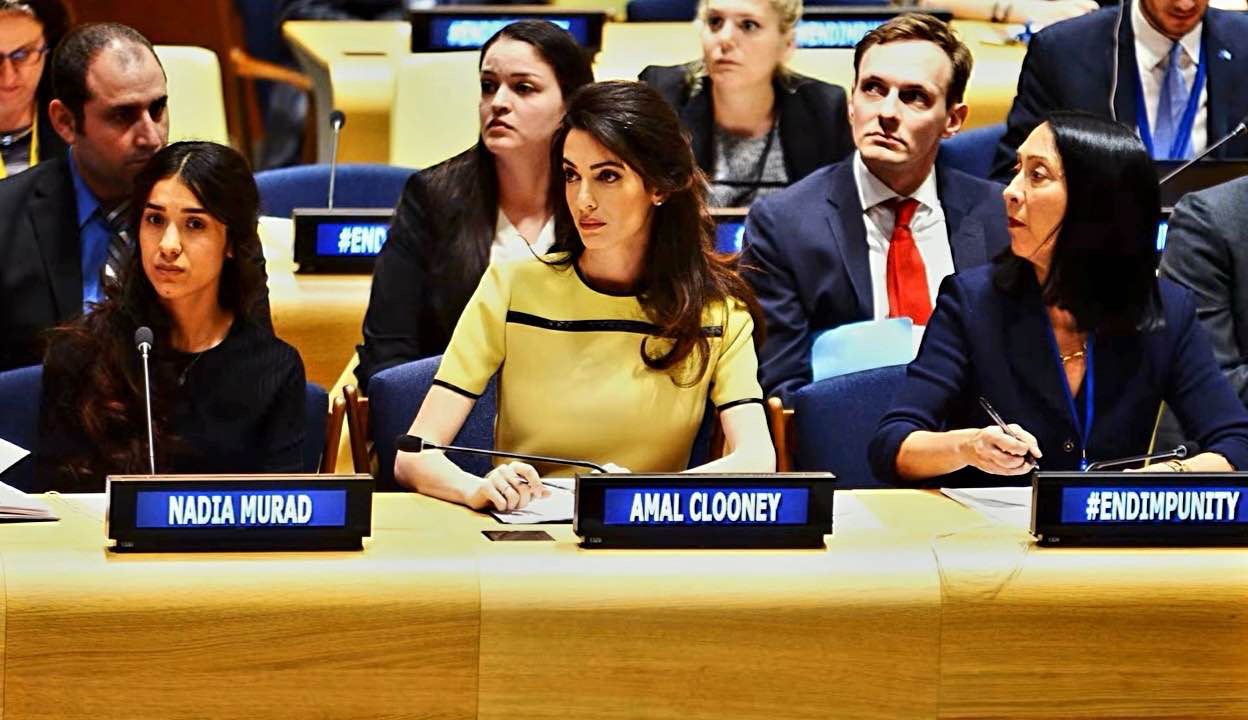
A decisive turning point came in 2016, when Murad met international human rights lawyer Amal Clooney. Clooney initially intended to listen to her account and refer her to another lawyer. However, after hearing about the destruction of Murad’s family and the crimes committed against the Ezidis, she decided to take the case.
“It was 10 years ago and I’m still working on it,” Clooney says.
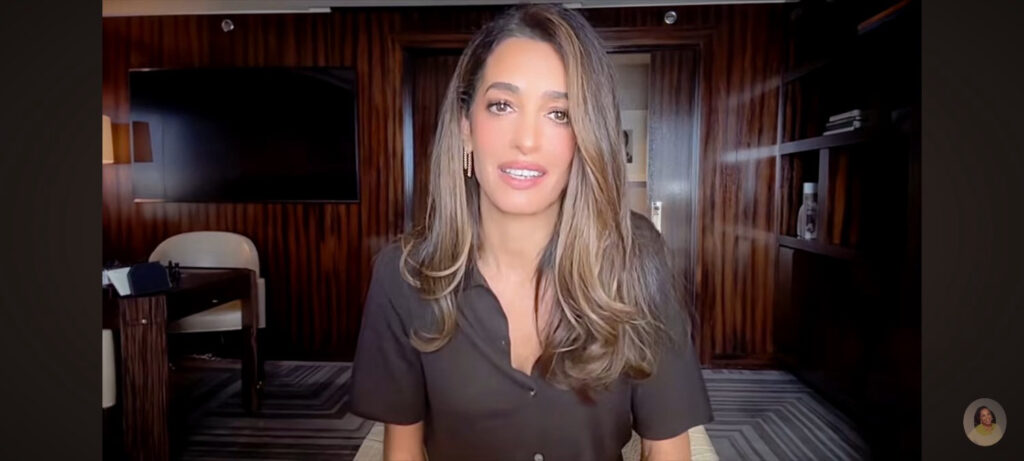
Their work has focused on securing accountability for ISIS members accused of genocide, crimes against humanity, and war crimes. Clooney explains that her legal team worked with prosecutors in Germany and other European countries, relying on the principle of universal jurisdiction. Under this principle, certain international crimes may be prosecuted in national courts even when committed outside the country concerned, provided the relevant legal requirements are met. One of the cases involved Murad’s relative, identified in the book by the pseudonym Huda. She testified against an ISIS member responsible for crimes against her family. After seven days of testimony, the court convicted the defendant of genocide and sentenced him to life imprisonment.
For Clooney, the verdict was an important achievement, but it also demonstrated how much remained to be done. The scale of the crimes committed by ISIS far exceeded the number of successful prosecutions. Murad feared that perpetrators might return to ordinary life while survivors continued to bear the consequences of their crimes. Clooney describes impunity as another form of trauma—an open wound that remains after the original crime.
Justice Without Re-traumatisation
Murad says that one of the most important lessons she learned from Clooney concerned the treatment of survivors during legal proceedings.
“From Amal I learned that talking to survivors didn’t require asking them to relive the worst moments of their lives. Everyone was able to approach us with respect and sensitivity, and survivors had the right to say no to anyone who asked for their stories.”
Clooney explains that lawyers and investigators must be trained to approach survivors with sensitivity and ask only questions necessary for the case. Murad says that Clooney was among the first people who made her feel that she was being treated as a human being rather than simply as a story to be shared publicly.
“She treats survivors as humans first, and not just stories,” Murad says.
This distinction is essential: testimony should serve the pursuit of justice, not the public consumption of suffering. Survivors must retain the right to dignity, privacy, and control over their own stories.
The Right to a New Life
Murad’s new beginning is also reflected in ordinary experiences that help her reconnect with life. Winfrey reads a passage from her book:
“The pleasures of walking, riding a bicycle, studying outside, talking to your friends. These are universal. That’s what refugees are looking for, I think, not big things but small moments and scenes that remind them of where they’re from and tell them that they will survive in this new place.”
Murad also recalls her childhood memories of looking at the night sky with her mother. Those moments remain among her most cherished connections to her family and to the life she had before the genocide. Another important part of rebuilding her life was her relationship with Abed, whom she later married. For a long time, she had felt that she had to choose between activism and personal happiness. Abed helped her understand that the two were not mutually exclusive. He told her:
“You will never have to go through any of this alone.”
Murad eventually reached a decision that became central to the meaning of her new book:
“I decided that I can be both,” she says. “And that was the best beginning I chose.”
Her marriage did not mean abandoning her work for justice. It meant reclaiming the right to make personal choices and determine her own future.
The Missing: A Wound That Does Not Close
More than 2,500 Ezidis, most of them women and children, remain missing after abduction by ISIS. Members of Murad’s own family are among them. More than 40 of her relatives were abducted, and the families continue to wait for news. The remains of two of her brothers, Elias and Jalo, were eventually identified, and Murad returned to Iraq for their funeral. However, the remains of her mother, Kathrine, and many other relatives have still not been found. Murad rejects the assumption that identifying remains and holding a funeral necessarily bring emotional closure.
“There’s no such thing as closure,” she says. “People say, ‘Oh, you go back and you have the funeral and you have closure.’ There is no closure because then there’s the next funeral and then there’s the next waiting.”
Her words reveal the continuing nature of genocide’s consequences. For families of the missing, suffering does not end with the passage of time. It continues through uncertainty, the search for loved ones, and the absence of a definitive answer. Murad also addresses the social stigma surrounding sexual violence among Ezidis. She explains that survivors and their relatives may both face judgement, making it difficult to speak openly about what happened. She recalls being offered surgery intended to restore the appearance of virginity. She refused, rejecting the idea that she should bear responsibility for making society comfortable with what had happened to her.
“I refused because what happened to me was not my fault,” she explains. “And I didn’t want to do something that would make society happy. It was about them. It was never about making me feel that nothing happened.”
Her decision was a rejection of the shame imposed on survivors. The responsibility belongs to the perpetrators, not to the women subjected to violence.
Recovery as a Daily Choice
Towards the end of the conversation, Winfrey asks Murad what recovery means in everyday life. Murad describes it through small, ordinary choices: meeting friends, going for runs, taking care of herself, making future plans, and spending time with her husband watching Seinfeld.
“I choose recovery in small things,” she says. “I don’t want my life to be entirely consumed by my work and what happened to me.”
She acknowledges that the past never disappears. Memories of Kathrine and other lost relatives remain part of her life, just as the consequences of genocide remain part of the collective experience of the Ezidi people.
“The past will always be there,” she says. “And it will always be part of me. I just need to make peace with it.”
Murad’s words do not suggest that trauma can simply be overcome or that the consequences of genocide can be left behind. They express a more complex understanding of recovery: the past remains part of a person’s life, but it does not have to determine every aspect of the future.
Nadia Murad’s story is ultimately about the right to remember without being imprisoned by memory, to seek justice without surrendering one’s humanity, and to build a life that includes more than the suffering one has endured. Her new beginning does not erase the past. It asserts that the future, too, belongs to her.

Editorial Note
Certain passages concerning sexual violence, crimes against minors, and the circumstances of victims’ deaths have been deliberately presented in abbreviated form or omitted from this article. This editorial decision was made not to diminish the historical significance of the events or the systematic nature of the crimes, but to respect the dignity and privacy of survivors and victims, to avoid turning personal suffering into a means of generating an emotional response from readers, and to approach the subject with ethical responsibility. The intention is to preserve the historical and legal significance of the testimony while avoiding unnecessarily distressing or graphic details.