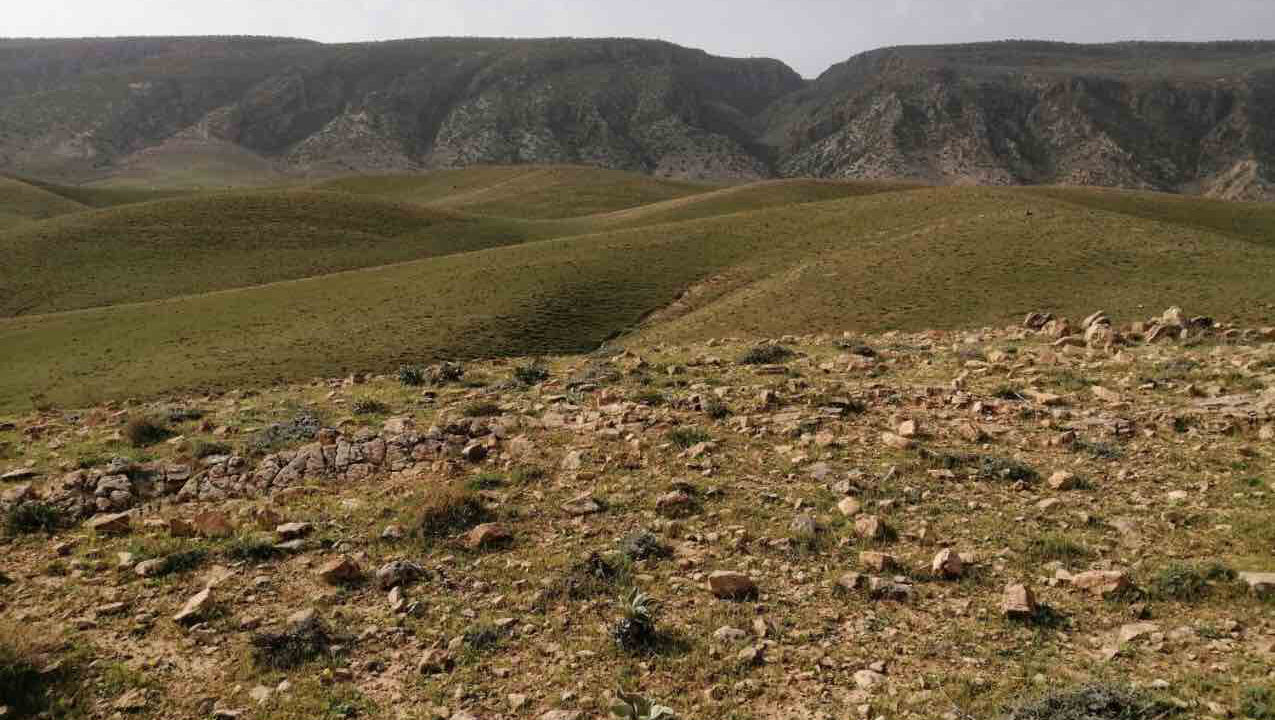
Since Murad Ismail stated that Shingal is part of Iraq and not part of the kurdish-controlled areas, kurdish media outlets and political voices have reacted with remarkable speed, urgency, and, frankly, defensiveness. For days, we have witnessed an almost desperate effort to declare Shingal part of the kurdish-controlled areas, while directing their anger towards Murad and insisting that he does not represent the Ezidis and therefore has no right to speak on their behalf. This is particularly evident in the rhetoric coming from voices aligned with the KDP.
Some have even gone as far as saying that there is no reason to discuss the relationship between Ezidis and kurds because, according to them, Ezidis are kurds anyway, and that is simply the truth.
But the question is: Why does it create so much fear and political discomfort when Ezidis express a different political position regarding the status of Shingal?
What exactly is at stake when Ezidis say that Shingal is part of Iraq? And why has this statement triggered such a strong reaction?
Whether some choose to acknowledge it or not, the kurdish-controlled areas themselves are part of Iraq. So why is it acceptable to assert one political position, but unacceptable for Ezidis to express another? Why should Ezidis be expected to remain silent whenever their understanding of their political and administrative future differs from that of a kurdish political party?
What is even more disturbing is the hostility towards Ezidis that becomes increasingly visible in the language, tone, and attitude of some political commentators and speakers. The resentment is difficult to ignore. One would think that Ezidis had taken something away from them simply by expressing their own political position.
Let us make something very clear: This is not an argument against kurdish people. It is not an argument between Ezidis and kurds. Ezidis and kurds have lived together, and they can continue to live together peacefully, respectfully, and as neighbours. Our disagreement is political. It concerns our rights, our identity, our representation, our future, and the way political interests and power have been used, often at the expense of Ezidis.
The argument is about the misuse of our identity for political purposes. It is about who has the authority to speak for us, who gets to decide our future, and why our political choices are so often treated as a challenge or a threat.
Murad Ismail’s statement should not be turned into an excuse to attack Ezidis or question their identity. Whether people agree with his position or not, the right to express a political opinion does not depend on receiving permission from a political party. No individual or party has exclusive ownership over the Ezidi voice.
And let us also be honest: Ezidis can no longer be spoken for, politically controlled, or expected to accept decisions simply because someone else has made them. We are not slaves to political interests, and we are not obligated to surrender our rights to prove loyalty to anyone. Unfortunately, some individuals who claim to represent Ezidis have become more concerned with serving political agendas than defending the actual interests of Ezidis. Their loyalty should be measured by what they achieve for Ezidis, not by how loudly they defend a political party.
We must finally distinguish between people, political parties, governments, and political interests. Criticising a political position is not hatred towards a people. Defending our rights is not an attack on anyone else’s identity. And refusing to accept a political narrative does not make us enemies.
Most importantly, Ezidis do not need to justify their identity, their political opinions, or their right to decide their own future to anyone.
There is no shame in saying who we are, in declaring our identity, or in standing publicly for what we believe. The real shame belongs to those who, for centuries, have imposed identities on others, assigned people to groups, and assumed the authority to decide who people are and where they belong.
And perhaps we must also question ourselves: How long will we allow others to name us, define us, and determine our identity without our consent?
That era must come to an end. And it is time we made that absolutely clear.
Our identity is not theirs to assign. Our history is not theirs to rewrite. Our political future is not theirs to decide.
We have every right to demand our rights, defend our identity, and speak publicly without fear or apology.
We were never born to seek permission to exist as ourselves. We do not need anyone’s approval to know who we are, and we certainly do not need anyone’s permission to decide our future.
The right to define who we are belongs to us. Not to political parties, not to governments, not to media outlets, and not to those who have spent generations speaking on our behalf.
We will define ourselves. We will speak for ourselves. We will decide for ourselves. And this time, we will not apologise for it.
That century has reached its end.