When Justice Feels More Distant: An Ezidi Perspective on the Recent Return of ISIS-Associated Individuals
There are moments when the distance between world events and your own life suddenly disappears.
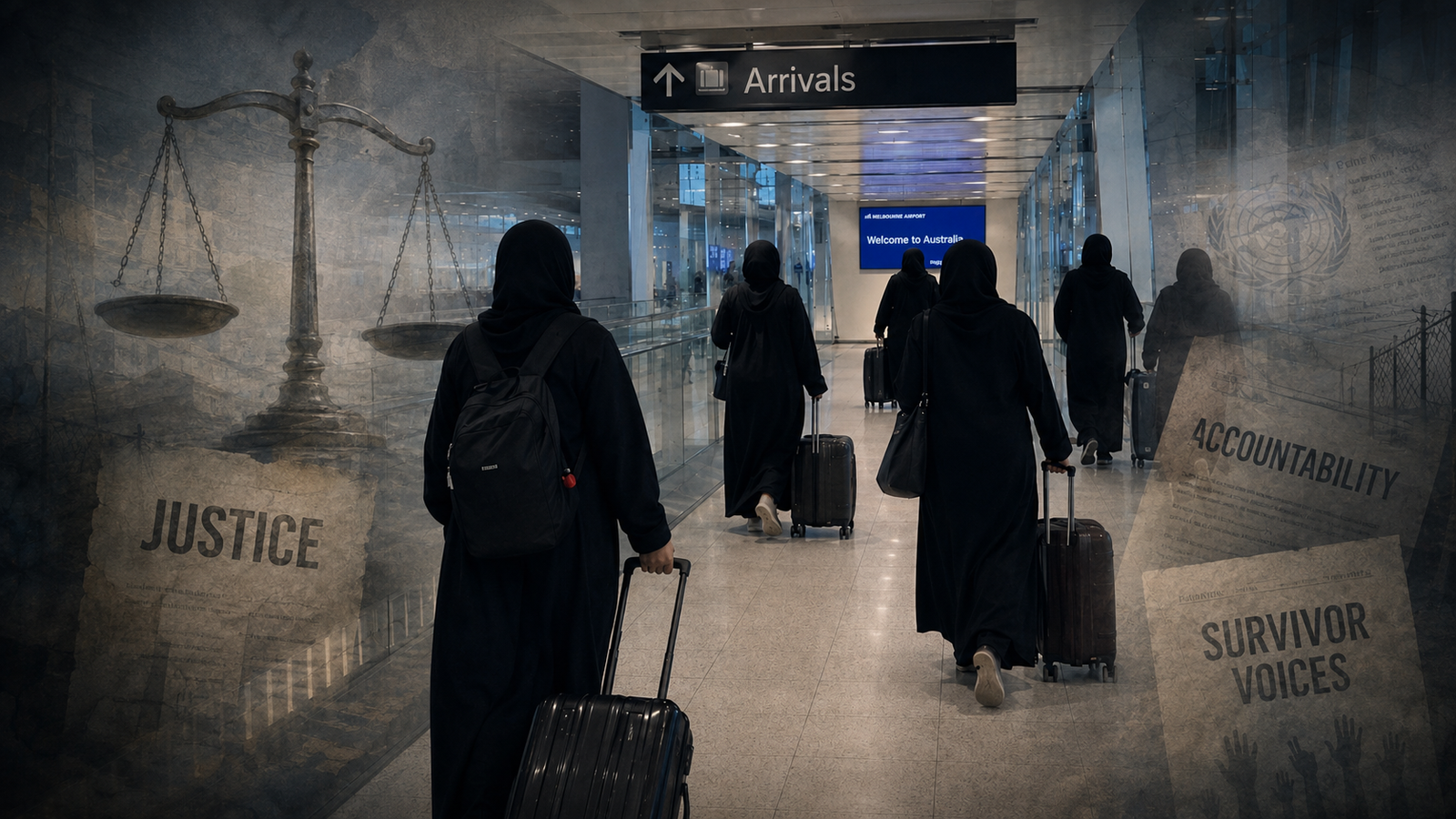
For many Australians, recent reports regarding the return of Australian women formerly associated with ISIS will be viewed through a national security lens. There will be debates about citizenship, intelligence monitoring, rehabilitation, legal obligations, and border policy. Politicians will speak about investigations, security agencies, and the rule of law.
For me, and for many Ezidis, it feels different.
It feels personal.
Like many in the Ezidi diaspora, I grew up hearing stories that no person should ever have to hear. Stories of villages emptied. Families separated. Women taken into sexual slavery. Men executed. Children abducted. An entire people almost erased within the span of a few days.
The 2014 Ezidi genocide committed by ISIS was not simply another conflict in the Middle East. It was a deliberate and targeted attempt to destroy a people, their identity, and their future. Even today, thousands of Ezidis remain displaced, missing, traumatised, or are trying to rebuild lives shaped by unimaginable violence.
And yet, despite how catastrophic and inhuman those events were for Ezidis, many Australians still know very little about them. Some do not know about them at all.
That is part of what makes these recent developments so emotionally difficult.
Ezidi advocates and human rights activists have worked for years to seek recognition, accountability, and justice. For many, this moment feels like a slap in the face. It feels unnatural. It feels unjust. It feels as though years of advocacy can be undermined by decisions that do not fully consider the people most affected by ISIS atrocities.
When news breaks that individuals associated with ISIS are returning to Australia, public discussion often focuses almost entirely on legal process and national security logistics. Those conversations matter. Governments have legal obligations. Security agencies play an essential role. Democracies are tested by how they respond to difficult and uncomfortable situations.
But there is another side to this conversation that often feels invisible: the perspective of survivors, victims, and the people directly affected.
For many Ezidis living in Australia, these developments reopen wounds that never fully healed. They raise difficult questions about justice, accountability, safety, and recognition. Questions that do not fit neatly into political talking points or social media arguments.
What does justice actually look like after genocide?
Can accountability ever feel complete for people who lost so much?
And where do survivors and victims fit into these conversations?
I do not pretend to have easy answers.
I understand that governments must make decisions within legal frameworks and international obligations. I understand that not every person connected to ISIS played the same role or committed the same acts. I also understand that security agencies are far more informed than the general public about the risks involved.
But understanding complexity does not erase pain. It does not erase trauma. It does not erase the experiences that will shape certain lives forever.
Nor should it silence those who continue to live with the consequences of ISIS atrocities every day.
One of the hardest parts of belonging to a people shaped by collective trauma is watching public conversations move on while the emotional weight remains. News cycles end. Governments make announcements. Policies change. But survivors continue carrying memories that do not disappear with headlines.
I think many Ezidis simply want acknowledgment and recognition that our concerns are legitimate and that they matter. Justice is not only about legal technicalities. It is also about recognising the lived reality of victims and survivors. People directly affected by extremist violence deserve to be heard, not treated as an afterthought.
This is not about hatred. Nor is it about rejecting the rule of law.
It is about asking whether justice systems and political decisions leave enough space for survivors to feel seen, protected, and respected.
Australia prides itself on fairness, justice, and human rights. Those values matter deeply. But part of upholding those values means listening carefully to the people most affected by these issues, even when their perspectives are uncomfortable or emotionally difficult.
As someone in the law and justice field, I often think about how institutions respond after atrocity and violence. Laws matter. Security matters. Due process matters. But so does memory. So does recognition. So does the human impact left behind long after governments move on to the next issue.
The Ezidi people have already endured silence once before. Many of us do not want to feel unheard again.
Perhaps the most important thing Australia can do moving forward is not simply focus on security responses, but also ensure that survivor voices are part of the national conversation. Not hidden at its edges. Not pushed aside. Not forgotten overnight.
Because justice cannot only be something that governments administer.
It also has to be something that people can still see and believe in.