
This is Part 2 of the series “Ezidi Students in Russia Build University Associations to Preserve Culture and Identity.”
We continue the series of stories about our students who decided to create Ezidi student associations at their universities. The chairman of the Ezidi association at Lomonosov Moscow State University, Eduard Avdoi, speaks about the activities of the association.
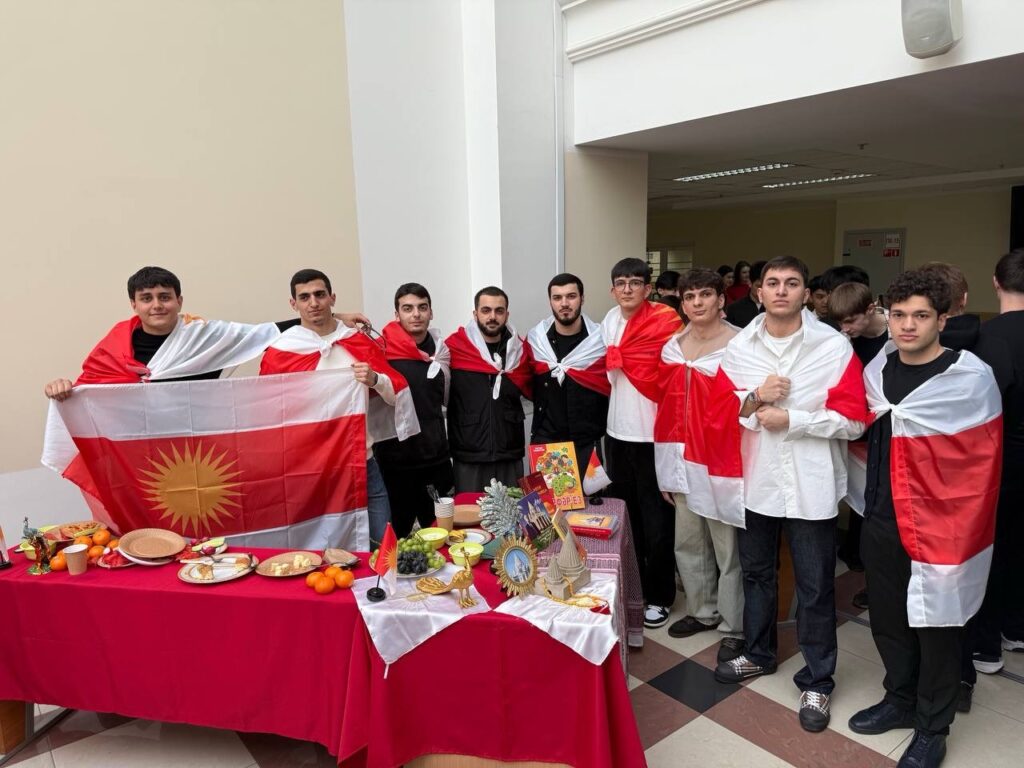
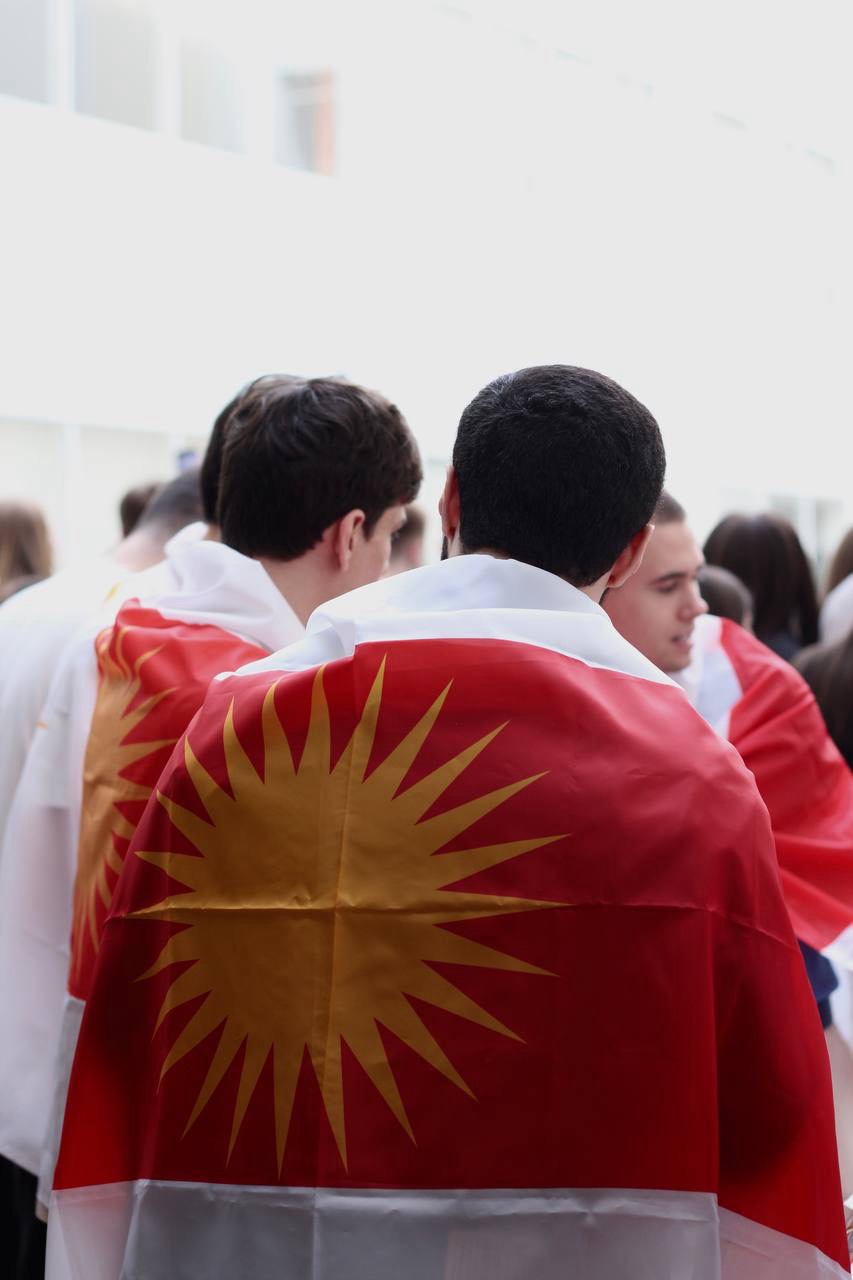
Moscow, MSU, 2024. Within the walls of the legendary Moscow State University, an initiative is emerging and developing dynamically — one intended to become not only a pillar of student life, but also a strategically important platform for an entire people. This is the Ezidi Association of MSU, headed by a young and ambitious second-year student of the Faculty of Law, Eduard Avdoi. Under his leadership, the association is becoming a powerful instrument for unity, education and the formation of the future of the Ezidi people.
The Beginning of the Journey: Unity as a Priority
“The main goal of creating the Ezidi association at MSU is to unite our people within the walls of the university,” Eduard Avdoi says as he begins speaking about the mission of the association.
According to him, the idea of creating the association came through his acquaintance and productive cooperation with Malkhas and Orkhan, whose role in the formation of the association he describes as key, expressing deep gratitude to them.
However, the path toward forming an active association was not without difficulties.
“There were many problems. Perhaps the main problem was finding representatives of our people,” Eduard admits.
In a vast metropolis and a multinational university, identifying every Ezidi student is not a simple task. Nevertheless, the association’s team demonstrated persistence and strategic thinking. Today, the association has 32 members, and the number continues to grow.
Regular meetings serve as an effective tool for getting to know new participants and integrating them, creating a strong social network.
Cultural Education: An Investment in Identity
The association’s future plans go beyond simple social interaction.
“This year, we plan to hold a number of large-scale events connected with education about our rich and interesting culture,” the chairman says.
This is a strategic step that underlines a deep understanding of the importance of preserving and promoting Ezidi identity.
In the modern globalised world, where cultural characteristics can sometimes become blurred, the active promotion of Ezidi culture, its history, traditions and values becomes critically important.
These events will serve not only to strengthen self-awareness within the association, but also to build bridges of mutual understanding with other peoples, breaking stereotypes and demonstrating the richness of Ezidi cultural heritage to the wider academic public.
A central place in Eduard Avdoi’s philosophy, and therefore in the mission of the association, is occupied by the unconditional value of higher education.
“For me, obtaining a higher education is one of the key factors in becoming a good specialist, because by the end of one’s studies a person gains a rich experience of knowledge,” he says.
This conviction is driven not only by personal ambition, but also by a deep sense of responsibility toward his people.
“For our people, this is very important, because we want our people to be known in different spheres of society,” Eduard emphasises.
The association sees higher education as a powerful social elevator, capable of preparing a new generation of highly qualified Ezidi specialists who will be in demand across many different fields, from law to science, and who will be able to represent their people with dignity at all levels.
It is an investment in human capital that will pay off many times over.
Among all the events the association has already held, Eduard especially highlights one moment that became a symbol of their unity and success:
“The most memorable moment was the ‘Dialogue of Culture’ event, when we managed to come together and present ourselves with dignity.”