
This is Part 1 of the series “Ezidi Students in Russia Build University Associations to Preserve Culture and Identity.” Part 2 will be published on Wednesday, 17 June 2026.
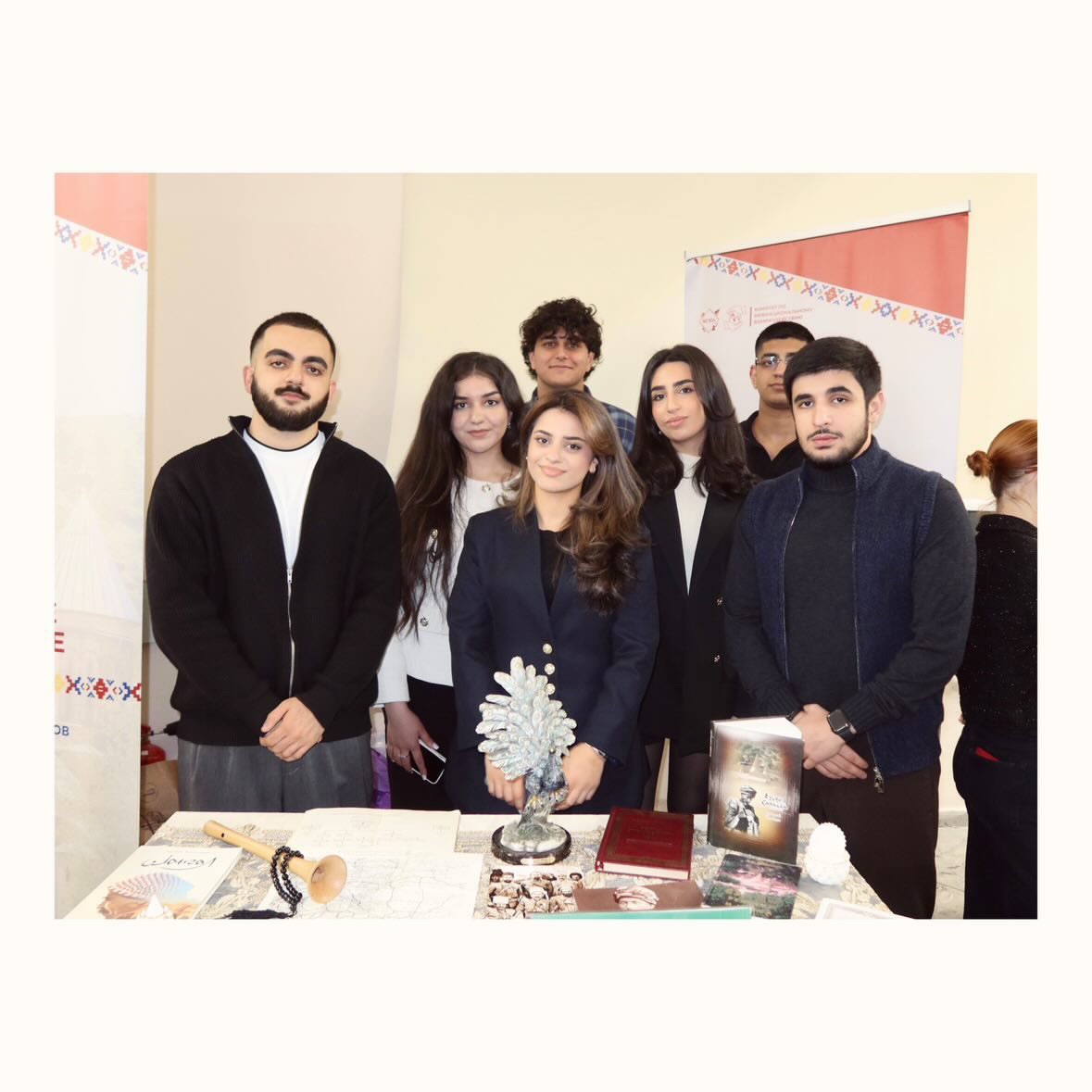
Ezidi students at the Russian Presidential Academy of National Economy and Public Administration under the President of the Russian Federation have created an Ezidi student association aimed at bringing young people together, preserving cultural traditions and strengthening identity within the university environment.
Compatriot associations at RANEPA began forming in the early 2010s, when students from different regions of Russia and countries of the former Soviet space began organising to support one another and preserve cultural traditions.
In 2025, an Ezidi student association was established at the university. Its creation marked an important step for Ezidi youth seeking to unite students and promote the traditions and values of the Ezidi people.
The founders of the Ezidi association at RANEPA, Kaloyan Kachakh Shamilevich and Nelly Khaloeva Tengizovna, described the history of its creation and its current development.
The idea first came to Kachakh during his first year of studies, when he saw the unity of Armenian youth within the Armenian student association. This made him think about the need for a similar structure for Ezidis. However, the first attempt was unsuccessful, as he struggled for a long time to find committed supporters, even among 135 Ezidis he knew.
“There were about 125 boys and about 10 girls. Because of this, I faced the first and main problem: the boys were not involved, and the girls themselves left the diaspora because there were 10 times more boys and there were no initiatives from the boys’ side. I, in turn, could not carry a diaspora of 135 people on myself. At that time, my hands dropped,” Kachakh said.
After a two-year pause, Kachakh met Nelly at the “Kaleidoscope of Cultures” event. Her persistence and repeated encouragement pushed him to resume the work. Together, they founded AEMR, the Association of Ezidi Youth of RANEPA, which has since continued to move forward slowly but steadily.
The association began by actively promoting the idea through social media. Nelly created the Instagram page @ezdi.ranepa, where posts and reels are published. At first, only 10 people joined the association, but the number later grew to 20, and interest continues to increase.
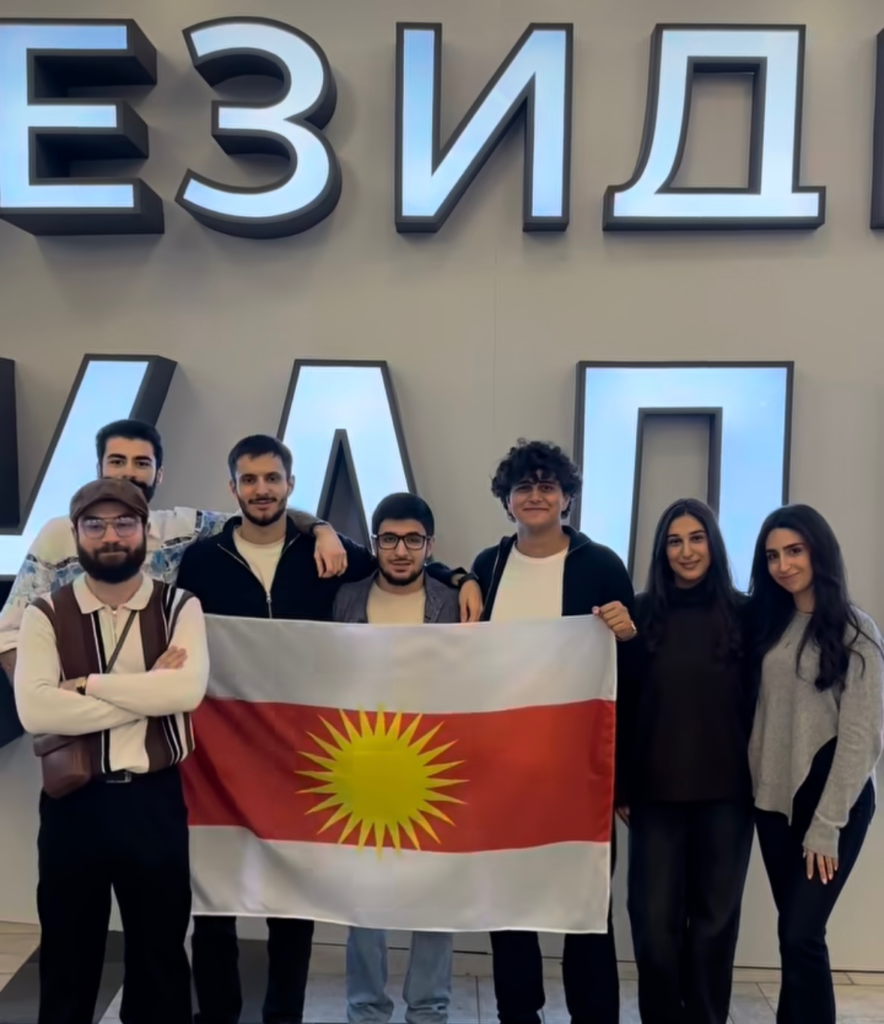
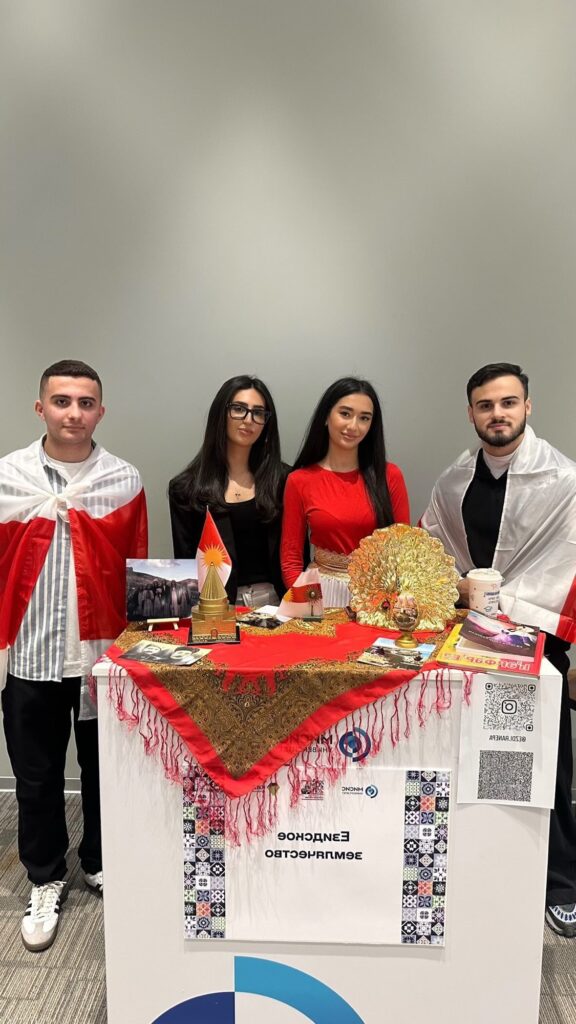
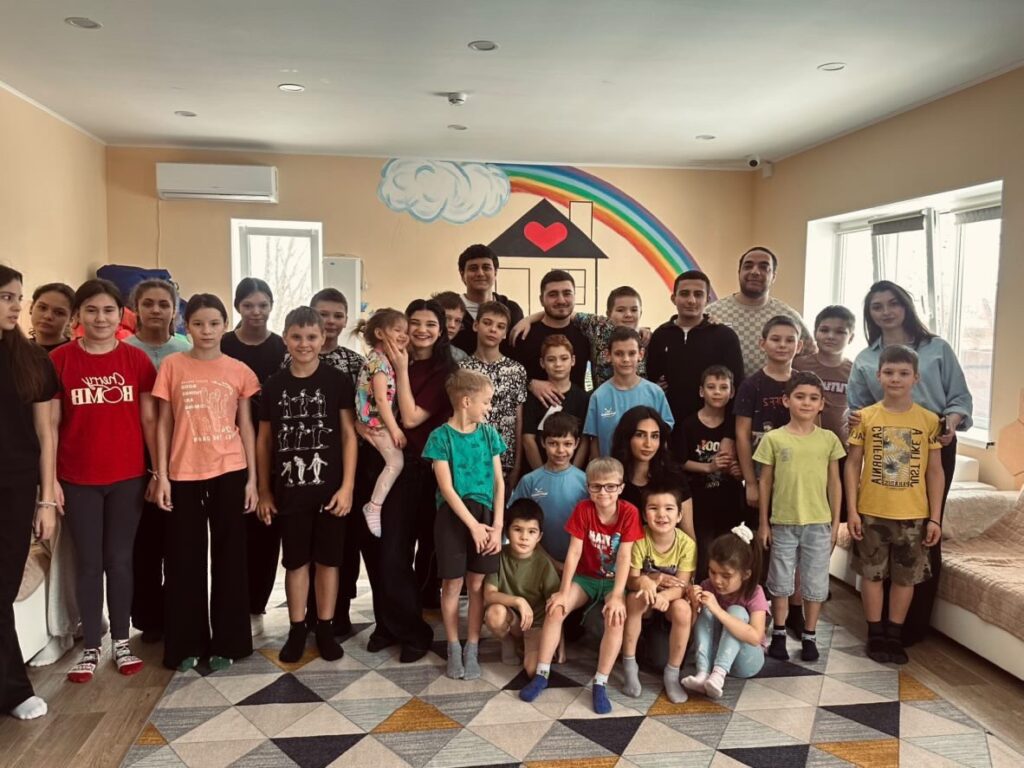
One of the main challenges remains finding and uniting Ezidi students, many of whom did not know the association existed. The activists, however, continue to present their work and attract new participants.
Although the association was created recently, its members have already taken part in several events. One of the most important upcoming moments will be participation in the Festival of Cultures, scheduled to take place on 10 December at the House of Cultures. It will be the first opportunity for Ezidis at RANEPA to present their culture at this level and demonstrate their identity.
Kachakh emphasised the importance of education as a key factor in the development of the people. In the context of assimilation and the loss of cultural identity, he said that knowing one’s roots becomes critically important.
Nelly expressed a similar view: “We always emphasise that receiving an education is not simply a formality, but a truly important step toward contributing to the future of both one’s family and one’s people.”
The leaders of the association hope their work will inspire other students to create similar associations in their universities, strengthening ties between Ezidi students across the country.
One of the most memorable moments for the association was its first meeting. Although 12 people were expected and only 7 attended, the meeting became the foundation for the future development of the association. The meeting also coincided with the day of the Lalish Nurani temple in Shangal, adding symbolic meaning to the occasion.
Kachakh shared a message for future students: “What I want to wish future students is not to give up under any circumstances. You must remember that you are the embodiment of ancient history, ancient faith, and culture. I want you to achieve your goals, to be successful in your studies, in your affairs, so that when you enter the diaspora, you fully understand: this is not for laughter and amusement, but so that you yourselves know and honour our adats and culture, and also know who you are and where you are from. Under no circumstances be ashamed of your origin. Remember and know, seek the truth, protect yourself and your mind from rubbish, listen to your heart and mind. Bzhi Ezdikhan.”
Nelly also addressed Ezidi youth: “The most important thing is to preserve one’s traditions, values and culture. Modern Ezidi youth must respect their roots. I wish that everyone becomes imbued with this thought and has the desire to preserve their identity, passing it from generation to generation.”
Through their work, Ezidi students at RANEPA are not only preserving their culture within the university, but also sharing it with others.
Thanks to the efforts of activists such as Nelly and Kachakh, RANEPA is becoming an important space for cultural visibility, student support, education and the preservation of Ezidi identity.

Author