
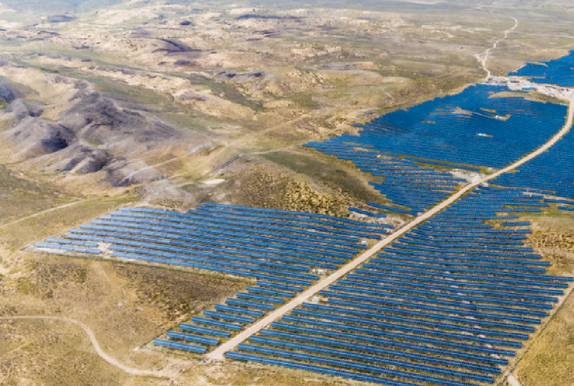
The dispute over the planned solar power plant near the Ezidi village of Bacînê is widening into a broader concern over energy projects in Tur Abdin, where historic Ezidi and Christian villages are warning that land essential to village life, agriculture, livestock and return is being placed under increasing pressure. Residents say these projects are being presented as development and public interest, while the people most directly affected are left to defend land that carries ancestral, cultural and religious meaning.
In Bacînê, residents have strongly rejected a solar power project planned on pastureland close to the village. The land is not viewed locally as empty or unused space, but as part of the village’s living environment, agricultural structure and ancestral landscape. The case is especially sensitive because Bacînê was emptied during the 1990s, forcing many Ezidis into exile in Europe. In recent years, families have begun returning, rebuilding homes, visiting ancestral graves and trying to restore Ezidi life after decades of displacement. For them, a large energy project placed so close to the village is not ordinary infrastructure; it is a direct threat to a return process that is still fragile.
Similar concerns are now being raised in Aynwardo, also known as Inwardo, a historic Chaldean Christian village where the G25 Solar Power Plant project has caused alarm among residents. Local objections focus on the possible impact on pastures, water resources, agriculture, livestock, tourism and the historical character of the village. The concerns mirror those raised in Bacînê: that renewable energy is being used as a justification for projects planned in places where land is tied to memory, livelihood and survival, without meaningful consent from the people connected to that land.
The issue is not opposition to renewable energy itself. Residents and activists are objecting to the location of these projects, the way decisions are being made and the lack of proper protection for historic village areas. They argue that alternative locations should be considered and that projects threatening agricultural land, pastureland, water sources, village life and cultural heritage should not move forward without the explicit consent of the villages concerned. Christian lawmaker George Aryo has already raised the situation of Bacînê in the Turkish parliament, but residents say their concerns continue to be ignored.
For Ezidis, the land around Bacînê carries more than economic value. It is connected to family history, graves, oral memory, village identity and Sharfadin heritage. Treating such land as a technical planning zone ignores the deep relationship between Ezidis and their ancestral villages, especially after decades in which return has already been made difficult by displacement, neglect and insecurity. Christian villages in Tur Abdin are raising similar concerns, warning that large energy projects near historic settlements could damage agriculture, weaken tourism, discourage return and alter the character of villages that have survived for centuries.
The cases of Bacînê and Aynwardo therefore raise a wider question: whether Ezidi and Christian villages in Tur Abdin will be recognised as living historical places with people, memory, land rights and cultural value, or whether they will be treated as politically weak areas where large projects can be imposed with limited resistance. Residents are calling for projects that threaten village land and living spaces to be reconsidered and halted where necessary, especially where they affect pastureland, water resources, sacred memory, historic sites and return processes.
For Bacînê, the demand remains clear: no project should be imposed on an Ezidi village without the informed and meaningful consent of the people connected to that land. Development cannot be allowed to erase the living spaces, memory and return process of peoples who have already been pushed away from their ancestral villages once before.