
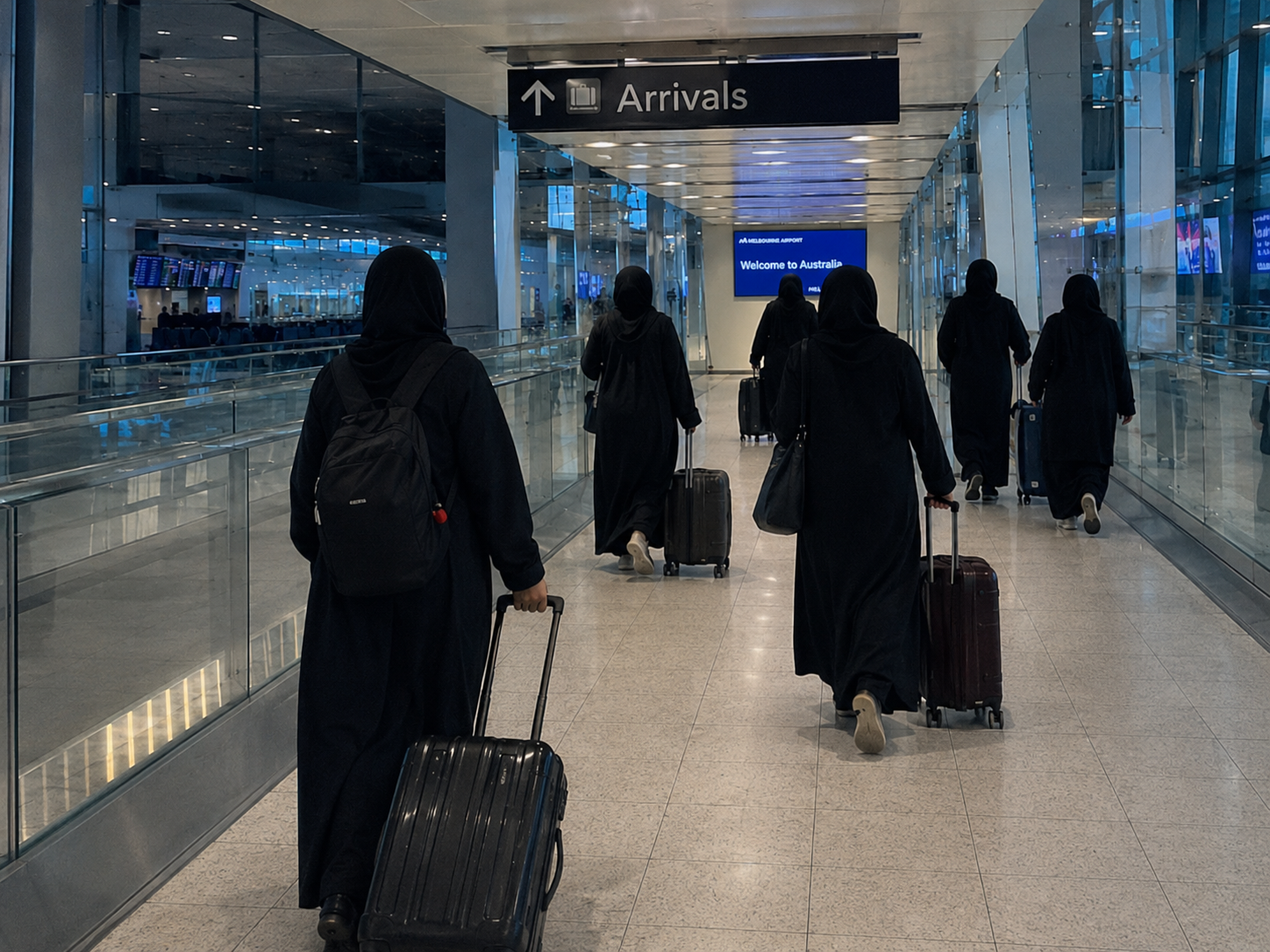
Australian authorities have charged two IS-linked women with crimes against humanity and slavery-related offences over the alleged enslavement of an Ezidi woman in Syria. The women, identified in Australian media as Kawsar Abbas, also known as Kawsar Ahmad, and Zeinab Ahmad, returned to Australia from Syria earlier this month and were arrested after arriving at Melbourne International Airport on 7 May 2026. The case has drawn attention because it is not only being treated as a terrorism-related matter, but as part of the wider system of enslavement and crimes against humanity carried out under IS rule.
The 53-year-old woman faces charges including enslavement, possessing a slave, using a slave and engaging in slave trading. The 31-year-old woman has been charged with enslavement and using a slave. Each offence carries a maximum penalty of 25 years’ imprisonment. Australian police allege that the older woman travelled to Syria in 2014 with her husband and children and was complicit in the purchase of a woman for US$10,000. Police further allege that both women knowingly kept an enslaved woman in the home. The charges have not yet been tested in court, and both women are presumed innocent unless proven guilty.
The case is significant because it moves beyond the more common legal response to IS-linked returnees, where prosecutions have often focused on terrorism offences. In this case, Australian prosecutors are seeking to address the alleged treatment of an Ezidi woman through the framework of crimes against humanity. That distinction matters deeply for Ezidis, because IS’s crimes were not only acts of terrorism. They formed part of a deliberate system of genocide, enslavement, forced conversion, sexual violence, family separation and the destruction of Ezidi life, identity and future.
For years, Ezidi survivors have described how IS turned enslavement into a structured and organised system. Women and children were abducted, sold, transferred between fighters and held inside homes where ordinary domestic spaces became places of captivity and abuse. The system was not hidden or accidental. It was justified, documented and enforced by IS as part of its genocidal campaign against Ezidis, including the targeting of Ezidi women and children because of their identity and faith, Sharfadin.
International prosecutions have increasingly shown that women affiliated with IS were not always passive bystanders. In several cases across Europe, courts have examined allegations that women helped control, guard, abuse or profit from enslaved Ezidi women and children. Germany was among the first countries to prosecute IS crimes against Ezidis through universal jurisdiction, and German courts have since convicted several women in cases linked to the enslavement and abuse of Ezidis. Sweden has also convicted Lina Ishaq for her role in holding Ezidi women and children as slaves in Raqqa.
These cases are important because they challenge the idea that only armed male fighters participated in IS crimes. They show that accountability must include everyone who knowingly helped sustain the system of captivity, whether through direct violence, control inside the home, forced religious practice, trafficking, or the continued possession of enslaved women and children. At the same time, they also show how limited justice remains. Thousands of Ezidi women and children were abducted by IS in 2014. Many remain missing, and many survivors continue to live with the consequences of captivity, displacement and trauma while prosecutions remain rare compared with the scale of the crimes.
For Ezidis, the issue is not only whether individual defendants are punished. It is whether courts are willing to name the crime clearly, examine the system behind it, and recognise the victims as part of an ancient people targeted for destruction (genocide). Australia’s case may become one of the first times an Australian court examines IS’s organised enslavement of Ezidis in detail. If pursued seriously, it could mark an important step toward accountability and a clearer public record of what IS did to Ezidi women and children.
But for survivors and families of the missing, no prosecution can undo what happened. Justice comes late, and often only partially. Still, every case that exposes the machinery of IS slavery helps preserve the truth: Ezidi women and children were not collateral victims of war. They were deliberately targeted, enslaved and dehumanised because they were Ezidi. That truth must remain at the centre of every courtroom, every investigation and every public discussion about IS crimes.