
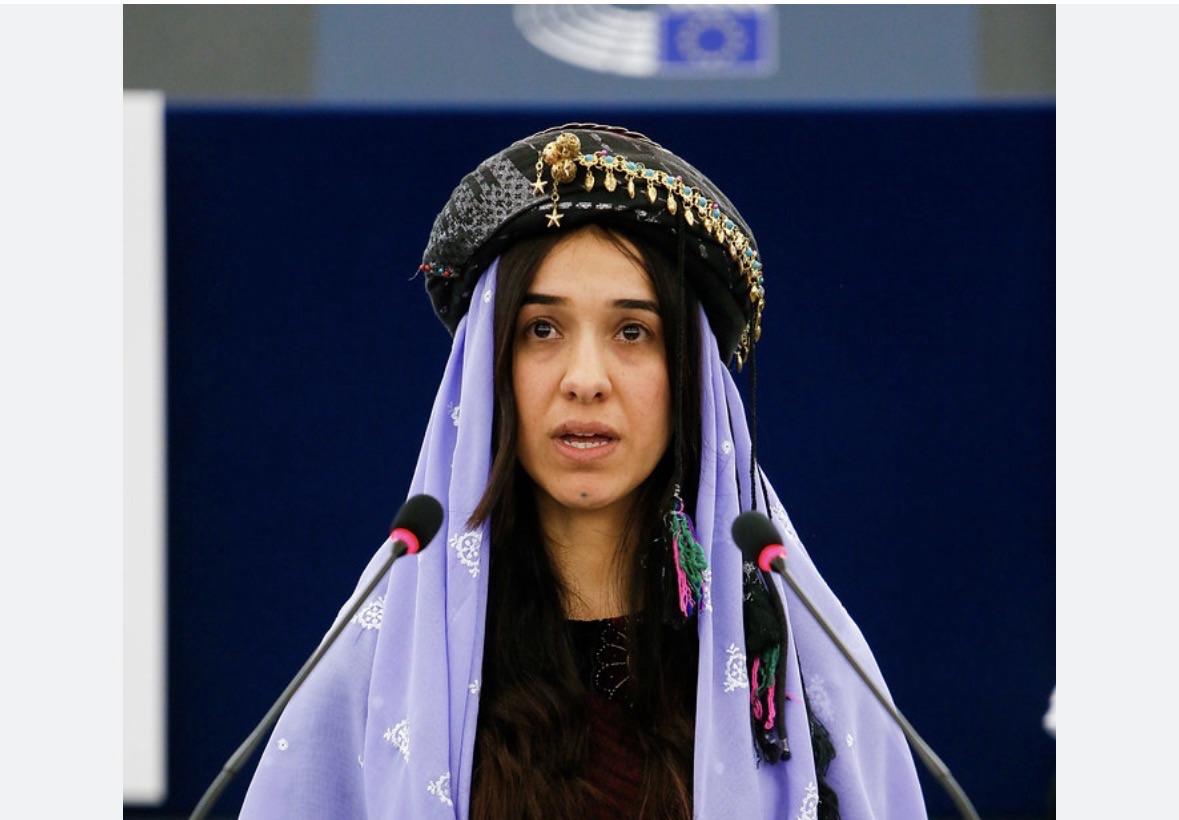
Chapman University recently welcomed Nobel Peace Prize laureate and human rights defender Nadia Murad, who spoke at the Musco Center for the Arts about her journey from surviving genocide to advocating for global justice and healing.
Murad, who was born in the Ezidi village of Kocho in northern Iraq, shared her story with students and faculty during a public conversation with Dean Jennifer Keene of Wilkinson College. She spoke about her ongoing work to raise awareness of the genocide committed against the Ezidi people and the systematic use of sexual violence in conflict.
In 2014, the so-called Islamic State destroyed Murad’s village, murdering her family and enslaving thousands of Ezidi women and children. After escaping captivity, Murad transformed her personal trauma into a mission for accountability and survivor recovery. Through her organisation, Nadia’s Initiative, she works to support survivors and rebuild war-torn communities in Iraq.
Murad emphasized the importance of documentation and remembrance. Her bestselling memoir, The Last Girl: My Story of Captivity, and My Fight Against the Islamic State, preserves the memory of her people’s suffering and resilience. She described writing as both an act of healing and a form of resistance against erasure, ensuring that the crimes against the Ezidis are never forgotten.
Earlier this year, Murad published Returning to Iraq to Bury My Brothers in Time magazine, reflecting on the painful process of identifying and burying the remains of her brothers, who were killed during the 2014 genocide. Her writings continue to highlight the ongoing struggle for recognition and justice for the Ezidi people.
Throughout her career, Murad has been honoured with numerous international awards, including the 2018 Nobel Peace Prize, the Sakharov Prize, and the Council of Europe Václav Havel Human Rights Award. Despite the accolades, she told the Chapman audience that her true purpose remains the pursuit of peace and dignity for survivors.
Murad ended the evening by encouraging students to nurture resilience and compassion in their own lives, reminding them that healing often begins with small acts of kindness toward oneself.
As she signed copies of her memoir, attendees left deeply moved by her strength and message: a reminder that even in the aftermath of genocide, voices like Nadia Murad’s ensure that truth and humanity endure.