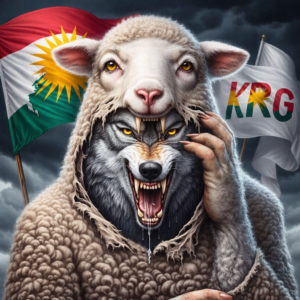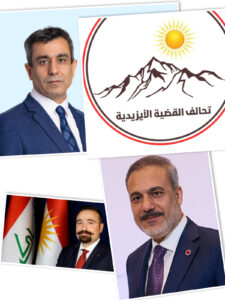


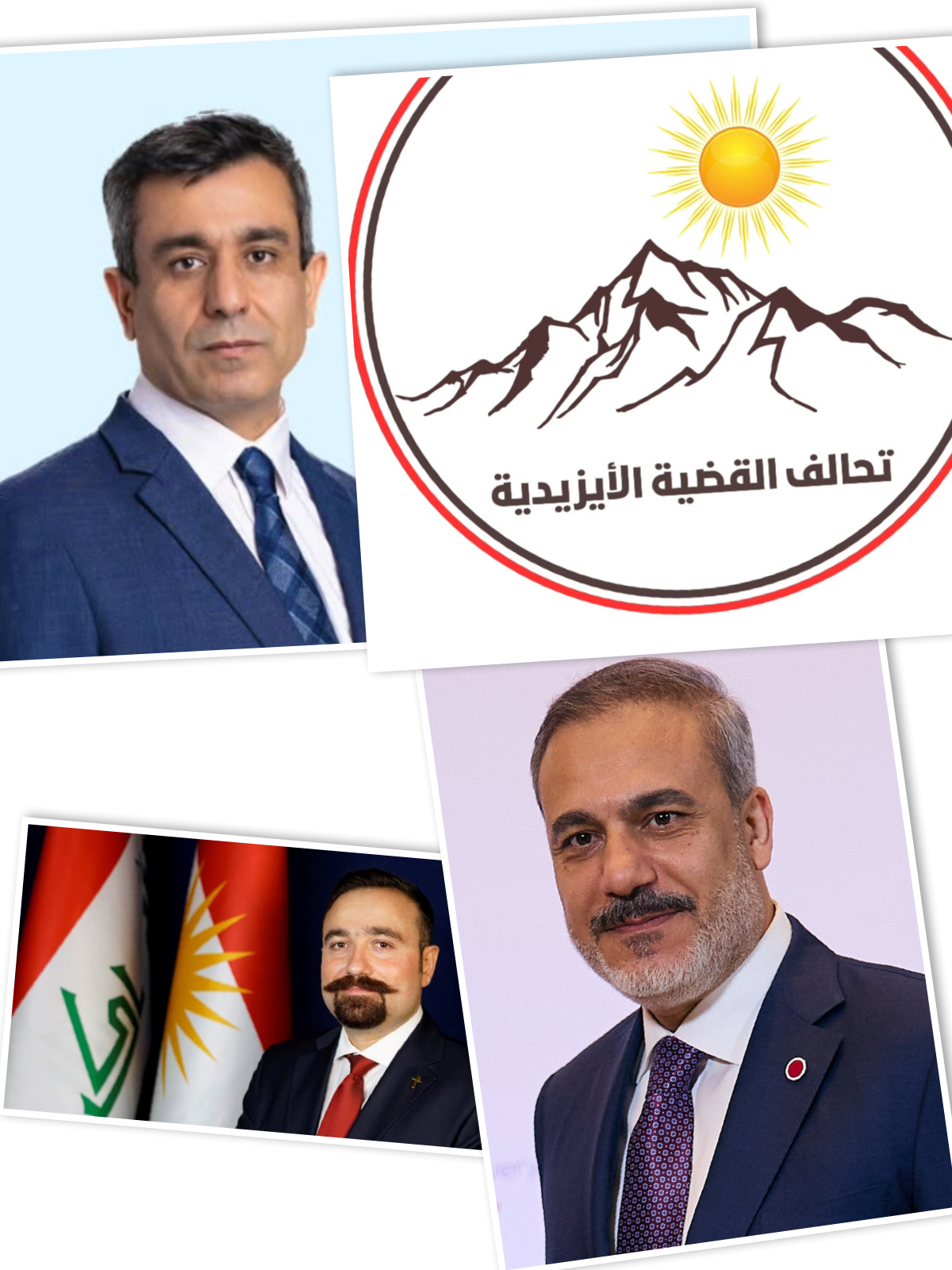
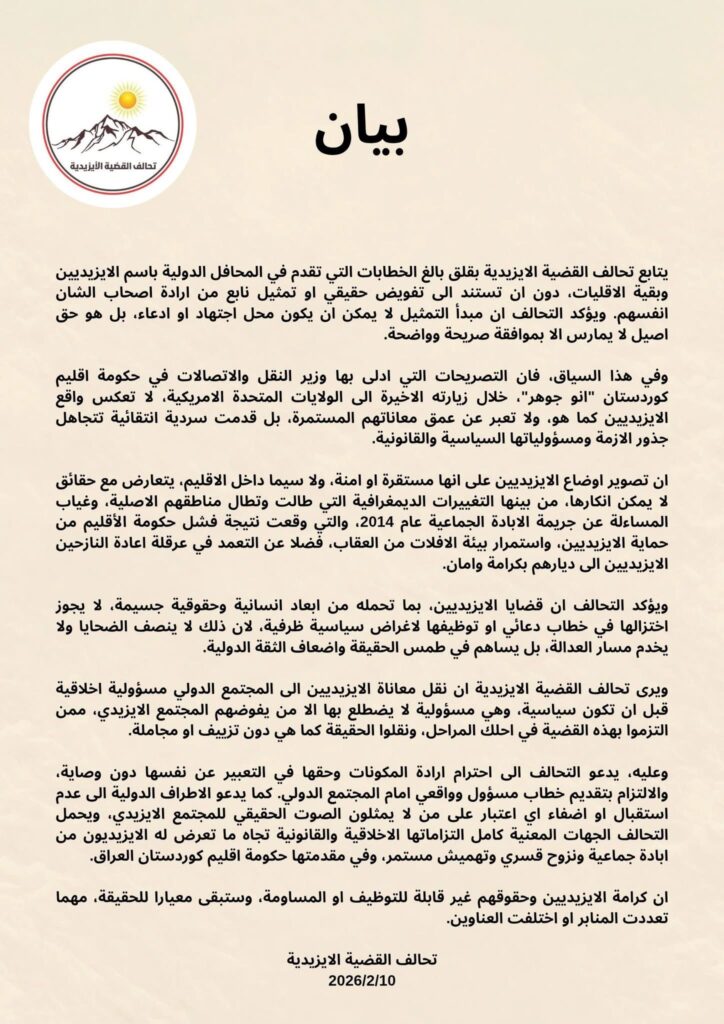
Recent events have highlighted once again the ongoing challenges facing the Ezidi people in Iraq. The Yazidi Cause Alliance strongly criticized statements made by Ano Jawhar Abdoka in Washington, emphasising that no non-Ezidi has the right to speak on their behalf without explicit consent. The Alliance reaffirmed that genuine representation of Ezidis must be rooted in their own voice, not in political rhetoric used for temporary agendas.
Abdoka, a KRG official, discussed the conditions of religious and ethnic minorities in Iraq and Syria, including the Yazidis, during the International Religious Freedom Summit. He spoke about the importance of implementing the Sinjar Agreement, protecting political representation through quotas, and removing armed groups from Ezidi areas. While these topics are critical, the Yazidi Cause Alliance warned that Abdoka’s statements did not reflect the true situation on the ground, particularly ongoing displacement, lack of accountability for the ISIS genocide, and demographic pressures in Sinjar.
The Sinjar Agreement, signed in 2020 by the Iraqi federal government and the KRG, was intended to ensure local administration, security, and reconstruction in Sinjar. Its implementation has been slow and incomplete, with multiple armed actors still present and the federal and regional authorities struggling to enforce the agreement fully. The failure to enact its provisions has left Ezidis vulnerable, with security and political representation still limited.
Adding to the tension, Turkish Foreign Minister Hakan Fidan’s recent remarks about Sinjar sparked strong objections from Ezidi lawmakers and Iraq’s foreign ministry. Fidan suggested that changes could occur in Sinjar following operations in northeast Syria, implying Turkey’s interest in intervening in Iraq. Murad Ismael, a Yazidi-Iraqi lawmaker, rejected this outright, stressing that Sinjar is an exclusively Iraqi matter and must be addressed within Iraq’s legal and constitutional framework. Iraq’s foreign ministry summoned the Turkish ambassador in protest, stating that Fidan’s comments interfered in Iraq’s internal affairs and violated diplomatic norms.
The Sinjar Resistance Units (YBS) remain active in Sinjar, having played a key role in defending the Ezidi homeland against ISIS. Turkey views the YBS as a security threat, but Ezidis insist that local forces should be integrated into Iraq’s official security institutions rather than be subject to foreign intervention. Clashes between the YBS and Iraqi army in recent months underscore the ongoing struggle for security and autonomy in Sinjar.
What these events make clear is that Ezidis continue to navigate a complex web of regional, national, and international pressures. Their representation, security, and the right to return safely to Sinjar cannot be subordinated to external political interests, whether from the KRG, Turkey, or other actors. Genuine progress for Ezidis will require respecting their self-determination, enforcing agreements like the Sinjar Agreement, and addressing the legacy of genocide and displacement with concrete action rather than rhetoric.
The Ezidi people’s struggle is far from over. As they demand true representation, accountability, and security, international actors and regional powers must recognize that their voice cannot be spoken for or overridden. Sinjar is not a bargaining chip — it is the heart of the Ezidi homeland, and its future must be determined by the Ezidis themselves.