
Haje Bakoyan is one of the most prominent Ezidi activists in Armenia working at the intersection of women’s rights, education, and community development. As the director of Shams Humanitarian NGO, she has become a visible figure advocating for social change while firmly rejecting the idea that progress requires abandoning Ezidi traditions or the Sharfadin religion. Her work focuses on strengthening the position of Ezidi women and girls within their families and society, without undermining the cultural foundations that sustain the Ezidi people and the religion of Sharfadin.
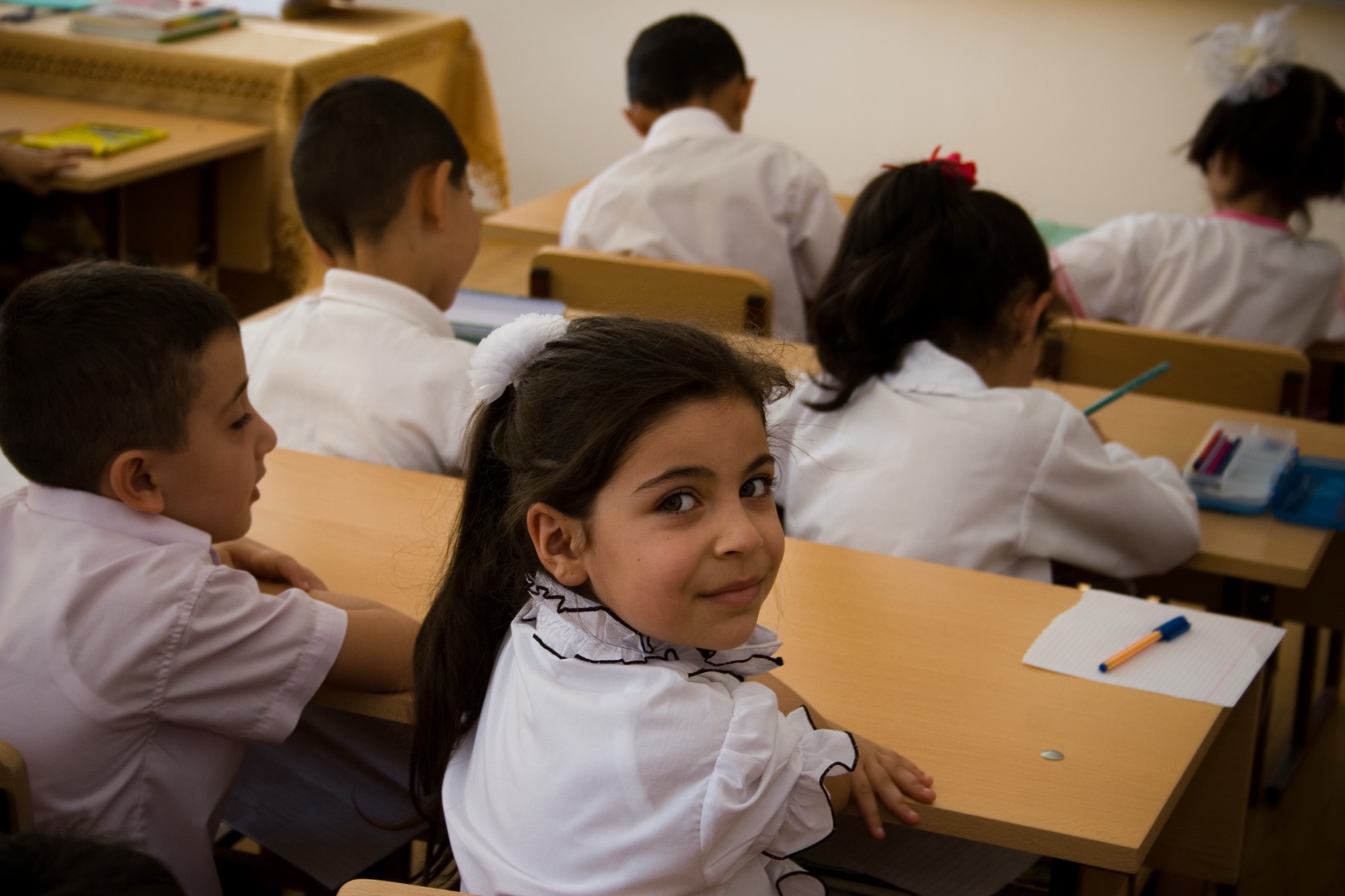
Bakoyan’s engagement is deeply shaped by lived experience. Growing up, she witnessed how many Ezidi girls left school not due to lack of ability, but because education for girls was often discouraged by family expectations, early marriage, and restrictive interpretations of tradition. These patterns were not abstract to her; she experienced them firsthand through early marriage and delayed access to education. Later efforts to continue her studies exposed the social resistance faced by Ezidi women who seek intellectual or professional development beyond prescribed roles.
Through Shams Humanitarian NGO, Bakoyan works to challenge these barriers in practical and community-based ways. Her approach emphasizes gradual change rooted in everyday examples rather than confrontation. Education is central to her vision. She promotes schooling as a foundation for independence and long-term security for Ezidi girls, alongside family support and a social environment that does not punish ambition or self-expression.
Ezidi girls in Armenia face several interconnected social challenges. Early marriage remains a significant obstacle, often cutting short education and limiting future opportunities. Fear related to safety, especially when education requires travel away from home, further restricts access to higher studies. Economic hardship also plays a major role, as many families lack the financial means to support prolonged education. In addition, years of social messaging that devalues girls’ voices has led to widespread lack of self-confidence, affecting mental health, educational outcomes, and participation in public life.
Bakoyan also addresses the economic exclusion of Ezidi women. Employment opportunities are limited by lack of work experience, social restrictions on working outside the home, and the risks associated with entrepreneurship. Despite this, there is a gradual increase in women engaging in small-scale and home-based businesses. To support this shift, Bakoyan has overseen programs that combine professional training, psychosocial support, and community engagement.
One notable initiative focused on women over the age of forty who felt that meaningful change was no longer possible in their lives. Through skills training, mental health workshops, and collective projects, participants gained tools to re-enter economic and social life. Some went on to establish small businesses or manage digital platforms, while others reported increased confidence and independence.
A key principle in Bakoyan’s work is distinguishing between traditions that sustain the Ezidi people and practices that limit women’s safety, education, or freedom. She advocates preserving values linked to family cohesion, respect, and faith, while openly challenging customs that cause harm. Dialogue within the community, rather than external pressure or confrontation, is central to this approach.
Bakoyan also highlights structural gaps, particularly the lack of effective mechanisms to prevent early marriage and the absence of targeted state programs addressing the specific needs of Ezidi women. She calls for educational initiatives that combine protection with opportunity, ensuring that girls can pursue education without fear or social penalty.
Looking ahead, Bakoyan envisions a future in which Ezidi women in Armenia have their own sources of income, stronger public voices, and greater courage to define their own paths. Through continued advocacy, education, and community dialogue, her work seeks to ensure that tradition and progress are no longer seen as opposing forces, but as elements that can coexist in shaping a more equitable future for Ezidis.